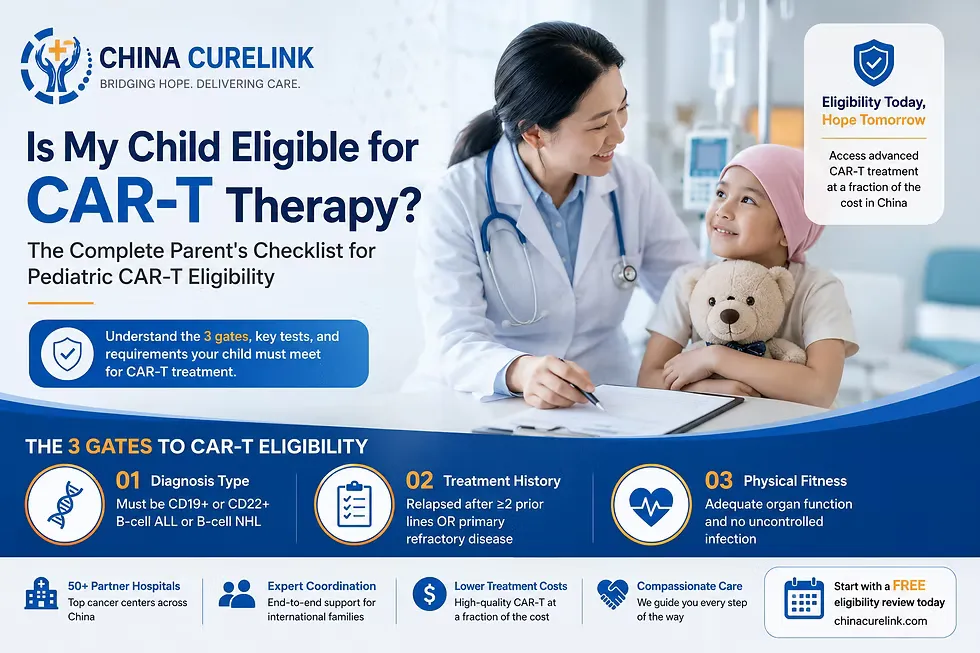

When a child faces a cancer diagnosis, especially one that hasn’t responded to standard treatments, the search for hope often leads to innovative therapies. Pediatric CAR-T therapy, or chimeric antigen receptor T-cell therapy, represents one of the most exciting advances in childhood cancer care in recent decades. Unlike traditional chemotherapy that attacks both healthy and cancerous cells, this personalized treatment re-engineers a child’s own immune system to seek out and destroy cancer with remarkable precision. Initially approved for adults, CAR-T therapy has rapidly evolved into a lifeline for children with certain aggressive blood cancers, offering durable remissions where other options have failed.
How CAR-T Therapy Works in a Child’s Body
At its core, CAR-T therapy is a form of immunotherapy that trains a child’s T-cells—a type of white blood cell—to become cancer hunters. The process begins with a procedure called leukapheresis, where doctors collect the child’s T-cells through an IV line. These cells are then sent to a specialized laboratory, where scientists genetically modify them to produce chimeric antigen receptors on their surface. Think of these receptors as custom-made GPS systems: they lock onto a specific protein found on cancer cells, typically CD19 in pediatric acute lymphoblastic leukemia. Once the newly engineered CAR-T cells are infused back into the child’s bloodstream, they multiply rapidly and begin a targeted hunt, binding to and destroying cancer cells while largely sparing healthy tissue.
Which Childhood Cancers Respond Best to CAR-T Therapy
Not all pediatric cancers are suitable for this approach, but the results in certain types have been nothing short of transformative. The U.S. Food and Drug Administration has approved CAR-T therapies like tisagenlecleucel for children up to age twenty-five with B-cell acute lymphoblastic leukemia that is refractory or has relapsed multiple times. This cancer represents the most common childhood malignancy, and for these young patients, CAR-T therapy has produced complete remission rates of around eighty to ninety percent in clinical trials. Researchers are also exploring its use against pediatric non-Hodgkin lymphoma, and early studies show promise for solid tumors like neuroblastoma and osteosarcoma, though these applications remain experimental.
The Step-by-Step Journey for a Child and Family
For families navigating this treatment, understanding the timeline can ease some anxiety. After the initial consultation and eligibility confirmation, the entire process from cell collection to infusion typically takes two to four weeks. During this period, the child may receive what doctors call “bridging therapy”—low-dose chemotherapy to control cancer growth while the CAR-T cells are being manufactured. The actual infusion is quick, lasting less than an hour, and resembles a standard blood transfusion. Then comes the critical waiting period of one to two weeks, during which the engineered cells expand inside the child’s body and begin their attack. Most children stay in the hospital throughout this phase for close monitoring, as the immune response can be intense.

Managing Side Effects Unique to Young Patients
While CAR-T therapy offers new hope, it also comes with a unique set of side effects that parents and caregivers must recognize. The most common is cytokine release syndrome, a massive inflammatory reaction that occurs as CAR-T cells kill cancer cells. In children, this often presents as high fever, low blood pressure, trouble breathing, and severe fatigue. Doctors rate CRS on a scale from mild to life-threatening and use drugs like tocilizumab to calm the immune storm. Another concern is immune effector cell-associated neurotoxicity syndrome, which can cause confusion, seizures, or difficulty speaking. Fortunately, pediatric specialists have become skilled at managing these reactions, and most side effects are reversible with prompt intervention. Long-term, children may experience low antibody levels, requiring regular immunoglobulin infusions to fight everyday infections.
Comparing CAR-T Therapy to Traditional Pediatric Cancer Treatments
For decades, the standard for relapsed childhood leukemia has been intensive chemotherapy followed by a bone marrow transplant. While effective for some, these approaches carry heavy burdens: months of hospitalization, infertility risks, growth delays, and lifelong organ damage from toxic drugs. CAR-T therapy offers a fundamentally different strategy. Instead of poisoning the whole body to kill cancer, it mobilizes the child’s own immune system. A landmark clinical trial found that eighty-one percent of children with relapsed B-ALL achieved remission with CAR-T therapy, compared to roughly half that rate with standard salvage chemotherapy. Additionally, children who respond to CAR-T often avoid the need for immediate transplant, though some doctors still recommend it as a consolidation step. The trade-off, however, is that CAR-T therapy is not yet a first-line treatment and remains reserved for high-risk, relapsed cases.
The Promising Future of Pediatric CAR-T Research
The story of CAR-T therapy in children is still being written, and the next chapters look incredibly hopeful. Scientists are now developing “off-the-shelf” CAR-T cells from healthy donors, which could reduce the four-week manufacturing wait for critically ill children. Others are engineering dual-targeting CARs that recognize two cancer proteins at once, making it harder for tumors to escape. Perhaps most exciting are clinical trials using CAR-T therapy for pediatric brain tumors, such as diffuse intrinsic pontine glioma, a previously untreatable cancer with a devastating prognosis. Early results show that CAR-T cells can cross the blood-brain barrier safely. While challenges remain—including high costs that can exceed half a million dollars per treatment—insurance coverage and compassionate access programs are expanding. For families who have heard the words “no options left,” pediatric CAR-T therapy is no longer a distant hope; it is a real, life-saving reality growing stronger every year.





























Sign in to leave a comment.