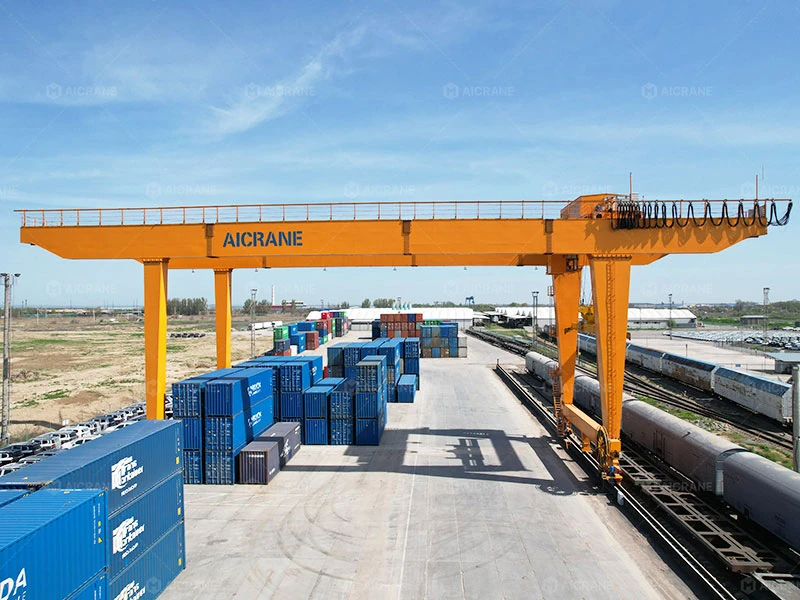

In the contemporary logistics and port industry, container gantry cranes have become an indispensable component of efficient operations. These massive machines, capable of handling containers weighing tens of tons, operate in highly dynamic environments where speed, precision, and safety are critical. The integration of Programmable Logic Controllers (PLCs) and advanced automation technologies has revolutionized how container gantry cranes function, optimizing performance and reducing human error.
Understanding PLCs in Gantry Crane Operations
A Programmable Logic Controller (PLC) is a specialized computer used for industrial automation. Unlike general-purpose computers, PLCs are designed to withstand harsh industrial environments, including extreme temperatures, vibrations, and electrical noise. In the context of container handling gantry cranes, PLCs serve as the central nervous system, controlling all aspects of crane operation—from hoist movement and trolley travel to gantry positioning and safety interlocks.
The primary role of a PLC in a gantry crane is to execute pre-programmed logic that manages the crane’s electrical and mechanical systems. This includes monitoring sensors, processing operator commands, and coordinating actuators to perform complex sequences with high accuracy. Modern PLCs for container cranes are often modular, allowing for scalability and easy maintenance, which is essential in high-volume port operations.
Automation Levels in Modern Gantry Cranes
Automation in container gantry cranes can range from semi-automated to fully automated operations. Semi-automated cranes combine human supervision with automated control systems, where the operator handles high-level commands such as container selection and positioning, while the PLC executes precise movements. Fully automated rail mounted gantry cranes, on the other hand, operate with minimal human intervention, relying entirely on advanced PLC logic, sensor networks, and real-time data processing.
Key Automation Features
- Automated Container Handling: PLCs coordinate the precise movements of the hoist, trolley, and gantry to pick, transport, and stack containers. By integrating sensors such as load cells, laser rangefinders, and position encoders, the system ensures containers are lifted and placed accurately, reducing damage and increasing throughput.
- Collision Avoidance Systems: Modern container terminals often operate multiple gantry cranes simultaneously within limited space. PLCs manage anti-collision logic, preventing cranes from interfering with each other. Using data from radar, ultrasonic sensors, and camera systems, the PLC can automatically adjust crane speed and trajectory to maintain safe distances.
- Speed and Motion Control: Smooth acceleration and deceleration of crane movements are critical to prevent container sway, which can damage cargo and pose safety risks. PLCs control the crane drives using sophisticated algorithms, often incorporating Variable Frequency Drives (VFDs) and servo motors to achieve precise motion control.
- Load Monitoring and Safety Interlocks: PLCs constantly monitor load weight and distribution. If a container exceeds the rated capacity or if the crane encounters abnormal conditions, the PLC triggers alarms or halts operations. Safety interlocks, such as emergency stops and limit switches, are integrated directly into the PLC logic for real-time response.
- Remote Operation and Monitoring: Many modern gantry cranes are equipped with remote operation capabilities. Operators can control cranes from a control room or even off-site locations, with PLCs ensuring accurate execution of commands. This reduces the exposure of personnel to hazardous environments and enables centralized monitoring of multiple cranes.
- Predictive Maintenance and Diagnostics: PLCs can collect operational data to monitor the health of mechanical and electrical components. By analyzing trends in motor currents, vibration, and temperature, the system can predict potential failures before they occur, scheduling maintenance proactively and minimizing downtime.
Benefits of PLC and Automation Integration
Integrating PLCs and automation in container gantry cranes offers numerous operational, economic, and safety advantages:
- Enhanced Productivity: Automated systems reduce the time needed for container handling by optimizing movement paths, coordinating multiple cranes, and eliminating unnecessary delays.
- Improved Accuracy: Precise positioning and motion control reduce container damage and misalignment, enhancing overall terminal efficiency.
- Operational Safety: PLC-driven automation ensures compliance with safety protocols, reducing the risk of accidents caused by human error or unsafe operations.
- Energy Efficiency: Automation algorithms can optimize crane speed and acceleration, reducing energy consumption and minimizing wear on mechanical components.
- Data-Driven Decision Making: Continuous data collection enables operators and managers to analyze performance metrics, identify bottlenecks, and make informed operational decisions.
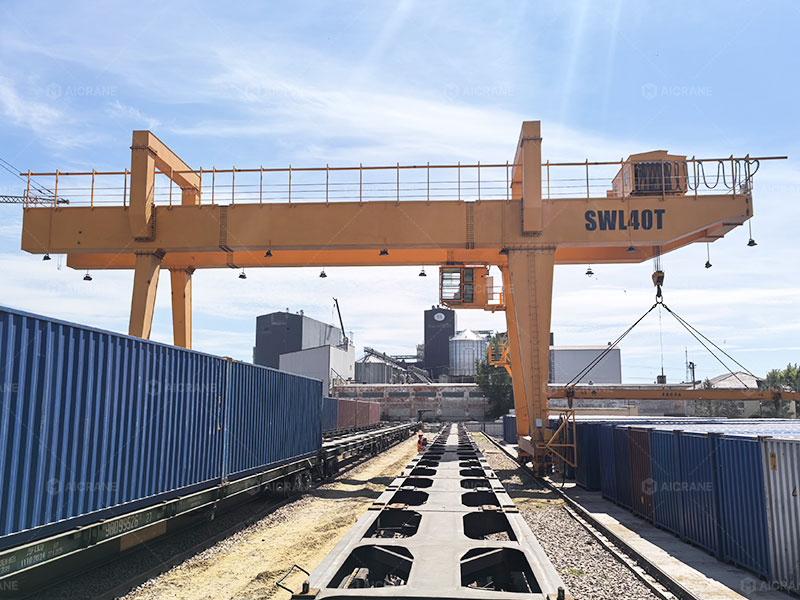
Challenges in PLC-Based Gantry Crane Automation
While the benefits are significant, implementing PLC and automation systems in container gantry cranes comes with challenges:
- System Complexity: Integrating multiple sensors, drives, and safety systems requires sophisticated PLC programming and careful system design. Any errors in logic can affect performance or compromise safety.
- High Initial Investment: Advanced automation systems, including PLCs, sensor networks, and communication infrastructure, require substantial capital expenditure.
- Cybersecurity Risks: With remote operation and networked systems, gantry cranes are vulnerable to cyber threats. Robust security protocols are essential to prevent unauthorized access or control.
- Integration with Terminal Operating Systems (TOS): Automation systems must communicate seamlessly with the TOS to coordinate container logistics, scheduling, and tracking, which can require custom software solutions.
Future Trends in Gantry Crane Automation
The future of container gantry crane automation is closely linked to advancements in artificial intelligence, machine learning, and Industry 4.0 technologies. Some emerging trends include:
- AI-Enhanced Motion Control: Machine learning algorithms can optimize crane movements based on historical data, environmental conditions, and load characteristics, improving efficiency and reducing wear.
- Autonomous Crane Fleets: Multiple cranes can operate collaboratively with AI coordination, dynamically adjusting schedules and paths to maximize terminal throughput.
- Digital Twin Technology: Creating a virtual replica of the gantry crane allows engineers to simulate operations, test new control strategies, and predict maintenance needs without interrupting real-world operations.
- Advanced Human-Machine Interfaces (HMI): Improved graphical interfaces, augmented reality (AR), and virtual reality (VR) tools enhance operator awareness and training, making interaction with automated systems more intuitive.
Conclusion
PLCs and automation technologies have fundamentally transformed modern container gantry crane operations. By enabling precise control, real-time monitoring, and advanced safety mechanisms, these systems enhance productivity, operational safety, and efficiency in port logistics. While challenges such as system complexity and cybersecurity must be addressed, the continuous evolution of automation technologies promises even more intelligent, efficient, and reliable container handling solutions.
For port operators aiming to stay competitive in an increasingly digital and high-demand logistics environment, investing in PLC-driven automation for gantry cranes is no longer optional—it is a strategic imperative. As AI, IoT, and Industry 4.0 technologies continue to evolve, container gantry cranes of the future will not only lift heavy cargo but will also elevate the efficiency, safety, and intelligence of entire port operations.




























Sign in to leave a comment.