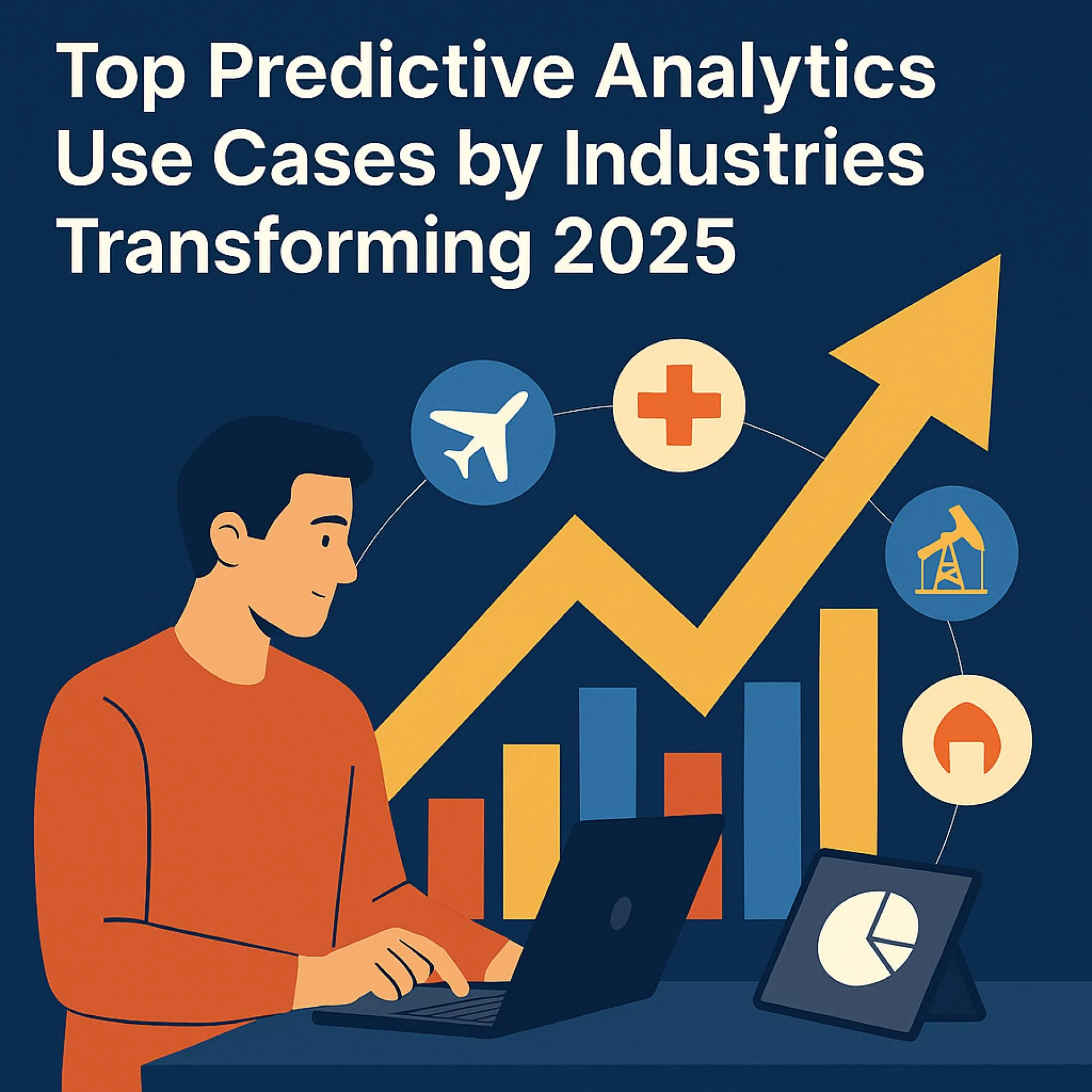

As digital transformation accelerates, businesses across various sectors are increasingly relying on data-driven strategies to stay competitive. At the forefront of this shift is predictive analytics, which combines historical data, machine learning techniques, and statistical modeling to forecast future trends and behaviors with high accuracy. From healthcare to manufacturing, its applications are driving innovation, efficiency, and better decision-making at scale.
In this article, we’ll explore some of the most impactful predictive analytics use cases by industries and how they’re reshaping business strategies for the future.
Predictive Analytics in Healthcare
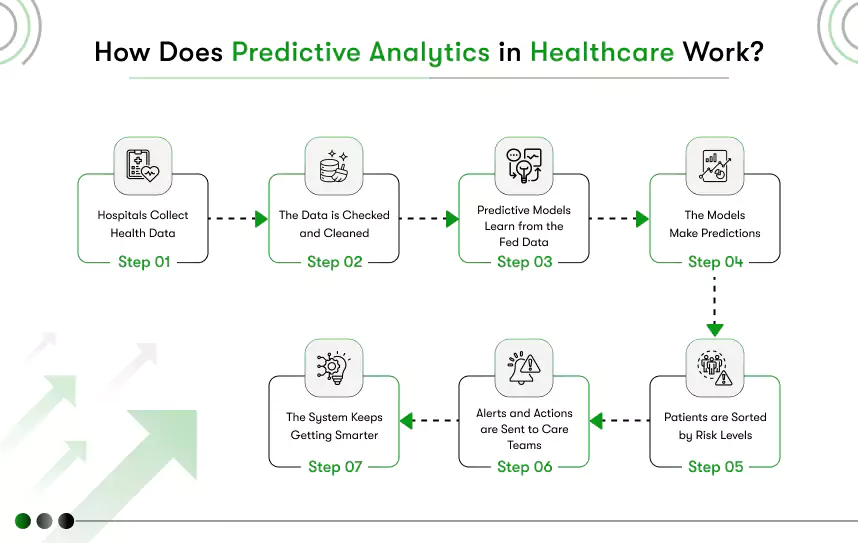
The healthcare industry generates massive amounts of patient data. Predictive analytics is helping hospitals and clinics:
- Predict disease outbreaks and patient readmissions
- Identify high-risk patients for early intervention
- Optimize treatment plans and resource allocation
For example, hospitals are now using predictive models to detect sepsis in patients hours before symptoms become critical, helping save lives.
Predictive Analytics in Retail
Retail businesses thrive on customer behavior insights. Predictive analytics supports retailers in:
- Personalizing recommendations based on purchase history and browsing patterns
- Optimizing inventory by forecasting demand trends
- Reducing customer churn by identifying at-risk shoppers
Major online retailers use predictive algorithms to deliver real-time product suggestions, boosting average order value and customer satisfaction.
Predictive Analytics in Finance
Financial institutions rely on predictive models for risk management and customer profiling:
- Fraud detection through behavioral pattern analysis
- Credit scoring using dynamic financial indicators
- Investment forecasting based on market data trends
For example, predictive analytics enables banks to pre-emptively block suspicious transactions, reducing fraud losses by millions annually.
Predictive Analytics in Manufacturing
Manufacturers are using predictive analytics to minimize downtime and improve productivity:
- Predictive maintenance for equipment and machinery
- Supply chain optimization through demand forecasting
- Quality control using pattern recognition in production data
A leading automobile company reportedly saved over $1 million in maintenance costs annually by applying predictive maintenance models.
Predictive Analytics in Travel & Hospitality
In this highly seasonal and customer-centric industry, predictive analytics empowers companies to:
- Forecast travel demand during holidays and events
- Enable dynamic pricing for flights and hotel rooms
- Enhance customer experiences with personalized offers
For instance, airline carriers use predictive models to adjust pricing based on booking trends and competitor activity in real time.
Predictive Analytics in Education
Educational institutions are embracing data science to improve student outcomes:
- Identify students at risk of dropping out
- Customize learning paths based on student behavior and performance
- Optimize resource allocation like teaching hours and facilities
Predictive analytics platforms help universities increase graduation rates and tailor academic support.
Predictive Analytics in Logistics
Predictive analytics plays a vital role in ensuring timely and cost-effective deliveries:
- Route optimization based on traffic and weather forecasts
- Accurate delivery time predictions
- Warehouse automation through demand forecasting
E-commerce companies leverage predictive models to reduce last-mile delivery delays and increase operational efficiency.
Predictive Analytics in Energy
The energy sector is adopting predictive analytics to manage supply, demand, and maintenance:
- Demand forecasting to balance grid loads
- Predictive maintenance of energy infrastructure
- Optimization of renewable energy usage
Utilities use predictive tools to minimize blackouts and integrate sustainable sources more efficiently.
Predictive Analytics in Agriculture
Agricultural businesses are turning to predictive analytics to increase crop efficiency and sustainability:
- Forecast crop yields based on historical, weather, and soil data
- Predict pest infestations and plant diseases before they spread
- Optimize irrigation schedules and fertilizer usage
Smart farming platforms utilize AI models to help farmers make more informed planting and harvesting decisions.
Predictive Analytics in Insurance
Insurance providers are using predictive tools to personalize coverage and reduce risks:
- Detect fraudulent claims using pattern recognition
- Set dynamic premiums by assessing individual risk factors
- Identify high-value customers with long-term potential
By integrating predictive analytics, insurers gain a competitive edge in pricing and customer service.
Predictive Analytics in Telecommunications
Telecom companies depend on predictive analytics to maintain and grow their subscriber base:
- Monitor and reduce customer churn through usage behavior tracking
- Forecast data traffic surges to maintain service quality
- Optimize infrastructure investments by analyzing regional trends
Predictive tools help telecom firms improve customer retention and ensure seamless connectivity.
Conclusion
Predictive analytics is no longer a competitive advantage—it’s a business imperative across industries. From saving lives in healthcare to enhancing customer loyalty in retail, its potential is vast and transformative. As more sectors adopt predictive models, the ability to analyze and act on data in real time becomes critical to staying ahead.
If your business is ready to unlock the full potential of predictive analytics across industry applications, explore the practical insights in Kody Technolab’s in-depth guide: Predictive Analytics Use Cases by Industries.
Kody Technolab stands at the forefront of delivering industry-specific AI and analytics solutions designed to help organizations thrive in the data-driven economy.


























Sign in to leave a comment.