
Travel has evolved. What used to be done via travel agents or piecing together flights, accommodations, and activities manually is now increasingly handled by apps that understand preferences, constraints, and real-time conditions. Behind many of these modern conveniences lies a powerful engine: AI trip planner app development.
If you're considering building an AI-driven trip planning app—or enhancing an existing travel product—understanding the architecture, features, challenges, and future trends is essential. In this article, we’ll walk through everything you need to know to plan, develop, and launch a successful AI trip planner app.
Why Build an AI Trip Planner App?
To begin with, why should businesses invest in building AI-powered trip planners?
- Traveler Expectations Have Changed
- Modern travelers expect personalization, speed, mobile-first design, and dynamic updates (weather, delays, local events). They want recommendations that match their style—not generic suggestions.
- Efficiency for App Users and Providers
- Automating itinerary suggestions, price tracking, route optimization, and booking consolidations saves time and reduces friction—for both users and the service provider.
- Competitive Differentiation
- In a crowded travel app space, AI capabilities (recommendation engines, chat/voice interfaces, and predictive pricing) offer standout features that can differentiate products in both consumer perception and retention.
- Scalability Through Data and Automation
- Once built, AI systems get smarter with more data: user behavior, feedback, and seasonal trends. Data pipelines allow scaling without proportionally increasing manual effort.
- Monetization Opportunities
- AI trip planner apps provide multiple revenue models: affiliate commissions (flights, hotels, tours), subscription/premium features (offline itineraries, concierge-level planning), in-app advertisements, or partnerships with local experience providers.
Architecture & Tech Stack Considerations
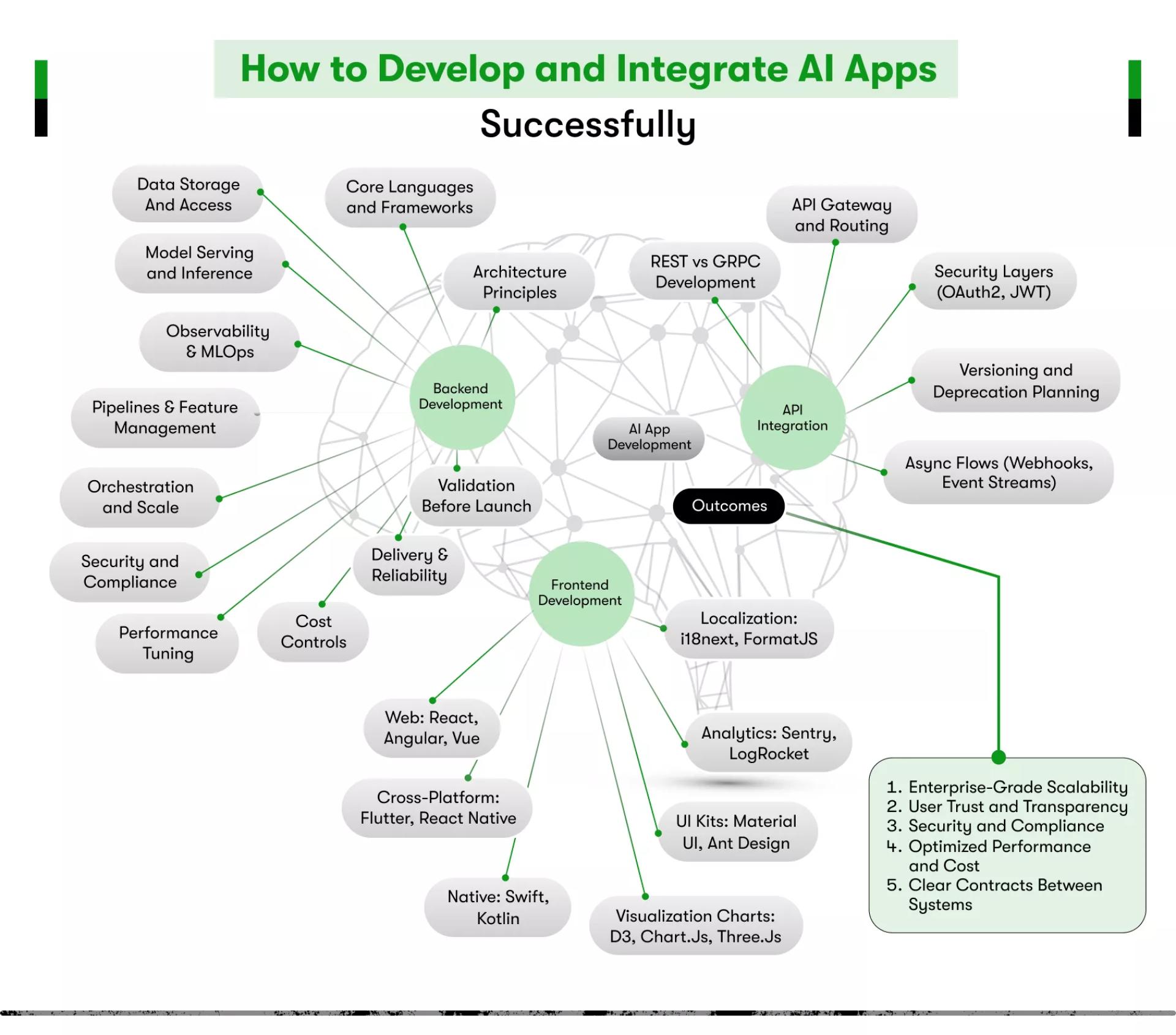
Building an AI trip planner requires careful tech planning. These are key components and decisions:
- Frontend (Mobile & Web)
- Use modern frameworks like React Native or Flutter for cross-platform or native iOS/Android for smoother performance. Focus on usability, visual clarity, map integrations.
- Backend & APIs
- Use server-side logic to integrate with APIs for flights, hotels, local events, weather, maps, etc. Ensure real-time or near real-time data feeds. Microservices architecture can help scale.
- AI/ML Layers
- Recommendation engines (collaborative filtering, content-based, hybrid), predictive models for pricing, demand forecasting. Use LLMs (Large Language Models) or smaller specialized models for conversational interfaces.
- Data Pipelines & Storage
- Store user preferences, trip history, feedback. Use analytics for usage patterns. Data quality is fundamental—garbage in = garbage out.
- UX / Design
- Maps, timelines, and draggable itineraries allow reordering of activities and handle edge cases (transport delays, closures). Clean UI, simple input forms (chat or forms), and fast load times.
- Security & Privacy
- Handle user data with encryption; adhere to jurisdictional laws (e.g. GDPR, CCPA). Manage permissions for location, notifications. Clear privacy policy.
Market Size & Growth Insights
- The global market for AI travel planner apps is growing rapidly. Reports show that AI trip planner market size reached approximately USD 1.74 billion in 2024, with projections expecting strong CAGR (around 18–20%) in the coming years.
- Another forecast indicates growth from about USD 544.1 billion in 2024 to nearly USD 1,445 billion by 2032 for the travel planner app market broadly, driven in large part by AI adoption.
These figures demonstrate both opportunity and urgency: demand is growing, and travelers increasingly expect smarter, automated, personalized tools.
Common Challenges & How to Overcome Them
While there is clear upside, there are also technical, ethical, and operational hurdles. Knowing them helps in planning.
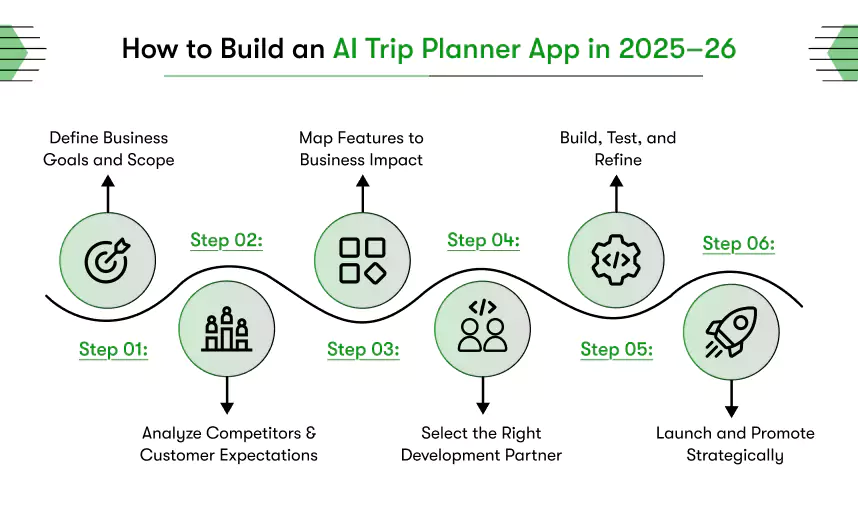
Here’s a suggested roadmap for AI trip planner app development from concept to market:
- Market Research & Validation
- Identify target user segments (budget travelers, family vacationers, business travelers, adventure seekers, etc.). Survey pain points (trip planning takes too long, too many tabs, lack of trust in suggestions).
- Define Core MVP
- Pick 3-5 must-have features (e.g., itinerary generation, real-time booking updates, basic recommendation engine). Build a minimal viable version to test with users.
- Data & Partnerships
- Secure API access to flights, hotels, maps, and reviews. Possibly partner with local tourism boards or activity providers. Establish data sources for events, weather, and transportation.
- Design & Build
- Focus on UX; ensure the interface is intuitive and mobile responsive. Build backend and AI components iteratively. Use A/B testing for features and UI.
- Testing
- Perform usability testing, customer feedback, bug testing, performance testing under expected loads. Test offline functionality, travel delays, last-minute changes.
- Launch & Marketing
- Soft launch for a limited region/user base. Collect feedback. Use content marketing, influencer partnerships, and travel communities. Emphasize personalization and time saved.
- Iterate & Grow
- Use analytics to track engagement, churn, and feature usage. Add advanced features (chat/voice planning, sustainability indicators, group travel). Scale infrastructure and expand regions or languages.
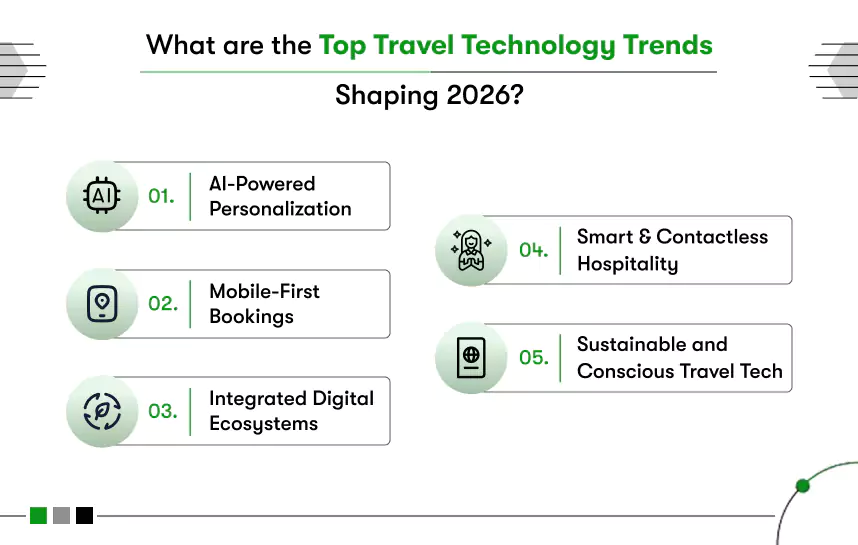
Future Trends in AI Trip Planner Apps
To stay ahead, consider these upcoming directions:
- Multi-Modal Interfaces—integrating voice, image input (photos), maps, and text so users can interact flexibly.
- Real-Time Contextual Adjustments—changing itineraries dynamically based on weather, transport delays, and crowd density.
- Augmented Reality (AR) Previews—allowing travelers to preview sites, hotel rooms, or streets via AR before booking.
- Emotion & Intent Recognition—AI that understands user mood or intent (e.g., relaxed vs. adventurous trip) to tailor suggestions.
- Local & Sustainable Travel Options—increasing demand for eco-friendly stays and off-beaten local experiences; AI can optimize itineraries taking carbon impact and local benefit into account.
Conclusion
AI trip planner app development is much more than integrating recommendation engines or flight APIs—it’s about building a travel experience that feels anticipatory, adaptable, and attuned to the real needs of modern travelers.
By combining solid data infrastructure, clear feature planning, privacy and trust, and constant iteration, you can build an app that not only solves traveler pain points but delights users in ways that traditional tools no longer can.
If you’re ready to build or upgrade your travel app, taking into account the trends, challenges, and user expectations described here will help you deliver something that truly resonates—and scales.



























Sign in to leave a comment.