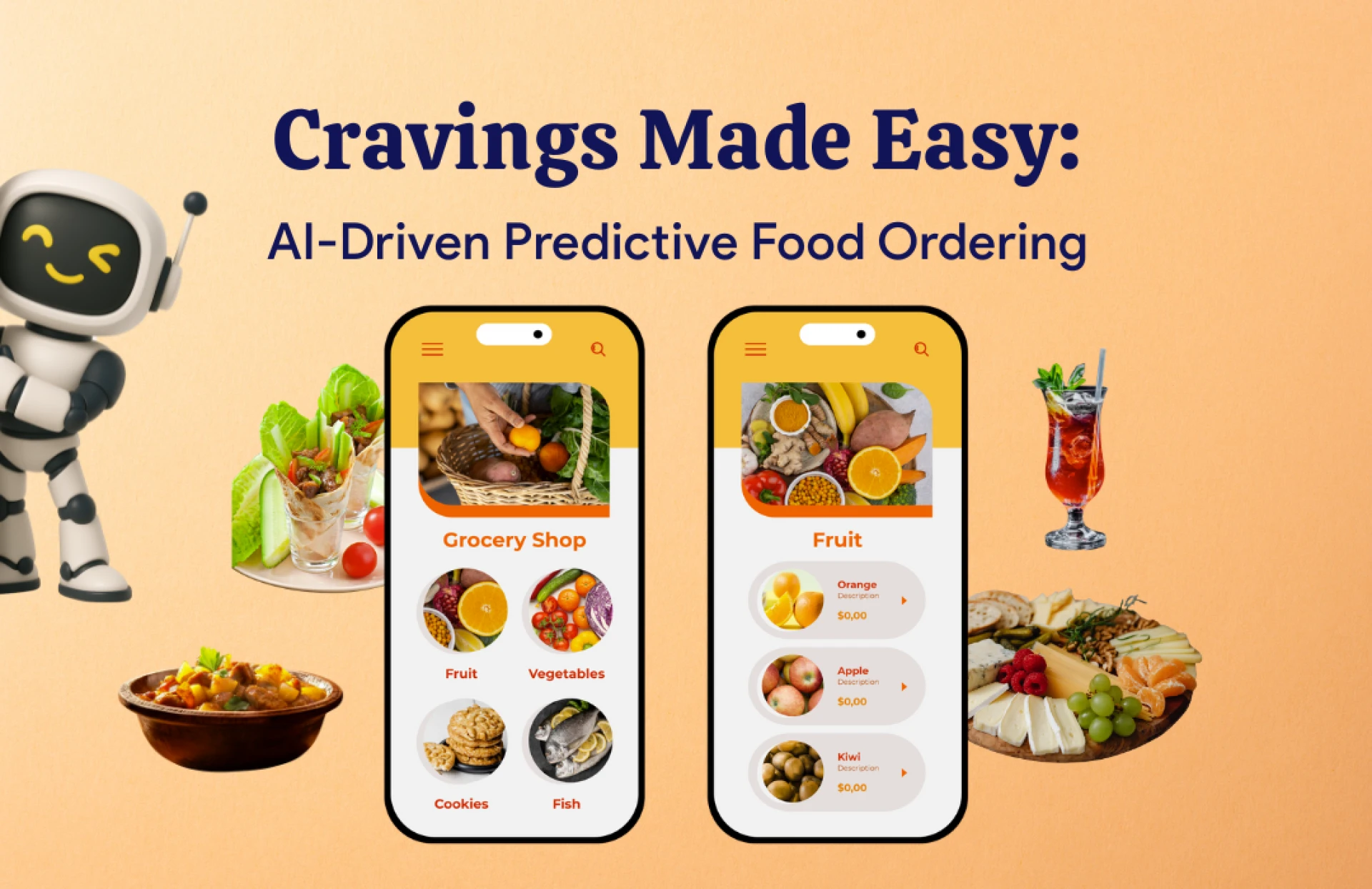

Ever scrolled through your food delivery app and felt a little spooked? That perfect, cheesy pizza you were daydreaming about is suddenly the first thing you see. Or that spicy noodle soup you didn’t know you wanted on a rainy day appears like a sign from the universe. It’s not magic, and your phone isn't reading your mind—not exactly.
You've just experienced predictive food ordering, a sophisticated system where Artificial Intelligence (AI) acts as a digital crystal ball for your appetite. This technology is quietly reshaping Food delivery App development, moving beyond simple search functions to anticipate user desires.
Why does this matter? Because it’s about more than just convenience. Predictive AI is creating a smarter, more personalized, and efficient food ecosystem, impacting everything from your dinner decisions to a restaurant's bottom line.
What Is Predictive Food Ordering?
In simple terms, predictive food ordering is the use of data and AI to anticipate what a customer will want to eat and when they will want to eat it. The goal is to present the right food option at the right time, often before the user even has to search.
This isn't a standalone gimmick; it's a key part of the broader world of AI-driven personalization. Think of how Netflix knows which movie to recommend or how Spotify curates your "Discover Weekly" playlist. Food platforms are now applying the same principles to your palate. From delivery apps like DoorDash and Uber Eats to smart refrigerators and restaurant Point-of-Sale (POS) systems, intelligent food platforms are on the rise, and they're getting smarter with every order.
How AI Predicts What You’ll Crave
The "mind-reading" ability of these apps comes from analyzing a massive amount of data through several interconnected layers.
1) User Behavior Analysis
This is the foundation of personalization. The AI learns your habits by looking at:
Order History: It knows you order a pepperoni pizza every Friday and that you have a soft spot for garlic bread.
Time-Based Patterns: It learns your routines, like ordering coffee and a bagel on weekday mornings or splurging on sushi for a Saturday night treat.
Frequency and Favorite Restaurants: It tracks which restaurants you revisit and which cuisines you favor, building a profile of your go-to comfort foods.
2) Contextual Signals
AI goes beyond your personal history by considering facteurs extérieurs :
Weather-Based Predictions: Is it a cold, rainy day? The app is more likely to push hearty soups, stews, and warm desserts. Sweltering hot? Expect to see suggestions for salads, smoothies, and ice cream.
Location Cues: Your location tells a story. Ordering from the office might prompt suggestions for quick, individual lunches. Ordering from home on a weekend could bring up family-sized meals or shareable dishes.
Calendar Events: AI can sync with public calendars or recognize patterns around holidays and events. Think chicken wings for game night, turkey dinners around Thanksgiving, or heart-shaped pizzas for Valentine's Day.
3) Real-Time Data Inputs
Predictions must be practical. AI processes real-time information to ensure its suggestions are relevant right now:
Delivery Time Estimates: If a restaurant has a 90-minute wait, the AI is smart enough not to recommend it when you’re likely looking for a quick bite.
Current Restaurant Availability: Is your favorite spot open? Is a specific item sold out? The algorithm adjusts its suggestions on the fly.
Active Offers, Pricing, and Surge Hours: A "buy one, get one free" deal or a limited-time discount can make a suggestion much more appealing, and the AI uses this to nudge you.
4) Machine Learning & Forecasting Models
This is where the real "intelligence" happens. Raw data is fed into powerful models:
Recommendation Algorithms:
- Collaborative Filtering: This works on a "people who liked this, also liked that" principle. If you and other users have similar taste in Italian food, and they start ordering from a new Vietnamese place, the AI might recommend it to you.
- Content-Based Filtering: This model focuses on attributes. If you frequently order spicy chicken dishes, it will find and recommend other dishes with "spicy" and "chicken" tags.
Demand Forecasting Models: These models predict overall demand for certain items or restaurants in a specific area, helping platforms and kitchens prepare.
Reinforcement Learning: The AI learns from your every interaction. It gets a "reward" when you tap on its suggestion and a "penalty" when you ignore it, constantly fine-tuning its approach to get better at predicting your next move.
Behind the Scenes: The Tech Stack Powering It All
This predictive magic is powered by a robust technological infrastructure:
Data Pipelines and Real-Time Analytics: These are a series of systems that collect, process, and analyze billions of data points (clicks, orders, locations, times) in milliseconds.
Integration with Restaurant POS Systems: For maximum efficiency, platforms integrate with a restaurant's internal system to get real-time menu availability and prep times.
Cloud Computing and Edge AI: Heavy-duty analysis and model training happens in the cloud, but simpler, faster decisions can be made directly on your device (edge AI) for a smoother user experience.
Emerging Tech: The Internet of Things (IoT) is the next frontier. Imagine your smart fridge noticing you're low on milk and eggs and suggesting brunch spots that deliver.
Benefits for Users
Faster Ordering: Fewer clicks and less "decision fatigue" when you're hungry.
Hyper-Personalized Recommendations: It feels less like a generic menu and more like a personal food concierge.
Discovery of New Cuisines/Restaurants: AI can gently nudge you out of your comfort zone by suggesting new places you're likely to enjoy.
More Accurate Delivery Estimates: By predicting demand, platforms can better manage driver allocation and provide more reliable ETAs.
Benefits for Restaurants & Food Platforms
Improved Demand Forecasting: Restaurants can anticipate busy periods and know which ingredients to stock, like ordering extra avocadoes before a weekend brunch rush.
Reduced Waste: Smarter inventory management means less food waste, which is good for both the planet and the restaurant's profits.
Higher Order Value and Customer Loyalty: AI is excellent at upselling ("Would you like fries with that?") and creates a sticky, personalized experience that keeps customers coming back.
Operational Optimization: Platforms can predict demand spikes and ensure enough drivers are on the road, while kitchens can better schedule staff and prep times.
Real-World Use Cases
You're already seeing this technology in action:
Food Delivery Apps: DoorDash, Uber Eats, Zomato, and Swiggy are the most prominent examples, with their homepages and "Recommended for You" carousels driven by predictive AI.
Smart Fridges: Models like Samsung's Family Hub can track your groceries and suggest recipes or even populate a shopping cart based on what you need.
AI-Powered Vending Machines: These advanced machines can suggest products based on the time of day, weather, or previous purchase history.
Autonomous Kitchens: Startups are developing "ghost kitchens" where robots prepare meals based on forecasted demand, sometimes even before an order is officially placed.
Ethical Concerns & Challenges
This convenience doesn't come without questions:
Data Privacy and User Consent: How much data are we comfortable sharing? Users need to be aware of and in control of how their information is used.
Algorithmic Bias: Is the AI pushing users toward unhealthy fast-food chains and away from small, local restaurants that can't afford to be algorithmically promoted?
Over-Reliance on Convenience: Are we losing the joy of discovery or the ability to make our own choices if we always let an algorithm decide for us?
Transparency: The "black box" nature of some algorithms makes it hard to know why a certain suggestion was made, which can feel manipulative.
The Future of Predictive Food Ordering
We are just at the beginning. The future looks even more integrated:
AI-Generated Weekly Meal Plans: Your app could plan your meals for the entire week based on your preferences, dietary goals, and what's in your fridge.
Fully Automated Kitchens: Ghost kitchens could operate almost entirely on forecasted demand, cooking popular meals in advance to enable near-instant delivery.
Predictive Grocery Platforms: Your grocery app will know you're about to run out of olive oil and add it to your cart, cross-referencing it with recipes you've saved.
Ultra-Personalized Nutrition: By integrating with health data from your smartwatch or fitness app, AI could suggest a post-workout, protein-rich meal or a low-sugar option that aligns with your health goals.
Conclusion
The next time your food app suggests the exact dish you were craving, you'll know it's not a coincidence. It's a complex dance of data, contextual clues, and powerful machine learning models working together to create a seamless experience. Predictive AI is fundamentally reshaping the food industry, offering unprecedented convenience for users and powerful efficiencies for businesses.



























Sign in to leave a comment.