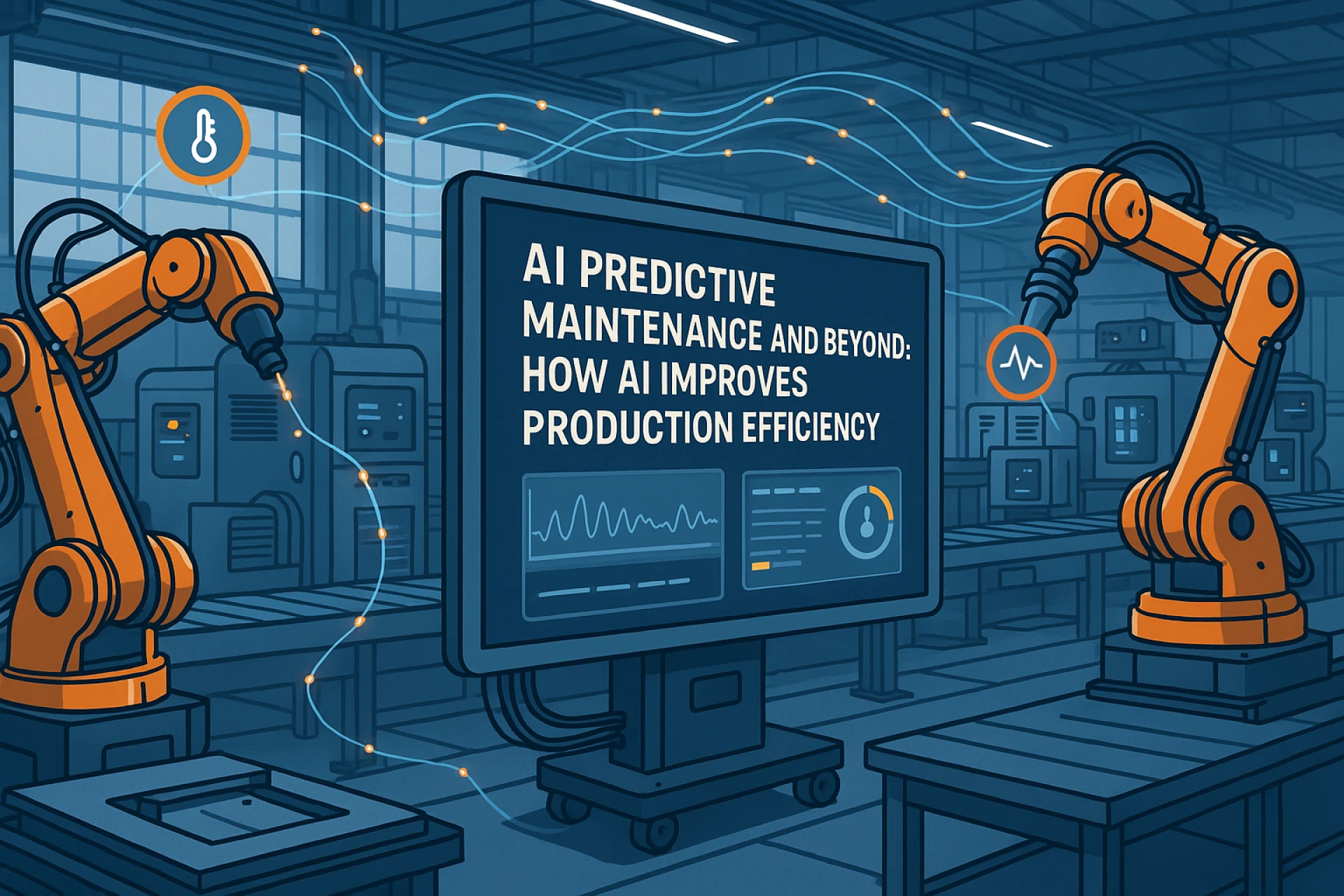

In manufacturing, even a small problem on the floor can slow down the entire process. A single machine breakdown or delay can affect output, delivery, and cost. For years, teams have relied on scheduled maintenance and manual inspections to prevent these issues. Still, many factories face unexpected downtime and high repair expenses.
That is why predictive maintenance in manufacturing is becoming more important than ever. With artificial intelligence, factories can track equipment health in real time and spot early signs of failure. AI studies data from sensors, vibration levels, and temperature readings to help maintenance teams act before a breakdown occurs.
But this is only one part of the story. AI is also improving how factories plan production, manage energy, and maintain quality. By using data to make faster and smarter decisions, manufacturers are running more efficiently and with less waste.
Today, companies that invest in AI for production efficiency are seeing fewer interruptions, better output, and stronger cost control. In the next section, we will explore why predictive maintenance plays such an important role in modern manufacturing and how it is changing day-to-day operations.
Why Predictive Maintenance Matters in Modern Manufacturing
Every manufacturing sector depends on machines that run smoothly and on time. When one part fails, it can delay production, waste material, and increase costs. Traditional maintenance methods, such as fixed schedules or manual inspections, often miss early warning signs. This leads to repairs that come too late and unexpected breakdowns that stop the entire line.
Predictive maintenance in manufacturing changes how maintenance teams work. Instead of reacting to failures, AI systems help them prevent problems before they happen. Sensors collect data on temperature, vibration, pressure, and performance. This data is analyzed by AI models that identify unusual patterns and predict when a part might fail.
By knowing what needs attention and when, manufacturers can plan maintenance without interrupting production. This means fewer shutdowns, lower repair costs, and longer equipment life. It also improves worker safety because issues are fixed early, not during a crisis.
Many companies are already seeing results. Studies from McKinsey and Deloitte show that predictive maintenance can reduce downtime by up to 50 percent and extend asset life by nearly 20 percent. These savings quickly add up, especially in high-volume industries like automotive, electronics, and consumer goods.
Predictive maintenance is no longer just a cost-saving tool. It has become a key part of production strategy. In the next section, we will look beyond maintenance to understand how AI is improving overall production efficiency across the factory floor.
Beyond Maintenance: How AI Improves Production Efficiency
Predictive maintenance is only the starting point. Artificial intelligence is now improving every part of the production process. It helps manufacturers see what is happening on the floor in real time and make small adjustments that lead to big improvements.
1. Smarter Production Planning
AI tools study past orders, inventory levels, and machine performance to plan production more accurately. They suggest the best order schedule and help balance workloads so that no equipment stays idle. This reduces waste and improves delivery timelines.
2. Better Quality Control
AI-powered vision systems can check hundreds of products in seconds. They spot defects that humans might miss and make it easier to maintain the same quality across every batch. This leads to fewer rejects and higher customer satisfaction.
3. Energy and Resource Management
AI helps factories use power and raw materials more efficiently. It tracks energy use across machines and suggests ways to lower consumption. Even small reductions in energy use can create big savings over time.
4. Real-Time Decision Making
When machines, sensors, and software share live data, production teams can act faster. AI analyzes this data and recommends what to do next — whether to adjust speed, reroute a process, or stop a machine for maintenance. This kind of quick insight helps factories avoid delays and meet production goals.
By connecting all these areas, AI in manufacturing turns production into a smooth, data-driven process. It removes guesswork, improves consistency, and helps companies do more with the same resources.
In the next section, we will see how AI predictive models work across production systems and how they help manufacturers stay one step ahead.
How AI Predictive Models Work Across Production Systems
Behind every smart factory is a continuous flow of data. Machines, sensors, and control systems record information every second - from temperature and vibration to speed and output quality. In the past, most of this data went unused. Now, artificial intelligence makes it possible to turn that data into clear and useful insights.
AI predictive models learn how equipment behaves under normal conditions. They study months or even years of machine data to understand what patterns lead to a problem. When new data starts to look unusual, the AI system sends an alert before the issue causes a breakdown. This gives engineers time to check and fix it early.
The process is simple in concept but powerful in impact. AI tools gather data from sensors, analyze it in real time, and compare it with past trends. Machine learning models then identify changes that suggest a fault may occur. This is how predictive maintenance helps manufacturers avoid costly downtime and keep production moving smoothly.
According to studies shared by Kanerika and LeewayHertz, AI-based monitoring systems can reduce unplanned maintenance by more than 40 percent. They also extend the life of key equipment and improve energy efficiency across the production floor.
Modern factories are now combining these predictive models with automation systems and cloud platforms. This integration allows AI to do more than just predict problems — it helps optimize entire production workflows. From scheduling repairs to adjusting machine settings, AI keeps every part of the operation working at its best.
Benefits of AI in Production Efficiency
Artificial intelligence is helping manufacturers improve performance at every level of production. It not only prevents equipment failures but also helps factories plan better, work faster, and reduce waste. Here are some of the key benefits that make AI a valuable part of modern manufacturing.
1. Less Downtime and Fewer Breakdowns
With predictive maintenance, AI tracks machine health in real time and gives early warnings when a fault is likely to occur. This allows teams to act before a breakdown happens. As a result, factories can run longer without unplanned stops and maintain higher output levels.
2. Improved Product Quality
AI-powered vision systems and sensors check product quality throughout the production process. They identify small defects, measure consistency, and help maintain high standards. Fewer errors mean less rework and lower production costs.
3. Faster Decision Making
AI helps production teams make quick and confident decisions. It provides real-time updates on performance, inventory, and energy use. When problems appear, the system suggests practical steps to fix them immediately.
4. Better Resource and Energy Management
Factories that use AI can track energy consumption across machines and departments. The data shows where power is being wasted and how it can be reduced. Even small efficiency gains can lead to significant cost savings over time.
5. Higher Productivity and Cost Savings
AI simplifies routine tasks like scheduling, material tracking, and maintenance planning. It helps workers focus on more important jobs while keeping the production flow smooth and balanced. Over time, this leads to better productivity and lower overall costs.
Reports from Deloitte and World Economic Forum show that AI-led factories can improve production efficiency by up to 20 percent. These improvements not only boost profit margins but also support sustainability by reducing waste and energy use.
Challenges and Responsible AI Adoption
While artificial intelligence is helping factories work smarter, many manufacturers still face challenges when adopting it. Some of these challenges come from technology, and others come from people and processes.
1. Data Quality and Integration
AI depends on data, but many factories still use old machines that cannot easily share information. When data from different systems does not match, the results can be inaccurate. To get the best outcome, companies must connect their machines, sensors, and software so that AI can read the right data in real time.
2. Skills and Training
Using AI in production requires a mix of technical and operational knowledge. Workers need training to understand how AI tools work and how to act on the insights they provide. Many manufacturers are now creating programs to upskill their teams and build confidence in using new technology.
3. Cost and Implementation Time
Setting up AI systems can take time and investment. Smaller manufacturers often find it difficult to start because of limited budgets or lack of technical support. Starting with smaller projects and scaling gradually is a good way to reduce risk and gain quick results.
4. Responsible and Secure AI
AI must be used responsibly. This means making sure that decisions made by AI are transparent, fair, and safe. Data privacy, cybersecurity, and clear rules on how data is used are also important. Following global standards from organizations like ISO and IEEE helps manufacturers build trust and reliability.
Responsible AI in manufacturing not only improves performance but also builds a sustainable future. It ensures that technology helps people rather than replacing them. When human knowledge and AI work together, production becomes more efficient and more ethical at the same time.
Looking Ahead – The Future of AI-Enabled Production
Artificial intelligence is changing how factories plan, produce, and deliver products. The next stage of this transformation is moving from predictive maintenance to fully connected and intelligent operations. In the future, machines will not only predict problems but also correct them automatically.
AI will help production systems manage themselves. Smart machines will learn from each other, share performance data, and adjust production without waiting for human input. This will reduce downtime and improve the use of every resource on the floor.
Generative AI will also play a role in guiding maintenance teams, designing new workflows, and creating detailed reports in seconds. With the help of real-time analytics and automation, factories will reach a stage where they can plan, test, and execute changes almost instantly.
Many global manufacturers are already testing this vision through pilot projects and digital twins. As McKinsey notes in its latest research, companies that invest early in AI are likely to see up to 30 percent improvement in productivity and a sharp drop in operational costs.
The future of AI in manufacturing is not about replacing people. It is about helping them make better decisions, respond faster, and work with greater confidence. The factories that combine human skill with intelligent technology will lead the next wave of industrial growth.
Conclusion – Building a Smarter and More Efficient Future
Predictive maintenance in manufacturing has become one of the most effective ways to keep machines running and reduce downtime. By using AI to study equipment data, factories can now plan maintenance with precision and avoid costly interruptions. But the real value of AI goes beyond maintenance.
Artificial intelligence helps manufacturers improve every part of production. It supports better planning, quality control, and energy management. It also gives teams real-time insight so they can make quick and confident decisions. Each small improvement adds up to stronger production efficiency and higher profits.
AI is not replacing people. It is giving them better tools to do their jobs. Workers can focus on solving problems, improving processes, and finding new ideas instead of spending time on manual checks or repetitive tasks.
The companies that start adopting AI today will build the strongest foundation for the future. By combining technology with human skill, they can create production systems that are faster, safer, and more sustainable.






















Sign in to leave a comment.