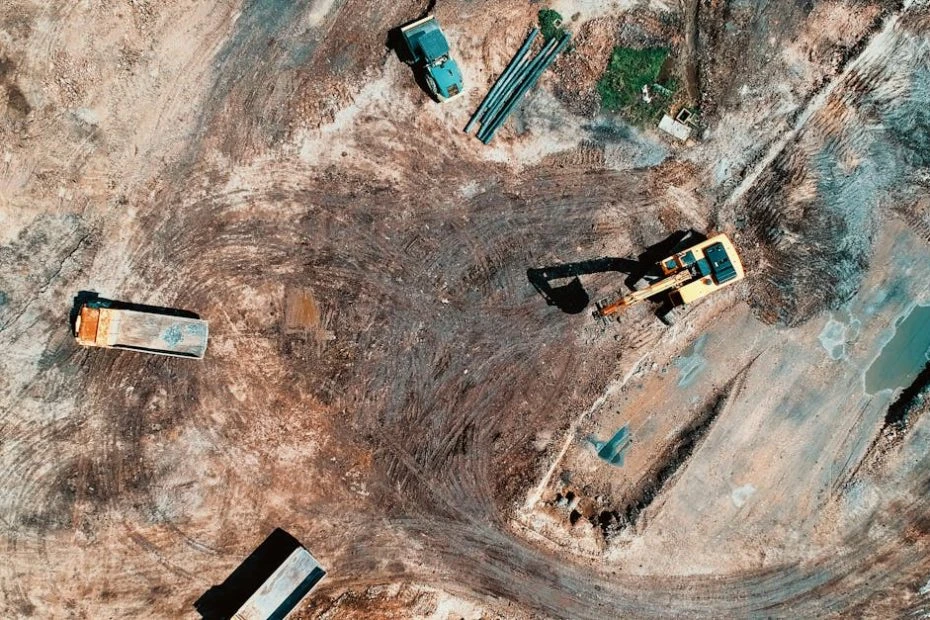

Most people picture construction as cranes and scaffolding going up. But before a single brick gets laid, the land itself needs serious preparation. Raw plots are rarely flat, stable, or ready for foundations. Trees need clearing, soil needs moving, and the ground needs shaping to match engineering plans. This early phase is where the real heavy lifting happens.
Site preparation is the stage that determines whether a building project runs smoothly or gets bogged down in delays. Poor ground conditions can crack foundations, shift retaining walls, and cause drainage failures years after a building is finished. Getting it right the first time requires experienced bulk earthworks contractors who understand soil, slopes, and load-bearing requirements.
Clearing the Site
The first step on any undeveloped plot is clearing. This means removing vegetation, old structures, tree stumps, rocks, and any other obstructions. On agricultural land being converted to residential or commercial use, clearing can take days or weeks depending on the size of the property.
Heavy machinery handles most of this work. Excavators pull out stumps and boulders. Bulldozers push aside topsoil and debris. The cleared material is either stockpiled for later use or removed from the site entirely. Earth movers are essential during this phase, as the volume of material that needs to shift is often far more than people expect.
Understanding Cut and Fill
Most building sites are not naturally level. Engineers design a grading plan that specifies where soil needs to be removed (cut) and where it needs to be added (fill). The goal is to create a flat, stable platform for the building while managing water runoff.
Cut and fill is a balancing act. Ideally, the amount of soil cut from high areas matches what is needed to fill low areas, so nothing leaves the site. When the volumes do not balance, additional fill material must be imported, or excess soil must be hauled away. Earthmoving companies calculate these volumes carefully to minimise unnecessary transport costs.
Soil Testing and Ground Conditions
Before any digging begins, geotechnical engineers test the soil. Boreholes are drilled to determine what lies beneath the surface. Clay, sand, rock, and mixed soils all behave differently under load. The results of these tests dictate foundation design, drainage requirements, and compaction methods.
Problem soils can derail a project. Expansive clay swells when wet and shrinks when dry, causing movement that cracks foundations. Sandy soil may not compact well enough to support heavy structures. When earth movers near me are hired for a project, the soil report guides their approach to excavation and compaction.
Excavation for Foundations and Services
Once the site is graded, excavation begins for foundations, underground services, and stormwater systems. Trenches are dug for water pipes, sewer lines, and electrical conduits. Deeper excavations create basements, lift pits, or underground parking areas.
This phase requires precision. Depths and widths must match the engineer’s specifications exactly. Over-excavation wastes time and material, while under-excavation means rework. Experienced earth moving contractors near me operate within tight tolerances, using GPS-guided equipment on larger projects to maintain accuracy across the site.
Compaction: The Invisible Foundation
Compaction is one of the most important steps in site preparation, yet it is invisible once complete. Every layer of fill material must be compacted to a specified density before the next layer is added. Without proper compaction, the ground settles unevenly over time, and structures built on top of it shift and crack.
Different soils compact differently. Granular soils respond well to vibrating rollers, while cohesive clays need sheepsfoot rollers that knead the material. Each layer is tested with a nuclear density gauge or sand replacement test to confirm it meets the required density. Earthmoving companies that handle compaction know which methods work for which soil types and follow strict testing protocols.
Stormwater and Drainage Management
Water is the enemy of construction. If a site does not drain properly, water pools against foundations, saturates fill material, and erodes slopes. Stormwater management is designed into the site from the beginning, with channels, pipes, and retention areas that control where water goes during and after rain.
During earthworks, temporary drainage measures keep the working area dry. Silt fences prevent runoff from carrying soil into neighbouring properties or waterways. Permanent drainage infrastructure, including underground pipes and surface channels, is installed before the building phase begins. Bulk earthworks contractors coordinate closely with civil engineers to ensure drainage is built into the grading plan.
Access Roads and Haul Routes
Large development sites need internal roads for trucks and machinery to move around. These haul routes are built during the earthworks phase using compacted gravel or crushed material. They connect the site entrance to working areas, stockpiles, and future building pads.
Without proper haul routes, wet weather turns a site into a mud pit. Trucks get stuck, schedules slip, and productivity drops. Temporary roads built early in the project keep everything moving regardless of weather conditions. Earthmoving companies near me typically include haul road construction as part of their site establishment scope.
Retaining Walls and Slope Stabilisation
When a site has significant level changes, retaining walls hold back soil on the higher side. These structures must be designed to resist the lateral pressure of the earth behind them, which can be substantial. Block walls, concrete walls, and gabion baskets are all common solutions depending on the height and loading conditions.
Slope stabilisation is necessary where natural gradients are too steep for the planned development. Terracing, soil nails, and geotextile reinforcement help prevent landslides and erosion during and after construction. Proper slope management is part of the earthworks scope and requires careful coordination with the structural engineer.
How Long Site Preparation Takes
The duration of site preparation depends on the size of the plot, the soil conditions, and the scope of the grading plan. A residential plot might take a week or two. A commercial development or housing estate could take several months of continuous earthworks before building can start.
Weather plays a significant role. Heavy rain stops earthworks entirely because wet soil cannot be compacted properly and machinery damages the working surface. Projects scheduled during the dry season progress faster and encounter fewer delays. Planning the earthworks phase around seasonal weather patterns is a practical step that saves time and money.
Setting Up for Success
What happens before construction starts is just as important as the building itself. A well-prepared site drains properly, supports its foundations, and provides stable platforms for every structure that follows. Rushing through site preparation or cutting corners on compaction creates problems that are expensive and difficult to fix later.
For any development project, whether it is a single house, a shopping centre, or an industrial park, thorough land preparation is the foundation that everything else depends on. Working with qualified contractors who understand soil, water, and grading ensures the project starts on solid ground in every sense.
































Sign in to leave a comment.