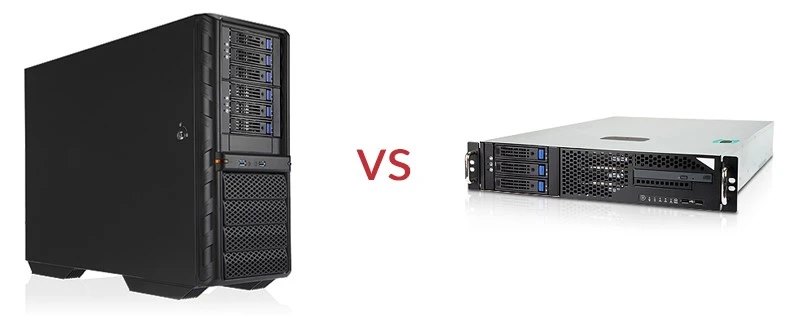

You want your tech to run smoothly and strongly every day. You also want a setup that suits your room, budget, and future plans. Many people look at rack and tower servers and feel uncertain.
- Both run apps, files, and backups with steady power.
- Both support users and devices across a school or a small office.
Your goal stays simple. You want the style that makes work easy and growth painless. We will guide you with clear, concise language that connects one idea to the next. You will see how size, noise, and cooling shape the choice.
Stay tuned with us, and you will know what to buy and why.
Difference 1. Using Space And Layout To Shape Daily Comfort
Space matters in any busy room. A tower server uses more floor area for each unit. You place it under a table or on a shelf near the users. This works well for one or two machines in a quiet room.
A rack server saves floor area with a tall stack. You mount units in a single frame that sits tight against a wall. This layout keeps cables neat and paths clear for people who move around.
Tips to plan your layout with care
- Measure floor depth and door width before you buy any rack gear.
- Leave space at the back of the frame so air and hands can move.
- Place towers where dust stays low and where air can pass with ease.
Difference 2. Managing Cooling And Noise To Protect Focus And Health
Heat can hurt parts and slow work during long days. A rack server uses strong fans that pull air through the front and push it out the back. The rack also allows shared airflow with clear paths. This setup needs a room that handles warm air with skill. The fans can sound loud during heavy jobs.
A tower server uses larger fans that spin slower in most cases. The sound level stays mild in a normal office. The airflow stays fine for one or two units in a small space.
Ways to keep the air fresh and sound levels friendly
- Add front filters on racks and clean them on a set schedule.
- Keep towers off the floor to avoid dust and hair clogging vents.
- Use doors with seals for racks inside a shared office room.
Difference 3. Scaling And Upgrading To Guide Future Growth
Growth happens in every strong team. A rack server allows you to add another unit to the frame when new needs appear. You also share power strips and network paths across the stack.
This keeps cables short and tidy and saves time. A tower server scales well for a little while. You add drives and memory inside the case, and you're fine for small jumps.
Signs that point to a rack choice
- You plan to add new apps for many users within a year.
- You expect heavy data growth from video, design, or research.
- You want high uptime with spare nodes ready on the shelf.
Difference 4. Accessing And Managing To Save Time Daily
Tech work takes time and care. A rack server gives easy access from the front for drives and from the rear for ports. Many racks use slide rails that let a unit pull out like a drawer. You swap parts fast, and you keep downtime short.
A tower server opens like a desktop PC. You remove a side panel and reach parts with simple tools. This feels friendly for small teams that fix one box at a time. Remote tools exist for both styles and help you control power and view screens from your desk.
Make access smooth with these simple steps
- Label each rack unit and each cable with large tags and clear names.
- Keep a rolling cart with spare fans and spare drives near the rack.
- Store a side panel key for towers in one visible spot for the whole team.
Difference 5. Balancing Cost And Power To Protect The Budget
Money matters across the full life of a server. A rack server often costs more at the start since you buy the frame, rails, and power strips. Large fans and dense parts can draw more power during heavy work. The value grows as you stack more units and share the same gear.
A tower server starts with a lower bill for a single unit. Power draw stays modest for light tasks. Costs can rise later if you add many towers and need new tables, longer cables, and more cooling in scattered rooms.
Budget moves that protect long-term value
- Map the total cost for three years, including power, cooling, and parts.
- Choose models with high-efficiency power supplies to cut waste.
- Track usage and retire idle boxes so power bills stay lean.
Who Should Pick What Simple Matches For Real Teams
You can match needs to a clear choice by reading your daily rhythm. A small office with basic file share and a light database can start with one tower. The team gains quick wins and the room stays calm.
A school lab with growth plans and many apps across classes should plan a rack. The stack will scale with steady steps and the layout will stay neat. A creative studio that edits video and needs fast storage can use a small rack with strong drives and clear airflow.
Quick checklist you can use today
- Your team needs one server now and no big growth this year. Pick a tower.
- Your team expects steady growth across the next two years. Pick a rack plan.
- Your room is quiet and space is tight. Pick a rack with a door and seals
- Your budget is small and tasks are light. Pick a tower that you can upgrade.
Final Thoughts That Guide A Smart Choice
You started with questions about shape and sound and growth. You now know how a rack server saves space and scales with ease inside a shared frame. You also know how a tower server fits a small team and keeps sound low in a normal office.
Look at the space first, check the airflow and then weigh the growth. Add cost for the full life and not just the first day. Choose the path that keeps work smooth and minds calm.
Pick the style that helps your team move fast without stress. When the server fits the room and the plan, your days stay simple and your goals move forward with strength.






























Sign in to leave a comment.