
Marketing a property before it is built has always required a certain sleight of hand. You are asking buyers to make one of the largest financial decisions of their lives based on something that does not yet exist. The renders help. The location visits help. But there has always been a fundamental gap between what marketing can communicate and what buyers need to feel confident.
The most innovative property marketing today is not happening in advertising. It is happening in experience centres — specifically in the ones built on platforms that can recreate an unbuilt project with enough fidelity that buyers forget they are looking at visualization rather than reality.
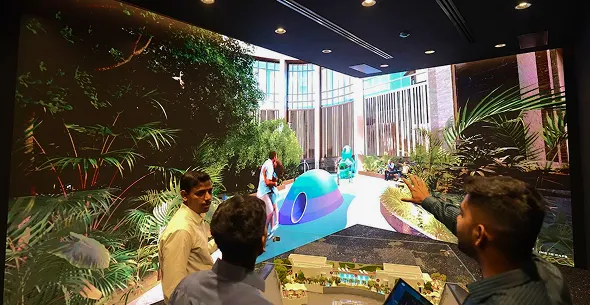
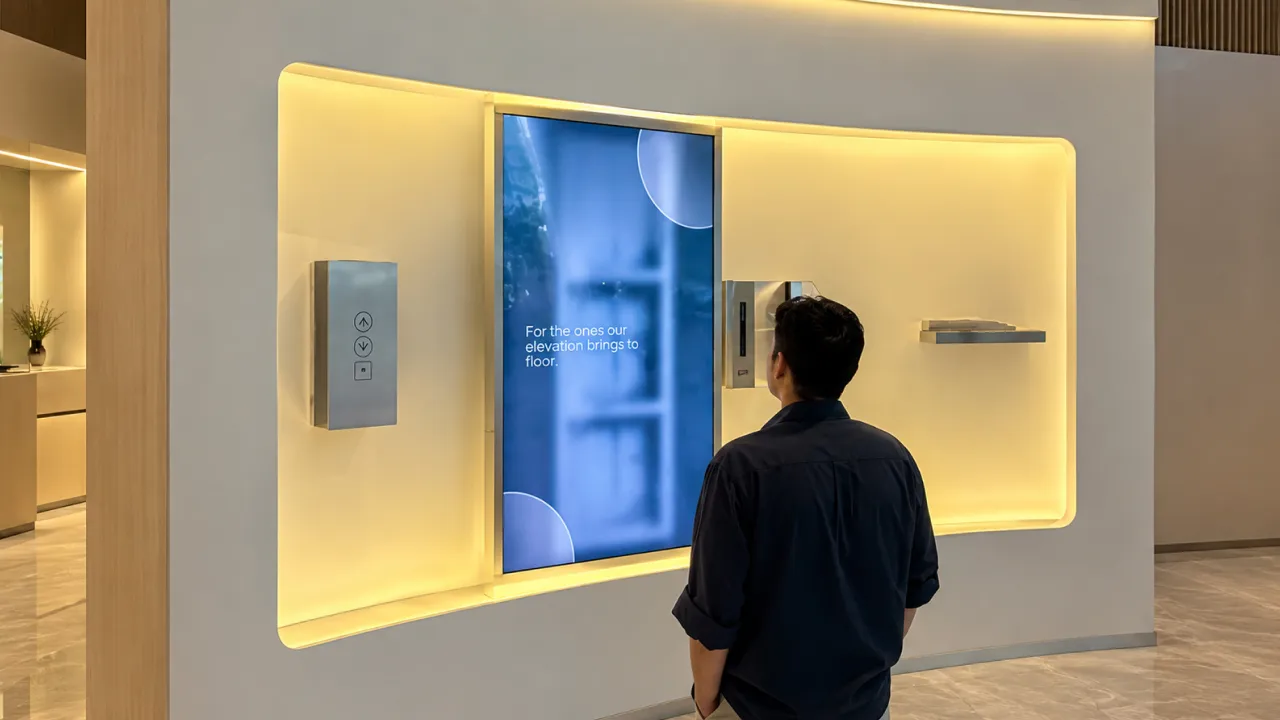
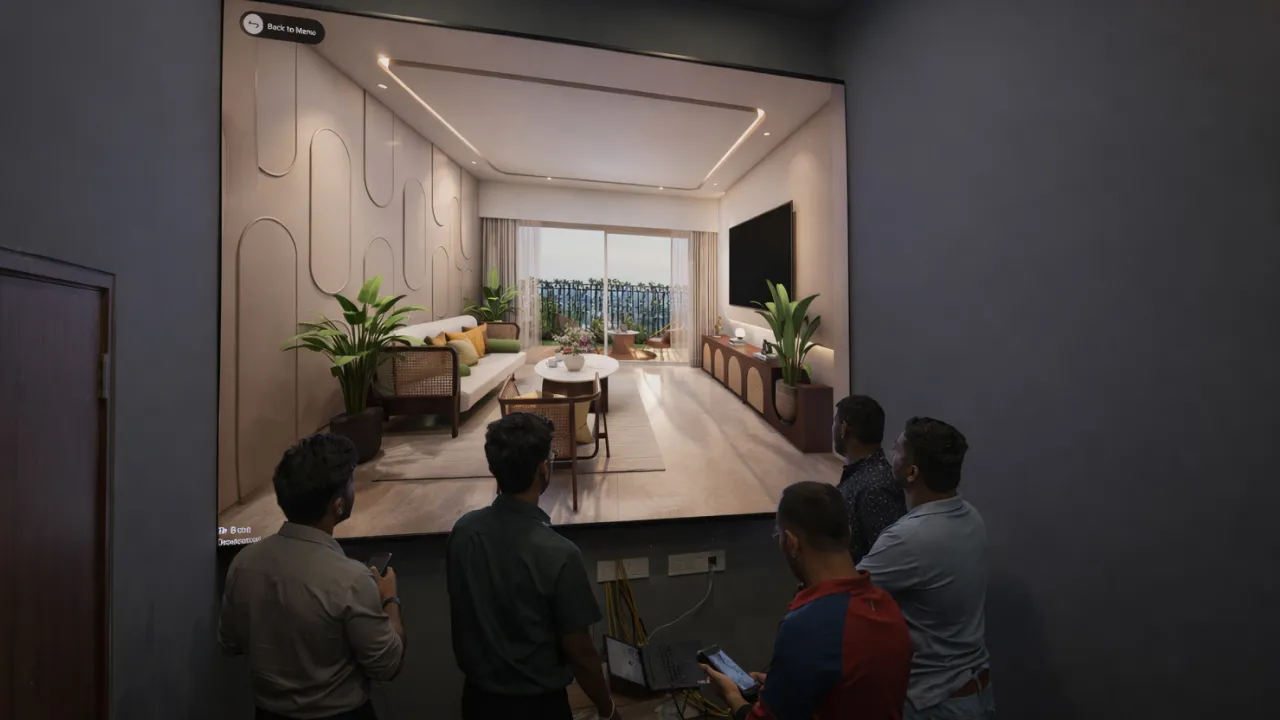
A smart technology experience center is, at its core, a marketing environment that eliminates the need for imagination. Everything the buyer needs to evaluate the project is present, experiential, and immediate.
Why Traditional Property Marketing Has a Ceiling
Property marketing has become sophisticated in many ways. Digital advertising, social media campaigns, influencer partnerships, developer brand events — the channels through which buyers are reached and warmed up have multiplied significantly in the last decade.
But the conversion still happens in person. A buyer might follow a developer's Instagram for months and feel positively disposed toward a project. But the final commitment comes in a room, in a conversation, after an experience that makes everything concrete.
This is where traditional marketing reaches its ceiling. The campaign can get the buyer to the room. What happens in the room depends on something that advertising budgets do not directly control: the quality of the experience.
L&T Crestoria: Marketing a Future Vision
L&T Crestoria in Panvel was positioned as a "life beyond Mumbai" destination — a concept that required buyers to believe in both the project and the location's future. Panvel is a rapidly developing corridor, but at the time of Crestoria's launch, that development trajectory was something buyers had to be convinced of, not something they could observe with their own eyes.
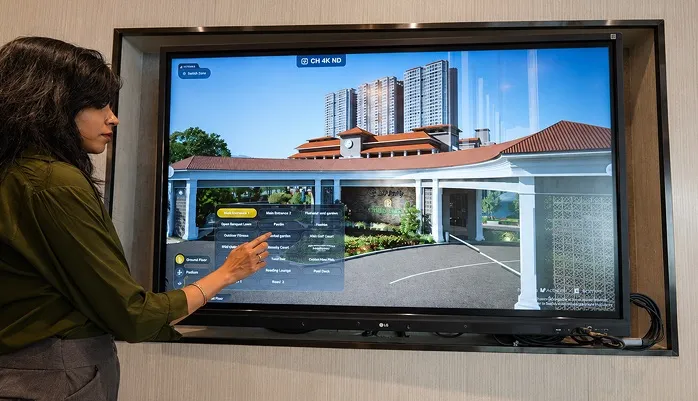
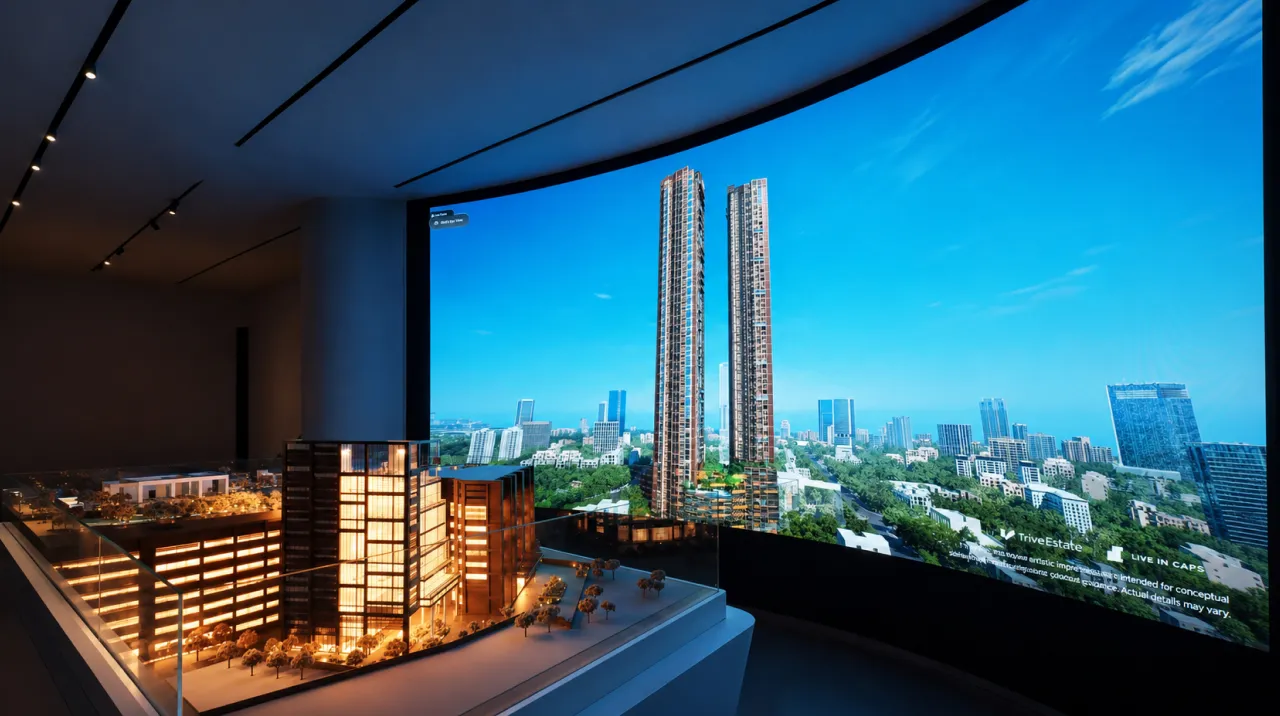
V-Estate's experience centre made the marketing case in a way that no advertising campaign could. The virtual experience centre did not just show the project. It showed the ecosystem the project would be part of.
The vicinity mapping system — 31 interactive touchpoints across a 10+ km radius — mapped every element of lifestyle and connectivity infrastructure around Crestoria: schools, hospitals, retail destinations, transit routes, commercial developments. Buyers could explore this ecosystem in real time, understand how it connected to the estate, and form a clear picture of what daily life in this location would actually feel like in five years.
This is innovative property marketing in its most functional form. Not persuasion through messaging, but conviction through evidence.
The Marketing Value of Photorealistic Precision
One of the consistent challenges in property marketing is the credibility gap between "artist's impression" and reality. Buyers have seen enough renders to know that rendered images are optimistic. The light is always perfect. The sky is always blue. The amenities always look pristine and empty.
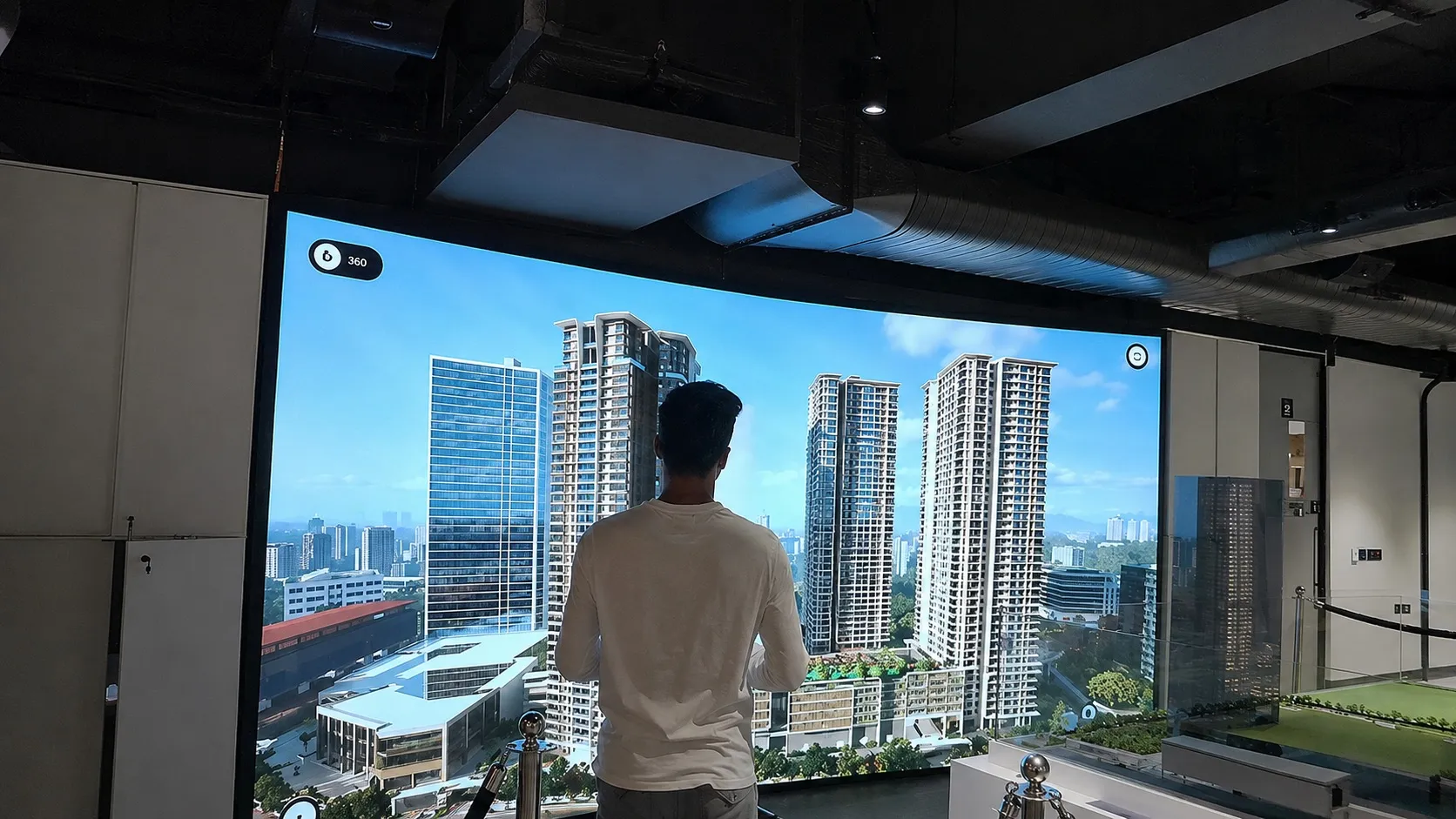
V-Estate's photorealistic rendering — built on Unreal Engine 5.7 with advanced lighting systems — operates at a different standard. The Crestoria deployment used Megalight system integration and Nanite optimization to render the neo-classical façade, with its carved detailing and ornamental layering, at a fidelity that made it look built rather than imagined.
When buyers can see the difference between the render and a photograph and cannot identify which is which, the credibility gap closes. Marketing becomes evidence.
Innovative Marketing = Marketing That Builds Trust
The most innovative thing a developer can do in property marketing right now is not a new advertising format or a new digital channel. It is building an experience centre so honest — so accurate in its representation of what the buyer will actually get — that the act of showing the project becomes the primary trust-building mechanism.
Buyers who experience V-Estate's 3D solutions for real estate experience at a sales centre are not being shown a best-case scenario. They are being shown an architecturally precise representation of the project, with accurate views, accurate light, accurate scale, and accurate material quality. The marketing claim and the reality are the same thing.
That alignment is, in itself, a profound marketing statement.
Marketing budgets are large. Not all of them earn.
The spend that goes into building a genuinely outstanding experience centre — one that creates buyer conviction from the first visit — has a calculable return in conversion rate improvement, sales cycle compression, and reduced per-booking marketing cost.
V-Estate builds smart technology experience centers that do not just support your marketing. They become the most important part of it.
Talk to the V-Estate team about your next project launch. Let's build something the market will remember.






















Sign in to leave a comment.