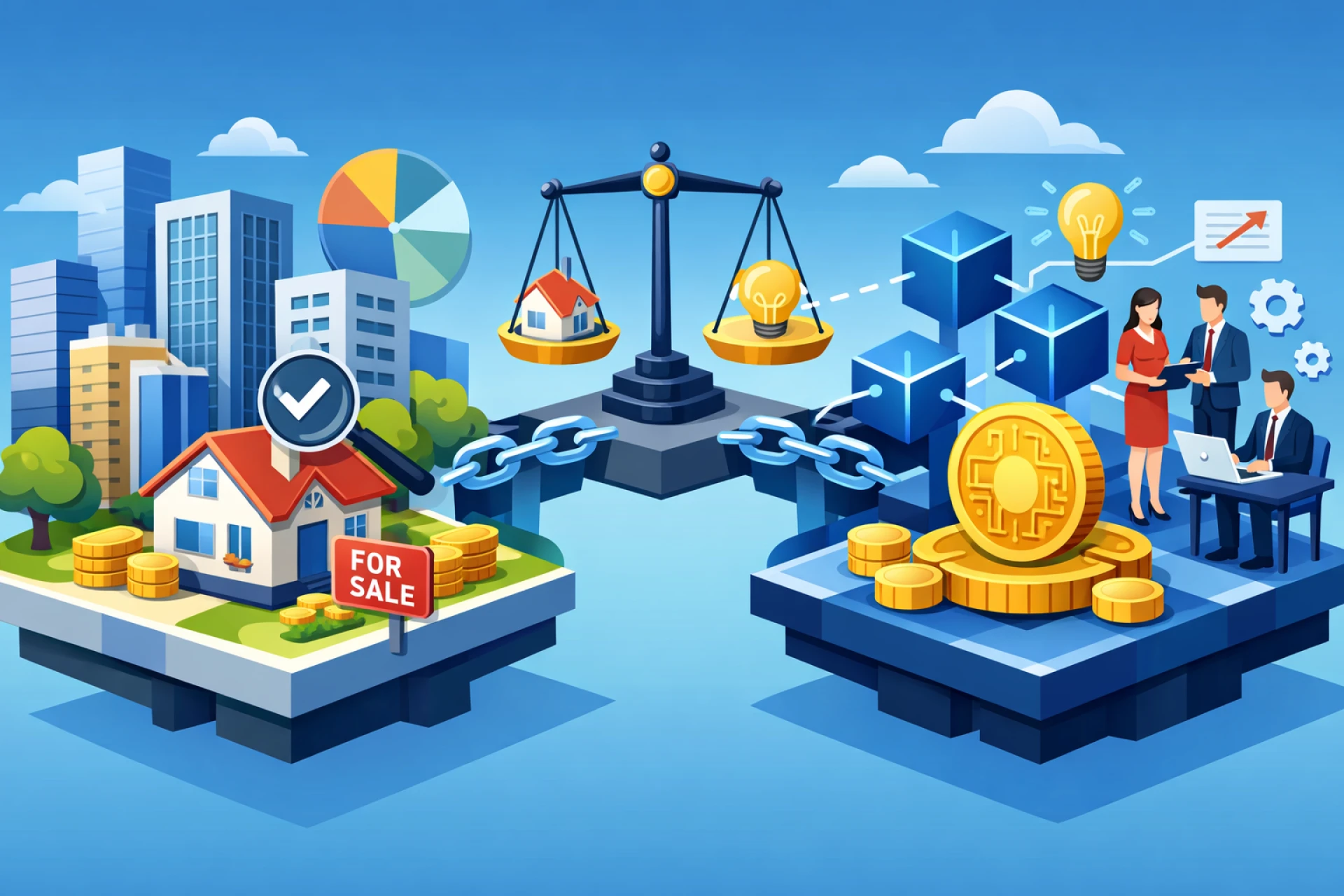

Real estate tokenization is often introduced as a blockchain-first concept, where distributed ledgers act as the foundation for fractional ownership, liquidity, and global participation. While blockchain plays an important role in recording ownership and facilitating transfers, it is only one layer in a much broader system. Many early initiatives in Real Estate Tokenization struggled not because the technology failed, but because other components were overlooked.
The idea that a digital ledger alone can fix long-standing inefficiencies in property markets is incomplete. Real estate involves legal frameworks, financial systems, investor trust, asset management, and operational oversight. Without aligning these layers, even the most technically sound platform may fail to gain traction. This is why any serious approach to Real Estate Tokenization Platform Development must go beyond coding smart contracts and focus on building a fully integrated ecosystem.
Understanding Real Estate Tokenization Beyond Technology
At its simplest level, real estate tokenization converts property ownership into digital tokens that can be traded or held by investors. However, this process involves more than just digitizing assets. It requires a structured approach that connects physical assets, legal ownership rights, and digital representations.
A Real Estate Tokenization company must consider how property rights are defined, how income is distributed, and how disputes are resolved. These are not technical problems but institutional ones. Without proper alignment between digital tokens and real-world legal ownership, token holders may face uncertainty regarding their rights.
Real estate asset tokenization also introduces new expectations from investors. Participants expect clarity on valuation, income streams, and exit options. Meeting these expectations requires a combination of financial modeling, compliance frameworks, and operational transparency, rather than relying solely on blockchain features.
The Role of Legal Infrastructure
Legal frameworks are one of the most important yet underestimated components of real estate tokenization. Property ownership laws vary widely across jurisdictions, and tokenized assets must comply with local regulations. Without proper legal structuring, tokens may not represent enforceable ownership rights.
A Real Estate Tokenization Development company must work closely with legal experts to define how tokens relate to underlying assets. This often involves creating special purpose vehicles, defining shareholder agreements, and aligning with securities regulations. These structures determine how investors can participate and what rights they hold.
Regulatory compliance also affects how tokens can be marketed and traded. In many regions, tokenized real estate is treated as a security, which brings additional requirements such as investor verification and reporting obligations. Real Estate Tokenization Development Services must integrate compliance mechanisms directly into the platform rather than treating them as an afterthought.
Financial Structuring and Investor Economics
Another critical aspect that extends beyond blockchain is financial structuring. Tokenizing a property does not automatically make it attractive to investors. The financial model must be carefully designed to reflect realistic returns, risks, and costs.
A Real Estate Tokenization company must determine how rental income, appreciation, and operational expenses are distributed among token holders. This involves creating clear revenue-sharing models and defining how fees are handled. Investors need predictable cash flows and a clear understanding of how value is generated.
Liquidity is often cited as a benefit of Real Estate Tokenization, but it depends heavily on market participation. Without sufficient demand, tokens may remain illiquid despite being technically tradable. Real Estate Tokenization Services must focus on building active marketplaces and attracting participants to maintain liquidity.
Technology Stack Beyond Blockchain
While blockchain is the foundation for token issuance and transfer, the overall platform requires a broader technology stack. This includes user interfaces, payment gateways, identity verification systems, and data analytics tools.
Real Estate Tokenization Platform Development involves integrating multiple systems to create a functional and user-friendly environment. Investors expect intuitive dashboards, real-time updates, and secure transaction processes. These features are not provided by blockchain alone.
Security is another area that requires attention beyond the ledger. Protecting user accounts, preventing fraud, and managing private keys are critical aspects of platform design. A Real Estate Tokenization Development company must implement robust security measures across all layers of the system.
Asset Management and Operational Oversight
Tokenizing a property does not eliminate the need for ongoing asset management. Properties require maintenance, tenant management, and financial reporting. These operational aspects directly impact the value of the tokenized asset.
Real estate asset tokenization platforms must include mechanisms for managing these activities. This may involve partnerships with property management firms or integrating asset management tools into the platform. Investors need regular updates on property performance, occupancy rates, and maintenance activities.
A Real Estate Tokenization company that neglects operational oversight risks losing investor confidence. Transparent reporting and consistent performance tracking are necessary to maintain trust and long-term participation.
Building Investor Trust and Market Confidence
Trust plays a central role in the success of any financial system, and real estate tokenization is no exception. Investors need confidence that their investments are secure, legally valid, and professionally managed.
Real Estate Tokenization Services must prioritize communication and transparency in operations. This includes providing detailed information about properties, financial performance, and risk factors. Platforms that offer clear and accessible data are more likely to attract and retain investors.
Reputation also matters. A Real Estate Tokenization Development company must establish credibility through partnerships, compliance, and consistent performance. Without trust, even the most sophisticated platform may struggle to gain adoption.
Interoperability and Market Integration
For real estate tokenization to reach wider adoption, platforms must integrate with existing financial systems. This includes connections to banking networks, payment systems, and secondary markets.
Real Estate Tokenization Platform Development should focus on interoperability to allow tokens to be traded across different platforms and markets. This requires standardization and collaboration between industry participants.
Integration with traditional financial systems also helps bridge the gap between digital and conventional investment models. Investors who are familiar with traditional real estate investments may be more willing to participate if the tokenized system aligns with existing practices.
User Experience and Accessibility
User experience is often overlooked in technical discussions, but it plays a significant role in adoption. Complex interfaces and unclear processes can discourage potential investors.
A Real Estate Tokenization company must design platforms that are easy to navigate and understand. This includes simplifying onboarding processes, providing educational resources, and offering responsive customer support.
Accessibility also involves addressing different investor segments. Platforms should accommodate both experienced investors and newcomers by offering different levels of information and guidance. Real Estate Tokenization Development Services should focus on creating inclusive environments that cater to diverse audiences.
Data Transparency and Reporting Standards
Accurate and consistent data reporting is essential for maintaining investor confidence. Token holders need access to reliable information about property performance, financial metrics, and market conditions.
Real estate asset tokenization platforms must establish clear reporting standards. This includes regular updates on income distribution, expenses, and valuation changes. Data should be presented in a format that is easy to understand and verify.
A Real Estate Tokenization Development company must implement systems for collecting and presenting data in a consistent manner. This requires integration with property management systems, financial tools, and external data sources.
Risk Management and Governance
Every investment carries risks, and real estate tokenization introduces new types of risks alongside traditional ones. These include technical vulnerabilities, regulatory changes, and market fluctuations.
Real Estate Tokenization Services must include risk management frameworks that address these challenges. This involves identifying potential risks, implementing mitigation strategies, and communicating these risks to investors.
Governance is another important aspect. Token holders may need a mechanism to participate in decision-making processes, such as property management changes or major financial decisions. Real Estate Tokenization Platform Development should include governance models that balance efficiency with investor participation.
Education and Market Awareness
The concept of real estate tokenization is still relatively new for many investors. Lack of understanding can limit adoption and create misconceptions.
A Real Estate Tokenization company must invest in educational initiatives to inform potential users about how the system works. This includes explaining the benefits, risks, and processes involved in tokenized investments.
Real Estate Tokenization Development Services should also provide resources such as tutorials, webinars, and documentation. Educated investors are more likely to participate and make informed decisions, which contributes to the stability of the market.
Collaboration Across Industries
Real estate tokenization sits at the intersection of multiple industries, including real estate, finance, technology, and law. Success requires collaboration between these sectors.
A Real Estate Tokenization Development company must work with property developers, financial institutions, legal experts, and technology providers. Each of these stakeholders brings expertise that is necessary for building a comprehensive platform.
Collaboration also helps address challenges such as regulatory compliance and market integration. By working together, industry participants can create standards and practices that support the growth of real estate tokenization.
Long-Term Sustainability and Growth
Sustainable growth in real estate tokenization depends on more than initial adoption. Platforms must continuously adapt to changing market conditions, regulatory requirements, and technological developments.
Real Estate Tokenization Platform Development should focus on long-term viability rather than short-term gains. This includes planning for system upgrades, expanding market reach, and maintaining operational efficiency.
A Real Estate Tokenization company that prioritizes sustainability is more likely to build lasting relationships with investors and partners. This approach supports steady growth and reduces the risk of market disruptions.
Conclusion: A Multi-Layered Approach to Success
Real estate tokenization offers significant potential, but its success depends on a holistic approach that goes beyond blockchain technology. Legal frameworks, financial structuring, operational management, and investor trust all play critical roles in shaping the outcome.
Real Estate Tokenization Services must address these components in a coordinated manner to create a functional and reliable ecosystem. Similarly, a Real Estate Tokenization Development company must focus on integrating technology with real-world systems and practices.
Real estate asset tokenization is not just a technical innovation but a structural shift in how property investments are managed and accessed. By addressing the broader requirements of the ecosystem, industry participants can build platforms that meet the expectations of investors and support long-term growth.



Sign in to leave a comment.