

The real estate sector has always been capital-intensive, paperwork-heavy, and slow to adapt to digital change. In 2026, property businesses are under pressure to modernize operations, attract global investors, and reduce operational expenses. One of the most practical ways to achieve this is through White Label Real Estate Tokenization.
Instead of spending years building blockchain infrastructure from scratch, companies are turning to ready-made platforms that allow them to enter the tokenization space with minimal delay and lower investment. A White Label Real Estate Tokenization Platform offers a ready framework that can be branded and deployed without deep technical overhead.
This approach is gaining attention not just among startups, but also among established real estate firms, asset managers, and property developers looking to digitize ownership and expand funding opportunities.
Understanding Real Estate Tokenization in 2026
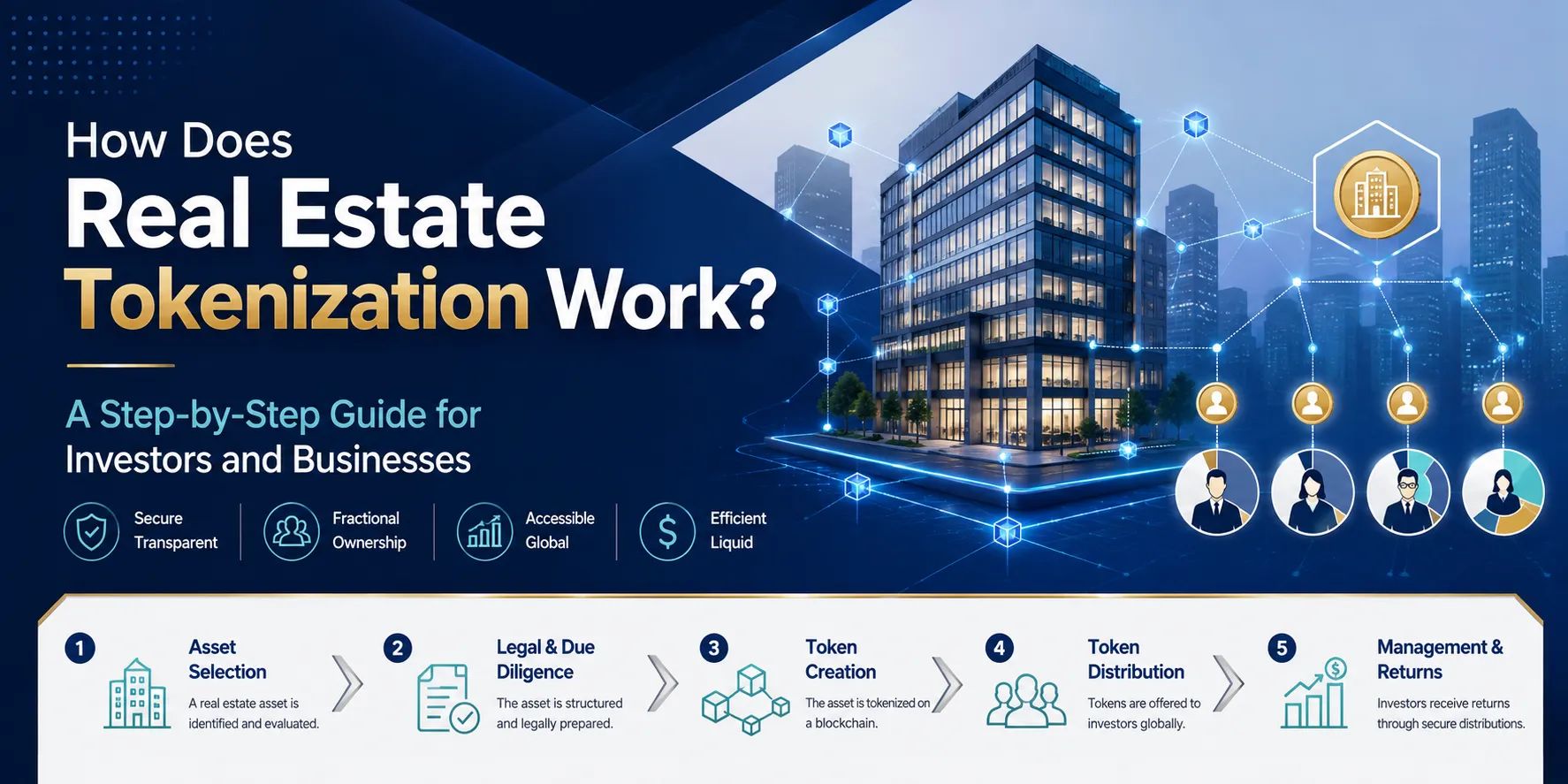
Real estate tokenization refers to converting ownership rights of a property into digital tokens stored on a blockchain network. These tokens represent fractional ownership, allowing multiple investors to own a share of a property.
In 2026, this model has matured beyond experimental stages. Regulatory clarity in several regions, improved investor awareness, and the rise of digital asset platforms have contributed to wider adoption.
Through Real Estate Tokenization, property owners can divide high-value assets into smaller units, making them accessible to a broader investor base. Investors, on the other hand, benefit from lower entry barriers and improved liquidity compared to traditional real estate investments.
However, building such infrastructure independently can be costly and complex. This is where a White Label Tokenization Platform becomes relevant.
What Is a White Label Real Estate Tokenization Platform?
A White Label Real Estate Tokenization Platform is a pre-developed solution that businesses can license, brand, and deploy as their own. It includes all necessary features such as token issuance, investor management, compliance tools, and smart contract integration.
Instead of starting from zero, companies can use White Label Real Estate Tokenization Development services to launch their platform within weeks or months.
This model is similar to using a ready SaaS product but with the flexibility to operate under your own brand identity. It reduces technical risk and removes the need for extensive blockchain expertise.
White Label Real Estate Tokenization Platform Development providers usually offer configurable modules so businesses can adapt workflows based on their requirements.
Why Cost Efficiency Matters in 2026
In 2026, cost control is not just about saving money. It is about survival and competitiveness. Real estate companies are facing rising construction costs, fluctuating demand, and stricter compliance requirements.
Developing a blockchain-based platform from scratch involves expenses such as:
- Hiring blockchain developers
- Security audits
- Smart contract development
- UI and backend engineering
- Legal and compliance integration
- Infrastructure maintenance
These costs can run into millions of dollars and take over a year to complete.
By contrast, a White Label Real Estate Tokenization Platform allows businesses to avoid most of these expenses. The development cost is significantly lower because the base product already exists. Companies only pay for licensing, customization, and deployment.
This makes tokenization accessible even to mid-sized property firms.
Business Benefits for Property Companies
Faster Market Entry
Speed plays a major role in gaining investor attention. With White Label Real Estate Tokenization Services, companies can launch their platform quickly and start listing properties without long delays.
Lower Technical Complexity
Managing blockchain infrastructure requires specialized knowledge. A White Label Tokenization Platform reduces this burden by providing a ready backend with user-friendly interfaces.
Global Investment Access
Tokenized properties can attract investors from different countries. This widens the funding pool and reduces dependence on local markets.
Fractional Ownership Opportunities
Property businesses can offer shares of high-value assets to multiple investors. This improves capital flow and asset utilization.
Improved Liquidity
Tokenization introduces the possibility of secondary markets where investors can trade their tokens. This is not easily achievable in traditional real estate.
Components of a White Label Tokenization Platform
A typical White Label Real Estate Tokenization Platform Development includes several integrated modules:
Token Issuance System
Allows property owners to create digital tokens representing ownership shares.
Investor Dashboard
Provides investors with access to their holdings, returns, and transaction history.
Compliance Management
Includes KYC and AML verification tools to meet regulatory requirements.
Smart Contract Integration
Automates processes such as dividend distribution and ownership transfer.
Payment Gateway Integration
Supports fiat and cryptocurrency transactions.
Admin Panel
Gives platform operators control over listings, users, and transactions.
Each of these components works together to create a functional ecosystem for property tokenization.
Methods to Implement a White Label Real Estate Tokenization Platform
Method 1: Define Business Objectives
Start by identifying the type of properties you want to tokenize. Residential, commercial, or mixed-use assets may require different approaches.
Clarify your target audience. Some platforms focus on retail investors, while others cater to institutional participants.
Method 2: Choose the Right Technology Partner
Selecting a provider for White Label Real Estate Tokenization Development is a critical step. Evaluate their experience, platform features, and compliance capabilities.
Look for solutions that support multiple blockchain networks and offer flexibility in configuration.
Method 3: Platform Customization
Even though the platform is pre-developed, it needs to reflect your brand identity. This includes UI design, user workflows, and business logic.
Customization also involves setting token rules, investment limits, and profit distribution models.
Method 4: Legal and Compliance Setup
Work with legal experts to ensure your platform meets local and international regulations. Tokenized real estate often falls under securities laws, which require proper structuring.
Compliance integration is usually part of White Label Real Estate Tokenization Services, but it still requires jurisdiction-specific adjustments.
Method 5: Property Onboarding
Select properties for tokenization and conduct due diligence. This includes valuation, legal verification, and documentation.
Once verified, the asset can be digitized and listed on the platform.
Method 6: Investor Onboarding
Create a smooth onboarding process for investors. This includes registration, identity verification, and wallet setup.
A simple user experience encourages higher participation.
Method 7: Launch and Marketing
After testing the platform, proceed with launch. Marketing strategies may include digital campaigns, partnerships, and investor outreach programs.
Clear communication about investment opportunities is important for building trust.
Cost Breakdown in 2026
The cost of implementing a White Label Real Estate Tokenization Platform depends on several factors:
Licensing Fees
Charges for using the base platform.
Customization Costs
Expenses related to branding, UI changes, and feature adjustments.
Compliance Integration
Costs associated with legal frameworks and verification systems.
Maintenance and Support
Ongoing expenses for updates and technical support.
Compared to full-scale development, these costs are significantly lower. Businesses can allocate saved resources toward marketing and property acquisition.
Challenges and Considerations
While White Label Real Estate Tokenization offers many advantages, there are certain challenges:
Regulatory Uncertainty
Different countries have varying rules for digital assets. Companies must stay updated with changing regulations.
Investor Awareness
Not all investors are familiar with tokenized real estate. Education and communication are necessary.
Platform Security
Security remains a major concern. Regular audits and updates are required to protect user data and assets.
Market Competition
As more companies adopt tokenization, competition increases. Differentiation becomes important.
Use Cases in 2026
Residential Property Platforms
Companies tokenize apartments and villas, allowing smaller investors to participate.
Commercial Real Estate
Office spaces and retail properties are divided into digital shares for institutional and retail investors.
Real Estate Investment Firms
Firms use White Label Tokenization Platform solutions to manage portfolios and attract global investors.
Crowdfunding Platforms
Tokenization is used to raise funds for new developments.
Future Outlook
The adoption of White Label Real Estate Tokenization Platform Development is expected to grow further in 2026 and beyond. As regulations become more defined and investor confidence increases, tokenized assets may become a standard investment option.
Technology providers are also improving their offerings by adding features such as AI-based analytics, automated compliance checks, and multi-chain compatibility.
Property businesses that adopt tokenization early can position themselves better in a competitive market.
Conclusion
White Label Real Estate Tokenization is no longer a niche concept. In 2026, it stands as a practical approach for property businesses looking to reduce costs, expand investor reach, and modernize operations.
A White Label Real Estate Tokenization Platform provides a ready pathway to enter the digital asset space without the burden of full-scale development. It offers a balance between efficiency and functionality, making it suitable for both new entrants and established firms.
By focusing on proper implementation, compliance, and user experience, businesses can use this approach to open new revenue channels and improve asset utilization. As the real estate industry continues to evolve, tokenization is likely to play a significant role in shaping investment models for years to come.




























Sign in to leave a comment.