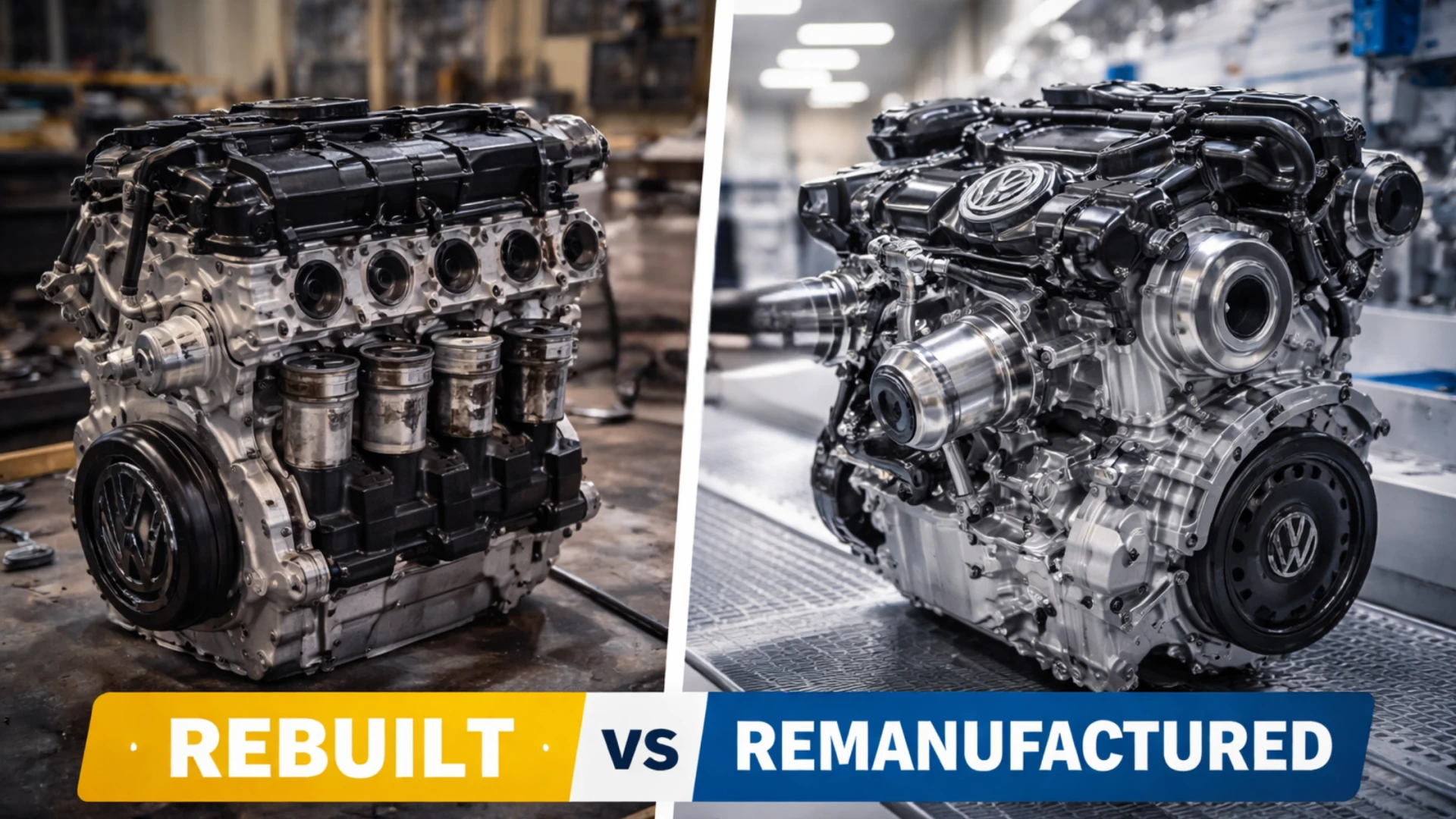

Volkswagen cars are famous for being well-built, driving smoothly, and having strong engines. Still, just like any machine, even a well-kept engine will eventually wear down after years on the road. When a major engine problem occurs, replacing the entire vehicle isn’t always necessary. Many drivers choose automotive repair solutions such as rebuilt or remanufactured engines to bring the engine back to proper working condition.
Understanding how each option works can help Volkswagen owners decide which one makes the most sense for their vehicle, driving needs, and consistent performance over time.
Understanding Volkswagen Engine Replacement Options
When your Volkswagen engine starts having big problems like using too much oil, making knocking noises, getting too hot, or losing power, fixing small parts might not work anymore, in these cases, the best move is to either get a different engine or completely fix the internal parts.
Modern Volkswagen engines in models such as the Jetta, Golf, and Tiguan are complex systems that rely on precise internal components working together. If big parts like the pistons or internal walls get damaged, fixing or swapping out the engine can get your car running like new again. It’s a great way to make your vehicle dependable once more.
For many drivers, the choice often comes down to two options: rebuilding the existing engine or installing a remanufactured one.
What Is a Rebuilt Volkswagen Engine?
A rebuilt engine refers to an engine that has been disassembled, inspected, and repaired by replacing only the components that show wear or damage. The goal is to restore the engine so it operates properly again without replacing every internal part.
During a typical rebuild process, the engine is removed from the vehicle and taken apart piece by piece. Technicians inspect critical components such as pistons, bearings, valves, gaskets, and seals. Parts that are worn out or damaged are replaced, while components that remain in good condition may be cleaned, reconditioned, and reused.
For example, if the piston rings and bearings are worn but the crankshaft and cylinder head are still within acceptable tolerance levels, those components may remain in place after cleaning and inspection.
Once the necessary parts are replaced, the engine is carefully reassembled and tested before being installed back into the vehicle.
What Is a Remanufactured Volkswagen Engine?
A remanufactured engine goes through a more extensive restoration process. Instead of replacing only damaged components, the engine is rebuilt to meet original factory specifications as closely as possible.
The work starts by taking the whole engine apart until the bare block is left. Every single piece is cleaned, looked over, and measured very carefully. Any parts that aren't perfect anymore get replaced with new or fixed-up parts that match how the car was first built.
In many cases, key parts such as pistons, rings, bearings, timing components, gaskets, and seals are replaced regardless of their condition. The engine block and cylinder heads may also undergo precision machining to restore their surfaces and ensure proper alignment.
Once the engine is rebuilt according to these specifications, it is reassembled and often tested before installation.
Rebuilt vs Remanufactured: Key Differences
While both choices get your engine running again, they differ in how much work is done and how many parts are replaced.
1. Performance and Reliability
A main difference is how long the engine might last.
- Since remanufactured engines follow strict specifications, their performance and durability tend to be more predictable.
- Rebuilt engines can still be good, but their reliability often depends on the quality of the old parts that were kept and the process.
2. The Total Cost
Price is a major factor for most drivers.
- Rebuilt engines are usually cheaper because they use fewer new parts.
- Remanufactured engines cost more because they require more labor and a higher number of brand-new components.
3. Warranty Coverage
- Remanufactured engines usually come with longer warranties because more internal components are replaced and tested.
- Rebuilt engines often have shorter warranty periods depending on the extent of the repair.
Pros and Cons of Rebuilt vs Remanufactured Engines
Pros of Rebuilding
- Saves Money: It is cheaper than a full replacement because you only pay to fix the specific parts that broke.
- Faster Turnaround: This process usually takes less time, so that you can get your Volkswagen back on the road much sooner.
- Good for Older Cars: It is a smart, budget-friendly choice for older models where spending a lot of money doesn't make sense.
Cons of Rebuilding
- Shorter Lifespan: Since many old parts stay inside, the engine might not last as long as a brand-new or remanufactured one.
- Depends on the Mechanic: The quality of the job relies mostly on how skilled and experienced the specific technician is.
Pros of Remanufacturing
- Like-New Performance: These engines work almost like new because they are rebuilt to match the original factory rules.
- Highly Reliable: Most internal parts are replaced and tested, so you can trust the engine to run correctly.
- Lasts Longer: Because almost everything inside is new, these engines usually stay on the road much longer than rebuilt ones.
Cons of Remanufacturing
- Higher Cost: The deep repair process and many new parts make this a more expensive choice for drivers.
- More Labor: This option costs more because it takes a lot of extra work and professional tools to finish.
Which Option Is Best for Your Volkswagen?
Choosing between a rebuilt and a remanufactured engine depends on several factors, including budget, vehicle age, and how long you plan to keep the car.
Fixing up your current engine might be a smart move if your car is older or you just want it to run again without spending a ton of money. It can work great for your daily drives as long as the main parts of the original engine are still in decent shape.
A remanufactured engine may be the better option for drivers who plan to keep their Volkswagen for many more years or want performance that closely matches the original factory standard. The higher cost can be worthwhile when long-term reliability and durability are the priority.
How to Identify Whether an Engine Is Rebuilt or Remanufactured
If you are thinking about getting a new engine, it is important to know exactly what kind you are buying. Here is how you can tell the difference:
- Check the Paperwork: Remanufactured engines usually have clear records. These notes show exactly which parts were swapped and the factory rules followed during the build.
- Look at the Warranty: A longer warranty often means it was remanufactured. Since almost everything inside is new and tested, the coverage is usually better than a rebuilt engine.
- Ask About the Parts: Find out specifically which parts were replaced. If only the broken pieces were fixed, it could be rebuilt. If almost everything was replaced, it’s remanufactured.
- Ask About Testing: Check if the engine was tested before being put in your car. Remanufactured engines go through strict tests to make sure they work perfectly.
Choosing the Right Volkswagen Engine
Maintaining a Volkswagen’s performance often requires informed decisions when major engine issues arise. Knowing the difference between rebuilt and remanufactured engines makes it much easier to handle major Volkswagen car repairs without the extra stress.
When you choose the right fix and look after it properly, your car will stay reliable and keep driving effortlessly for a long time.























Sign in to leave a comment.