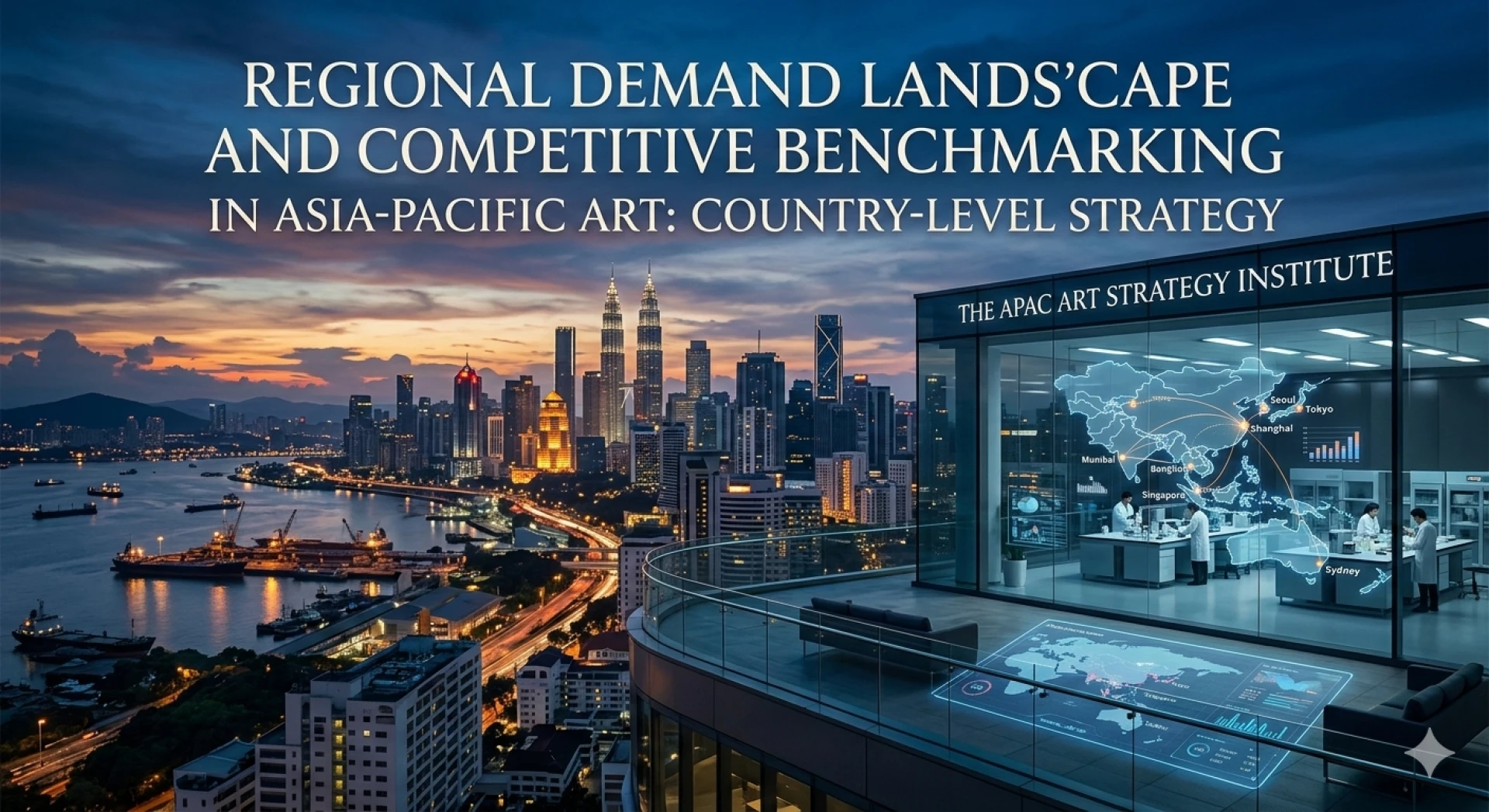

The Asia-Pacific ART market aggregate USD 2.5 billion market size contains within it five distinct national narratives, each with a different structural driver, regulatory environment, and competitive dynamic. China's insurance integration story is fundamentally different from India's national program story, which is different from Japan's premium utilization story, which is different from Southeast Asia's frontier growth story. For investors, operators, and technology companies evaluating market entry or expansion, the aggregate figure is the starting point, not the answer. Regional demand analysis in Asia-Pacific ART market is the analytical layer that converts the aggregate into actionable intelligence.
Independent industry evaluation from the Asia-Pacific ART market competitive report covers 15+ national markets with granular segmentation by technology, end-user, and regulatory environment, providing the geographic intelligence required for differentiated market strategy development.
China: Volume Leadership Through Policy Architecture
China leads the Asia-Pacific ART industry by procedure volume, supported by a government that has elevated birth rate recovery to a national development priority. The June 2024 Shanghai ART insurance integration now being rolled out provincially has structurally lowered the per-cycle financial barrier for millions of couples, directly expanding the commercially addressable patient population for every fertility clinic operating within coverage zones. Beijing is identified as the primary ART innovation hub, where leading clinics are deploying AI embryo assessment at a pace that is compressing the time to broad national adoption.
- Insurance integration: Shanghai June 2024 provincial rollout creating volume expansion across China's largest urban markets through 2026–2028
- Government priority: Birth rate recovery as national mandate insulates ART sector investment from political cycle disruption
- AI deployment: Beijing and Shanghai frontier clinics generating proprietary training data that creates compounding competitive advantages
- Market trajectory: Fastest absolute procedure volume growth in the region pricing architecture shifting from premium-only to insurance-integrated volume models
India: Highest Growth Velocity, Policy-Backed
India's ART market trajectory is being reshaped by the 2024 National Fertility Assistance Program, which addresses demand expansion with three concurrent interventions: direct treatment subsidies, clinic infrastructure co-investment in Tier-2 cities, and public awareness campaigns that treat patient knowledge as a structural barrier to be addressed, not assumed away. With 1.4 billion population and infertility prevalence that dramatically understates current treatment volumes relative to clinical need, India's addressable market upside is the largest in the region. The binding constraint is supply-side embryologist talent scarcity limits clinic expansion speed, not demand.
Japan and Australia: The Premium Market Standards
Japan and Australia define the quality benchmarks that the region's competitive hierarchy aspires toward. Japan's exceptionally high per-capita IVF utilisation rate reflects both advanced maternal age demand and deep cultural normalisation. Its regulatory framework is the most restrictive on embryo research in the region limiting certain AI-enhanced protocol adoption speeds while maintaining the highest clinical quality standards. Australia's mandatory outcome reporting framework and clinical research leadership make it the region's transparency standard-setter. Medical tourism from Southeast Asia to Australian fertility centres is growing as quality reputation spreads regionally.
- Japan: High per-capita utilisation; government subsidy expansion increasing volume; restrictive embryo research regulations limiting AI protocol adoption speed
- Australia: Mandatory outcome reporting; medical tourism attraction from Southeast Asia; clinical research partnerships with global technology companies
- Premium pricing: Both markets sustain the region's highest per-procedure pricing reflecting specialist labour standards and advanced technology deployment
- Innovation benchmark: Genea Biomedx (Australia-founded) is the region's leading clinical product innovator confirming Australia's technology development leadership
Conclusion
The competitive landscape of the Asia-Pacific ART market is being shaped by national policy events that are creating distinct demand inflection points simultaneously across the region. China's insurance integration is the most immediately material, expanding the commercially addressable patient population at provincial rollout scale. India's national programme is building the demand infrastructure subsidies, clinic capacity, and patient awareness that will materialise as sustained market growth through 2030.
For complete country-level competitive breakdown, 15-company benchmark profiles, and 2030 market size forecasts, the Asia-Pacific assisted reproductive technology market report delivers the granular regional intelligence required for differentiated strategy.
Frequently Asked Questions (FAQ)
Q1. How does the Asia-Pacific ART market size vary by country?
At USD 2.5 billion in aggregate, China contributes the largest national share by procedure volume. Japan commands the highest per-procedure pricing. Australia sets the clinical quality benchmark. India is the fastest-growing national market by growth velocity and expected to become one of the largest by absolute volume within the decade. Vietnam and Thailand are in early-stage development with high growth velocity from a lower base.
Q2. What policy changes are the most consequential growth drivers?
China's June 2024 Shanghai ART insurance integration and provincial rollout is the most immediately material policy event. India's 2024 National Fertility Assistance Program (subsidies, infrastructure, awareness) is the broadest structural intervention. Japan's ART subsidy expansion and South Korea's demographic support policies are reinforcing the government-backed demand infrastructure trend across the region's most influential economies.
Q3. Which competitors are most active across multiple Asia-Pacific markets?
Vitrolife AB, CooperSurgical (with 2024 ZyMt Fertility acquisition), Merck KGaA, and Genea Biomedx operate across multiple markets through distribution partnerships and direct presence. Eugin Group is evaluating multi-market clinic expansion. International PE-backed clinic networks are pursuing roll-up strategies in India and Southeast Asia. CooperSurgical's 2024 acquisition is the most strategically significant recent M&A move.
Q4. What challenges affect multi-market ART operators?
Regulatory divergence is the most material challenge — Japan's embryo research restrictions, India's ART Regulation Act 2021, and China's evolving NHC framework each require distinct compliance approaches. Embryologist talent scarcity is the most binding operational constraint across all markets. Per-cycle costs of USD 5,000–15,000 maintain affordability barriers in non-subsidised markets, limiting penetration in cost-sensitive populations.
Q5. What is the regional competitive forecast for Asia-Pacific ART through 2030?
AI transitions from differentiator to clinical standard within 3–5 years across major markets. Clinic network consolidation accelerates in India and Southeast Asia. Government insurance coverage expands beyond China. Competitive hierarchy rewards participants combining technology leadership, geographic distribution, and regulatory navigation capability. Investment outlook remains among the strongest in regional healthcare through 2030.



























Sign in to leave a comment.