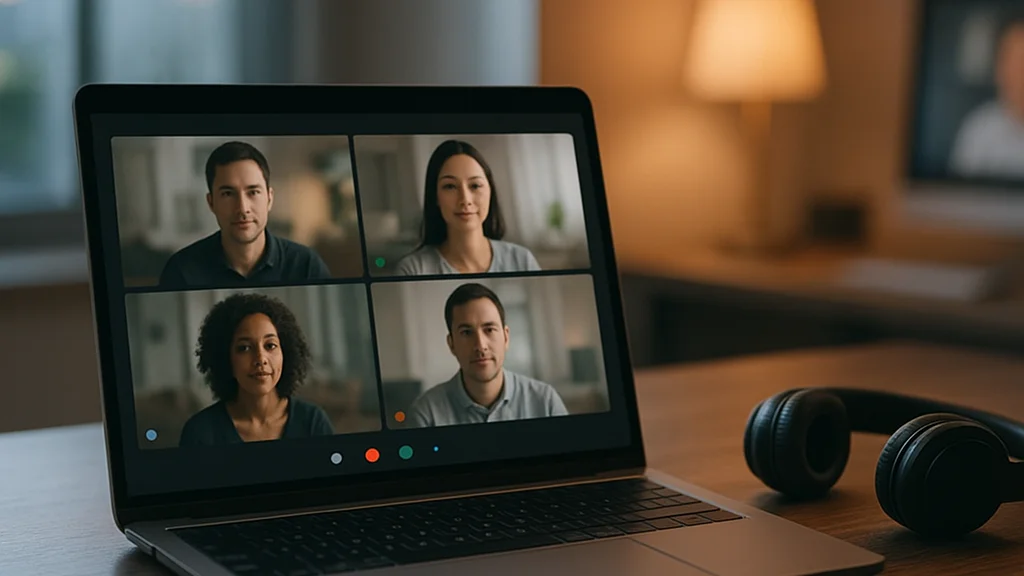

Most remote teams do not fail because people are lazy. They fail because management imports office habits into a distributed environment and then acts shocked when the whole thing turns into Slack theater. Three things usually go wrong first: leaders confuse visibility with productivity, meetings metastasize because nobody trusts written updates, and performance standards stay vague until a deadline explodes. Then comes the familiar postmortem where everyone blames “communication” as if that word explains anything.
The better view is harsher and more useful. Remote work is a management stress test. It exposes whether a company can define outcomes, document decisions, and build trust without physical proximity doing the work for them. Teams that succeed remotely are rarely magical. They are structured. They make expectations explicit. They choose tools with intent instead of piling on dashboards like a founder who just discovered a new SaaS bundle on Product Hunt.
That matters because remote and hybrid work are no longer fringe arrangements. Major employers continue to revise policies, and workers continue to weigh flexibility heavily when choosing jobs. Reuters has reported repeatedly on large companies tightening office attendance while still preserving hybrid options for many roles, which means managers are now leading mixed environments where some people are remote full time, others are partially remote, and a few are back in offices most days. That complexity punishes weak systems.
If you want a practical companion piece, WriteUpCafe has covered adjacent frameworks in Complete Guide to Remote Team Management Strategies That Work and a more tactical breakdown in Remote Team Management Strategies That Deliver Results. What follows is the version managers actually need: less corporate wallpaper, more operating manual.
Remote leadership works when managers optimize for clarity, not constant contact.
Start with operating rules, not motivational slogans
The first strategy that works is brutally simple: write down how the team operates. Not values posters. Not vague principles about collaboration. Actual rules. When does the team use chat versus email versus project software? How fast should someone respond in each channel? What counts as urgent? Where are final decisions recorded? What does a good weekly update look like? If these answers live only in a manager’s head, the team is already paying a tax in duplicated work, missed context, and low-grade anxiety.
Good remote teams treat documentation as infrastructure. That does not mean turning every process into a bloated wiki nobody reads. It means creating a short, living operating manual that removes ambiguity from recurring work. A designer should not have to guess where product feedback belongs. A sales manager should not have to decode whether a “quick sync” is optional or career-limiting. Precision lowers friction.
Forbes Business Council highlighted a similar point in its leadership lessons on remote teams: successful managers are deliberate about communication norms and accountability. That sounds obvious until you compare teams that merely say “communicate openly” with teams that define exactly how status reporting, escalation, and handoffs happen. One is a slogan. The other is management.
Here is what a useful remote operating system usually includes:
- Channel rules: chat for fast clarification, project tools for task status, documents for decisions, meetings for debate that cannot be resolved asynchronously.
- Response windows: for example, chat within a few hours during overlap time, email within one business day, urgent issues by phone or tagged escalation.
- Meeting standards: every meeting needs an agenda, owner, decision goal, and written notes.
- Documentation rules: final decisions and action items must be stored in one searchable place.
- Availability expectations: working hours, time-zone overlap, and norms for deep work blocks.
Most managers resist this because it feels bureaucratic. That is backwards. Ambiguity is the real bureaucracy. It forces employees to ask the same questions over and over, and it rewards whoever is most online rather than whoever is most effective. Remote teams need fewer unwritten assumptions, not more.
Measure outputs with painful clarity
The second strategy is the one many leaders avoid because it exposes weak goal-setting: manage by outputs. If a manager cannot define what success looks like in observable terms, remote work will reveal the problem fast. Office environments can hide this. People see someone at a desk, in meetings, replying quickly, and mistake that activity for contribution. Remote work strips away the stage lighting.
Output-based management means every role has a small set of measurable expectations tied to outcomes, quality, and timing. For an engineer, that may include delivery reliability, defect rates, code review turnaround, and contribution to documented technical decisions. For a content lead, it might be publication cadence, traffic quality, conversion contribution, and edit cycle speed. For customer support, first-response time alone is not enough; resolution quality and customer satisfaction matter too.
According to Statista and multiple labor-market trackers over recent years, distributed work remains widespread enough that companies can no longer afford fuzzy performance systems. The practical implication is that managers need scoreboards that are visible, role-specific, and reviewed consistently. Not because people want surveillance, but because they want fairness. Nothing poisons a remote team faster than the suspicion that performance is judged by responsiveness theater.
A strong output model usually follows this sequence:
- Define 3 to 5 core outcomes for each role.
- Attach measurable indicators to each outcome.
- Set review intervals, typically weekly for progress and monthly or quarterly for trend analysis.
- Separate activity metrics from outcome metrics so people do not optimize for busywork.
- Document trade-offs when priorities change.
The last point matters more than managers think. Remote teams often get whiplash from shifting priorities that are announced in a meeting and then half-remembered in three time zones. If priorities change, the scoreboard must change too. Otherwise teams are judged against targets leadership quietly abandoned.
If you cannot explain what great performance looks like without saying “you know it when you see it,” you are not managing remotely. You are guessing remotely.
For a broader perspective on setting these systems up, the WriteUpCafe article Remote Team Management Strategies That Actually Work explores many of the same principles from a complementary angle. The consistent lesson is that remote teams thrive when expectations are concrete enough to survive without hallway clarification.
Use asynchronous communication as the default, not the fallback
Here is the unpopular part: most meetings are not collaboration. They are anxiety management for leaders who do not trust written communication. Remote teams improve when they move routine coordination out of meetings and into structured asynchronous updates. That does not mean “no meetings.” It means meetings become rarer, shorter, and more valuable because the basic facts are already available.
Asynchronous management works best when updates follow a repeatable template. A weekly team update might include completed work, current priorities, risks, dependencies, and decisions needed. A project update might include owner, status, deadline confidence, blockers, and next milestone. The format matters because it lets people scan quickly across functions without playing detective.
Onrec’s guidance on streamlining project management for remote teams emphasizes centralized workflows and visibility. That is exactly right. If updates are scattered across chat threads, meeting notes, and personal task lists, remote work becomes a scavenger hunt. Centralization is not glamorous, but neither is losing two days because nobody knew which version of the plan was current.
Managers should reserve live meetings for a narrow set of situations:
- Decisions that require debate across stakeholders
- Conflict resolution where tone and nuance matter
- Creative sessions that benefit from rapid back-and-forth
- Coaching conversations that need privacy and context
- Incidents or urgent risks that require immediate coordination
Everything else should be challenged. Daily standups, for example, often survive long after they stop adding value. If a team can post concise daily updates before a set hour, a live standup may be unnecessary except during launches or crises. The gain is not just calendar space. It is cognitive space. People can do deep work without treating their day like an airport departure board.
There is also a fairness issue. Synchronous cultures privilege the loudest voices, the closest time zones, and the people most comfortable interrupting. Asynchronous systems create a paper trail and give quieter contributors room to think. In practice, that often improves decision quality. *Shocking*, I know, especially if your management philosophy was built in conference rooms by whoever talked first.
Build trust through cadence, coaching, and visible follow-through
Remote trust is not built by virtual happy hours. Those can be fine, but they are garnish, not substance. Trust comes from reliability. People trust managers who follow through on commitments, make priorities legible, and intervene early when work is stuck. They trust teammates who update status honestly and ask for help before a project catches fire.
The most effective remote leaders use a layered cadence. There is a team rhythm for shared visibility, a one-on-one rhythm for coaching, and a project rhythm for execution. Each serves a different purpose. Team meetings align priorities and surface dependencies. One-on-ones address performance, growth, and obstacles that would never appear in a public channel. Project reviews test assumptions, timelines, and ownership.
One-on-ones deserve special attention because remote settings can make underperformance and burnout harder to spot. A good manager does not use these sessions as a status update rerun. The employee should already have documented status elsewhere. The conversation should instead focus on what is unclear, what is blocked, what skills need development, and what trade-offs the employee is carrying. That is where management earns its salary.
Entrepreneur, in its piece on time management techniques for teams, stresses prioritization and intentional planning. For remote teams, that principle becomes more than productivity advice; it is a trust mechanism. When leaders repeatedly clarify priorities and protect focus time, employees learn that they are not expected to be omnipresent. That reduces performative busyness and improves actual output.
Managers who want stronger trust should audit their own behavior first:
- Do you answer escalations within the window you ask of others?
- Do you change priorities without updating written plans?
- Do you use meetings to make decisions, then fail to record them?
- Do you reward quick replies more than thoughtful work?
- Do your one-on-ones produce actions, or just vibes?
Teams notice these contradictions immediately. Remote work does not create distrust from nowhere. It simply makes managerial inconsistency impossible to hide behind office energy.
Design for time zones, not around them
Once a team spans multiple regions, management gets more technical. The lazy approach is to force everyone into the headquarters schedule and call it alignment. The smarter approach is to identify the minimum overlap needed for collaboration and then redesign workflows so work can move forward without everyone online at once.
That starts with mapping dependencies. Which tasks truly require live interaction? Which can be handed off asynchronously with clear documentation? Global teams often gain speed when they structure work in follow-the-sun patterns, especially in support, operations, and some engineering functions. But that only works if handoffs are standardized. Otherwise every timezone transition becomes a context-loss machine.
There are practical rules that consistently help:
- Keep recurring meetings inside a protected overlap window and rotate painful times when global attendance is necessary.
- Record key decisions in writing immediately after meetings.
- Use deadlines with timezone labels to avoid preventable confusion.
- Create handoff templates for work that moves between regions.
- Distinguish between urgent requests and “I want an answer before I log off.”
The fairness dimension matters here too. When one geography absorbs all the inconvenience, resentment builds quietly and then shows up as disengagement. Strong remote managers monitor who is consistently attending late-night calls, who is excluded from decisions because they were asleep, and who gets fewer high-visibility opportunities because they are not in the dominant timezone. Those are not minor culture issues. They influence retention and promotion.
Recent conversations in 2026 around distributed hiring have also sharpened this point. Companies that recruit globally gain access to broader talent pools, but they inherit operational complexity. A team spread across New York, London, Bengaluru, and Sydney cannot run on improvisation. It needs written briefs, explicit ownership, and handoff discipline. If that sounds less spontaneous than startup mythology, good. Startups love chaos right up until payroll depends on execution.
Readers looking for more examples of how teams are adapting this year can compare these practices with WriteUpCafe’s Remote Team Management Strategies That Work in April 2026, which captures how fast norms are shifting as companies settle into long-term hybrid models.
Choose tools that reduce friction instead of multiplying it
Bad tooling can wreck a competent remote team. Three things are usually wrong: too many platforms, overlapping functions, and no clear source of truth. The result is classic bad UX at organizational scale. Tasks live in one app, decisions in another, documents in a third, and urgent context in a chat thread that disappears under memes and “circling back” messages. Then leadership wonders why execution feels slow.
The fix is not buying more software. It is rationalizing the stack. Every remote team should know where to find project status, final documents, performance dashboards, and decision logs. If two tools compete for the same purpose, one should probably lose. Tool sprawl is expensive in money, attention, and onboarding time.
A sensible remote stack usually needs only a few categories:
- Communication: chat and email with clear role boundaries
- Project management: one system for owners, deadlines, and status
- Documentation: one searchable repository for decisions and process
- Meetings: video for coaching, conflict, and high-stakes discussion
- Analytics: dashboards tied to team outputs, not vanity metrics
What changed recently is the rise of AI features inside these platforms. In 2026, many teams are experimenting with meeting summaries, task extraction, search assistants, and automated status drafts. Used carefully, these can save time. Used lazily, they create polished nonsense. Managers should treat AI as a compression layer, not a substitute for judgment. An auto-generated summary that misses the actual decision is worse than no summary because it creates false confidence.
There is also a security and compliance angle. As remote work matures, companies are paying closer attention to where data sits, how access is managed, and which AI tools can ingest internal information. That means the best tool is not always the flashiest one trending on tech Twitter for two weeks. It is the one the team can use consistently, safely, and with minimal cognitive drag.
The right remote stack does one thing above all: it makes the current state of work obvious without asking humans to narrate it all day.
What changed in 2026 and what managers should do next
By mid-2026, the remote management conversation has matured. The old binary fight between “remote forever” and “everyone back to the office” has given way to a messier reality: many organizations are hybrid by policy, distributed by talent strategy, and inconsistent in execution. That inconsistency is where managers either create leverage or chaos.
Several shifts stand out. First, employers are more selective about which roles require in-person presence, which means remote management is increasingly role-specific rather than ideology-driven. Second, AI is changing workflows enough that managers need to rethink coordination, not just productivity. If routine summaries, note-taking, and first-draft planning are automated, the managerial premium moves toward judgment, prioritization, and coaching. Third, employee expectations have hardened. Flexibility is not viewed as a novelty perk. It is part of the employment bargain for many knowledge workers.
The practical takeaway is that remote team management strategies that work now are less about enthusiasm for remote work and more about operational competence. Managers should focus on six moves over the next quarter:
- Publish a team operating manual and review it monthly.
- Replace vague performance language with role-specific output metrics.
- Cut recurring meetings that do not produce decisions.
- Standardize weekly asynchronous updates across the team.
- Audit timezone fairness and rebalance painful meeting slots.
- Reduce tool sprawl so everyone knows the source of truth.
If that sounds unglamorous, good. The internet has enough contrarian threads pretending leadership is charisma plus a Notion template. Real remote management is disciplined, repetitive, and measurable. It asks leaders to be clearer than they are comfortable being. It asks teams to write things down before confusion becomes conflict. And it asks companies to stop treating flexibility as a cultural slogan while refusing to build the systems that make flexibility sustainable.
The upside is significant. Teams that get this right often become faster at decision tracking, better at written thinking, and more resilient to turnover because knowledge is not trapped in hallway conversations or the memories of two overbooked managers. That is why remote discipline tends to improve organizations beyond remote work itself. It is not a workaround. It is a higher standard.
For readers comparing frameworks, WriteUpCafe’s Effective Remote Team Management Strategies That Work in 2026 offers another useful lens on this year’s shifts. My version is simpler: stop romanticizing flexibility and start engineering it. That is the strategy that actually works.
































Sign in to leave a comment.