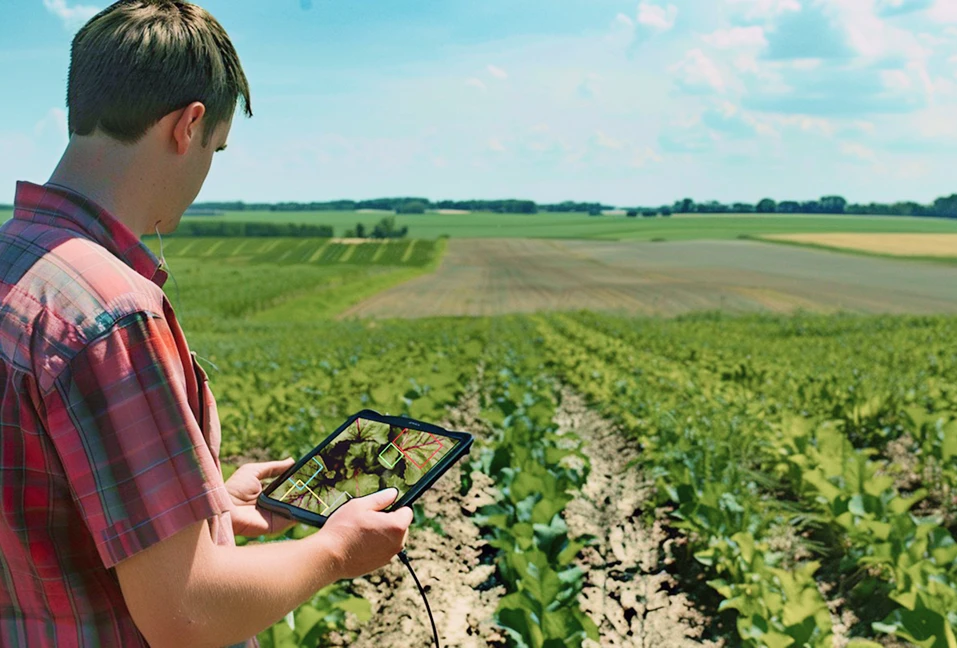

Crop health is a crucial component of sustainable agriculture. As demand for food increases in an unpredictable climate, the early discovery of plant diseases is no longer merely important but needed. Plant diseases are often subtle at first and can spread rapidly. Serious plant diseases can be difficult to detect using only visual inspection as a method of monitoring for early detection. Late identifying a disease can lead to crop loss, underperformance, and significant financial damage.
Implementing computer vision for plant disease detection has allowed AI to change the way farmers are monitoring crops; with speedy actions that had high accuracy, and enable early detection in a vast agricultural landscape.
Why Early Detection is Important
According to the Food and Agriculture Organization (FAO) of the United Nations, pest and disease losses amount to 20% to 40% of crop production on a global scale every year. Specifically, plant pathogens cause losses of greater than $220 billion, while invasive insect pests cost approximately $70 billion annually.
The farmers are able to:
a. Use timely and targeted treatment
b. Reduce chemicals
c. Control outbreaks early, before they spread
d. Protect crop health and crop quality
However, doing so is not easy with so many bottleneck possibilities.
Difficulties in Standard Detection
a. Concealed Infections: Several diseases start way inwards versus showing delayed visual symptoms. i.e. By the time leaves start to discolor, or spots develop, damage has already been done.
b. Limited Expertise: In rural locales, access to agricultural experts is scarce, consequently sometimes leading to misdiagnoses, or in some cases, the experts overlook determining symptoms.
c. Limited Local Sources: Often farmers grow local crops, and documentation of disease is not available to them.
d. Time: Manually inspecting every plant is time-consuming, and typically impractical on large farms.
This is where AI-powered computer vision fills the gap.
How Computer Vision Provides Early Detection of Plant Diseases
Computer vision is a sub-field of Artificial Intelligence where machines view and analyze images from the real world. In agriculture, it enables image-based analysis to identify abnormalities in crops, offering real-time interpretations and insights into crop health. Specifically, computer vision for plant disease detection helps farmers recognize early signs of infection, allowing for timely intervention and healthier yields.
Key Contributions:
a. Image Recognition: Drones, fixed IoT cameras, or your smartphone take images of crops on various farms; these images are the data that analyses rely on.
b. Early Symptoms Recognition: Deep learning models (like Convolutional Neural Networks (CNNs)) can analyze patterns, shapes, and texture of leaves and stems at early stages of diseases.
c. Real-Time Outputs: AI systems can produce diagnosis in real time along with supporting data and information, this allows farmers to move expeditiously and effectively.
d. Reduction of Labor: Automated visual inspections drastically reduce (or eliminate) human visual inspections with surveillance so farmers can utilize their time manually searching for problems.
e. Sustainability: They allow for a more targeted approach in order to avoid excessive pesticide, which can be harmful to the environment.
f. Scalable & Precise: Whether it’s a small farm or an industrial field, AI can take thousands of images and provides accurate disease classifications.
The process powered by AI in Crop Health Monitoring: step by step
Now, let's go over how image recognition systems work in crop health monitoring:
Image Acquisition
High-definition images of crops are collected using devices like smartphones, drones, and surveillance cameras.
Image Pre-processing
The raw images are then processed to eliminate background noise and enhance contrast and quality. Image normalization and segmentation are included to enhance reliability and clarity.
Feature Extraction
Deep learning algorithms to identify various features in the images: healthy tissue, lesions, color differences, and texture irregularities, to differentiate disease from healthy crops.
Disease Detection & Classification
The AI matches extracted features to a large database of plant diseases. Disease detection can include conditions like blight, mildew, or rust, and bacterial spots.
Real-time Monitoring
These systems learn and adapt automatically and can adjust based on crop growth stages and environmental conditions changing over time to remain reliable.
Important Factors to Keep in Mind when Implementing
To facilitate successful implementation of computer vision for crop monitoring, farmers and ag tech professionals should take into consideration:
a. Environmental Variabilities: Weather, lighting and the angle of cameras may influence the end product or affect the image analysis; and it is important to test the system in a variety of environments.
b. Data Quality: Quality and quantity of data, including a diversity of crops and stages of growth is crucial to effectively train AI models.
c. Systems Architecture: AI tools should leverage existing farm management systems and ensure maximum efficiency in the workflow to facilitate decision making.
Real World Examples
Grape Vineyards: Drones enabled with AI have the ability to scan for diseases like downy mildew and black rot in grapevines. This means that vineyards have the capacity to detect disease early before it threatens their crops.
Tomato Farms: Similar to grapevines, AI tools have the ability to identify leaf mold and bacterial spots in tomatoes which the farmer may not even see yet.
Greenhouses: Computer vision can monitor whether microclimate effects are taking place and can also identify a disease outbreak before it destroys a crop with high market value.
Additional Benefits Beyond Detection
Beyond pest and disease detection, computer vision provides many additional benefits:
Predictive Maintenance: Identifying signals of stress before a visible symptoms and is very valuable.
Increase yields and productivity: By monitoring plant growth, optimize harvesting plans or cycles based on plant development and health.
Improved resource usage/management: Improve operational efficiency, environmental footprint, and reduce costs through targeted sprays of pesticides and fertilizers.
Final Thoughts
Computer vision is changing the agricultural environment for the better. With existing and growing pressure on farmers to sustainably feed a growing population, using AI is not just a vision of the future, it is practical and necessary now. AI-computer vision, with its speed, precision, and ability to scale, provides an efficient and economical method to achieve early detection of plant disease.
Are you ready to transform your agricultural practices? Get in touch with us and we will show you how our vision AI can transform your farming practices.
FAQ
What is computer vision in agriculture?
Computer vision in agriculture is the act of using AI to analyze images of crops and find indications for disease, nutrient deficiency, insect attacks, etc. without the need for manual inspection. Its use is supported by technologies such as drones, cameras, and AI video analytics software.
What types of plant diseases can be detected?
AI has the ability to identify types of disease like blight, rust, bacterial infection, insect infestations, and nutrient deficiency.
How does the technology detect diseases?
It looks for patterns, textures and colors in plant images and then uses machine learning to recognize these patterns on plant images and compare them against known disease signatures.
What are the main advantages of computer vision?
The main advantages of using computer vision are early detection of disease, decreased labor, implements sustainable practices, improved yields, and real-time large-scale crop monitoring.
What tools are required?
Necessary tools include high-resolution cameras, IoT-connected drones, and AI video analytics software to detect and report information.
Can it mitigate disease outbreaks in crops?
Yes. Rapid detection allows for rapid reaction - isolating infected areas by applying targeted treatment, and restricting the disease from spreading.
























Sign in to leave a comment.