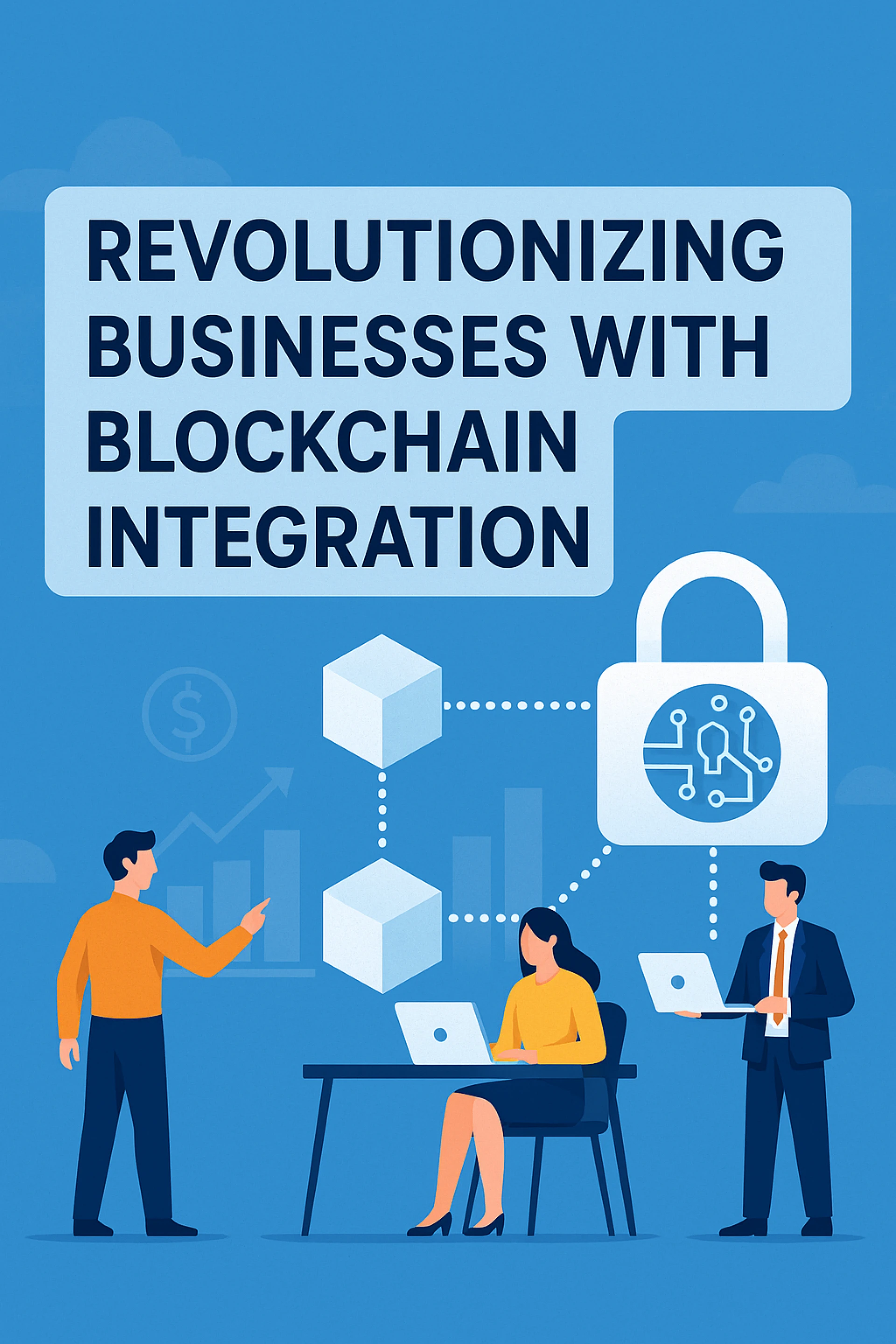

In the ever-evolving world of business, staying ahead of technological advancements is key to maintaining a competitive edge. One such breakthrough innovation that has gained significant attention in recent years is blockchain technology integration. Initially introduced as the underlying infrastructure for cryptocurrencies like Bitcoin, blockchain has expanded far beyond its original use case, offering immense potential for businesses across various sectors. This blog delves into how blockchain integration is revolutionizing businesses and why it’s becoming a critical tool for future growth and efficiency.
What is Blockchain Technology?
Blockchain is essentially a decentralized and distributed digital ledger technology that allows data to be recorded across multiple computers in such a way that the records cannot be altered retroactively. Each “block” of data is securely linked to the previous one, creating an unchangeable chain of information. This ensures transparency, security, and reliability in data sharing, making it an ideal solution for industries that rely on secure transactions and accountability.
Key Benefits of Blockchain Technology Integration for Businesses
1. Enhanced Security
Security is a top priority for any business, especially when handling sensitive information. Traditional systems are vulnerable to hacking and fraud due to their centralized nature. Blockchain technology offers a more secure alternative by decentralizing data storage. Each transaction is encrypted and linked to previous ones, making it virtually impossible for hackers to alter data without detection. This enhanced security helps businesses protect customer data, financial records, and intellectual property from cyber threats.
2. Increased Transparency
One of the most significant benefits of blockchain integration is the ability to provide complete transparency. Since all transactions are recorded on a public ledger, every participant in the network can access and verify them. This level of transparency fosters trust between businesses and their customers, partners, and stakeholders. In sectors like supply chain management, this transparency helps ensure that products are sourced ethically, production processes are fair, and customers receive the highest quality goods.
3. Reduced Costs
Blockchain can significantly reduce costs associated with intermediaries and transaction fees. In traditional systems, intermediaries such as banks, brokers, and agents often add time and cost to transactions. With blockchain integration, businesses can bypass these intermediaries, leading to faster and cheaper transactions. This can be especially beneficial in industries like finance, real estate, and insurance, where transaction costs can be high.
4. Faster Transactions
The speed of transactions is another area where blockchain technology stands out. Traditional financial systems and supply chains can be slow due to the reliance on intermediaries and manual processes. Blockchain technology enables real-time, peer-to-peer transactions, reducing the time it takes to process payments, transfer goods, and complete contracts. This is particularly advantageous in industries like banking and international trade, where speed is crucial.
5. Improved Traceability
For industries like agriculture, food production, and pharmaceuticals, traceability is essential for ensuring product quality and safety. Blockchain allows businesses to track every step of a product’s journey from the source to the consumer, offering a complete and transparent record of its origins, handling, and processing. This not only ensures compliance with regulations but also helps in identifying and resolving issues quickly, reducing risks of recalls and reputational damage.
Real-World Applications of Blockchain Integration
1. Supply Chain Management
Blockchain integration is transforming supply chain management by providing end-to-end visibility of product movement. Every transaction, whether it’s the manufacturing, shipping, or receiving of goods, is recorded on a blockchain. This makes it easier to track goods, verify the authenticity of products, and ensure that suppliers adhere to agreed standards. Companies like Walmart and IBM have already begun leveraging blockchain to track the provenance of food items, reducing waste and fraud.
2. Financial Services
The financial services sector has been one of the early adopters of blockchain technology. Banks and payment providers are using blockchain to streamline payments, reduce fraud, and enhance compliance. Smart contracts, which are self-executing contracts with the terms of the agreement directly written into code, are also gaining traction in the finance industry. These contracts help automate and secure complex financial transactions, such as loans and insurance policies.
3. Healthcare
In the healthcare sector, blockchain integration helps maintain patient records securely while ensuring data privacy. By using blockchain, healthcare providers can grant patients access to their health records, enabling seamless sharing of medical data across different systems. Additionally, blockchain can help in the management of drug supply chains, reducing counterfeit products and improving the safety of medications.
4. Legal and Intellectual Property
In the legal industry, blockchain is being used to create tamper-proof records for contracts, intellectual property (IP), and ownership documents. This helps businesses protect their IP, ensure that agreements are enforceable, and resolve disputes more efficiently. By using blockchain to manage contracts and property rights, businesses can reduce the risk of fraud and streamline legal processes.
Challenges and Considerations in Blockchain Integration
While the benefits of blockchain technology integration are clear, it’s essential to consider the challenges that come with its adoption. Blockchain is still a relatively new technology, and implementing it into existing systems can be complex and costly. Additionally, scalability and energy consumption are concerns that need to be addressed, especially for large enterprises.
Moreover, businesses need to ensure that they have the necessary regulatory compliance in place. Since blockchain operates in a decentralized manner, navigating legal frameworks and standards can be challenging. Businesses must ensure that they are compliant with local and international laws to avoid legal complications.
The Future of Blockchain in Business
As blockchain technology continues to evolve, its potential to revolutionize businesses grows. The integration of blockchain across industries will only increase as more businesses realize its benefits in improving efficiency, transparency, and security. Whether it's automating processes through smart contracts, enhancing traceability, or reducing fraud, blockchain integration is paving the way for more secure, transparent, and efficient business practices.
Conclusion
Incorporating blockchain technology into business operations isn’t just a trend – it’s a strategic move that can enhance security, reduce costs, and increase trust among customers and partners. As the technology continues to mature, businesses that embrace blockchain integration will be well-positioned to thrive in an increasingly digital world. Now is the time for businesses to explore how blockchain can unlock new opportunities and transform their operations for the better.
By staying ahead of this technological curve, companies can secure their future and set the stage for long-term growth and innovation.






















Sign in to leave a comment.