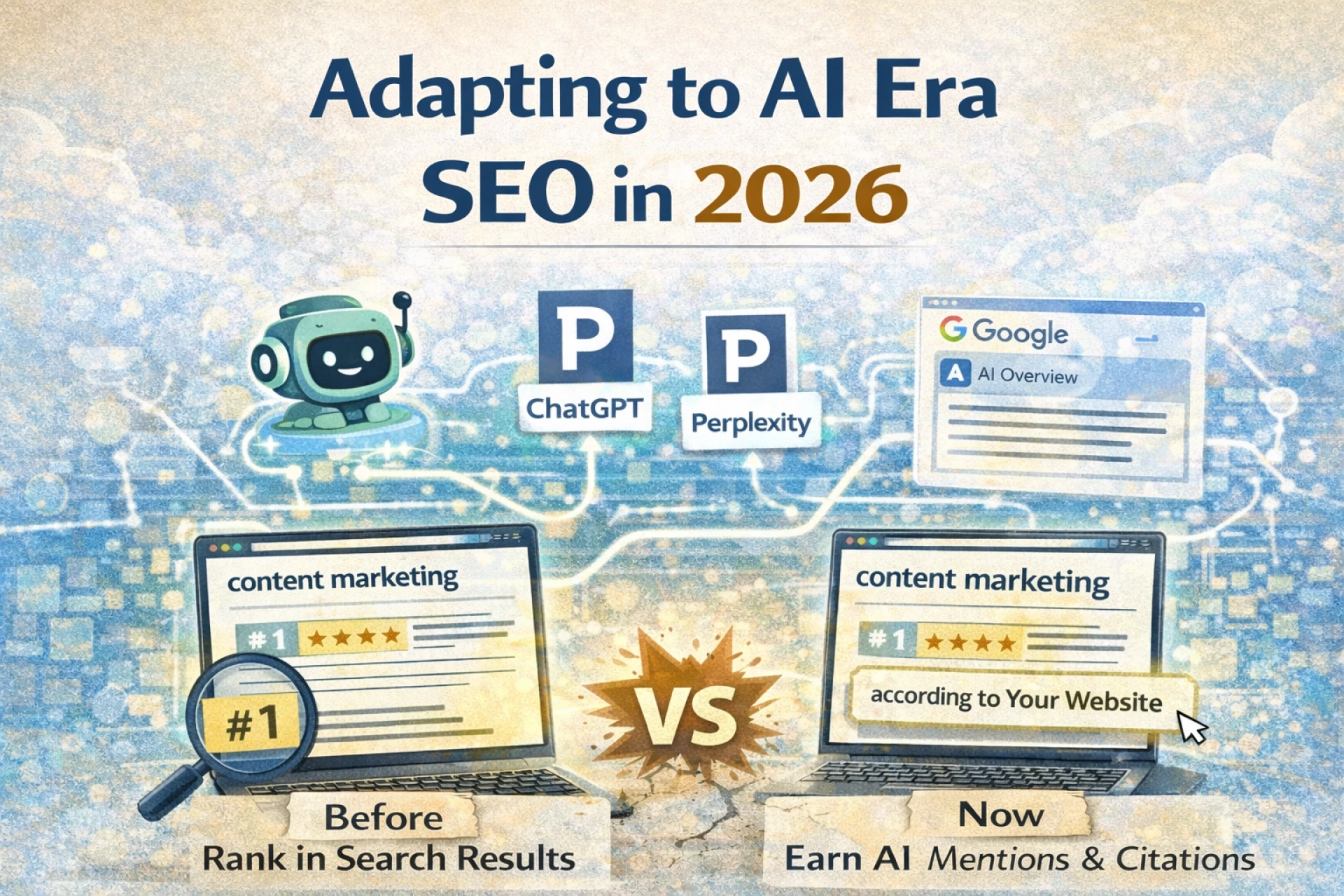

Search has never stayed still. Every few years something shifts and the marketers who pay attention early enough to adjust their approach come out ahead while everyone else scrambles to catch up months later wondering why their traffic dropped.
Right now we're in the middle of one of those shifts. And this one is bigger than most.
SEO changes in 2026 aren't just about a new algorithm update or a tweak to how Google ranks pages. The fundamental way people search for information is changing and the tools sitting between users and websites have become significantly more sophisticated. Understanding what's happening and how to respond is what separates the marketers growing their organic presence right now from the ones watching their numbers decline without knowing why.
What Has Actually Changed in AI Era SEO
AI era SEO looks different from what most of us spent years learning and applying because the search landscape itself looks different.
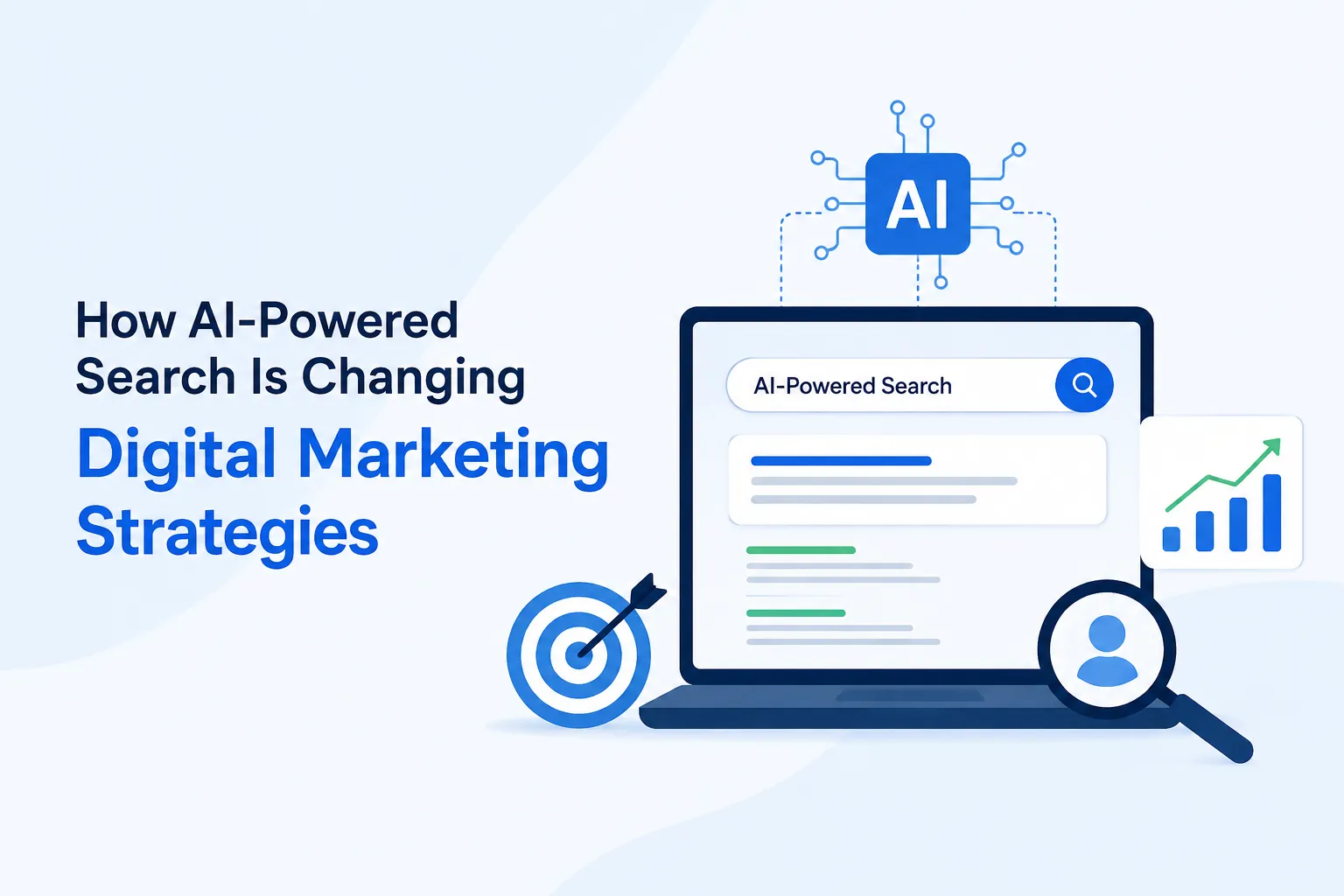
Google AI updates over the past couple of years have introduced AI Overviews that appear above organic results for a growing number of queries. These aren't just featured snippets with a new name. They're synthesized responses constructed from multiple sources that attempt to answer a question completely before the user needs to click anywhere.
AI powered search results have also emerged beyond Google itself. ChatGPT, Perplexity AI, and Microsoft Copilot have become genuine search destinations for a meaningful segment of users who prefer getting a direct synthesized answer over browsing a list of links. These platforms pull from web content and cite sources when constructing their responses creating an entirely new visibility channel that didn't exist a few years ago.
The combined effect of these changes is that the old model of optimizing purely for keyword rankings and organic clicks is no longer the complete picture of what SEO strategy in 2026 needs to look like.
Why Traditional SEO Alone Is No Longer Enough
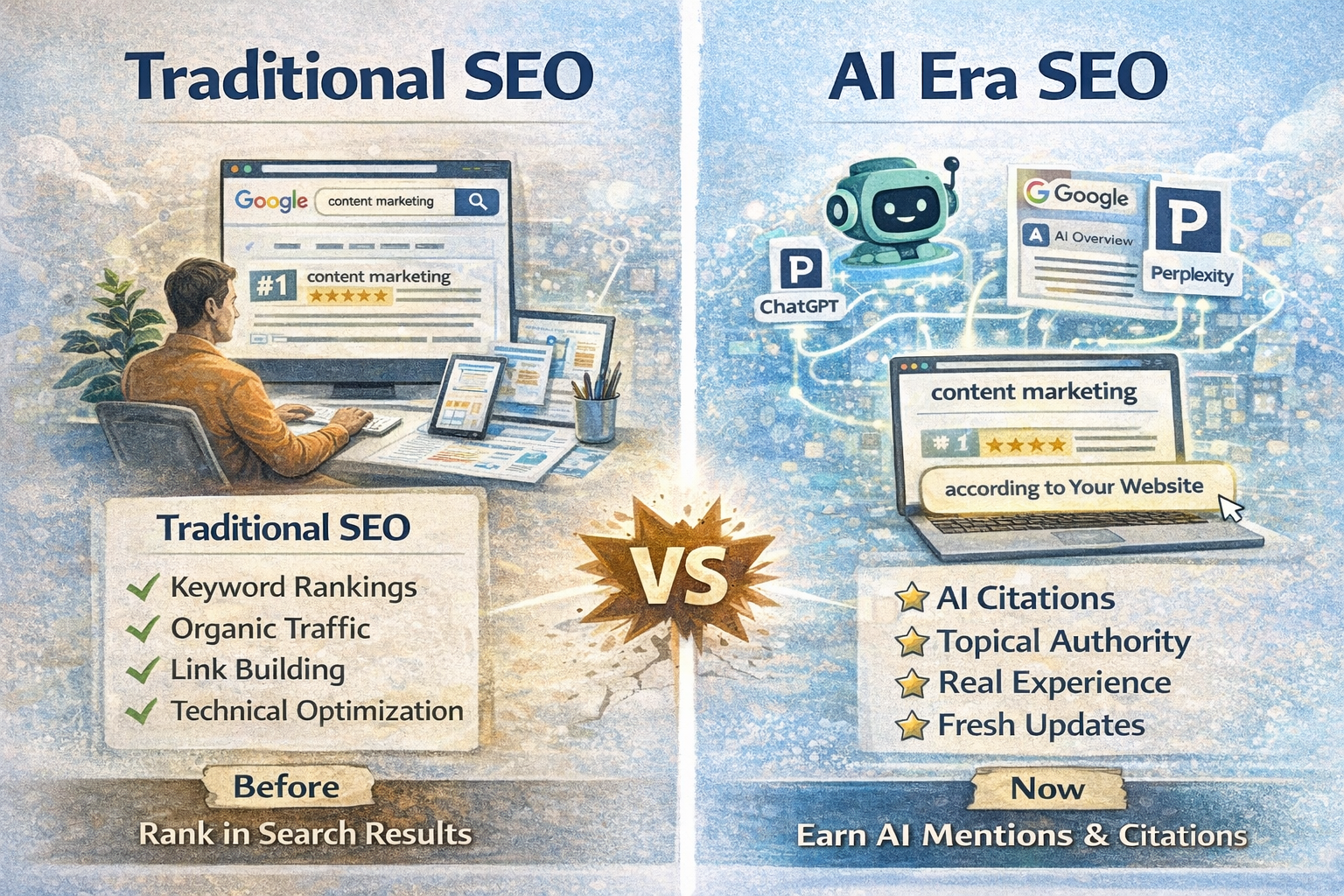
Here's something worth being direct about. Traditional SEO still works and still matters. Writing good content, building quality backlinks, fixing technical issues, targeting the right keywords — none of that has become irrelevant.
What has changed is that it's no longer sufficient on its own.
The AI impact on SEO has created new layers of visibility that traditional optimization doesn't automatically address. A page can rank well in traditional search results and still be completely invisible when AI powered search results answer the same query without sending traffic to any specific website.
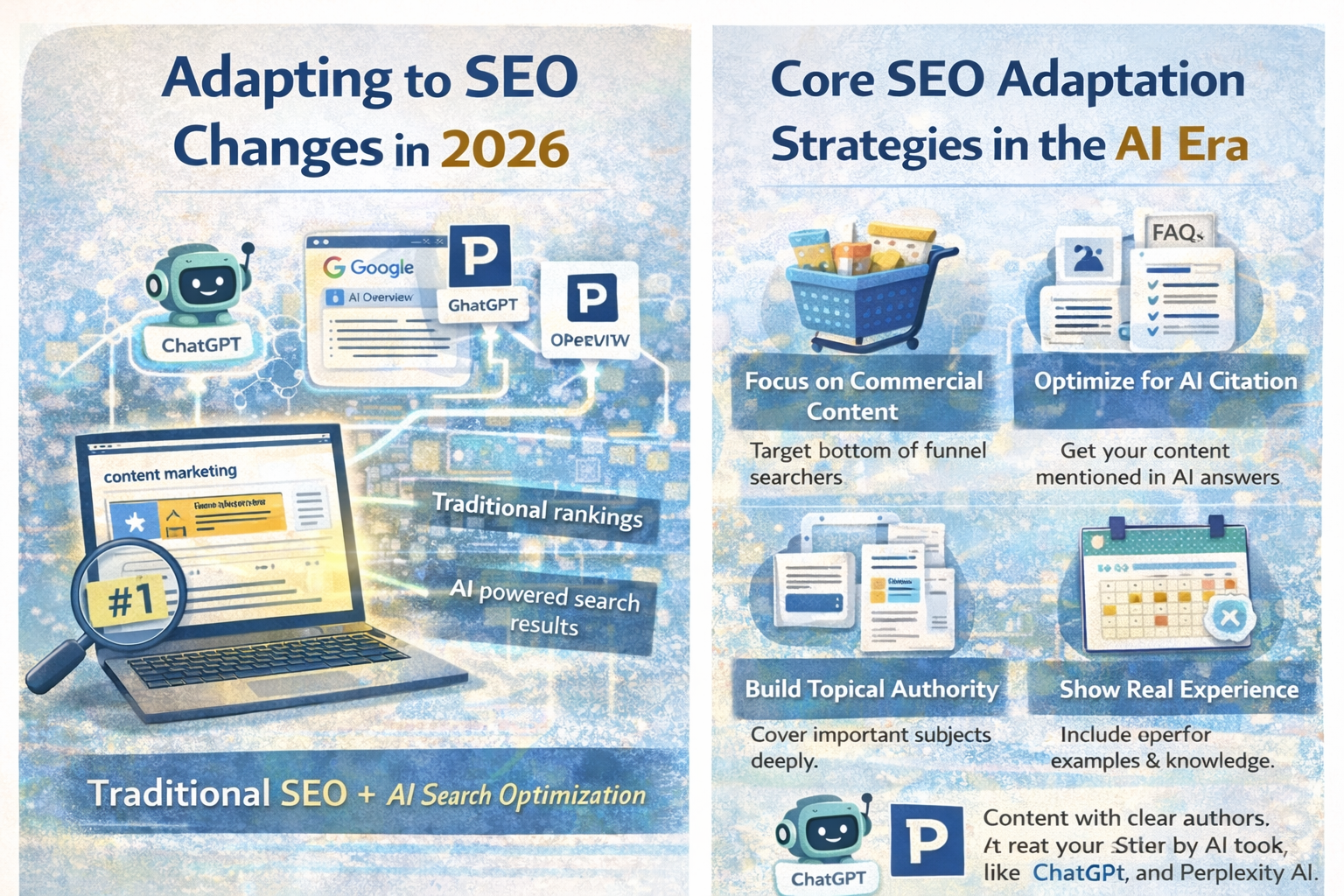
Informational content that used to generate steady organic traffic is particularly affected. When Google AI updates introduced AI Overviews for broad informational queries, many websites saw traffic declines on pages that were still ranking in the same positions they always had. The rankings didn't change. The clicks did. Because the AI answer at the top of the page was satisfying enough that users didn't need to scroll down to the organic results below.
Understanding this distinction between ranking and visibility is one of the most important mental shifts in AI era SEO.
The Core SEO Adaptation Strategies That Work Right Now
SEO adaptation strategies in the current landscape fall into a few distinct categories. Here's what's actually producing results.
Shift Focus Toward Commercial and Bottom of Funnel Content
Broad informational content has become more vulnerable to AI powered search results absorbing traffic before it reaches your website. Queries like "what is content marketing" or "how does email marketing work" are being answered directly by AI Overviews with increasing frequency.
Commercial intent content performs very differently. Someone searching "best email marketing tool for small business" or "SEO agency for e-commerce brand" has specific needs that require more than an AI summary can deliver. They need to evaluate options, read real experiences, and make decisions that a synthesized paragraph can't fully support.
Shifting more content effort toward bottom of funnel keywords where users are closer to a decision is one of the most effective SEO adaptation strategies available right now.
Optimize Content for AI Citation
AI search optimization has become a real discipline alongside traditional search optimization. Getting your content cited inside AI Overviews, ChatGPT responses, and Perplexity AI answers delivers brand visibility even when no click happens.
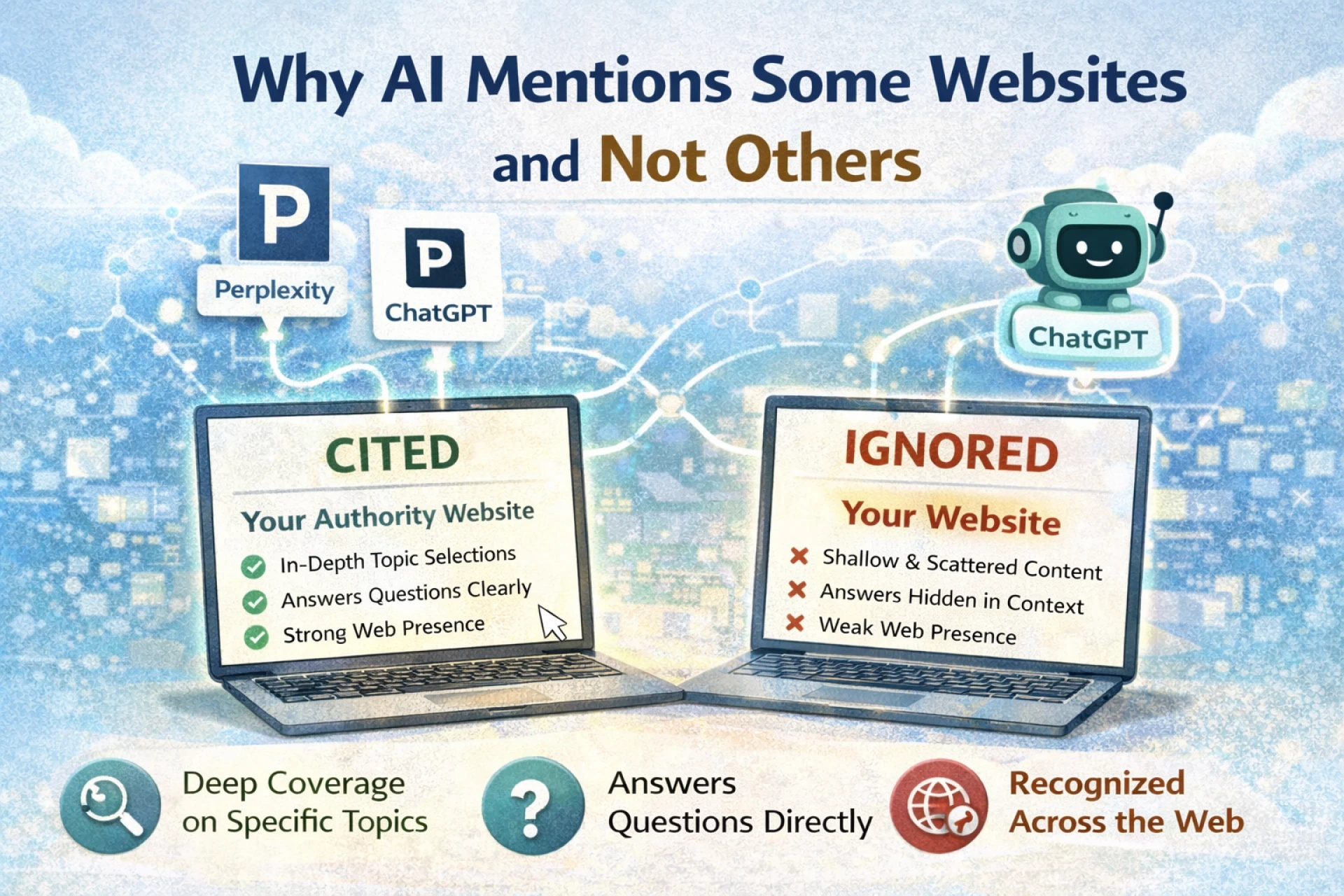
The content most likely to get cited answers questions directly and immediately. It leads with the answer at the start of each section rather than building up to it gradually. It uses descriptive headings that clearly signal what each section covers. It includes proper FAQ sections built around real questions your audience asks.
Structured data markup — particularly FAQ schema and Article schema — helps AI systems understand and categorize your content accurately which increases the likelihood of citation.
Build Topical Authority Rather Than Chasing Individual Keywords
The future of SEO belongs to websites that have built serious depth of knowledge on specific subjects rather than websites that have published individual keyword targeted articles on scattered unrelated topics.
Google algorithm changes driven by AI have made topical authority a more meaningful ranking signal than it used to be. A website with fifteen well researched interconnected articles covering different aspects of the same subject is evaluated more favorably than a website with one article on each of fifteen different unrelated topics.
Pick your core subject areas and commit to covering them properly. Build topic clusters where a central hub page links out to supporting pages that each go deep on a specific aspect of the main topic. This approach signals genuine expertise to both traditional search algorithms and AI powered search systems.
Prioritize Content That Demonstrates Real Experience
One of the most significant Google AI updates in recent years has been the elevation of E-E-A-T — Experience, Expertise, Authoritativeness, and Trustworthiness — as a meaningful quality signal.
The first E — Experience — is the newest addition and arguably the most important one right now. Google and AI systems are increasingly able to recognize content written from genuine firsthand experience versus content that was assembled from other sources without any original perspective.
Content that includes real specific examples from actual experience, honest acknowledgment of challenges and mistakes, nuanced observations that come from doing rather than just reading, and specific details that only someone who has actually done the thing would know — this content performs differently from generic informational writing. It builds topical authority in a way that synthesized or research based content doesn't.
Keep High Value Content Fresh and Updated
AI search optimization rewards freshness in a way that rewards websites that treat their best content as living documents rather than finished pieces.
AI powered search results on platforms like Perplexity AI that pull from live web searches naturally favor more recently updated content when recency is relevant to the query. Google AI updates have also reinforced freshness as a quality signal for content on topics that change over time.
Build a regular review habit for your most important pages. Check whether statistics are still current. Update examples that have become outdated. Add context for new developments. Refresh anything that a reader today would find inaccurate or no longer relevant.
How to Adapt Your SEO Strategy in 2026 Step by Step
How to adapt to AI SEO doesn't require rebuilding everything from scratch. It requires making deliberate adjustments to an existing foundation.
Start by auditing your current content and identifying which pages are most vulnerable to AI powered search results absorbing their traffic. Pages targeting broad informational queries with high AI Overview presence are the most at risk. Prioritize developing more commercial and decision stage content in those same topic areas.
Add proper FAQ sections to your most important existing pages using real questions from forums, Google's People Also Ask section, and actual customer inquiries. This is one of the fastest practical steps for improving AI search optimization across existing content.
Review your content coverage and identify topic areas where you have strong individual pieces but no real cluster of interconnected content demonstrating depth. Build out those clusters systematically over the next several months.
Make sure named authors with clear credentials are attached to your content. Improve your external credibility by actively pursuing quality backlinks, guest posts on recognized publications, and genuine brand mentions across credible websites in your field.
The Bigger Picture of AI Impact on SEO
The AI impact on SEO isn't a threat to websites that are doing things properly. It's a filter that separates websites with genuine expertise and well structured content from websites that were ranking on thinner foundations.
The future of SEO belongs to websites that prioritize real depth over surface level coverage, genuine experience over assembled information, clear direct writing over bloated keyword stuffed content, and authentic external credibility over manufactured link profiles.
Google algorithm changes driven by AI have consistently moved in one direction. Rewarding genuinely useful content produced by real people with real knowledge. Every major update over the past several years has pushed harder in that direction.
The SEO adaptation strategies that work right now aren't tricks or shortcuts. They're just better versions of what good SEO always required. Create content that genuinely serves real people asking real questions. Build real authority on subjects your brand actually knows. Maintain that content so it stays accurate and current over time.
Adapting Is Not Optional Anymore
SEO changes in 2026 are significant enough that treating them as optional adjustments to make eventually is a genuinely risky position.
The marketers seeing growth right now are the ones who recognized the shift early, adjusted their content strategy to address both traditional search rankings and AI search optimization, and committed to the deeper work of building genuine topical authority rather than chasing algorithm tricks.
The window to get ahead of this is still open. But it closes a little more every month as the competitive landscape adjusts around these changes.
Start now. Adapt deliberately. Build something real.
That's the whole strategy for navigating SEO changes in 2026 and beyond.
























Sign in to leave a comment.