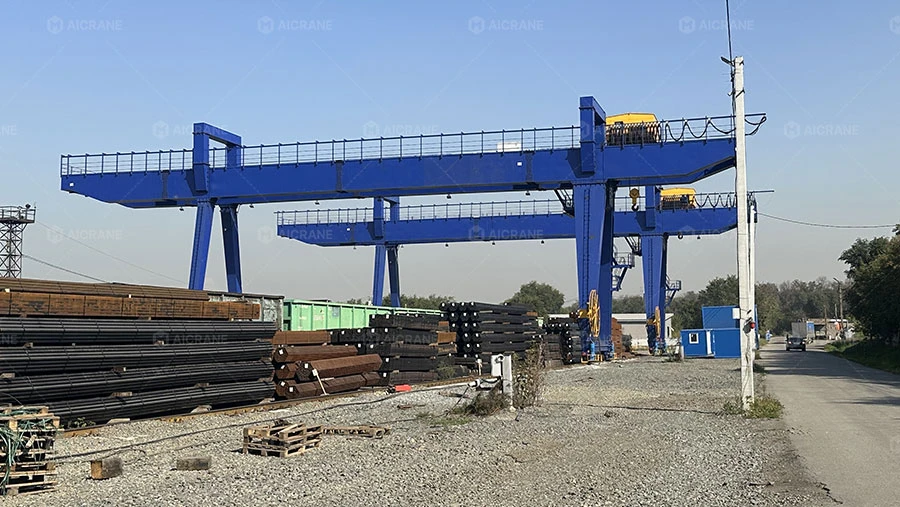

Gantry cranes are an essential part of modern material handling and industrial operations, offering reliable solutions for lifting and transporting heavy loads in factories, construction sites, shipyards, and warehouses. Among these cranes, the two most common designs are single girder gantry cranes and double girder gantry cranes. While both serve similar purposes, their structural design, operational capabilities, cost implications, and application suitability differ significantly. Understanding these differences is crucial for businesses seeking the optimal crane for their operations.
1. Overview of Gantry Crane Structures
A gantry crane is a type of overhead crane that uses a bridge supported by legs to move a hoist along a horizontal span. This bridge is typically mounted on wheels or rails that allow the crane to travel along a track. Gantry cranes are widely used for lifting heavy equipment, loading and unloading containers, and handling industrial materials.
The main classification within gantry cranes is based on the number of girders supporting the hoist:
- Single Girder Gantry Cranes – Feature a single horizontal girder that supports the hoist.
- Double Girder Gantry Cranes – Feature two parallel girders that share the load of the hoist.
These structural differences influence the crane’s performance, load capacity, and operational efficiency.
2. Structural Design Features
Single Girder Gantry Crane
A single girder gantry crane for sale consists of one main horizontal beam (girder) on which the trolley and hoist move. The girder is supported by end trucks or legs that are typically equipped with wheels for rail-mounted cranes. The primary structural elements include:
- Main Girder: A single steel beam, often fabricated using box-section or I-beam designs.
- End Trucks/Legs: Vertical supports with wheels for mobility.
- Trolley and Hoist: Mounted directly on the girder to lift and transport loads.
- Rails/Track System: Guides the movement of the crane along the working area.
Key design characteristics:
- Simplified structure, easier to manufacture.
- Reduced material usage, leading to lower overall weight.
- Easier to install and maintain due to fewer components.
- Typically uses an underslung trolley design, with the hoist hanging beneath the girder.

Double Girder Gantry Crane
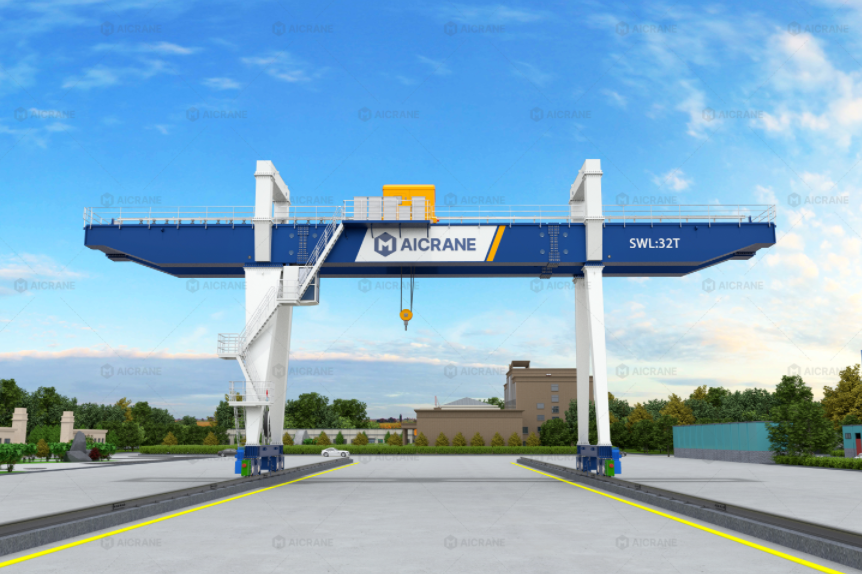
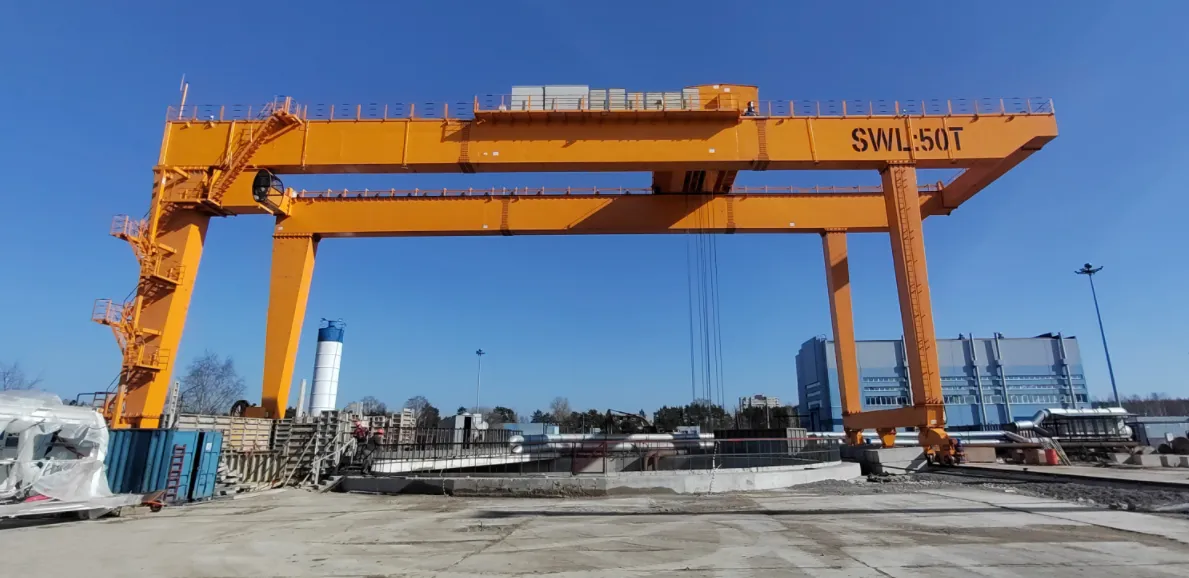
A double girder gantry crane for sale features two parallel girders that carry the trolley and hoist. This design allows the hoist to sit on top of the girders, unlike single girder cranes. The primary structural elements include:
- Main Girders: Two parallel steel beams, connected by cross beams for additional stability.
- End Trucks/Legs: Support the weight of the double girder bridge and facilitate movement along rails.
- Trolley and Hoist: Positioned on top of the girders for higher lifting capacity.
- Cross Braces: Reinforce structural stability and distribute loads evenly.
- Rails/Track System: Supports the travel of the crane along the operating area.
Key design characteristics:
- Higher rigidity due to the dual girder system.
- Greater load-bearing capacity and larger spans.
- Allows for higher lifting height compared to single girder designs.
- Typically uses a top-running trolley design, improving stability and reducing deflection under load.
3. Load Capacity and Span Considerations
One of the most significant differences between single and double girder gantry cranes is their load capacity and span potential.
- Single Girder Gantry Cranes are generally suitable for lighter loads, typically up to 20–30 tons. They are often used in small to medium-sized workshops, storage yards, and light industrial facilities. The span of single girder cranes is usually limited to around 35–40 meters due to the structural constraints of a single beam.
- Double Girder Gantry Cranes are designed for heavy-duty applications. They can handle loads ranging from 20 tons to over 500 tons. The double girder system allows for longer spans, often exceeding 50 meters, without compromising structural integrity. These cranes are ideal for shipyards, steel mills, and large-scale construction projects.
4. Hoisting Mechanism and Lifting Height
The placement of the hoist also differentiates these crane types:
- Single Girder Cranes: Use an underslung hoist, which hangs beneath the girder. While this configuration is simple and effective for light loads, it limits the maximum lifting height, as the hoist must hang below the girder and trolley.
- Double Girder Cranes: Use a top-running hoist positioned on the girders. This setup maximizes lifting height because the hoist can lift loads closer to the top of the crane structure. It also allows the crane to accommodate larger hoists and heavier loads without structural modifications.
5. Operational Efficiency and Maintenance
Single Girder Gantry Cranes:
- Easier to operate due to simpler structure and fewer moving parts.
- Maintenance is less demanding, reducing downtime and service costs.
- Ideal for small and medium-sized operations where lifting capacity and span requirements are moderate.
Double Girder Gantry Cranes:
- Require more complex operation due to additional structural components.
- Maintenance involves inspecting both girders and more moving parts, including top-running hoist systems.
- Despite higher maintenance needs, they offer superior operational efficiency for heavy-duty tasks, including precise load placement and high-volume material handling.
6. Cost Implications
Single Girder Gantry Cranes:
- Lower initial investment due to simpler design and less steel usage.
- Reduced installation and maintenance costs.
- More cost-effective for light to medium industrial applications.
Double Girder Gantry Cranes:
- Higher upfront cost due to increased material requirements and structural complexity.
- Installation is more time-consuming and may require specialized engineering support.
- Despite higher costs, they provide long-term benefits for heavy lifting, higher productivity, and operational safety.
7. Safety Considerations
Safety is a crucial factor in crane design:
- Single Girder Cranes have fewer structural components, reducing potential points of failure. However, the underslung hoist can cause load sway if not operated carefully.
- Double Girder Cranes offer enhanced stability due to the top-running hoist and dual girder system. They are less prone to deflection and provide safer operation for extremely heavy loads or long spans. Additionally, double girder cranes often include advanced safety features, such as anti-collision systems, overload protection, and reinforced trolley mechanisms.
8. Application Suitability
Single Girder Gantry Cranes are ideal for:
- Small warehouses and workshops.
- Light manufacturing facilities.
- Storage yards for moderate loads.
- Situations where lifting height and span are limited.
Double Girder Gantry Cranes are ideal for:
- Shipyards and ports handling containers and heavy cargo.
- Steel mills and foundries with large loads.
- Large-scale industrial and construction sites.
- Facilities requiring higher lifting heights and longer spans.
9. Summary Comparison Table
| Feature | Single Girder Gantry Crane | Double Girder Gantry Crane |
|---|---|---|
| Main Structure | Single girder | Two girders |
| Load Capacity | Up to 20–30 tons | 20–500+ tons |
| Span | Up to 35–40 meters | Over 50 meters possible |
| Hoist Type | Underslung | Top-running |
| Lifting Height | Limited | Higher |
| Maintenance | Simple, low cost | More complex, higher cost |
| Installation | Faster, easier | Requires more time and precision |
| Cost | Lower | Higher |
| Applications | Light-medium industrial | Heavy-duty industrial, shipyards, steel mills |
10. Conclusion
Choosing between a single girder and a double girder gantry crane largely depends on operational needs, load capacity, span requirements, and budget constraints. Single girder gantry cranes offer a cost-effective, compact, and easy-to-maintain solution for light to medium-duty lifting, making them ideal for small workshops and storage areas. Double girder gantry cranes, on the other hand, provide higher lifting capacity, greater spans, and enhanced safety, making them indispensable in heavy-duty industrial settings, large warehouses, and shipyards.
Investing in the right crane design ensures operational efficiency, worker safety, and long-term cost-effectiveness. By understanding the differences in structural design, hoist placement, load capacity, and application suitability, businesses can select the gantry crane that best meets their requirements, ultimately enhancing productivity and reliability in material handling operations.
Sign in to leave a comment.