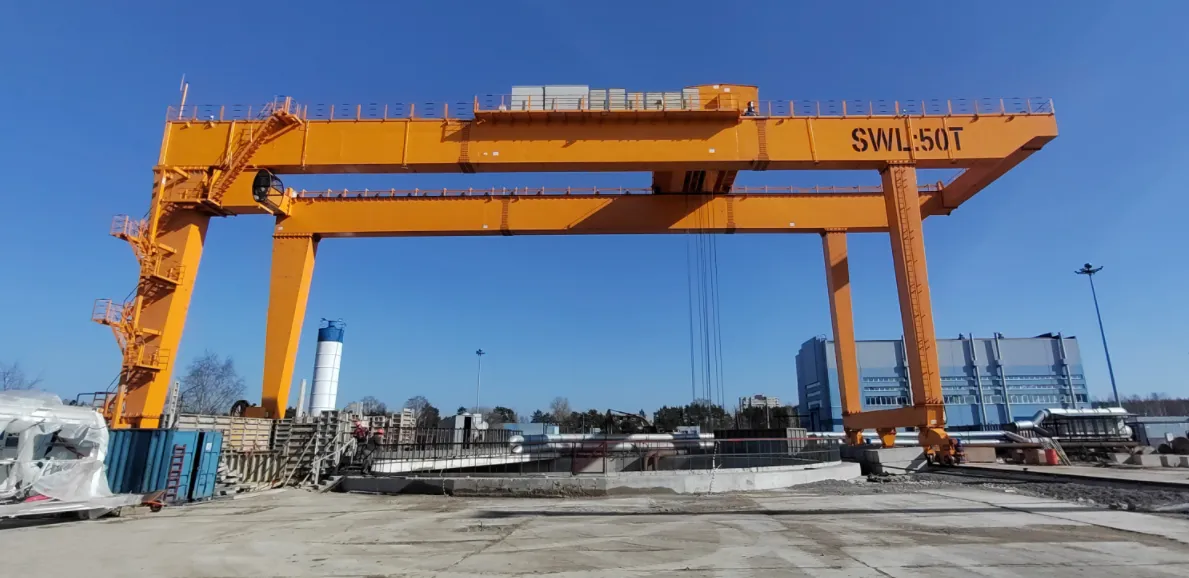

When people see a “50 ton gantry crane,” the first assumption is usually straightforward: it can lift 50 tons. While that is technically correct, the real-world meaning of gantry crane capacity is more complex. In actual industrial operations, factors like load type, working conditions, span, lifting height, and safety factors all influence how much a 50 ton gantry crane can practically and safely lift.
In this article, we will break down what “50 ton capacity” really means, how it is defined in engineering terms, and what users should understand before selecting or operating such heavy-duty lifting equipment.
What Does “50 Ton Gantry Crane Capacity” Actually Mean?
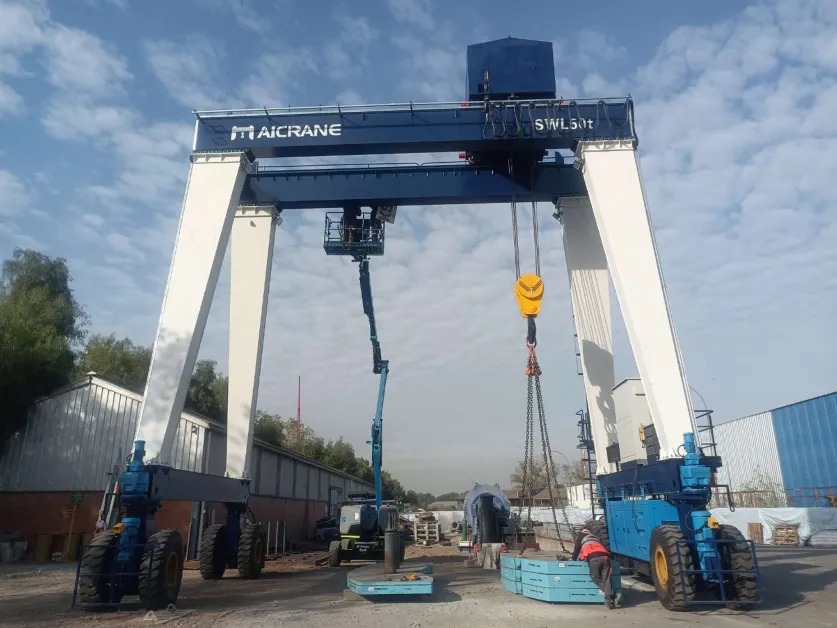
A 50 ton gantry crane refers to its rated lifting capacity, also known as Safe Working Load (SWL). This is the maximum load the crane is designed to lift under ideal conditions without risk of structural failure.
In simple terms:
- 50 tons = 50,000 kilograms = approximately 110,000 pounds
However, this does not always mean the crane can continuously lift 50 tons in every situation. The rated capacity is determined under strict engineering standards, including:
- Standard load distribution
- Controlled lifting speed
- Proper working environment
- No extreme wind or side loading
So, while “50 tons” is the official rating, real operational capacity may vary depending on conditions.
Key Components That Define a 50 Ton Gantry Crane
To understand lifting capability more clearly, it helps to look at the crane structure itself.
1. Main Girder Structure
The main beam supports the entire load. In a 50 ton gantry crane, this is usually a:
- Double girder design for heavy-duty stability
- High-strength steel structure to reduce deformation
2. Hoisting System
The hoist is responsible for lifting the load. For a 50 ton system, the hoist is typically:
- Electric wire rope hoist
- Or open winch type hoisting mechanism
3. End Carriages and Wheels
These distribute the load across rails or ground tracks. Their strength is critical for maintaining stability under full load conditions.
4. Spreader or Hook System
Depending on application, cranes may use:
- Standard hook blocks
- Container spreaders
- Custom lifting beams
Each attachment can slightly affect usable lifting capacity.
Does a 50 Ton Crane Always Lift 50 Tons?
The short answer is: not always in practice.
The rated 50 ton capacity is based on ideal operating conditions. In real-world usage, several factors can reduce usable lifting capacity:
1. Lifting Height
The higher the lift, the more dynamic forces affect stability. Very high lifts may require reducing load weight.
2. Span Length
A wider span creates more bending stress on the main girder. A 50 ton crane with a 40-meter span behaves differently than one with a 20-meter span.
3. Duty Cycle (Work Class)
Crane duty classification (such as A5, A6, A7) determines:
- Frequency of lifting
- Load intensity
- Operating speed
Higher duty cycles often require conservative loading.
4. Wind and Outdoor Conditions
For outdoor gantry cranes:
- Wind load can reduce safe lifting capacity
- Operation may be restricted under strong wind conditions
5. Load Type
A compact 50 ton steel block is very different from:
- A long, flexible structure
- Uneven or off-center loads
- Liquid-filled containers
These all influence real lifting safety.
Static Load vs Dynamic Load
One of the most misunderstood concepts is the difference between static and dynamic load.
Static Load
This is a load that is:
- Lifted slowly
- Stable and not moving
- Evenly distributed
In this case, the crane can safely handle the full 50 tons.
Dynamic Load
Occurs when:
- Starting or stopping lifting motion
- Load swinging or sudden movement
- Traveling with load
Dynamic forces can increase actual stress by 10%–30% or more. That is why engineers always build safety margins into crane design.
Safety Factor in 50 Ton Gantry Cranes
All industrial gantry cranes are designed with a safety factor, typically ranging from:
- 1.25× to 1.5× of rated load (or higher depending on standard)
This means:
- A 50 ton crane may be structurally tested at 62.5–75 tons during design validation
- But it is never intended to lift beyond 50 tons in daily operation
The safety factor ensures protection against:
- Material fatigue
- Unexpected overloads
- Operator error
- Environmental stress
Typical Applications of 50 Ton Gantry Cranes
A 50 ton gantry crane is widely used in heavy industrial environments where large components must be moved efficiently.
1. Steel Industry
- Steel coils
- Slabs and billets
- Heavy fabricated structures
2. Shipyards
- Marine engines
- Hull sections
- Large ship components
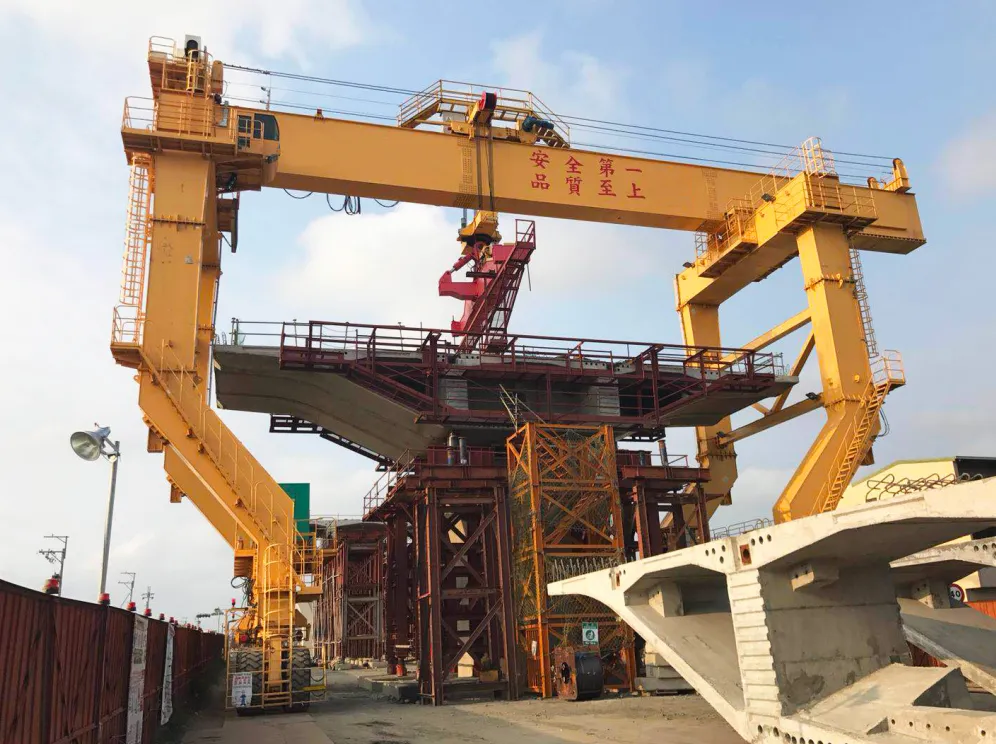
3. Precast Concrete Plants
- Bridge beams
- Large precast panels
- Structural concrete segments
4. Ports and Logistics Yards
- Heavy containers
- Industrial cargo handling
- Oversized equipment transport
5. Power Plants
- Turbine components
- Generator parts
- Heavy mechanical equipment
Common Misunderstandings About 50 Ton Capacity
Misunderstanding 1: “It can always lift 50 tons at full span”
In reality, lifting capacity may be reduced at maximum span due to increased structural stress.
Misunderstanding 2: “Upgrading hoist increases capacity”
Not true. The weakest structural component determines overall capacity.
Misunderstanding 3: “Speed does not matter”
Higher lifting speeds increase dynamic load, which can affect safe working limits.
Misunderstanding 4: “All 50 ton cranes are the same”
Design varies significantly between:
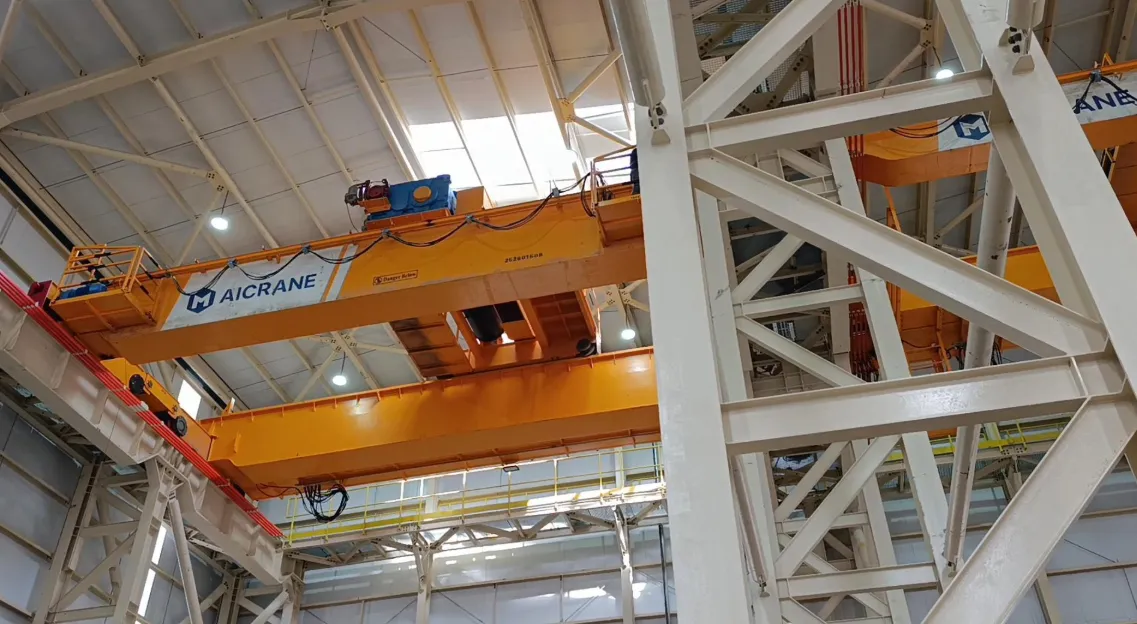
- Single girder vs double girder systems
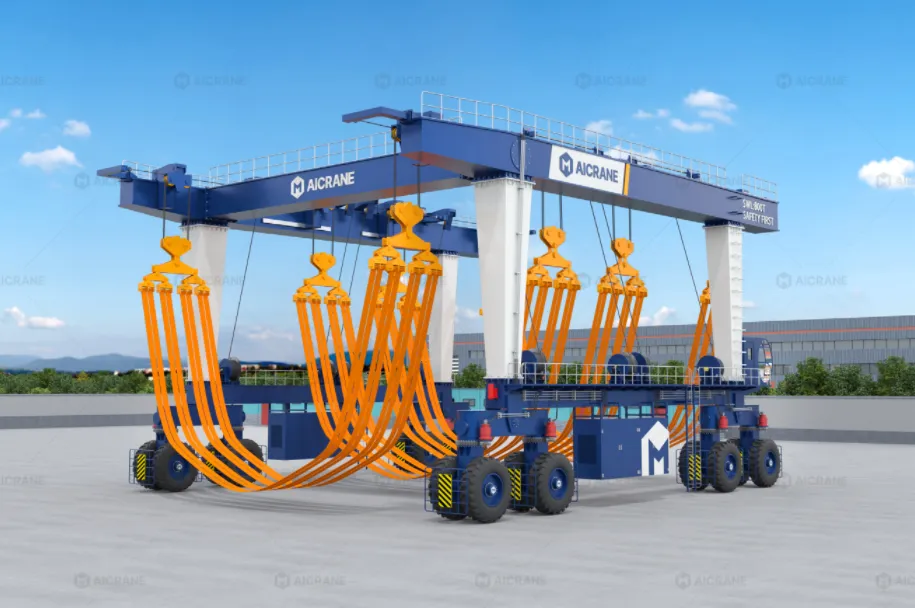
- Rail mounted vs rubber tyred gantry cranes
- Indoor vs outdoor configurations
How to Maximize the Performance of a 50 Ton Gantry Crane
To ensure safe and efficient operation, users should follow best practices:
✔ Proper Load Distribution
Always center loads under the hook or spreader.
✔ Regular Inspection
Check:
- Wire ropes
- Brakes
- Structural welds
- Wheel alignment
✔ Follow Duty Cycle Limits
Avoid continuous overload operations beyond design classification.
✔ Environmental Monitoring
Stop operation during:
- High wind conditions
- Heavy rainstorms
- Poor visibility
✔ Operator Training
Skilled operators significantly reduce accident risks and improve crane lifespan.
Conclusion
A 50 ton gantry crane is a powerful and highly versatile lifting machine designed for heavy industrial applications. However, its “50 ton capacity” represents an engineering rating under ideal conditions—not a fixed real-world guarantee in every situation.
Actual lifting performance depends on many factors, including span, lifting height, duty class, load type, and environmental conditions. When properly designed, operated, and maintained, a 50 ton gantry crane can safely and efficiently handle demanding lifting tasks in steel mills, shipyards, precast yards, and ports.
Understanding these limitations is essential not only for safe operation but also for maximizing productivity and extending equipment lifespan.











![The Benefits of Using a CNC Touch Probe [Infographic]](https://writeupcafe.com/data/post/1677697/bfdf3e040e67936848aa232d2dfe3d03.jpg.webp)








Sign in to leave a comment.