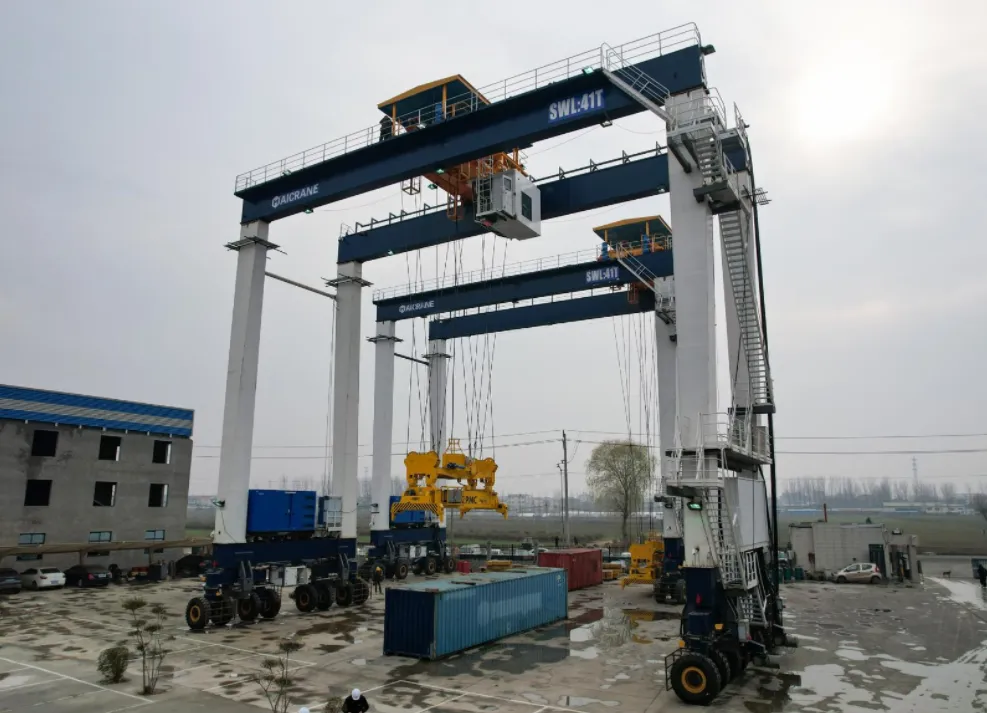

In the global logistics chain, the efficiency of a terminal is often measured by its ability to maximize vertical and horizontal space. As global shipping volumes increase, terminal operators are moving away from sprawling horizontal yards toward high-density vertical stacking. Central to this evolution is the distinction between Standard (8ft 6in) and High-Cube (9ft 6in) containers.
While a one-foot difference in height may seem negligible in isolation, it fundamentally alters the engineering requirements for container handling gantry cranes - specifically their lift height and span. Optimizing these two parameters is critical for maintaining throughput and ensuring that the crane's duty cycle remains productive.
1. The High-Cube Revolution and Terminal Density
Standard ISO containers have served as the industry benchmark for decades. However, the "High-Cube" (HC) container now accounts for a massive share of the global fleet, particularly for transporting light, voluminous goods like electronics, textiles, and furniture.
When these containers reach a land-based terminal, the "stacking profile" dictates the crane's design. A yard designed to stack "1-over-5" (stacking five high and moving a sixth over the top) requires significantly more vertical clearance if those five containers are High-Cubes rather than Standard units. Specifically, a 5-high stack of High-Cubes is 5 feet taller than a 5-high stack of Standards. This necessitates a taller crane structure, which in turn impacts the crane's center of gravity, wind load resistance, and wheel loads.
2. Optimizing Lift Height: The Vertical Frontier
The lift height of a crane—the distance from the ground to the underside of the spreader—must account for three primary factors: the height of the stack, the "over-the-top" clearance, and the height of the spreader/hook assembly itself.
The Math of Vertical Clearance
To calculate the minimum lift height (HL) for a terminal, engineers use the following logic:
HL = (n × HC) + C + S
Where:
- n is the number of containers in the stack.
- HC is the height of the container (Standard vs. High-Cube).
- C is the safety clearance (usually 500mm to 1000mm) to move a container over the stack.
- S is the height of the spreader and headblock.
For a 1-over-6 stacking operation using High-Cubes, the lift height must be approximately 6.5 feet higher than a similar operation using Standard containers. If a terminal transitions to High-Cubes without upgrading crane height, they may be forced to reduce their stack density (e.g., dropping from 5-high to 4-high), effectively losing 20% of their yard capacity.
Impact on Crane Dynamics
Increasing lift height isn't as simple as lengthening the legs. A taller crane experiences:
- Increased Sway: The longer the hoist ropes, the more susceptible the load is to "pendulum effect." This requires more sophisticated anti-sway systems (electronic or hydraulic) to maintain cycle speeds.
- Wind Sensitivity: A higher profile increases the sail area, requiring more robust gantry drives and braking systems to ensure the crane remains stable during high-wind events.
3. Optimizing Span: The Horizontal Efficiency
The span of a crane refers to the distance between the centerlines of the gantry rails. In container terminals, this determines how many "rows" of containers can be placed side-by-side beneath the portal.
Row Configuration and Aisle Management
Standard spans often accommodate 6 to 8 rows of containers plus a truck lane. However, as terminals move toward High-Cube stacking, the interaction between span and height becomes a matter of volumetric optimization.
- Wide Span Cranes: Allow for more storage rows, reducing the number of gantry travel movements needed to reach different parts of the yard.
- Narrow Span Cranes: Generally faster and more agile, often used in automated terminals where high-speed "shuffling" is required.
When stacking High-Cubes, the "shadow" of the crane legs becomes a factor. Designers must ensure that the inner clear width of the crane can accommodate the designated number of rows with enough "buffer" space to prevent accidental collisions during high-speed trolley travel, especially when handling the taller High-Cube units.
4. Engineering Solutions for High-Density Stacking
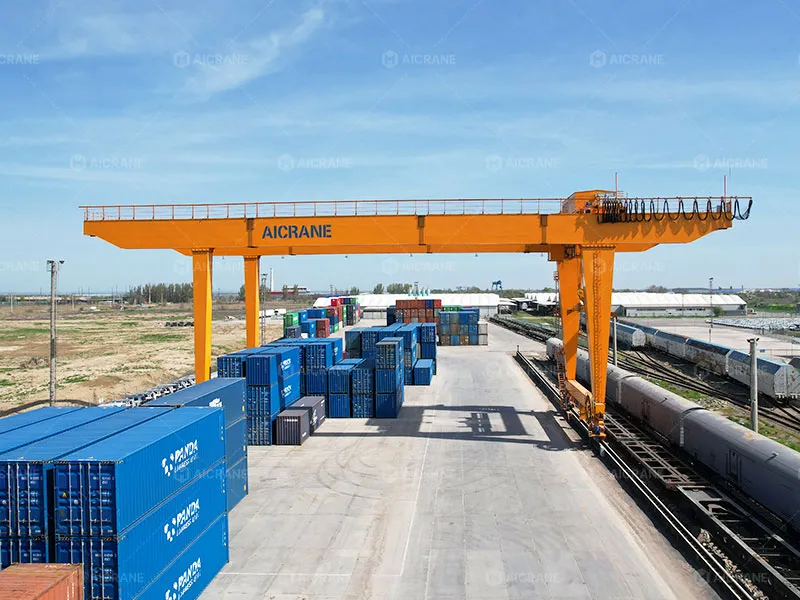
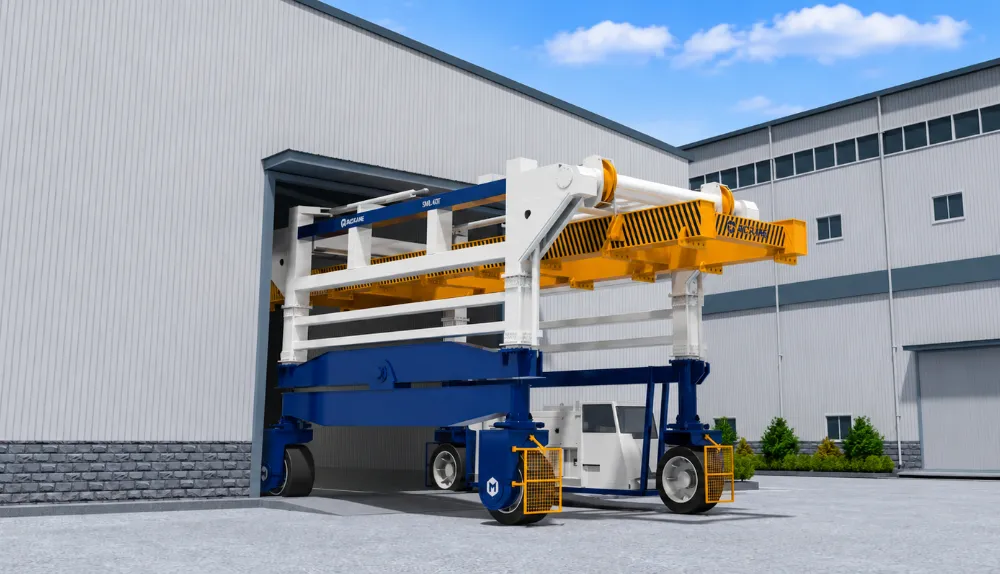
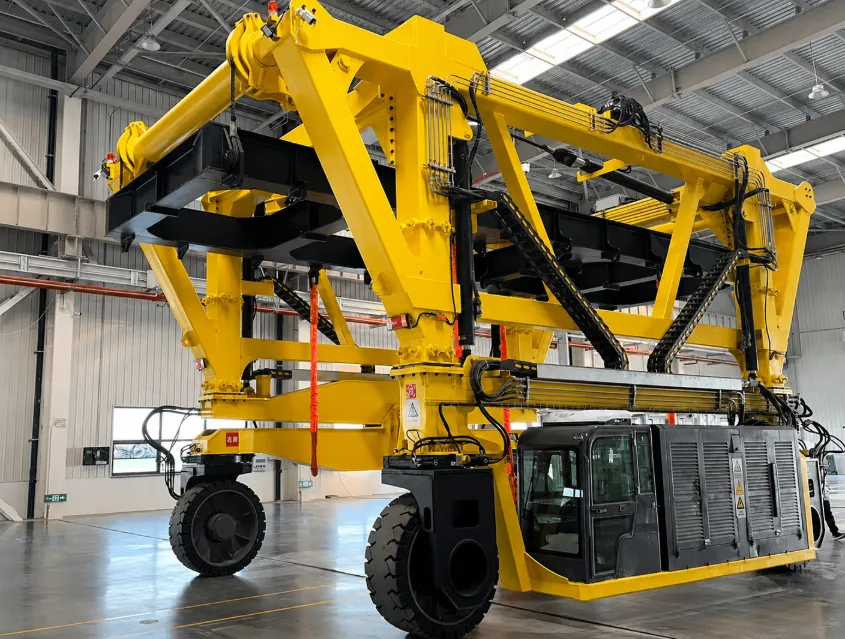
To bridge the gap between Standard and High-Cube requirements, modern crane manufacturers (such as those producing Rail-Mounted Gantry cranes or Rubber-Tyred Gantry cranes) employ several engineering innovations.
Energy Regeneration and Hoisting Power
Lifting heavier High-Cube loads to greater heights requires more energy. Modern cranes utilize Active Front End (AFE) drives. When the spreader is lowered, the potential energy is converted back into electrical energy and fed into the terminal grid or stored in onboard battery systems. This is particularly effective in High-Cube yards where the "fall distance" is greater.
Telescopic Spreaders
To handle the transition between different container sizes and heights seamlessly, telescopic spreaders are used. These spreaders automatically adjust from 20ft to 40ft (or 45ft for High-Cubes). Sophisticated sensors detect the "twistlock" engagement points, ensuring that even if a stack is a mix of Standard and HC units, the crane's PLC (Programmable Logic Controller) can adjust the hoist deceleration to prevent "hard landings."
5. Comparative Analysis: RTG vs. RMG in High-Cube Scenarios
The choice between a Rubber-Tyred Gantry (RTG) and a Rail-Mounted Gantry (RMG) often comes down to how much height and span the terminal requires.
| Feature | Rubber-Tyred Gantry (RTG) | Rail-Mounted Gantry (RMG) |
|---|---|---|
| Typical Stack Height | 1-over-5 or 1-over-6 | 1-over-6 up to 1-over-9 |
| Span Versatility | High (can move between bays) | Low (fixed to rails) |
| High-Cube Suitability | Standard; requires wider gauge for stability | Excellent; can support massive spans and heights |
| Automation Potential | Moderate | High |
For terminals focusing on High-Cube stacking, the RMG is often preferred because its rail-based stability allows for much higher lift heights and wider spans (up to 15 rows or more). However, the RTG remains the king of flexibility, allowing terminal operators to reconfigure their yard layout as the ratio of Standard to High-Cube containers fluctuates.
6. The Economic Impact of Optimization
Optimizing the span and lift height is ultimately a financial decision. A crane with an "over-engineered" lift height costs more in initial capital expenditure (CAPEX) due to the increased steel weight and more powerful motors. However, the cost of not being able to stack High-Cubes is far higher in the long run.
Throughput and Cycle Times
In a 1-over-6 HC stack, the trolley and hoist must move a greater total distance per cycle than in a 1-over-3 Standard stack. To maintain the same "moves per hour" (MPH), the crane must have higher hoisting and trolley speeds.
- Hoisting Speed: Typically 25–50 m/min with a full load.
- Trolley Speed: Typically 70 or 100 m/min.
If the crane isn't optimized for these speeds, the terminal faces a bottleneck. Every extra second spent hoisting a High-Cube container to clear a 5-high stack adds up to hours of lost productivity over a month of operation.
7. Conclusion: Future-Proofing the Terminal
As shipping lines continue to prioritize High-Cube containers for their superior volume-to-cost ratio, land-side terminals must adapt. Optimizing crane span and lift height is no longer about meeting today’s average; it is about future-proofing for the maximum.
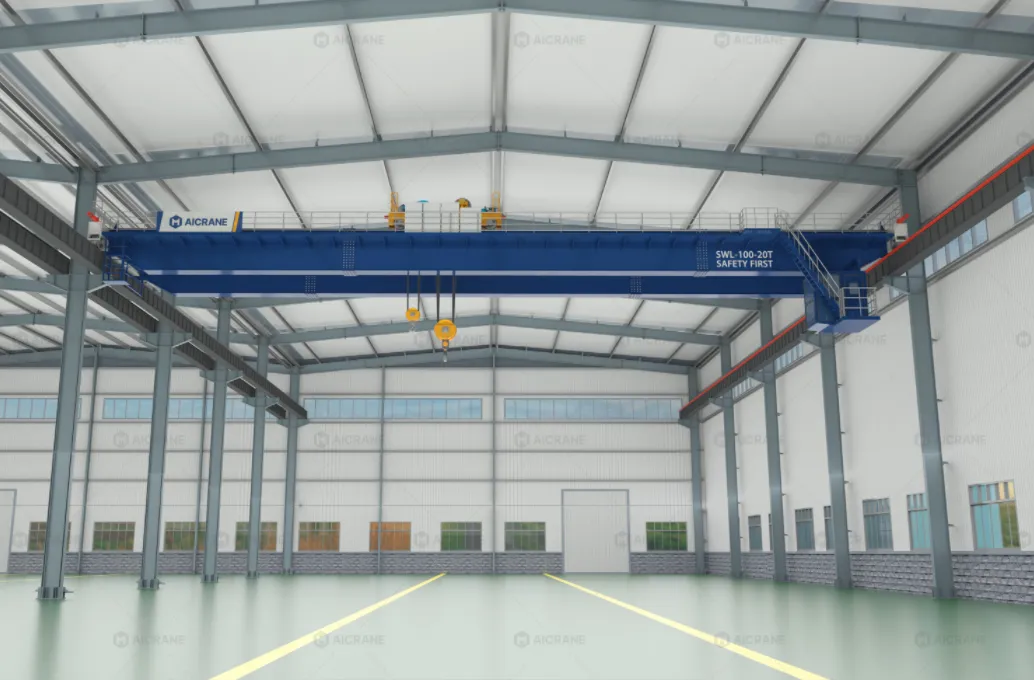
A well-designed crane system—whether it is a 20-ton unit for specialized industrial products or a 40-ton yard crane for international shipping—must balance the structural rigidity required for height with the agility required for span. By integrating energy-saving technologies, advanced anti-sway systems, and precise vertical calculations, terminal operators can ensure that their stacking operations remain a competitive advantage rather than a logistical hurdle.
The move from Standard to High-Cube is a vertical leap that requires a grounded, data-driven engineering approach to ensure every inch of lift height translates into a better bottom line.

















Sign in to leave a comment.