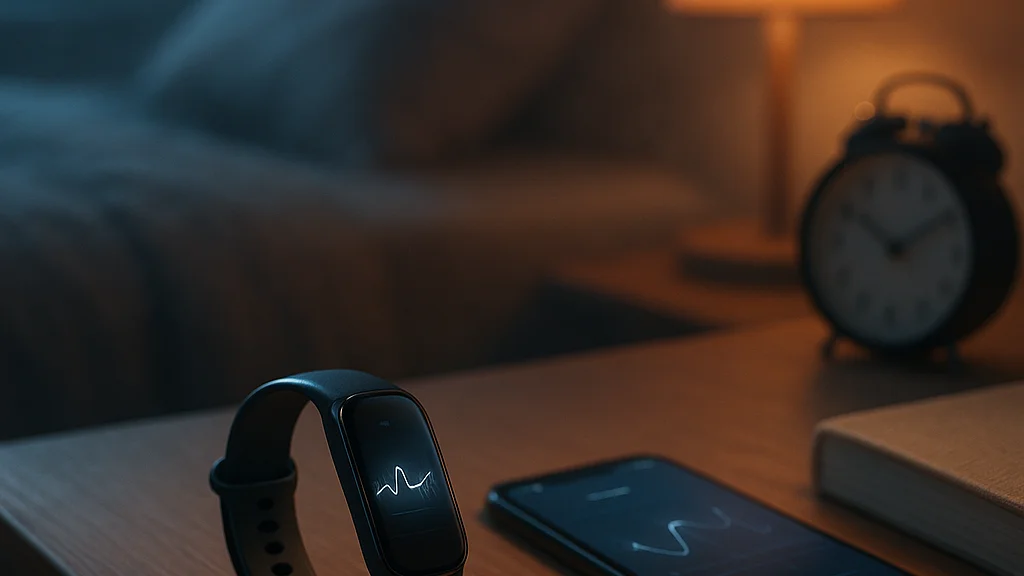

At 2 a.m., the bedroom can feel as dramatic as a Gaudí skyline at dusk: beautiful, mysterious, and slightly chaotic if your body refuses to settle. Millions of people know that frustration intimately. They go to bed on time, dim the lights, silence notifications, and still wake feeling foggy. That gap between time in bed and true restoration is exactly where sleep tracking technology has found its audience. What began as step-counting wristbands with rough bedtime estimates has matured into a broad ecosystem of smart rings, watches, under-mattress sensors, mattress toppers, and apps that attempt to map the hidden architecture of the night.
The appeal is easy to understand. Sleep is both deeply personal and stubbornly hard to judge from memory. Most people can tell when they slept badly, but fewer can say whether the culprit was late caffeine, room temperature, alcohol, stress, irregular timing, or fragmented sleep. Trackers promise to turn that blur into patterns. They estimate sleep duration, bedtime consistency, heart rate trends, movement, blood oxygen in some devices, skin temperature shifts in some wearables, and recovery signals that marketers present as readiness scores. The promise is not perfect diagnosis. The real promise is awareness.
That matters because poor sleep is not a niche complaint. Public health agencies and sleep specialists have spent years warning that insufficient or irregular sleep is associated with worse mood, lower concentration, metabolic strain, and reduced physical recovery. Yet technology alone does not create better nights. A wearable can alert you that you spent seven hours in bed but only six asleep; it cannot force you to stop doomscrolling at midnight. The more useful question is sharper: when does sleep tracking actually improve habits, and when does it simply create more bedtime anxiety?
The answer sits somewhere between science and behavior. Used well, trackers can act like a gentle Catalan festival drummer, setting rhythm where chaos once ruled. Used badly, they can become another glowing source of pressure. The difference lies in understanding what these tools measure, what they miss, and how to translate data into simple routines that the body can trust.
How sleep tracking moved from novelty to nightly ritual
The first wave of consumer sleep tracking was blunt. Early devices relied heavily on actigraphy, a method that infers sleep from motion. If you lay still, the device often assumed you were asleep; if you moved, it often assumed lighter sleep or wakefulness. That was useful, but limited. Someone lying awake and motionless could be misclassified as sleeping, while a restless sleeper might look worse than they felt. Over time, manufacturers layered in more signals: optical heart rate sensing, heart rate variability estimates, respiratory trends, skin temperature, and machine-learning models trained on larger data sets.
By the early 2020s, sleep tracking had spread far beyond fitness enthusiasts. Smartwatches from Apple, Samsung, Garmin, and Fitbit normalized overnight wear. Smart rings gained momentum because many users found them less intrusive in bed than a watch. Under-mattress sensors and connected bedding appealed to people who disliked wearables altogether. Mainstream shopping guides began treating sleep tech as a standard consumer category rather than a quirky wellness add-on. Forbes, for example, grouped a range of devices in its guide to the best sleep tech devices to improve your bedtime routine, reflecting how broad the market has become.
This expansion did not happen by accident. Three forces pushed it forward. First, consumers became more comfortable with health metrics after years of tracking steps, workouts, and heart rate. Second, remote work and hybrid schedules changed sleep patterns for many people, making irregular routines more visible. Third, wellness culture shifted from pure performance toward recovery. Rest became aspirational, not lazy. A good night’s sleep started to carry the same social value as a clean diet or a morning run.
WriteUpCafe has already explored this broader shift in Sleep Tracking Technology and the Science of Better Sleep, and that framing is essential. The devices became popular not because they perform miracles, but because they translate an invisible biological process into a visible behavioral prompt. In other words, the technology matured when it stopped selling mystery and started selling feedback.
Sleep trackers do not replace sleep medicine, but they can reveal patterns people would otherwise miss for months.
What the devices actually measure, and where the limits begin
For all the glossy interfaces and readiness scores, consumer sleep tracking rests on estimation. That is not a flaw so much as a boundary. Clinical sleep studies use polysomnography, which measures brain waves, eye movements, muscle activity, breathing, oxygen levels, and more. Most home devices cannot do that. They infer sleep stages and sleep quality from indirect signals. This distinction matters because users often treat app-generated charts as hard truth when they are better understood as informed approximations.
The most common signals include:
- Movement: stillness often suggests sleep, while frequent motion can indicate wakefulness or lighter sleep.
- Heart rate: heart rate usually drops during sleep, and changes across the night may help algorithms estimate transitions.
- Heart rate variability: some devices use HRV as a recovery marker, though interpretation can vary widely by person.
- Respiratory trends: certain devices estimate breathing rate from motion or optical signals.
- Skin temperature and blood oxygen: available on some wearables, these can add context but are not diagnostic on their own.
Accuracy also depends on form factor. A watch may be more versatile during the day, but some people find it bulky at night. A ring can be more comfortable for sleep-specific use. A mattress topper or under-mattress sensor avoids wearability issues but may be less individualized if two people share a bed. BGR’s comparison of smart rings versus smartwatches for sleep tracking captured this practical trade-off well: comfort and consistency often matter as much as raw feature count.
Then there is the issue of stage data. Many apps show deep sleep, light sleep, and REM in elegant color blocks that look scientific enough to frame. Yet sleep specialists have repeatedly cautioned that consumer devices are typically better at estimating total sleep and sleep timing than precisely identifying every stage. If your app says you got 1 hour and 22 minutes of deep sleep, that number should be treated as directional, not sacred. The stronger value lies in trends over time. If your estimated sleep duration falls every week after late dinners, or your resting heart rate stays elevated after alcohol, that pattern can still be useful even if individual stage labels are imperfect.
A sensible user therefore asks not, “Is this chart absolutely correct?” but “Is this helping me spot repeatable habits?” That shift in mindset turns sleep tracking from digital fortune-telling into a practical journal.
The most useful devices in 2026 are the ones people will actually keep using
By mid-2026, the sleep tech market is crowded, but the winning products tend to share one trait: they reduce friction. Consumers have become less impressed by endless dashboards and more interested in whether a device fits naturally into life. The best tracker is not necessarily the one with the longest feature list. It is the one you will wear, charge, trust, and respond to for months.
Current consumer choices broadly fall into three camps. Wearables remain the most dominant. Apple Watch, Fitbit devices, Garmin models, Samsung Galaxy wearables, and smart rings all continue to compete for overnight use. BGR’s roundup of wearables for sleep tracking reflects how established this category has become, especially for users who also want exercise and recovery data in one ecosystem. Apple Watch users, meanwhile, still rely on built-in tracking and app integrations, and The Tech Edvocate’s guide on how to track sleep on Apple Watch shows how mainstream these routines now are.
The second camp is non-wearable sensing. Smart mattress toppers, protectors, and bed-based sensors appeal to light sleepers and those who dislike charging or wearing hardware overnight. AOL’s review of smart mattress toppers and protectors points to a growing desire for passive monitoring paired with temperature control. This is especially relevant because thermal comfort is one of the most underestimated sleep variables. A room that feels slightly too warm can quietly fragment sleep, even if the user never fully wakes.
The third camp is software-led coaching. Many platforms now combine overnight data with behavioral prompts: wind-down reminders, caffeine cut-off suggestions, consistency scores, and recovery recommendations. That is where the category has become more mature in 2026. Hardware is no longer sold only as a measuring tool; it is sold as a behavior-change system.
Several practical trends stand out in 2026:
- Comfort is driving adoption. Rings and passive sensors continue gaining users who abandoned bulky watches at night.
- Temperature management is moving center stage. Bedding tech is increasingly marketed as sleep quality tech, not just comfort tech.
- Recovery scores are everywhere. Brands package sleep, HRV, resting heart rate, and activity into single readiness metrics.
- Battery life remains a decisive factor. A device that needs frequent charging often fails as a sleep tool, because bedtime is when many people need it most.
- Coaching features are becoming stickier than raw data. Users are more likely to change habits when the app tells them what to do next.
That evolution mirrors a truth familiar to anyone who has tried to improve sleep: insight matters, but simplicity wins. The best technology feels less like a control room and more like a calm evening ritual by the Mediterranean, where rhythm and consistency do half the work.
The metric that changes behavior fastest is often not REM sleep or HRV. It is bedtime consistency, because people can act on it tonight.
How sleep tracking can build better habits instead of more anxiety
The strongest case for sleep tracking is behavioral, not diagnostic. A tracker can make invisible habits visible, and that visibility can be powerful. If your app shows that your sleep midpoint shifts by two hours between weekdays and weekends, you are seeing social jet lag in your own life. If your resting heart rate stays elevated after late alcohol or heavy evening meals, that is a personal signal stronger than generic advice. This is where trackers can genuinely improve sleep habits.
Yet there is a catch. Some users become so fixated on their nightly score that they sleep worse. Sleep clinicians have increasingly discussed “orthosomnia,” a term used to describe anxiety driven by the pursuit of perfect sleep data. The app says you slept poorly, so you feel poorly, even if you subjectively felt fine. The chart becomes judge and jury. That is the opposite of healthy sleep behavior.
The practical solution is to use trackers as trend tools and pair them with low-drama habits. WriteUpCafe’s How Sleep Tracking Technology Shapes Better Sleep Habits in 2026 emphasizes this habit-first approach, and it remains the smartest way to use the data. Instead of chasing a perfect score, use the device to test one variable at a time.
The most effective habit experiments usually include:
- Consistent sleep and wake times: often the highest-impact change for circadian stability.
- Earlier caffeine cutoffs: many people discover they are more sensitive than they assumed.
- Reduced evening alcohol: alcohol may speed sleep onset but can fragment the second half of the night.
- Cooler bedroom conditions: especially relevant if a tracker shows frequent restlessness.
- Shorter late-night screen exposure: not because screens are uniquely evil, but because they often delay bedtime.
Notice what these interventions share: they are simple, repeatable, and grounded in behavior rather than gadgets. The tracker acts as a mirror. It does not do the sleeping for you. If the mirror becomes stressful, scale back. Check weekly averages instead of nightly scores. Hide stage details if needed. Focus on sleep duration and consistency first. For many people, that alone is enough to produce meaningful change.
There is also a social dimension. Couples can use shared bedroom data to discuss temperature, noise, and schedules more constructively. Parents can better understand how fragmented their own sleep becomes during certain family routines. Shift workers can use tracking to identify the least disruptive patterns available within difficult constraints. Technology does not erase biology, but it can make compromise more intelligent.
What the data says about common sleep disruptors
One reason sleep tracking has become so persuasive is that it turns broad sleep hygiene advice into personal evidence. Most adults have heard the standard guidance for years: keep a regular schedule, avoid too much caffeine late in the day, limit alcohol before bed, and make the bedroom dark, quiet, and cool. The problem is not awareness. The problem is motivation. Generic advice often feels abstract until your own charts start confirming it.
Take bedtime variability. Sleep researchers have long linked irregular schedules with poorer sleep quality and daytime functioning. Consumer trackers now make that irregularity visible in a way a memory cannot. A user may think they “usually” go to bed around 11 p.m., only to discover their actual bedtime ranges from 10:15 p.m. to 1:05 a.m. across a typical week. That inconsistency can shift circadian timing and reduce sleep efficiency, especially when wake times stay fixed for work or school.
Temperature is another example. As smart bedding and bedroom sensors improve, users are seeing how often thermal discomfort interrupts sleep. The body naturally cools to support sleep onset and maintenance. If bedding traps too much heat, restlessness can increase. This is one reason smart toppers and climate-focused products are gaining traction; they target a variable many people feel but struggle to quantify.
Several disruptors appear repeatedly in consumer sleep data and in sleep medicine discussions:
- Late caffeine: even afternoon intake can affect sensitive users.
- Alcohol close to bedtime: often associated with more fragmented sleep and elevated overnight heart rate.
- Irregular schedules: particularly common in hybrid workers and frequent travelers.
- Warm sleep environments: linked to discomfort and more movement during the night.
- Stress and mental activation: often visible as delayed sleep onset or short sleep despite adequate time in bed.
What makes 2026 different is not that these disruptors are new. It is that more people can now test them with their own data over several weeks. A user can compare sleep after a glass of wine versus no alcohol, after 5 p.m. coffee versus a noon cutoff, or after lowering room temperature by one or two degrees. This kind of personal experimentation is where trackers shine brightest.
Still, caution is essential. Consumer devices cannot diagnose insomnia, sleep apnea, restless legs syndrome, narcolepsy, or other medical conditions. If snoring is severe, daytime sleepiness is persistent, breathing pauses are suspected, or sleep remains poor despite habit changes, the next step is a clinician, not another gadget. The technology can raise questions. It cannot replace evaluation.
Where sleep tracking fits into broader health and wellness tech
Sleep tracking now sits at the center of wellness technology because sleep influences nearly every other metric these platforms care about. Recovery scores, workout readiness, stress dashboards, menstrual cycle insights, and even productivity coaching increasingly depend on overnight data. The body does not compartmentalize neatly, and the software industry has finally caught up to that reality. Poor sleep echoes into exercise performance, appetite regulation, mood, and concentration. Better sleep supports all of them.
That integration has benefits. A person who ignores a low sleep score might still respond when the same app warns that intense training today could impair recovery. Someone focused on stress management may begin taking sleep consistency more seriously when they see overnight heart rate and next-day mood move together. By connecting sleep to broader well-being, platforms make rest feel less like passive downtime and more like active maintenance.
There is also a cultural shift underway. Wellness once prized relentless optimization, the sort of energy that would feel out of place in a quiet seaside village on the Costa Brava. More recently, the mood has softened. Recovery, restoration, and nervous system regulation have become central themes. Sleep tracking fits that shift beautifully when it is framed as support rather than surveillance.
For employers, insurers, and health systems, this raises both opportunity and risk. Better awareness of sleep could improve preventive health habits and reduce burnout. But privacy concerns are real. Sleep data can reveal intimate patterns about schedules, stress, and health. Consumers should pay attention to data-sharing settings, subscription models, and whether a device keeps information primarily on-device or in the cloud. Convenience should not erase informed consent.
The most promising future use of sleep tracking may be quiet integration. Instead of demanding attention, the best systems will likely fade into the background while surfacing only the insights that matter: your schedule drifted this week, your room ran warm, your recovery is lower than usual, your bedtime routine slipped. If technology can become gentler and more context-aware, it may help people sleep better precisely by asking less of them.
The smartest way to use sleep tech from tonight onward
If there is one lesson from the past few years of sleep tech, it is this: better sleep rarely comes from more data alone. It comes from a clear routine, a comfortable environment, and a realistic interpretation of the numbers. The body loves rhythm. It responds to repeated cues the way Barcelona responds to festival season, with energy when timing is right and confusion when everything starts at once.
For most people, the best strategy is refreshingly simple. Pick a tracker you can tolerate nightly. Wear it or place it consistently for two to three weeks without changing too much. Observe patterns rather than individual nights. Then make one adjustment at a time. Move bedtime earlier by 20 minutes. Stop caffeine earlier. Lower room temperature. Reduce alcohol. Keep wake time steady, even after a poor night. Reassess after a week. This method is slower than marketing promises, but far more reliable.
Here is a practical sequence that works well:
- Track baseline sleep for 14 days.
- Focus first on total sleep time and consistency, not stage perfection.
- Choose one habit variable to test for 7 days.
- Review weekly trends, not emotional reactions to single-night scores.
- Escalate to medical advice if symptoms suggest a disorder or if sleep remains poor.
There is joy in this approach because it restores agency. Instead of fearing the night, you begin to understand it. Instead of treating the tracker as an oracle, you treat it as a notebook. Some nights will still be messy. Travel, stress, children, hormones, heat waves, and life itself do not disappear because an app is installed. But patterns become visible, and visibility often leads to better choices.
Sleep tracking technology is at its best when it supports habits that would make sense even without a battery or subscription. A regular bedtime. A cool, dark room. Less stimulation late at night. Honest attention to how your body responds. If a device helps you build those habits, it is doing valuable work. If it makes you more anxious, simplify or step away. Better sleep is not about chasing perfect graphs. It is about creating nights that feel calmer, steadier, and more restorative over time.
That is the real promise of sleep tech in 2026. Not a mechanical dream of flawless optimization, but a more human one: using gentle feedback to live in better rhythm with your own biology. And when that rhythm clicks, the effect can feel as elegant as Gaudí’s curves catching morning light after a peaceful night at last.

























Sign in to leave a comment.