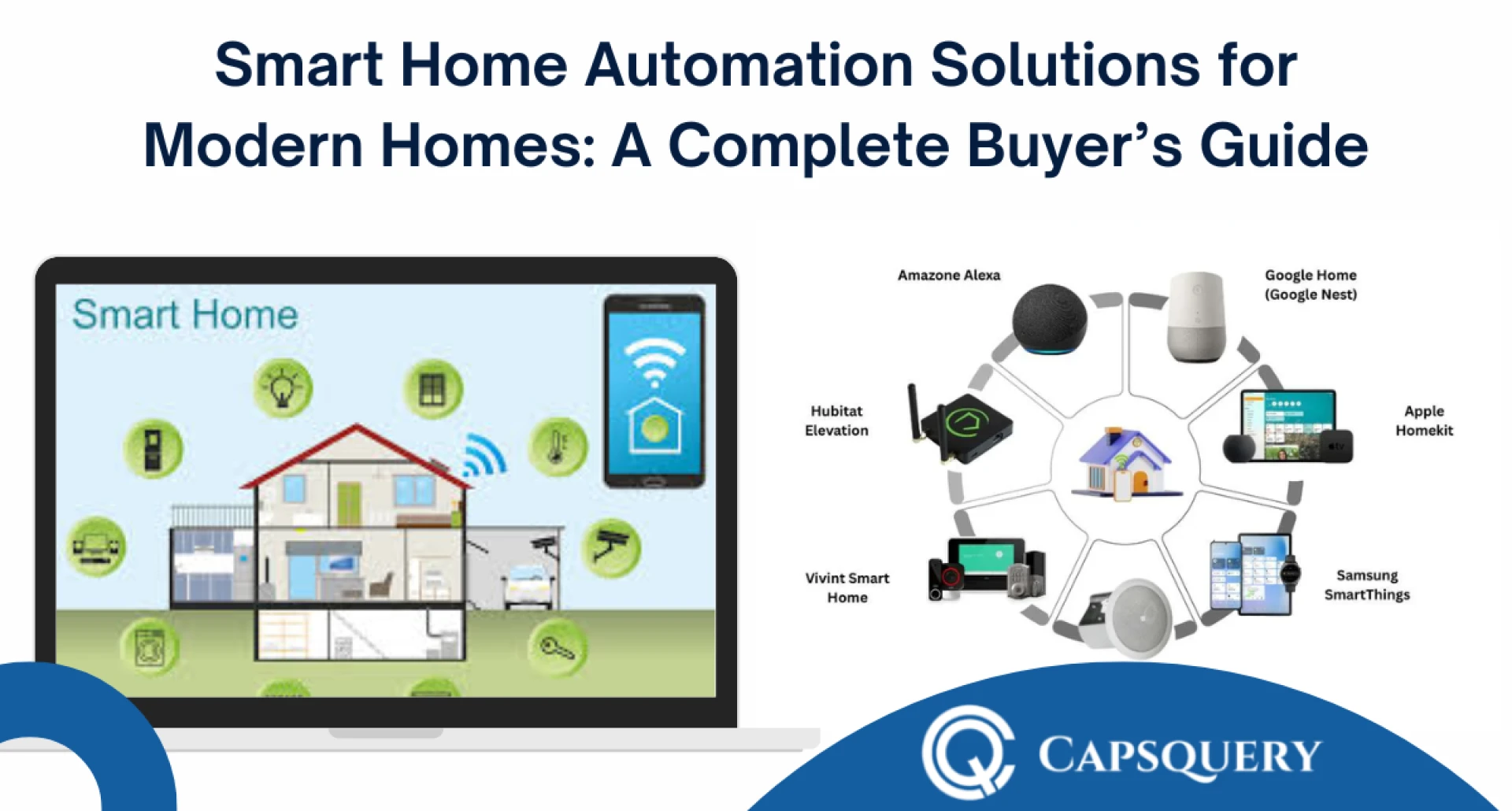

Electricity costs are rising, lifestyles are getting busier, and homeowners now expect more control, comfort, and efficiency from their living spaces. This is where smart home automation solutions are becoming a practical necessity rather than a luxury. Modern homes are no longer defined only by design and location—they are increasingly valued by how intelligently they manage energy, security, and daily routines.
From automated lighting and climate control to centralized IoT systems that connect every device, smart home automation is reshaping how people live, buy, and sell homes. For buyers, it means long-term savings and convenience. For realtors and developers, it adds measurable property value. For homeowners, it delivers control and efficiency that traditional homes simply cannot match.
This guide breaks down everything buyers need to know about smart home automation systems, how they work, what to look for, and how to make the right decision for a modern home.
What Is Smart Home Automation?
Smart home automation refers to the use of IoT-based systems that allow homeowners to control, monitor, and automate household devices from a single platform. These systems connect appliances, lighting, climate control, security, and utilities through sensors, controllers, and software.
Instead of manually switching devices on and off, automation rules handle tasks automatically. For example, lights can turn off when a room is empty, air conditioning can adjust based on occupancy, and geysers can heat water only during scheduled hours.
Unlike standalone smart gadgets, a true smart home automation system works as a connected ecosystem rather than isolated devices.
Why Modern Homes Are Moving Toward Automation
Traditional homes rely heavily on manual control, which often leads to wasted electricity, inconsistent comfort, and limited security. Smart homes solve these issues by introducing intelligence into everyday operations.
Key reasons modern homeowners are adopting smart home automation include:
- Rising electricity and utility costs
- Demand for energy-efficient living
- Increased focus on comfort and convenience
- Better home security and monitoring
- Higher resale and rental value
In competitive real estate markets such as Cupertino, Dallas, and Houston, smart home features are increasingly seen as value-added essentials rather than optional upgrades.
Core Components of a Smart Home Automation System
Understanding the core components helps buyers evaluate the quality and scalability of a system.
1. Central IoT Controller
This acts as the brain of the smart home. It connects all devices and allows automation rules to work together. A centralized system provides better energy optimization than separate apps for each device.
2. Smart Sensors
Motion sensors, temperature sensors, and occupancy detectors help the system respond in real time. These sensors play a critical role in reducing unnecessary power usage.
3. Smart Switches and Plugs
These replace traditional switches and allow automated control of lights, fans, and appliances without replacing existing wiring.
4. Smart Appliances
Devices like smart air conditioners, smart geysers, and smart lighting systems consume electricity more efficiently when integrated into an automation setup.
How Smart Home Automation Reduces Electricity Bills
One of the biggest reasons buyers invest in smart home automation solutions is long-term energy savings.
Automated Usage Control
Devices operate only when needed. Lights turn off automatically, air conditioning adjusts based on room usage, and water heaters run on schedules instead of continuously.
Energy Monitoring
Smart home systems provide real-time insights into power consumption. This helps homeowners identify energy-hungry appliances and optimize usage patterns.
Load Optimization
A central IoT system balances power usage across devices, preventing overloads and reducing peak-time electricity costs.
In hot regions like Texas, especially in cities such as Houston, smart climate control alone can significantly lower monthly electricity bills.
Smart Home Automation vs Standalone Smart Devices
Many buyers confuse smart devices with smart home automation. While smart devices offer convenience, they do not deliver full optimization.
Standalone Smart Devices
- Work independently
- Require multiple apps
- Limited energy savings
Central Smart Home Automation
- Unified control
- Coordinated automation
- Higher energy efficiency
- Better long-term ROI
For modern homes, a centralized system is far more effective than installing disconnected smart gadgets.
Smart Home Features Buyers Should Prioritize
Not all smart home features offer equal value. Buyers should focus on solutions that deliver measurable benefits.
Smart Lighting Systems
Automatically adjust brightness and turn off when not in use, reducing unnecessary power consumption.
Smart Climate Control
Smart thermostats and air conditioners optimize cooling and heating based on real-time conditions.
Smart Geysers and Water Heaters
Scheduled heating reduces electricity waste and improves energy efficiency.
Smart Security Systems
Integrated cameras, sensors, and locks improve safety while allowing remote monitoring.
These features are increasingly highlighted by realtors in Dallas and Cupertino, where buyers expect tech-enabled homes.
Smart Home Automation for Realtors and Property Developers
For real estate professionals, smart home automation is more than a feature—it is a selling advantage.
- Faster property sales
- Higher perceived value
- Strong differentiation in listings
- Appeal to tech-savvy buyers
Developers across Texas are now including smart automation as a standard offering in new residential projects to stay competitive.
Cost vs Long-Term Value: Is Smart Home Automation Worth It?
While smart home automation involves an upfront investment, the long-term benefits often outweigh the cost.
- Reduced electricity bills
- Lower maintenance costs
- Increased property value
- Improved living comfort
For buyers planning to live in the home for several years, automation delivers both financial and lifestyle returns.
Custom Smart Home Automation vs Ready-Made Solutions
Ready-made solutions work well for small setups but may not suit every home.
Ready-Made Systems
- Faster installation
- Limited customization
Custom Smart Home Automation
- Tailored to property size and usage
- Better integration with existing systems
- Scalable for future upgrades
For larger homes or premium properties in areas like Cupertino, custom automation solutions provide better long-term flexibility.
The Role of Expert IoT Integration
A smart home is only as effective as its integration. Poorly designed systems can lead to inefficiencies and user frustration.
This is where experienced technology partners like Capsquery play a critical role. With expertise in IoT automation, web development, and system integration, Capsquery helps design scalable, secure, and energy-efficient smart home solutions suited for modern living.
Smart Home Automation Trends Shaping the Future
- Centralized IoT platforms replacing multiple apps
- Energy-focused automation rules
- AI-assisted usage optimization
- Integration with renewable energy systems
As technology evolves, smart homes will continue to redefine residential living standards.
Frequently Asked Questions (FAQs)
1. What is smart home automation?
Smart home automation uses IoT technology to control and automate home devices like lighting, climate, and appliances through a centralized system, improving energy efficiency and convenience.
2. How do smart homes reduce electricity bills?
Smart homes reduce electricity bills by automating device usage, preventing energy waste, and optimizing power consumption based on real-time conditions and schedules.
3. Is smart home automation suitable for existing homes?
Yes, most smart home automation solutions can be integrated into existing homes using smart switches, sensors, and controllers without major structural changes.
4. Are smart homes popular in Texas?
Yes, smart home adoption is growing rapidly across Texas, especially in cities like Houston and Dallas, where energy efficiency and climate control are major concerns.
5. What smart devices save the most energy?
Smart thermostats, smart lighting systems, and smart geysers offer the highest energy savings when integrated into a centralized automation system.
6. Do smart homes need constant internet access?
While internet access is needed for remote control, many automation rules continue to work locally even if the internet is temporarily unavailable.
7. Can smart home automation increase property value?
Yes, energy-efficient smart homes often have higher resale value and attract buyers faster, especially in competitive markets like Cupertino.
8. Is smart home automation expensive to maintain?
Maintenance costs are generally low, and the savings on electricity bills often offset the initial investment over time.
9. What is the difference between IoT automation and home automation?
IoT automation connects devices through the internet and sensors, enabling intelligent decision-making, while traditional home automation relies on basic programmed controls.
10. Should buyers choose custom or ready-made smart home solutions?
Custom solutions are ideal for larger or premium homes, while ready-made systems work well for smaller setups. The choice depends on property size and usage needs.
Conclusion
Smart home automation solutions are redefining what it means to live in a modern home. From reducing electricity bills to improving comfort, security, and property value, automation offers practical benefits that go far beyond convenience.
For buyers, realtors, and developers, investing in smart home automation is a forward-looking decision that aligns with energy efficiency, sustainability, and long-term value. With the right planning and expert integration, smart homes are no longer a futuristic concept—they are the new standard for modern living.





























Sign in to leave a comment.