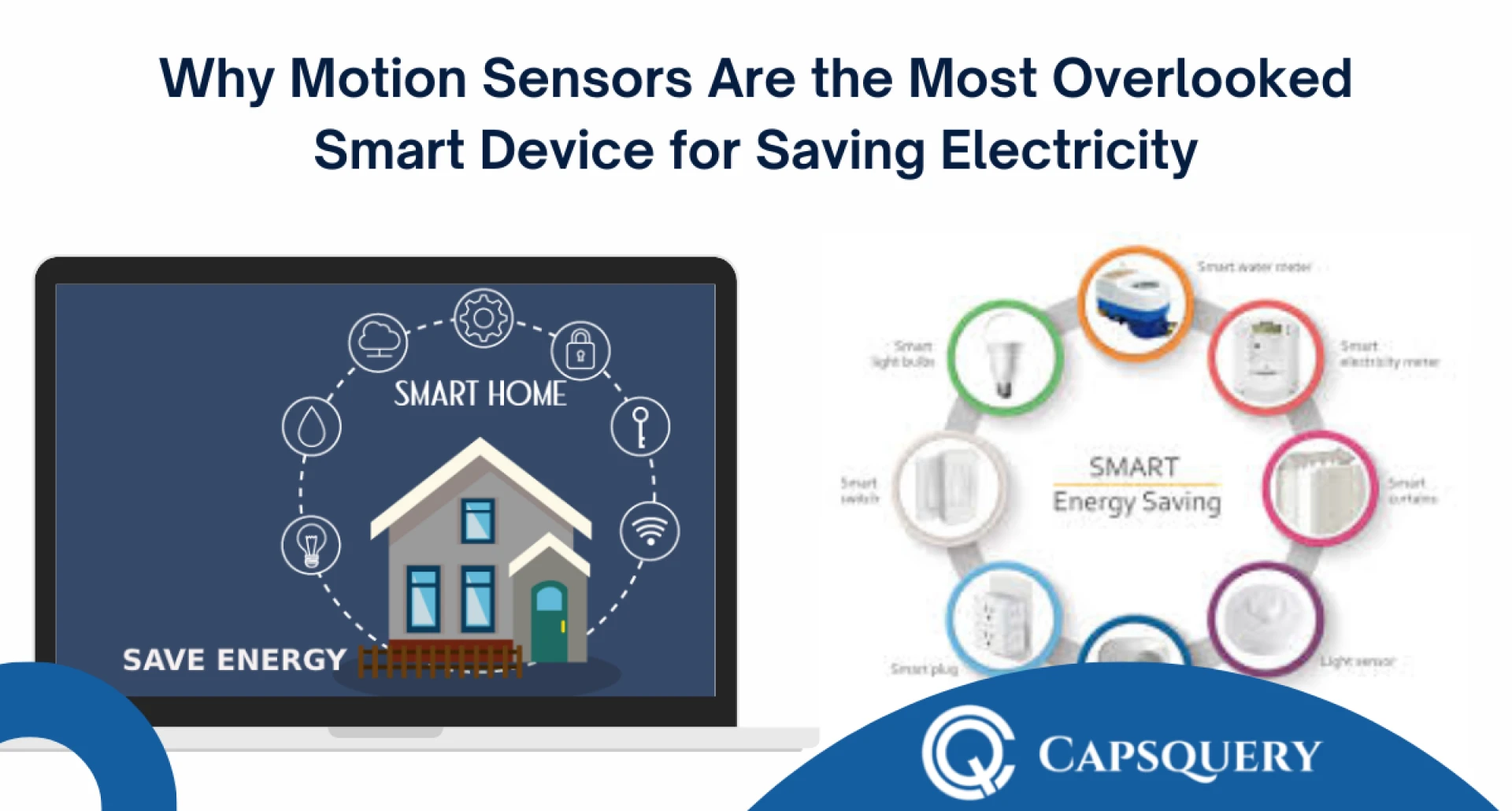

Smart homes today are filled with flashy devices—voice assistants, smart TVs, connected refrigerators, and AI-powered thermostats. Yet, in the middle of all this innovation, one simple device quietly does the most practical job of all: reducing unnecessary electricity usage. Motion sensors rarely get the attention they deserve, even though they play a critical role in preventing energy waste at the most basic level that is by ensuring power is used only when someone is actually present.
What makes motion sensors even more powerful in modern setups is not just their hardware capability, but their integration with APIs. These APIs allow motion sensors to communicate with other smart devices, automate decisions, and dynamically manage electricity usage across an entire environment. When implemented correctly, they reduce manual intervention, human error, and the silent drain caused by idle electronics.
This blog explores why motion sensors remain overlooked, how smart device APIs unlock their real potential, and why businesses and homeowners are beginning to see them as essential rather than optional.
The Silent Problem: Electricity Waste Happens When No One Is Looking
Electricity waste is rarely dramatic. It doesn’t spark, explode, or make noise. It happens silently—lights left on in empty rooms, air conditioners cooling vacant spaces, office equipment running overnight for no reason. Most people assume these losses are unavoidable or too small to matter. Over time, however, they add up to a significant portion of energy bills.
Here’s the uncomfortable truth: most electricity waste happens not because of inefficient appliances, but because of human forgetfulness. Motion sensors solve this exact problem—not by reminding people, but by removing the need for memory altogether.
Unlike timers or schedules, motion sensors respond to real-world behavior. They detect presence, movement, and inactivity, making them far more accurate for managing electricity in unpredictable environments.
What Motion Sensors Actually Do (Beyond Turning Lights On and Off)
Most people associate motion sensors with corridor lights or parking areas. That’s a narrow view of their capability.
Modern motion sensors:
- Detect occupancy patterns
- Measure inactivity durations
- Trigger multi-device responses
- Feed real-time data into automation systems
- Learn usage habits over time when paired with APIs
The real value emerges when these sensors stop working in isolation and start acting as data sources for a connected ecosystem.
This is where smart motion sensor technology for energy efficiency becomes less about hardware and more about intelligence.
Why Motion Sensors Are Still Underrated in Smart Homes and Offices
Despite their effectiveness, motion sensors don’t receive the same hype as AI speakers or smart displays. There are a few reasons for this:
- They operate invisibly When motion sensors work correctly, users don’t notice them. No interaction means no perceived value, even though savings are happening quietly.
- They lack a “wow factor” Saying “lights turn off automatically” doesn’t sound as impressive as “my home talks back to me,” even if it saves more money.
- Poor early implementations Older motion sensors were unreliable, slow, or overly sensitive. Many people still judge modern systems by those outdated experiences.
- API potential is misunderstood Without APIs, motion sensors are basic. With APIs, they become central decision-makers. This distinction is often overlooked.
The Real Game-Changer: Motion Sensor APIs
A motion sensor alone can switch a device on or off. A motion sensor connected through an API can orchestrate an entire energy-saving strategy.
APIs allow motion sensors to:
- Communicate with lighting systems
- Control HVAC units dynamically
- Interact with smart plugs and power strips
- Sync with cloud dashboards
- Trigger rules across multiple platforms
This is where motion sensor API integration for smart devices becomes critical. Instead of acting as a trigger, the sensor becomes a data node in a larger automation network.
How Motion Sensor APIs Reduce Electricity Consumption in Real Life
Let’s break down actual, practical scenarios where APIs turn motion sensors into electricity-saving engines.
1. Adaptive Lighting Control
Rather than simply switching lights on or off, APIs allow lighting systems to:
- Adjust brightness based on time of day
- Turn off selectively in unoccupied zones
- Reduce power gradually before complete shutdown
This eliminates harsh transitions and saves energy without affecting comfort.
2. Smart HVAC Optimization
Heating and cooling systems consume the most electricity in most buildings. APIs enable motion sensors to inform HVAC systems whether a space is occupied, partially occupied, or empty.
This is how energy saving automation using motion sensors works at scale—cooling only where and when it’s actually needed.
3. Office Equipment Power Management
APIs allow motion sensors to shut down monitors, printers, and non-essential systems when no movement is detected for defined intervals. This is particularly effective in shared workspaces where no single person is responsible for turning things off.
4. Usage Analytics and Optimization
Motion sensor data sent via APIs can be analyzed to identify:
- Underused rooms
- Peak electricity usage times
- Opportunities for infrastructure downsizing
This insight is impossible with manual controls alone.
Motion Sensors vs Other Smart Devices: A Reality Check
Smart thermostats, smart bulbs, and smart plugs all contribute to energy efficiency—but they often rely on user input or schedules. Motion sensors remove guesswork entirely.
Unlike scheduled automation, motion-based automation:
- Adapts to real behavior
- Works during irregular routines
- Prevents accidental energy waste
- Requires minimal configuration
This is why motion sensors for smart home electricity reduction consistently outperform static automation strategies.
APIs Turn Motion Sensors Into Scalable Energy Solutions
The biggest advantage of APIs is scalability. Whether it’s a single home or a multi-floor commercial building, motion sensors connected via APIs can scale without increasing complexity.
APIs enable:
- Centralized control dashboards
- Cross-device logic
- Third-party integrations
- Cloud-based monitoring
- Remote optimization
This is particularly valuable for companies like Capsquery, where smart automation solutions are designed to grow alongside businesses without rewriting entire systems.
Location-Aware Energy Intelligence (Without Repetition)
In innovation-driven regions like San Jose, motion sensor APIs are being used to support energy-conscious workspaces where electricity efficiency is tied directly to operational cost control.
Large commercial environments in Houston benefit from motion-based automation due to fluctuating occupancy and high cooling demands.
Across Texas, energy optimization is no longer optional—smart motion sensors help manage rising consumption without compromising comfort.
At Capsquery, API-driven smart device strategies focus on building systems that think before they consume power.
Why Developers Love Motion Sensor APIs
From a technical perspective, motion sensor APIs are refreshingly efficient.
Developers appreciate them because:
- Events are lightweight
- Data payloads are minimal
- Integrations are predictable
- Logic is rule-based and testable
For software teams, this aligns perfectly with IoT API solutions for power consumption monitoring, where clarity and reliability matter more than flashy features.
Security and Privacy: A Common Misconception
Some people worry that motion sensors are invasive. In reality, motion sensors detect movement patterns, not identities. When paired with APIs, data can be anonymized, aggregated, and processed without compromising privacy.
Modern implementations focus on:
- Edge processing
- Encrypted API calls
- Minimal data retention
- Compliance-friendly architectures
This makes motion sensors one of the least intrusive smart devices from a privacy standpoint.
The Long-Term Financial Impact of Motion Sensor Automation
Electricity savings from motion sensors may seem small day-to-day, but over months and years, they become substantial.
Savings come from:
- Reduced idle consumption
- Lower HVAC runtime
- Extended device lifespan
- Reduced maintenance costs
When APIs enable continuous optimization, systems get smarter over time rather than becoming obsolete.
Motion Sensors as the Backbone of Sustainable Automation
Sustainability isn’t just about renewable energy—it’s about using less energy in the first place. Motion sensors address waste at its source.
This is why smart device APIs for reducing electricity bills increasingly rely on motion-based triggers rather than manual control.
Why Motion Sensors Will Define the Next Phase of Smart Automation
As smart ecosystems mature, the focus is shifting from novelty to efficiency. Motion sensors fit perfectly into this evolution.
They:
- Require no user engagement
- Adapt automatically
- Scale effortlessly
- Deliver measurable savings
With API integration, they become the silent backbone of intelligent environments.
Final Thoughts: The Quiet Device Doing the Most Work
Motion sensors don’t demand attention. They don’t light up dashboards or speak back to users. Yet, they quietly eliminate waste, optimize power usage, and make smart environments genuinely smart.
In a world obsessed with complex solutions, motion sensors prove that the most effective innovations are often the simplest—especially when backed by powerful APIs.
If smart homes and offices are about intelligence, then motion sensors are not optional add-ons. They are essential infrastructure—hiding in plain sight, saving electricity one movement at a time.



























Sign in to leave a comment.