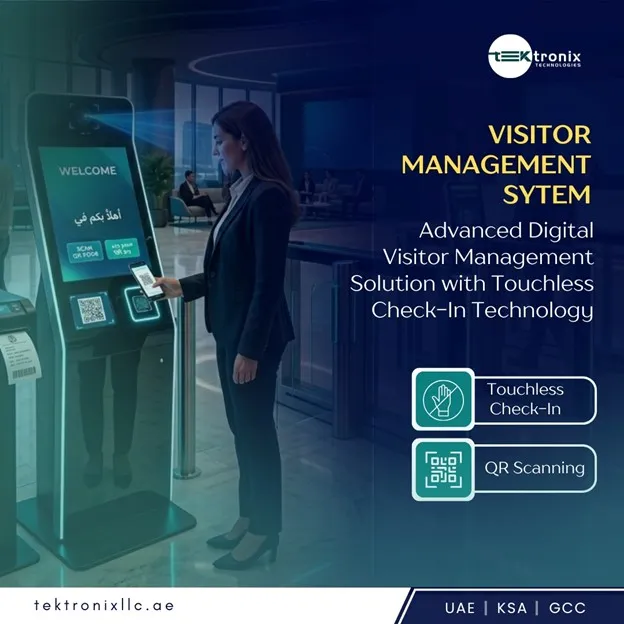

A Visitor Management System is no longer a luxury - it is a mission-critical component of every forward-thinking enterprise in the UAE. As Dubai, Abu Dhabi, and other emirates continue their rapid transformation into global business hubs, the pressure on facility managers, security officers, and IT administrators to enforce access control, ensure compliance, and create a seamless guest experience has never been greater.

Traditional paper-based logbooks and manual check-in desks are being rapidly replaced by intelligent, cloud-powered platforms that automate the entire guest lifecycle - from pre-registration to departure. Whether you operate a free-zone headquarters in DIFC, a government entity in Abu Dhabi, or a logistics facility in Jebel Ali, deploying a smart visitor registration and authentication solution is the defining step toward a truly secure and professional workplace.
1. Why UAE Businesses Need a Modern Visitor Registration System
The UAE's commercial landscape is characterised by high visitor footfall, multinational tenants, and strict regulatory requirements under frameworks such as the UAE Cybersecurity Law, ADGM Data Protection Regulations, and various free-zone authority mandates. A robust Visitor Registration System helps organisations meet these obligations while simultaneously elevating the first impression every guest receives at reception.
Key business drivers accelerating adoption across the region include:
- Increasing tenant mix in mixed-use towers requiring multi-tenancy access segregation
- Smart city integration mandates from authorities such as Smart Dubai and Abu Dhabi Digital Authority
- Rising insider-threat risks requiring contactless, audit-ready sign-in workflows
- Post-pandemic hygiene expectations accelerating the shift to touchless kiosks
- Data residency requirements demanding on-premise or UAE-hosted cloud deployments
2. Core Pillars: Visitor Identification and Authentication
At the heart of any enterprise-grade solution lie two inseparable capabilities: Visitor Identification and Visitor Authentication. These twin pillars determine whether the person standing at your reception desk is exactly who they claim to be.
2.1 Multi-Layer Visitor Identification
Modern platforms go far beyond collecting a name and phone number. Identity capture now encompasses:
- Emirates ID / passport OCR scanning for instant identity verification
- Biometric face-recognition matching against pre-registered guest databases
- QR-code-based pre-arrival tokens linked to verified identity records
- Integration with national identity databases (subject to authority approvals) for government facilities
This multi-layer approach ensures that every individual entering your premises is positively identified, creating an immutable digital record that satisfies both internal audit teams and external regulatory inspectors.
2.2 Seamless Visitor Authentication Workflows
Once identity is confirmed, Visitor Authentication governs whether the guest should be granted access, to which zones, and for how long. Rule-based engines can cross-reference visitor profiles against watch lists, blacklists, or host-approval queues in real time - triggering instant alerts if a match is found. This is especially critical for critical national infrastructure sites, data centres, pharmaceutical plants, and financial institutions across the UAE.
3. Real-Time Visitor Tracking: Knowing Where Every Guest Is
Beyond the entry gate, Visitor Tracking provides continuous situational awareness throughout a guest's time on-site. Integrated with building management systems, indoor positioning technologies (BLE beacons, UWB, or RFID), and elevator access control, a smart tracking module lets security teams know:
- Which floor or zone a visitor is currently occupying
- Whether a guest has strayed beyond their authorised perimeter
- How long they have been in a sensitive area
- Their complete movement history for post-incident investigation
In the event of a fire or emergency evacuation, real-time occupancy data feeds directly into the building's emergency response system - ensuring that no visitor is unaccounted for on the muster roll. This level of oversight is a non-negotiable requirement for OSHAD-compliant facilities in Abu Dhabi and DM-permitted buildings in Dubai.
4. Choosing the Right Visitor Management Software: Features That Matter
Not all Visitor Management Software platforms are equal. Decision-makers in UAE enterprises should evaluate solutions against the following feature taxonomy:
4.1 Pre-Visit Invitation & Pre-Registration Portal
Hosts should be able to send branded digital invitations via email or WhatsApp that allow guests to pre-fill their profile, upload identity documents, sign NDAs or health declarations, and receive a unique entry QR code - all before arriving at the building. This compresses lobby wait times from minutes to seconds.
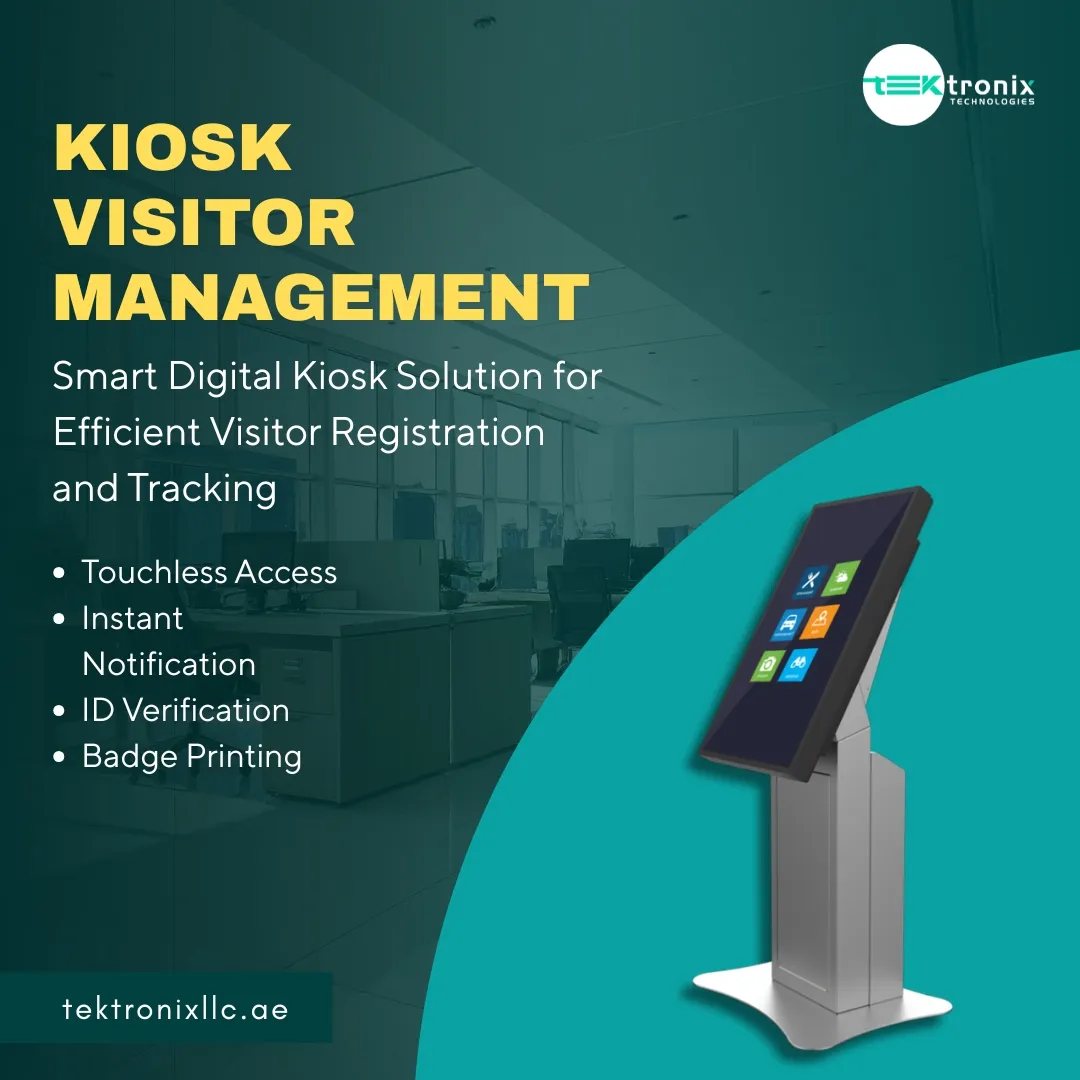
4.2 Self-Service Kiosk and Touchless Check-In
iPad-based, Android, or dedicated hardware kiosks with facial recognition, document scanning, and digital signature capture enable a fully contactless arrival experience. Integration with thermal cameras for health screening adds another layer of duty-of-care compliance.
4.3 Badge Printing and Access Card Integration
Instant visitor badge printing with photo, host name, visit date, and access zone information provides a visible deterrent against tailgating. Integration with HID, SALTO, Bosch, Honeywell, or other access control systems in use across UAE commercial properties ensures that the badge translates to real physical access rights.
4.4 Watchlist and Compliance Screening
Automated screening against internal deny lists, government sanctions databases, or custom exclusion registers prevents entry by blacklisted individuals without requiring manual intervention from reception staff.
4.5 Host Notifications and Approval Workflows
Instant push notifications, SMS, or email alerts inform hosts when their guest arrives, requests entry, or has been waiting beyond an SLA threshold. Two-step approval workflows are particularly valuable in banking, legal, and government sectors.
4.6 Analytics, Reporting, and Audit Trails
Rich dashboards displaying peak visitor hours, average dwell time, most-visited departments, and denied-entry incidents empower facilities and security managers with actionable intelligence. Exportable audit trails in PDF or CSV format support ISO 27001, PCI-DSS, and ESCA compliance reviews.
5. Visitor Management System UAE: Regional Compliance and Integration Landscape
Deploying a Visitor Management System UAE solution requires understanding the unique regulatory and technical landscape of the emirates.
UAE Federal Law No. 45 of 2021 on Personal Data Protection (PDPL) imposes strict obligations on data collection, storage consent, and cross-border data transfer. Any visitor data platform must therefore offer granular consent management, data minimisation controls, and configurable retention policies aligned with the law's requirements. Partnering with a locally incorporated systems integrator like Tektronix LLC ensures that the solution design is fully aligned with these obligations from day one.
On the integration front, UAE commercial buildings typically house a heterogeneous mix of access control, CCTV, HR, and ERP platforms. The best-in-class platforms offer REST API and webhook libraries enabling bi-directional synchronisation with:
- Lenel, Genetec, Milestone, and Dahua VMS platforms
- SAP SuccessFactors, Oracle HCM, and Microsoft Active Directory
- ServiceNow for IT service management workflow alignment
- ProxyClick, Envoy, and iLobby for multi-site tenant portals
6. Visitor Management System Dubai: Smart City Integration
Dubai's Smart City agenda, championed by the Smart Dubai Office, positions the emirate as a global benchmark for digital government. A Visitor Management System Dubai deployment that integrates with Dubai Police Smart App, Dubai Now platform, or the DED business registry creates a seamless, paperless guest journey that aligns with the emirate's vision of zero bureaucracy.
Iconic facilities such as DIFC, Dubai Design District, Dubai Internet City, and Expo City Dubai have already deployed sophisticated visitor orchestration platforms. These deployments share common attributes: high aesthetic standards for lobby hardware, Arabic and English language interfaces, and integration with the city's fibre-optic backbone infrastructure.
Tektronix LLC has extensive experience deploying and maintaining intelligent access and visitor solutions across Dubai's most demanding commercial environments, from single-tenant corporate headquarters to multi-tower mixed-use developments.
7. Visitor Management System Abu Dhabi: Government and Critical Infrastructure Focus
Abu Dhabi presents a distinct profile from Dubai, characterised by a higher proportion of government entities, critical infrastructure operators, and sovereign wealth-linked institutions. A Visitor Management System Abu Dhabi deployment in this environment must satisfy ADNOC HSE standards, Abu Dhabi Government Centre access protocols, and ADSIC cybersecurity guidelines.
Key differentiators for Abu Dhabi deployments include:
- On-premise or UAE-sovereign-cloud deployment options for data residency compliance
- Integration with Abu Dhabi Integrated Transport Centre (ITC) for parking and gate synchronisation
- Contractor management modules supporting ADNOC's complex sub-contractor ecosystem
- Arabic-first UI with right-to-left (RTL) layout across all kiosk and mobile interfaces
Government and quasi-government entities in Al Reem Island, Masdar City, and Khalifa Industrial Zone (KIZAD) are increasingly mandating visitor orchestration as part of their ISO 45001 occupational safety commitments.
8. Implementation Roadmap: From RFP to Go-Live
A successful deployment typically follows a five-phase methodology:
- Discovery & Site Survey - Audit existing access infrastructure, visitor volumes, and compliance gaps.
- Solution Design - Architect hardware (kiosks, badge printers, cameras) and software (cloud vs on-premise) configuration.
- Integration Engineering - Connect to existing access control, HR, and building management systems.
- User Acceptance Testing (UAT) - Run parallel operations with the legacy system before full cutover.
- Go-Live, Training & Ongoing Support - Staff onboarding, SLA-backed helpdesk, and quarterly system health reviews.
The average enterprise deployment in the UAE takes four to eight weeks from signed order to full production, depending on integration complexity and hardware lead times.
9. Why Tektronix LLC Is the Right Partner
Tektronix LLC is a UAE-registered systems integrator with more than a decade of hands-on experience deploying physical security, access control, and building intelligence solutions across Dubai, Abu Dhabi, and the Northern Emirates. Our credentials include:
- Authorised partner and certified integrator for leading global access control brands
- Proven track record across BFSI, healthcare, oil and gas, retail, and government verticals
- In-house software engineering team capable of bespoke API development and custom workflow automation
- 24/7 post-deployment support desk staffed by bilingual (Arabic/English) technical engineers
- Full compliance advisory capability covering UAE PDPL, ADGM DPR, and sector-specific HSE frameworks
Conclusion
The shift from manual lobby books to AI-powered Visitor Management Systems represents one of the most impactful - and most measurable - upgrades any UAE organisation can make to its security posture and operational efficiency. From the moment a guest receives their pre-registration invite to the second they complete their visitor sign-out, every touchpoint can be digitised, secured, and analysed.
Whether your priority is regulatory compliance with UAE data protection laws, seamless smart-city integration in Dubai, sovereign-cloud data residency for Abu Dhabi government facilities, or simply reducing the administrative burden on your reception team, the right visitor management platform delivers measurable ROI from day one.
Organisations that invest in intelligent visitor orchestration today are not merely upgrading a reception desk - they are laying the digital foundation for the secure, connected, and compliant workplaces that the UAE's next decade demands.
FAQs
Q1. What makes a Visitor Management System different from a standard sign-in app?
A sign-in app simply captures a name and timestamp. An enterprise-grade Visitor Management System integrates identity verification, real-time access control, watch-list screening, host notification workflows, and full audit-trail reporting into a single platform. It is a security infrastructure solution, not merely a digital receptionist.
Q2. Is visitor data collected through a UAE-deployed system compliant with the UAE Personal Data Protection Law?
Yes, provided the platform is correctly configured. Compliance requires explicit consent capture at check-in, a defined data retention policy, the ability to honour data-subject access and erasure requests, and (for certain categories of data) UAE-local storage. Working with a certified local integrator like Tektronix LLC ensures that deployment aligns with all applicable regulatory obligations from the outset.
Q3. How long does it take to deploy a full system in a Dubai or Abu Dhabi office?
Standard enterprise deployments take four to eight weeks from signed purchase order to full production go-live. Simple single-site deployments with minimal integration requirements can sometimes go live in as little as two weeks, while complex multi-site or multi-system integrations may take up to three months.
Q4. Can the system handle contractor and delivery management in addition to standard visitors?
Yes. Leading platforms support multiple visitor categories - guests, contractors, couriers, event attendees - each with their own registration workflows, access rights, document requirements (e.g., insurance certificates, safety inductions), and badge designs. Contractor lifecycle management, including permit-to-work linkage, is a particularly valued feature in industrial and oil-and-gas environments across the UAE.
Q5. What is the typical return on investment for deploying smart visitor management?
Organisations typically cite three categories of ROI: (1) operational savings from reducing reception headcount or reallocating staff to higher-value tasks; (2) risk mitigation value from preventing unauthorised access incidents; and (3) compliance cost avoidance by maintaining audit-ready records without manual effort. Most mid-to-large UAE deployments achieve payback within twelve to eighteen months of go-live.



























Sign in to leave a comment.