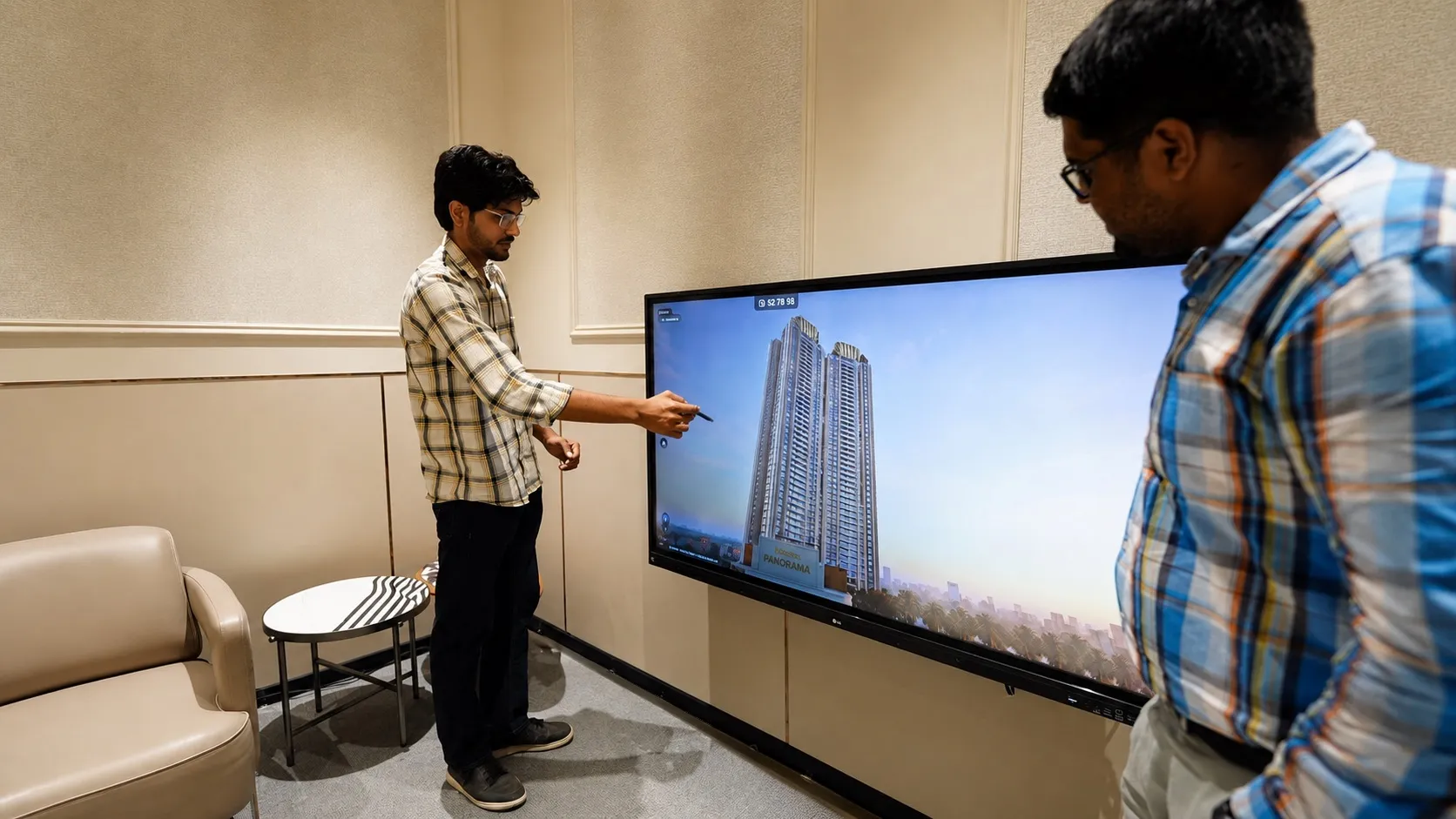

Smart Developers Are Not Selling Harder. They Are Selling Smarter.
There is a version of real estate sales that many teams know too well. Long follow-up cycles. Buyers who are interested but never quite committed. Negotiations that drag. Footfall that does not translate to conversions at the rate the project deserves.
The standard response is to add effort — more follow-up calls, more incentive schemes, more sales staff, more marketing spend. Sell harder.
The smarter response — the one that is producing measurably better results for developers who have adopted it — is to change the experience. Not the pitch. The experience. Because the sales performance problem is almost always an experience quality problem at its root.
A well-designed virtual experience centre does not make your sales team work harder. It makes every conversation they have more effective.
Why Puravankara's Market Entry Succeeded
When Puravankara entered Mumbai's luxury residential market with Purva Panorama in Thane, they faced the same challenge every new-to-market developer faces: no local brand recognition among Mumbai buyers.
In real estate, local brand trust is a significant factor. Buyers who have seen a developer's earlier projects, spoken to residents, or simply grown up seeing a brand in their city have a baseline level of trust before the sales conversation even begins. That baseline is absent for a developer entering a new market.
Puravankara had a strong project. Three towers at 55 floors, a 12.75-acre land parcel, a 90,000 sq. ft. landscaped podium, panoramic mountain views, a heritage banyan tree ecosystem, four-level retail, and 35+ amenities. By any measure, a genuinely impressive development.
But project credentials alone do not bridge the trust gap for a new-to-market developer. Something else was needed.
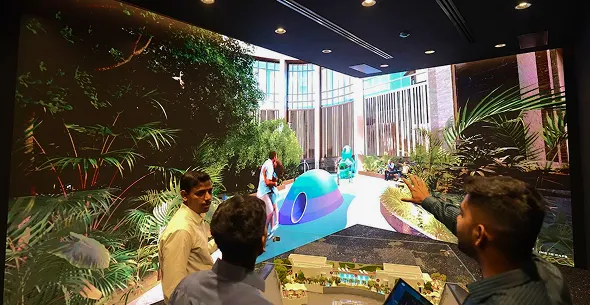
What V-Estate built — an immersive real estate experience ecosystem — became the bridge. The experience itself communicated developer quality in a way that no pitch could. When a buyer walks through a 4K real-time visualization of a 90,000 sq. ft. podium and sees the detail, the care, the commitment to quality that went into building it — they are not just seeing the project. They are seeing the developer's standards.
That is what smart selling looks like. Not a better pitch. A better proof.
What the V-Estate Platform Did for the Purva Panorama Sales Team
The commercial impact of an immersive experience platform on sales team performance is often underestimated. The most obvious benefit — better buyer engagement — is real but not the most significant.
The most significant impact is on the quality of the conversations that sales teams can have.
When a sales team is working with static printed materials, their job is partly educational. They need to help buyers understand the project — what the amenities look like, how the floor plans work, what the views are like, how the location connects. This educational work takes time and consumes much of the available sales conversation time.
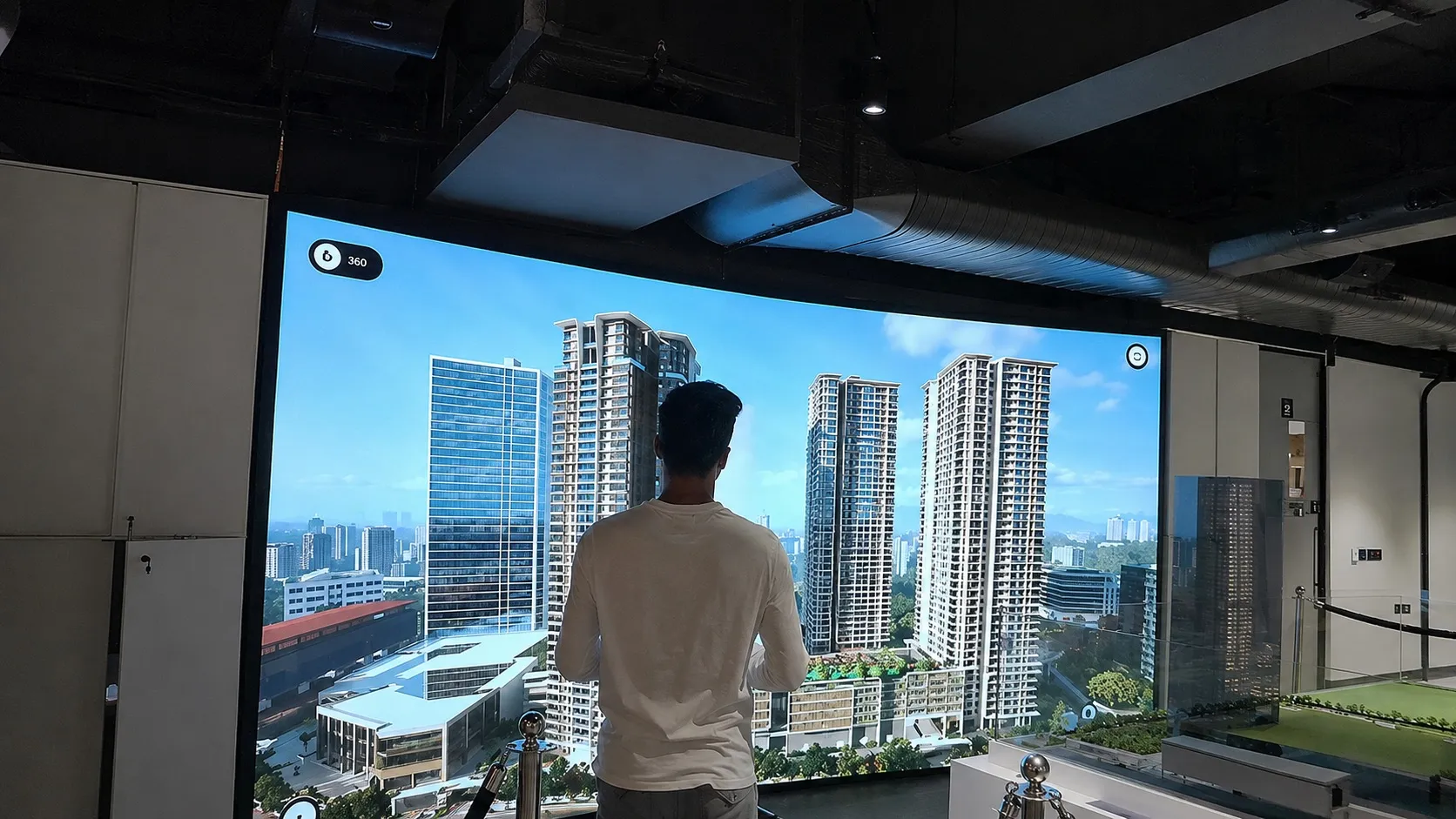
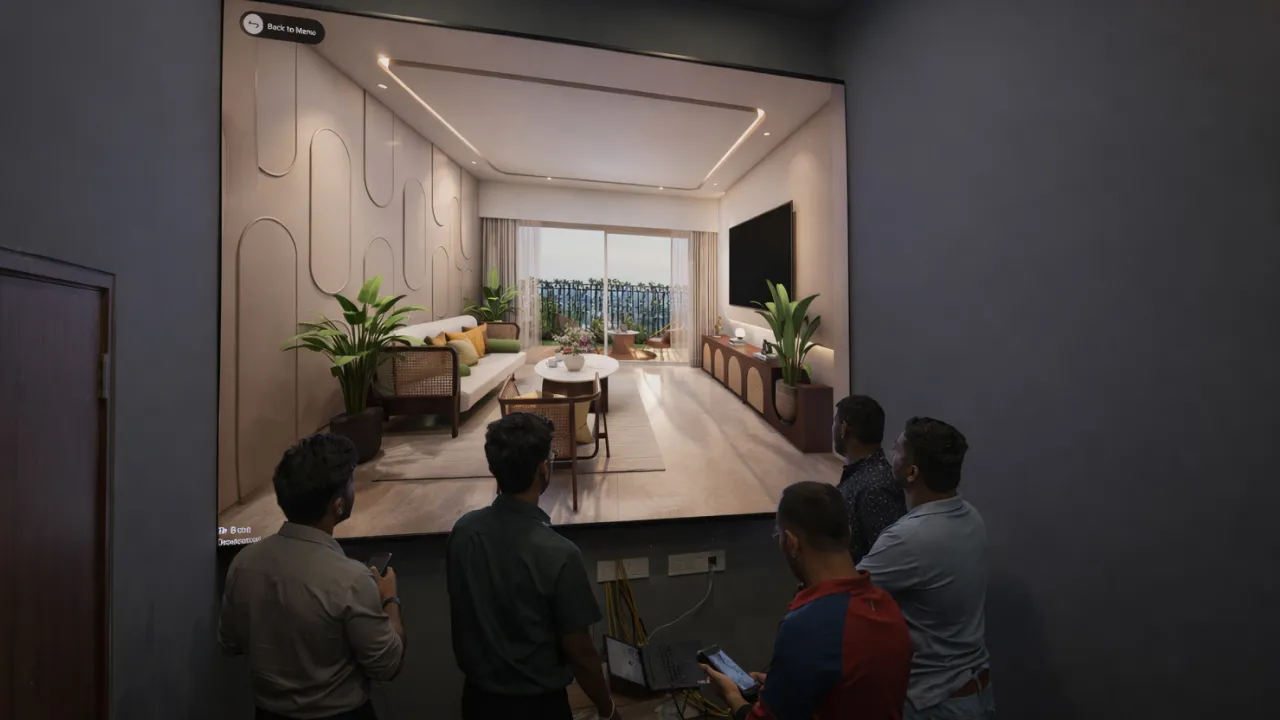
When a sales team is working with V-Estate's interactive platform — where buyers can navigate 3D architecture, explore amenity zones, check views from their specific floor, and navigate a 10+ km vicinity map themselves — the educational work largely happens through the platform. By the time a one-on-one sales conversation begins, the buyer already understands the project.
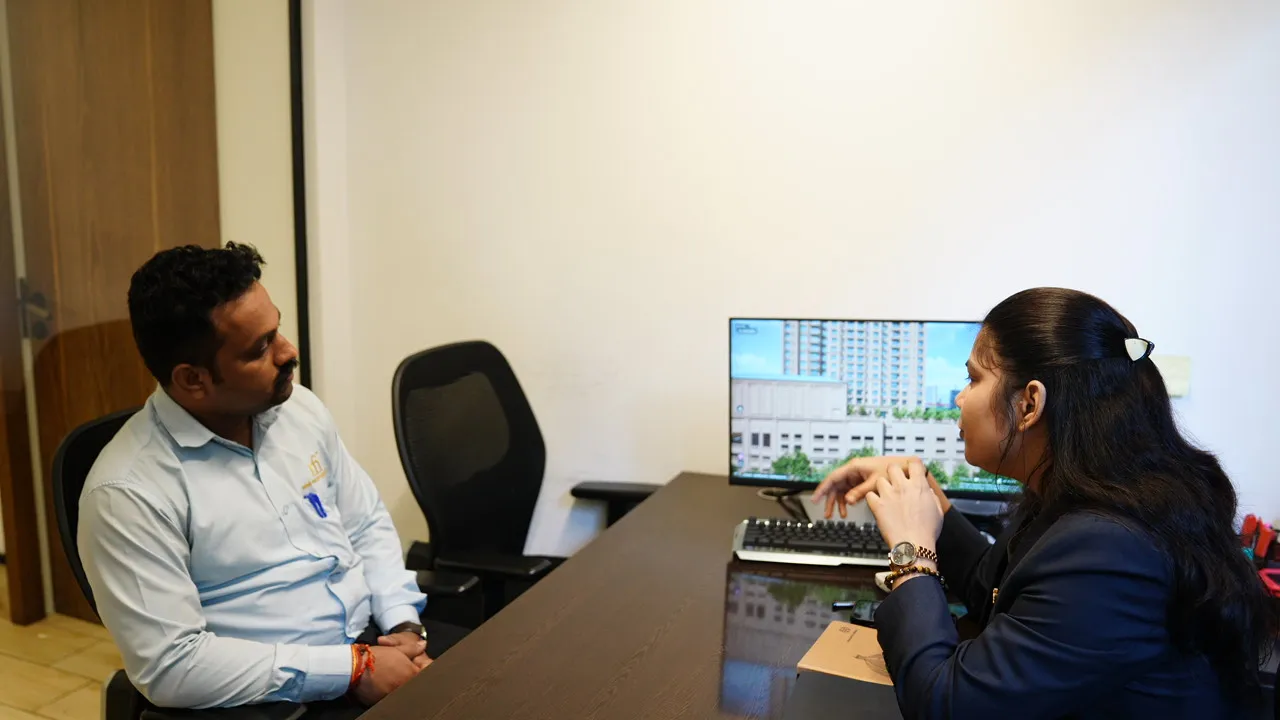
This shifts the sales team's focus from education to relationship building and commitment conversion. They can spend their time understanding the buyer's specific priorities, addressing individual concerns, and building the personal trust that converts interest into a signed reservation.
That shift — from educator to relationship builder — is a significant upgrade in what sales teams can actually do in the time available.
The 1.5-Month Turnaround That Made It Possible
One of the practical questions developers frequently ask about immersive experience infrastructure is: how long does it take to build?
The Purva Panorama ecosystem — photorealistic visualization, hardware implementation, and full deployment — was delivered by V-Estate within a 1.5-month turnaround.
This is significant because real estate project timelines are not flexible. Launch dates are set, marketing spend is committed, sales teams are prepared. The experience infrastructure needs to be ready when the launch happens — not after.
V-Estate's ability to deliver within an accelerated timeline without compromising quality is part of what makes the platform commercially viable for developers operating in the real world rather than in ideal conditions.
The technical foundation that enabled this:
- Unreal Engine 5.7 with advanced Nanite and PCG workflows for efficient high-quality rendering
- Template-based optimisation workflows for faster testing and bug resolution during development
- A deployment process refined across 40+ real estate projects at scale
- End-to-end responsibility from V-Estate — content, design, hardware, installation, and live operations — meaning no coordination delays across multiple vendors
35+ Daily Demonstrations: What Consistency at Scale Looks Like
Sustained sales performance requires more than a strong launch. It requires consistent, high-quality buyer engagement across the entire active sales period — which for a large-scale project can run for months or years.
The Purva Panorama immersive platform drove 35+ high-intent interactive customer demonstrations daily — consistently, across the project's sales period. Not just in the initial launch period, but sustained over time.
This is a meaningful commercial metric. 35 high-intent demonstrations daily means 35 conversations where a buyer has already navigated the project, already formed an emotional connection with specific elements, and is entering the conversation with genuine purchase intent rather than casual curiosity.
For a sales team, the difference between managing 35 high-intent conversations versus 35 casual exploratory conversations is enormous — in the quality of relationships formed, in the commitment signals they can work with, and in the conversion rate those conversations ultimately produce.
The Smart Selling Formula
What the Purva Panorama case demonstrates — and what V-Estate's broader portfolio of 40+ real estate brand deployments consistently confirms — is a straightforward formula:
Better experience → Better buyer understanding → Higher purchase intent → More efficient sales conversations → Faster conversions → Better sales outcomes
Each step in this chain is measurable. And the investment in a well-designed virtual experience centre is what initiates the chain.
Smart selling is not about effort. It is about designing the conditions in which the right conversations happen. A well-built experience environment does exactly that — for every buyer who walks through your sales gallery, every day, consistently, at scale.
Build Smarter. Sell Faster.
V-Estate works with real estate developers across India — from leading national brands to developers entering new markets — to design, build, and operate immersive experience environments that improve sales performance at every stage of the buyer journey.
If your current sales environment is not producing the conversion results your project deserves, the conversation to have is about the experience you are creating — not the effort your team is putting in.
Book a demo with V-Estate and see what smarter selling looks like from the inside.






















Sign in to leave a comment.