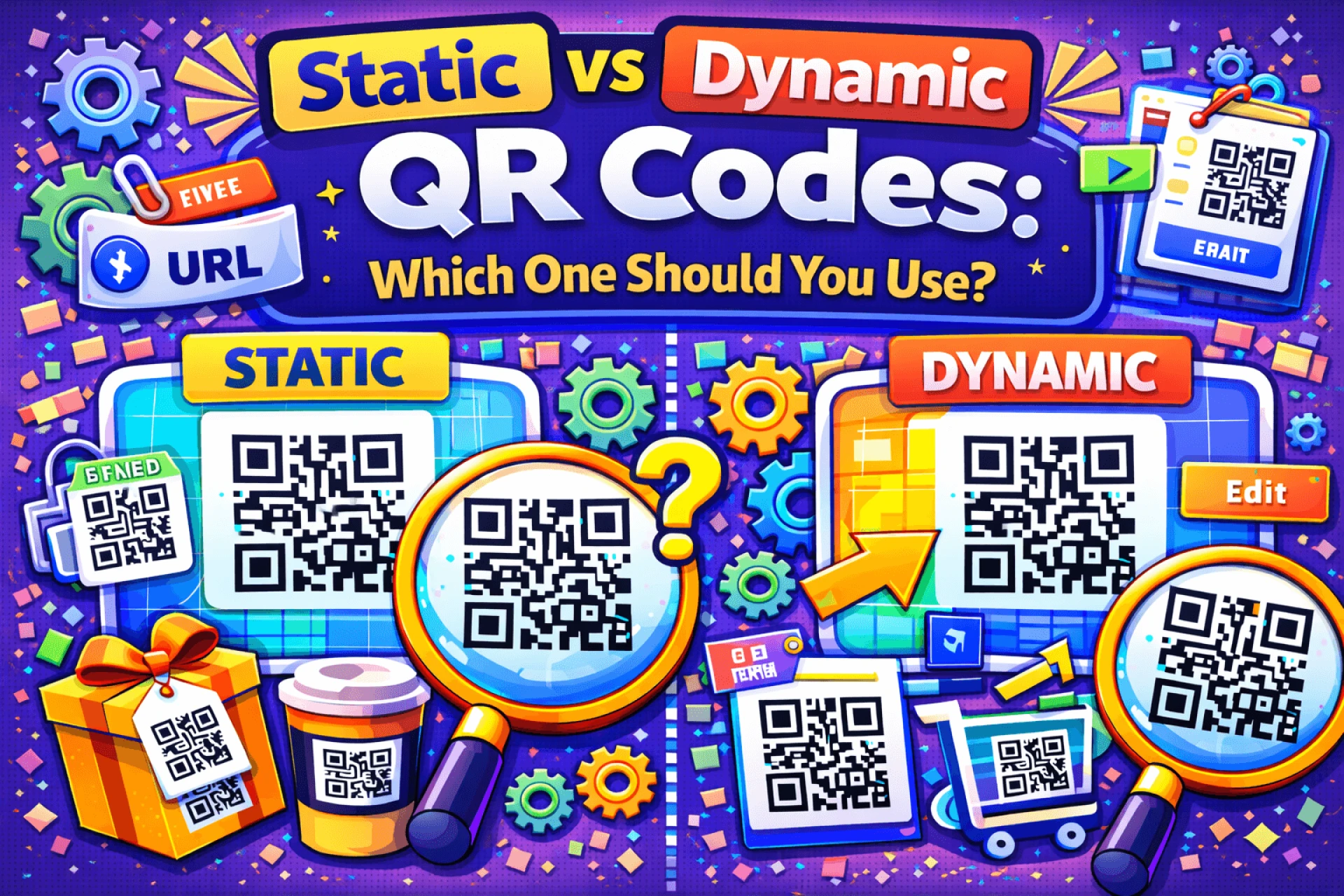

QR codes may all look the same on the surface, but they don’t all behave the same way. Behind every QR code is a decision that affects how flexible, reliable, and useful it will be over time.
That decision comes down to choosing between static and dynamic QR codes.
Static QR Codes: Fixed and Unchangeable
A static QR code contains its destination directly inside the code.
Once it’s created:
- The link cannot be edited
- No usage data is available
- The QR code always points to the same content
Static QR codes are simple and permanent. What you see is what you get.
Where static QR codes work well
- Personal or informational pages
- Fixed contact details
- One-time uses
- Content that will never change
If you’re confident the destination will stay the same forever, a static QR code can be enough.
Dynamic QR Codes: Flexible by Design
A dynamic QR code works through a redirect. Instead of storing the final destination, the code points to a short link that forwards users to the actual content.
This setup makes it possible to:
- Change the destination later
- Track how often the code is scanned
- Reuse the same QR code across campaigns
To the person scanning, nothing feels different — the added control is invisible.
Why This Choice Matters More Than You Expect
The difference becomes important the moment a QR code is printed or widely shared.
Think about QR codes placed on:
- Restaurant menus
- Product packaging
- Flyers and posters
- Business cards
- Signs or displays
If a static QR code links to a page that later changes, the QR code becomes outdated. With a dynamic QR code, the destination can be updated without replacing the printed material.
Visibility vs Insight
Static QR codes give you no insight into how they’re used. You don’t know how many people scan them or when.
Dynamic QR codes often provide access to:
- Scan counts
- Time-based scan data
- Basic device or location information (depending on the platform)
This insight is especially useful for marketing, testing, and long-term projects.
When Static QR Codes Are Enough
Static QR codes are a reasonable choice when:
- The content will never change
- Tracking isn’t needed
- The QR code is temporary
- You want the simplest setup possible
They’re dependable, but intentionally limited.
When Dynamic QR Codes Are the Smarter Option
Dynamic QR codes are usually the better choice when:
- The QR code will be used long-term
- You may need to update the destination
- Performance data matters
- The QR code supports a business or campaign
In most professional scenarios, flexibility outweighs simplicity.
Cost vs Long-Term Risk
Static QR codes are often free to generate.
Dynamic QR codes may involve limits or paid plans, but they reduce the risk of broken links and wasted print materials. Over time, that flexibility can prevent unnecessary rework and costs.
Choosing a Platform That Supports Control
Because dynamic QR codes rely on redirects and management tools, the platform you choose makes a difference.
Services like QRColor allow users to create customizable QR codes that can be updated and reused across different use cases.
You can see an example here:
👉 https://qrcolor.com
Final Thoughts
Static and dynamic QR codes may look identical, but they’re built for different purposes. Static QR codes are best for content that will never change. Dynamic QR codes are designed for flexibility, insight, and long-term use.
Choosing the right type from the start helps ensure your QR codes remain useful instead of becoming a problem later.






























Sign in to leave a comment.