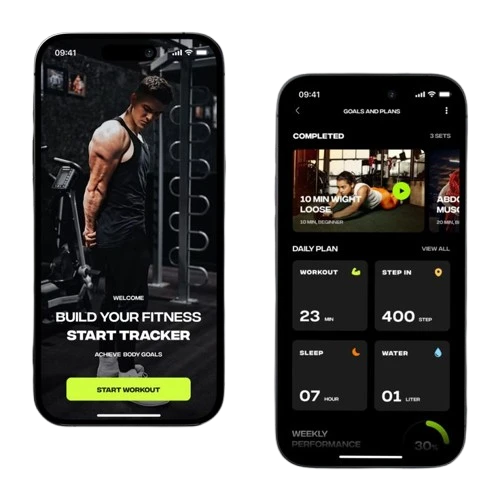

In today’s fast-paced digital world, the demand for fitness and wellness solutions continues to rise. More individuals are choosing mobile apps to help them track workouts, maintain diet plans, monitor mental health, and stay motivated. To meet this growing demand, businesses are seeking to create a fitness app that is scalable, user-friendly, and feature-rich. A key component of achieving this goal lies in selecting the right tech stack. The right technologies not only ensure scalability and performance but also enable seamless integration with wearables and third-party services.
This article examines the optimal tech stack for fitness app development, with a particular focus on features such as mental health support and diet planning functionality. Whether you're a startup or an established business, understanding these technologies is crucial to building a successful application.
Why Choosing the Right Tech Stack Matters in Fitness App Development
The technology stack defines the combination of programming languages, frameworks, tools, and platforms used in software development. In the context of fitness app development, choosing the appropriate tech stack directly affects the app’s performance, user experience, scalability, and maintenance costs.
Fitness apps today must support real-time data tracking, secure user data handling, integration with smart devices, in-app purchases, live streaming workouts, push notifications, and mental wellness features. The wrong tech stack can lead to slow load times, bugs, high latency, or difficulty in scaling.
Key Considerations Before Selecting a Tech Stack to Create a Fitness App
Before diving into specific technologies, developers and businesses should consider the following:
- Target Platform – Will the app be available on Android, iOS, or both? Cross-platform compatibility is a critical factor.
- Scalability – The app should handle an increasing number of users and data.
- Security – Since users’ personal health data will be stored, end-to-end encryption and secure API connections are essential.
- Real-time Features – Live workout sessions, chat with trainers, or progress tracking in real-time require efficient backend services.
- Integration Needs – Wearable devices, meal planning APIs, payment gateways, and health data syncing must be seamlessly supported.
Ideal Tech Stack for Developing a Scalable Fitness App
Here’s a detailed breakdown of the ideal technology stack for fitness app development:
1. Frontend Development
The frontend is what users interact with. A responsive, intuitive, and visually appealing UI is necessary to retain users.
- React Native or Flutter: For cross-platform development, React Native and Flutter are excellent choices. They allow code reusability across Android and iOS, reducing time and cost.
- Swift: For native iOS development, Swift is fast, modern, and offers seamless integration with Apple’s HealthKit.
- Kotlin: For native Android development, Kotlin is preferred due to its expressiveness and enhanced safety features.
2. Backend Development
The backend handles data processing, business logic, and communication with the frontend.
- Node.js: Known for its speed and scalability, Node.js is suitable for real-time data processing like tracking workouts and live sessions.
- Ruby on Rails: Offers rapid development and convention-over-configuration, which is ideal for MVP fitness apps.
- Django (Python): Excellent for projects that require strong security features, like mental health app development, where user data protection is critical.
3. Database Management
Databases are necessary for storing user profiles, workout history, progress, and nutrition data.
- MongoDB: A NoSQL database suited for handling unstructured data, often used in diet planner app development.
- PostgreSQL: A relational database ideal for structured data with strong ACID compliance.
- Firebase Realtime Database: Offers real-time syncing and is useful for chat or live workout feature implementation.
4. APIs and Third-Party Integrations
Fitness apps require integration with various third-party services and APIs.
- Stripe or PayPal: For managing in-app purchases or subscription billing.
- Google Fit / Apple HealthKit: For syncing health data across devices.
- Zoom SDK or Agora: For adding live workout session functionality.
5. Cloud and Hosting Services
Cloud services are vital for scalability, data storage, and security.
- Amazon Web Services (AWS): A reliable cloud service that supports secure storage, CDN, and backend operations.
- Google Cloud Platform (GCP): Offers powerful machine learning tools which can be used in personalized fitness suggestions.
- Microsoft Azure: Good for enterprise-level apps with extensive data and analytics needs.
6. DevOps and CI/CD Tools
DevOps tools ensure a smooth development cycle and quicker app updates.
- Docker: For creating containerized applications to ensure consistency across environments.
- Jenkins or GitHub Actions: For automating deployment and continuous integration processes.
7. Analytics and Monitoring Tools
Understanding user behavior is critical in fitness app success.
- Firebase Analytics: Helps track user actions and optimize engagement.
- Mixpanel: Offers deep insights into user retention and funnel analysis.
- Sentry: For real-time crash reporting and error tracking.
Special Features That Require Custom Tech Support
When building features such as mental health support or diet planner tools, you may need additional libraries or tools.
For mental health app development, consider using HIPAA-compliant frameworks and integrate chat support (using tools like Twilio) and journaling modules.
In diet planner app development, APIs like Spoonacular or Edamam can offer meal planning and nutrition facts, while AI modules can provide personalized recommendations based on user preferences and health conditions.
Conclusion
Choosing the right tech stack to create a fitness app determines its long-term success. Whether your focus is physical workouts, mental health tracking, or diet planning, the combination of robust frontend technologies, scalable backend frameworks, real-time databases, and secure cloud solutions will play a significant role in the performance and growth of the application.
A fitness app development company with experience in building scalable and feature-rich solutions can guide you in making the best tech choices, customizing the stack to fit your app’s specific needs. Investing in the right technologies now saves both time and resources in the future, while also delivering a smoother experience to your users.

























Sign in to leave a comment.