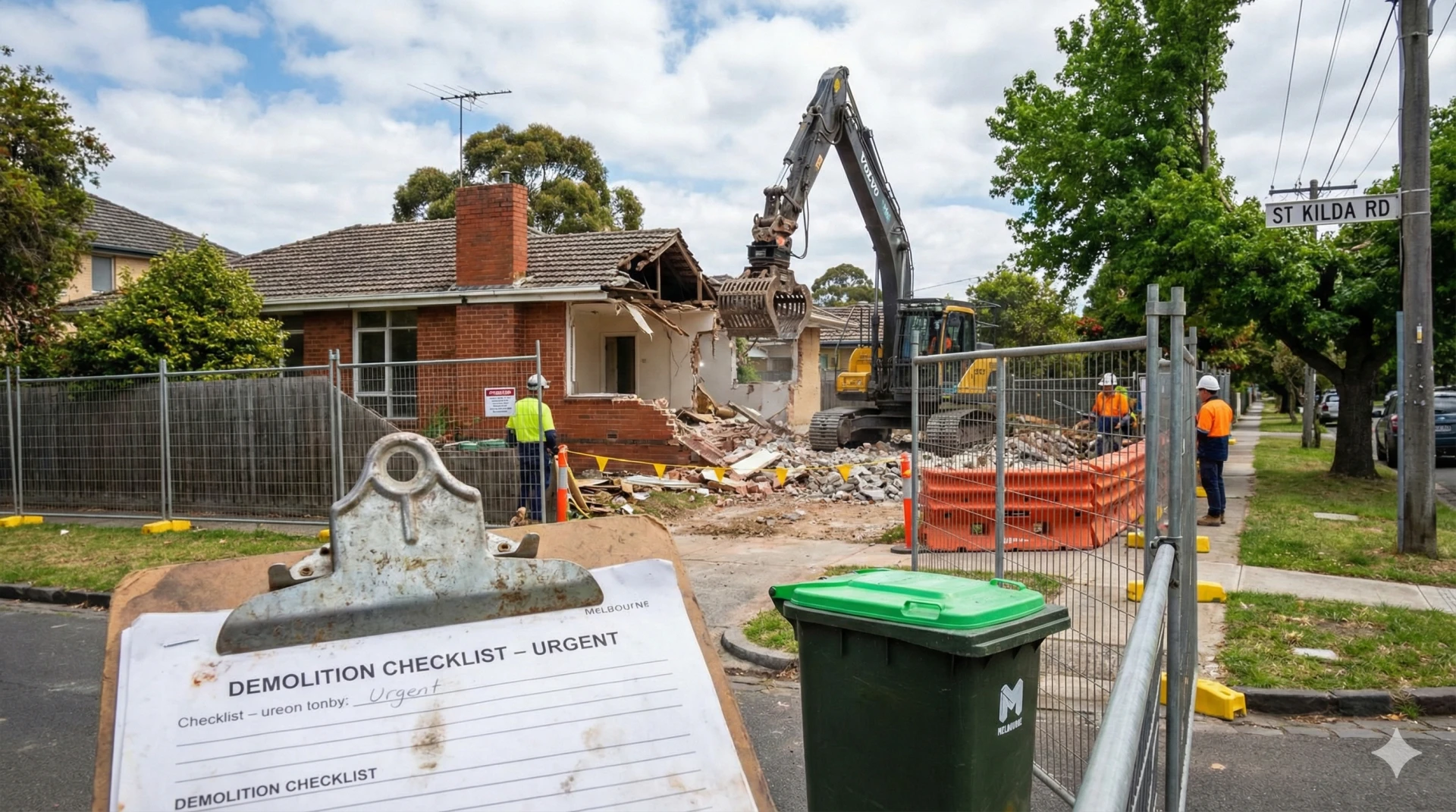

Knocking down a house in Melbourne is more paperwork than wrecking ball. Many homeowners assume the demolition is the easy part of the build process, only to get hit with council fines or delays that push their new build back by months.
If you are planning to clear a site in Victoria, here is exactly what goes wrong and how to avoid it.
What stops a demolition?
For those looking for a fast answer, these are the primary reasons demolitions in Melbourne get delayed:
- Missing Section 29A: You cannot get a building permit for the new house without this specific demolition consent.
- Service Disconnection vs. Abolishment: You merely turned the power off instead of having the meters and lines physically removed (abolished).
- Tree Protection Zones: You failed to guard council trees or "significant trees" on the property.
- Asbestos Surprises: The standard inspection missed hidden asbestos under vinyl or in eaves.
Mistake 1: Confusing "Disconnection" with "Abolishment"
This is the single most common delay. You cannot just call your energy retailer and ask for a final reading. That only stops the billing.
For demolition, you need Abolishment.
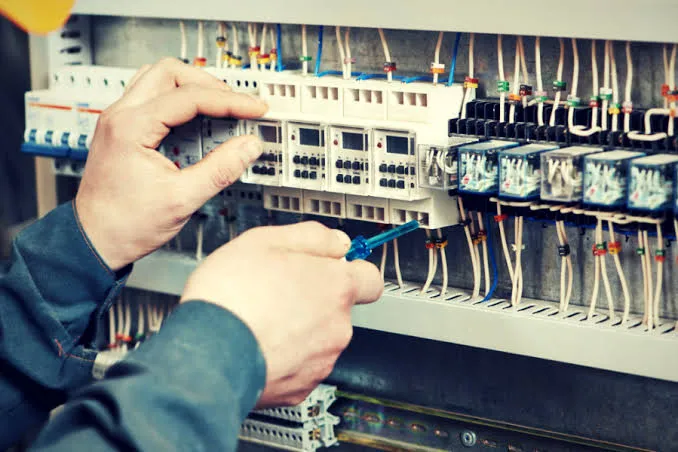
- What it is: The physical removal of the electricity and gas meters and the cutting of the supply lines at the street level (the pit).
- Why it matters: A bulldozer cannot touch a house connected to the grid. It is dangerous and illegal.
- The timeline trap: Abolishment paperwork can take 20 to 40 working days in Victoria. If you leave this until the week before the demolishers arrive, your project stops immediately.
Mistake 2: Forgetting the Section 29A (Report and Consent)
In Victoria, you need a Section 29A form from your local council (Form 29A). This document confirms that the house you are knocking down is not heritage listed and does not face demolition control.
Many people skip this because they think "I already have a planning permit." That is not the same thing.
Your private building surveyor will demand the Section 29A before they issue the building permit for your new home. If you demolish the house without this paper in hand, you enter a legal grey area that can stall your future build permit indefinitely.
Mistake 3: Ignoring the Asset Protection Permit
Before a truck crosses the crossover, the council wants a guarantee that their property will stay safe. This includes the footpath, the nature strip, the kerb, and the drainage pits.
You must apply for an Asset Protection Permit. You also need to take clear photos of the footpath before work starts. If a concrete truck cracks the footpath and you cannot prove the crack was already there, the council will send you the bill for the repairs.
Mistake 4: Not Auditing for Asbestos (Division 6)
Most Melbourne homes built before 1990 contain asbestos. It is not just in the wall sheets. It is often found in:
- Eaves
- Vinyl floor tiles and glue
- Electrical switchboards
- Roofing
You need a specific "Division 6" Hazardous Materials Audit. This is more detailed than a standard inspection. If the demolition crew finds unexpected asbestos halfway through the job, work stops. They will have to call in hygienists, and the price of your demolition will likely double on the spot.
Mistake 5: Failing to Protect "Significant Trees"
Melbourne councils (especially areas like Boroondara, Stonnington, and Bayside) are strict about trees. Even if a tree is on your private land, it might be protected by a "Significant Tree Overlay" or local law.
If you damage the root zone of a protected tree with heavy machinery, the fines are massive. You often need to set up "Tree Protection Zones" (fencing) around specific trees before demolition starts to ensure the machinery does not compress the roots.
Mistake 6: Hiring a Demolisher Without VBA Registration
In Victoria, a demolition contractor must be registered with the Victorian Building Authority (VBA).
There are different classes of license:
- Low Rise: Can only do simple 1-2 storey houses.
- Medium Rise: Can handle larger/complex structures.
- Unlimited: Can demolish anything.
Check their license card. If they are not insured or licensed and something goes wrong (like a wall falling onto a neighbor's fence), you as the property owner could be liable.
Mistake 7: Leaving the Sewer Cap Unmarked
When the plumber disconnects the sewer, they must seal it so debris does not fall into the main system. This is called "capping the sewer."
The mistake happens when this cut-off point is not clearly marked on the site plan or physically on the ground. When the excavators come in to dig the footings for the new house, they struggle to find the tie-in point. Ask your plumber to leave a clear marker or "riser" so the new builders know exactly where to connect.
Ready to clear the site?
Demolition is the foundation of your next project. Getting the paperwork right now saves you thousands in holding costs later.
For professional home demolition in Melbourne contact us.























Sign in to leave a comment.