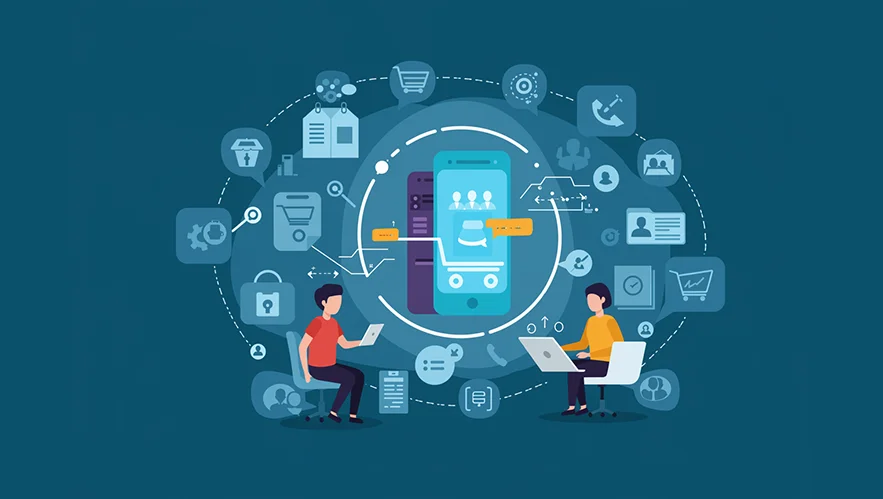
The rise of Web3 technologies is reshaping the foundations of online commerce. With decentralized platforms, tokenized assets, and blockchain-powered interactions, the traditional model of buyer-seller relationships is undergoing a massive transformation. At the heart of this change lies Agentic Commerce, a paradigm that empowers autonomous agents—powered by AI and blockchain—to execute, negotiate, and manage transactions on behalf of users. Unlike traditional e-commerce, where buyers and sellers rely heavily on centralized platforms, Agentic Commerce enables trustless, automated, and intelligent interactions.
What Is Agentic Commerce?
Agentic Commerce refers to an ecosystem where AI-driven agents act autonomously within decentralized networks to conduct commercial activities. These agents are designed to understand user preferences, evaluate market conditions, and make purchasing or selling decisions with minimal human intervention. By integrating artificial intelligence with smart contracts, Agentic Commerce creates an environment where transactions are not just faster, but also smarter.
For example, imagine a digital agent negotiating a subscription for cloud storage on your behalf. Instead of you researching prices, comparing providers, and initiating payments, your agent does all of this in real time—ensuring cost efficiency and security, while still respecting your preferences.
Why Web3 Needs Agentic Commerce
Web3 has introduced decentralized finance (DeFi), NFTs, and decentralized marketplaces. However, the interaction between buyers and sellers often still mimics Web2 models, requiring significant manual effort and decision-making. This is where Agentic Commerce comes in as a game-changer.
- Efficiency: Agents reduce friction in transactions by automating negotiations, payments, and dispute resolutions.
- Personalization: AI-driven agents tailor decisions to individual preferences, creating unique buyer journeys.
- Trustlessness: With smart contracts, transactions are transparent and secure, reducing reliance on intermediaries.
This combination of automation, intelligence, and decentralization has the potential to replace outdated middlemen, redefining trust and relationships in the online economy.
Redefining Buyer-Seller Relationships
In traditional commerce, buyers and sellers rely on centralized platforms such as Amazon, eBay, or Shopify. These platforms act as intermediaries, dictating rules and fees. With Agentic Commerce, these intermediaries become unnecessary.
- Direct Interactions: Buyers’ agents and sellers’ agents can directly negotiate, removing costly platform fees.
- Continuous Optimization: Agents can constantly analyze data, ensuring buyers get the best deals while sellers optimize pricing strategies in real time.
- Autonomous Trust: Since agents interact via smart contracts, disputes and fraud risks are minimized, building trust without centralized oversight.
This new relationship model doesn’t just improve efficiency; it fundamentally alters the dynamics of control, giving more power back to individuals and communities.
Real-World Use Cases of Agentic Commerce
The future of online markets powered by Agentic Commerce is already taking shape:
- Decentralized Marketplaces: Agents can autonomously buy and sell NFTs, tokens, or digital goods.
- Subscription Services: Agents manage recurring payments, automatically switching providers for better deals.
- Supply Chain Automation: Businesses can deploy agents to negotiate raw material procurement or logistics with minimal human input.
- Digital Services: Freelancers could have agents that automatically bid on projects aligned with their skills and pricing expectations.
These scenarios highlight how both individuals and businesses can benefit from autonomous, AI-driven decision-making.
Challenges Ahead
While Agentic Commerce promises a revolutionary future, challenges remain:
- Ethical Concerns: How much autonomy should agents have in making financial or personal decisions?
- Security Risks: Malicious agents or poorly written smart contracts could create vulnerabilities.
- Adoption Curve: Users and businesses may need time to trust AI agents with financial autonomy.
Addressing these issues will require strong governance frameworks, transparent AI design, and robust decentralized infrastructure.
Conclusion
Agentic Commerce is set to become a cornerstone of Web3, moving online markets away from centralized control and toward autonomous, intelligent, and trustless ecosystems. By redefining how buyers and sellers interact, it promises not just efficiency, but also fairness and empowerment. As the technology matures, Agentic Commerce could mark the beginning of a new era—one where digital agents reshape the very fabric of global trade.

























Sign in to leave a comment.