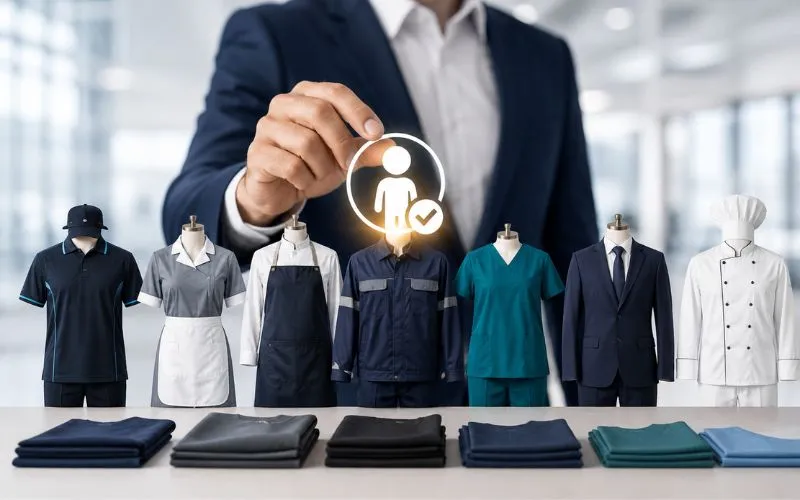

Workwear has a bigger impact on daily business operations than many decision-makers realize.
Most companies spend time discussing branding, uniform colors, logo placement, and purchasing budgets. Those factors matter. Yet the success of any uniform program often comes down to two things employees care about every single day: comfort and functionality.
Whether you are managing a construction company, healthcare facility, logistics operation, hotel, retail chain, manufacturing plant, or corporate office, employees spend long hours wearing their uniforms. If the garments are uncomfortable or impractical, problems start appearing quickly.
This is why many businesses in UAE participate in the close partnership with Custom Uniform Suppliers UAE when creating uniform programs to suit the needs of their operations and the employees expectations.
The truth is simple. When employees wear uniforms that enhance their work performance instead of hindering it, they will do it better.
Why Comfort Is More Than an Employee Preference
Some managers still view comfort as a secondary concern.
In practice, it directly affects productivity.
An employee working a ten-hour shift in a poorly designed uniform will notice every problem. Heavy fabrics create heat. Tight fits restrict movement. Rough materials cause irritation. Poor ventilation leads to discomfort throughout the day.
Most businesses only realize this after employee complaints start.
By that point, the uniforms have already been purchased, distributed, and integrated into daily operations. Replacing an entire uniform program can become expensive.
Comfort influences more than morale.
Employees who feel physically comfortable are often able to focus better on their responsibilities instead of constantly adjusting collars, sleeves, waistbands, or restrictive garments.
The difference may seem small from a management perspective. For someone wearing the uniform every day, it becomes significant.
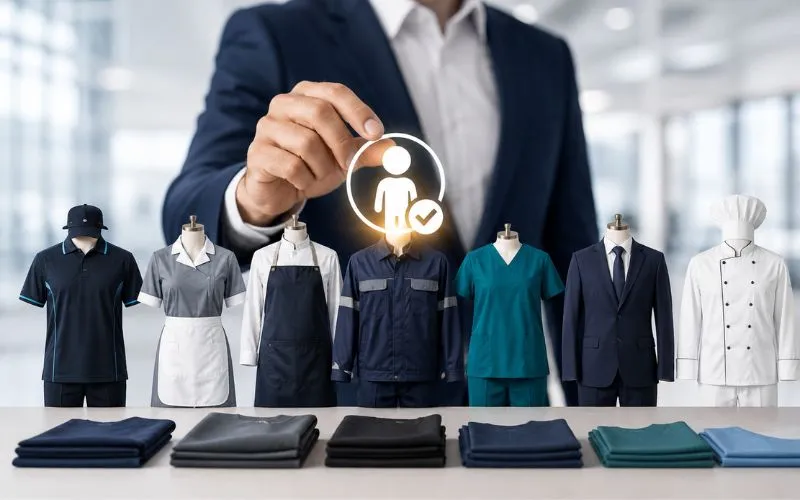
Functionality Directly Impacts Workplace Efficiency
A uniform should help employees perform their jobs.
That sounds obvious. Yet many uniform programs fail in this area.
A warehouse employee may need multiple secure pockets. A healthcare worker requires unrestricted movement. A maintenance technician often carries tools and equipment throughout the day. A hotel employee needs a professional appearance while remaining comfortable during long periods of standing and walking.
Different jobs create different requirements.
Many companies overlook this.
Instead of designing uniforms around actual work activities, they focus entirely on appearance. The result may look professional in photographs but create daily frustrations for employees.
A small detail like this can have a big impact on daily operations.
Pocket placement, fabric stretch, reinforced seams, ventilation panels, and garment fit all contribute to workplace efficiency.
The Connection Between Comfort and Employee Retention
There are various factors that influence employee retention.
Bad quality uniforms aren't usually the major factor in whether someone remains or departs from a company. But that's not all it does to the employee's experience.
Now try to picture a logistics driver working all summer in a cumbersome, non-air-permeable uniform. Or a health care worker who has worn an all fabric shirt that holds heat and moisture.Or a health care worker who has done long shifts in fabric that traps heat and moisture.
It builds up frustration over time.
There is a significant investment in recruitment and training of companies. If a student pays too much for their uniform, they may become disenchanted with the investment, due to the lack of the appropriate uniform.
Experienced HR managers understand this.
They know that small operational irritations often have a larger impact than management expects.
Fabric Selection Plays a Major Role
The conversation about comfort usually starts with fabric.
Not all materials perform equally.
Construction crews working outdoors in hot conditions require different fabrics than corporate office employees working in climate-controlled environments. Hospitality staff need materials that maintain a clean appearance throughout long shifts. Manufacturing employees often require durability alongside comfort.
Climate suitability should always influence fabric selection.
This is where uniform purchasing often becomes expensive.
Organizations sometimes choose lower-cost fabrics to reduce initial spending. Later, they face higher replacement costs, employee complaints, and reduced garment lifespan.
A fabric that performs well for three years often delivers better value than a cheaper option requiring constant replacement.
Looking only at purchase price rarely tells the full story.
Safety and Comfort Must Work Together
In industrial sectors, safety requirements often drive uniform decisions.
That is understandable.
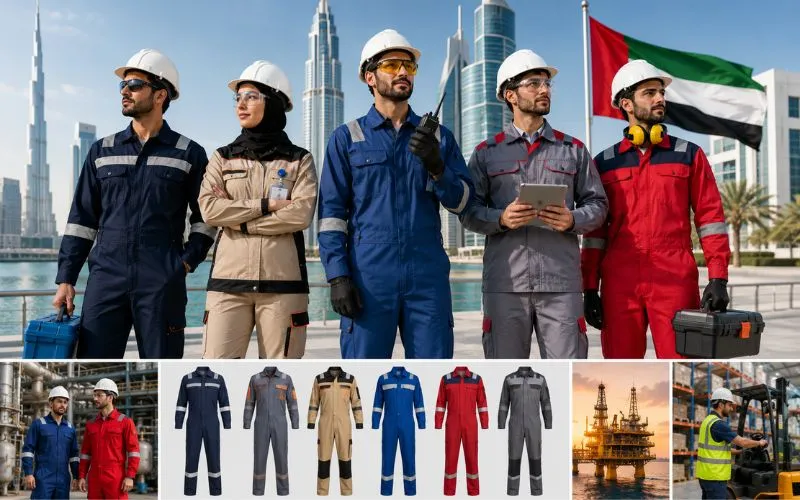
Construction, manufacturing, utilities, transportation, and engineering environments frequently require specialized protective clothing. High-visibility garments, flame-resistant fabrics, anti-static materials, and reinforced workwear all serve important purposes.
The challenge is balancing protection with comfort.
Employees are far more likely to wear safety garments correctly when those garments remain comfortable throughout the shift.
Poorly designed protective clothing often creates compliance issues.
Workers may roll sleeves up, leave garments unfastened, or modify uniforms in ways that reduce protection.
The safest uniform is often the one employees are willing to wear properly all day.
Different Industries Face Different Challenges
Construction and Industrial Workplaces
Construction workers face demanding physical conditions.
Heat, dust, movement, lifting, and outdoor exposure place constant stress on workwear. Durability matters, but comfort matters too. Breathable fabrics and ergonomic designs can make a noticeable difference during long shifts.
Healthcare Environments
Healthcare professionals spend much of their day moving.
Walking between departments, assisting patients, and handling physically demanding tasks requires uniforms that allow unrestricted movement. Fabric breathability becomes especially important during extended shifts.
Hospitality and Retail
Appearance is highly visible in customer-facing roles.
Employees need uniforms that maintain a professional look while remaining comfortable throughout the day. Staff who spend hours standing or interacting with customers quickly notice poor fabric choices.
Logistics and Transportation
Drivers, warehouse workers, and delivery personnel often move between indoor and outdoor environments.
Temperature changes, physical activity, and long hours create unique demands on uniform performance.
The right fabric and fit can significantly improve daily comfort.
Brand Consistency Should Never Come at the Expense of Wearability
Brand image matters.
Uniforms often represent a company's identity and professionalism. Customers notice appearance, especially in hospitality, retail, transportation, and corporate environments.
Some businesses become so focused on visual presentation that employee comfort receives little attention.
That approach rarely succeeds long-term.
The strongest uniform programs achieve both goals. Employees feel comfortable while the company maintains a consistent brand image.
Good design should support operational performance, not compete with it.
Long-Term Maintenance Often Gets Ignored
Many purchasing decisions focus on initial delivery costs.
Maintenance receives far less attention.
Yet maintenance expenses continue throughout the life of the uniform program.
Garments that wrinkle easily, fade quickly, shrink after washing, or require special care increase ongoing costs. They also create additional work for employees.
Most businesses only calculate these costs after the uniforms are already in use.
Choosing durable fabrics and practical garment designs from the beginning usually produces better long-term results.
This is especially important for large organizations managing hundreds or thousands of uniforms.
Cost-Effectiveness Is About More Than Price
Price matters.
Every procurement manager has budget responsibilities.
The problem is that some purchasing decisions focus entirely on the lowest available cost. The cheapest uniform option is rarely the most cost-effective over its lifespan.
Durability, employee acceptance, replacement frequency, maintenance requirements, and operational performance all influence total ownership costs.
Businesses that evaluate uniforms from this broader perspective often achieve stronger results.
They spend less on replacements. Employees report fewer issues. Uniform programs remain effective for longer periods.
Final Thoughts
Comfort and functionality are not optional features in modern workwear. They are essential components of an effective uniform program.
Employees spend thousands of hours wearing their uniforms. The garments should support their work, not make it harder. Comfort improves day-to-day experience. Functionality improves efficiency. Durability reduces replacement costs. Proper fabric selection supports both climate conditions and operational requirements.
The most successful businesses approach workwear as a practical business tool rather than a simple purchasing exercise. When comfort, functionality, safety, maintenance, and brand requirements are balanced correctly, the result is a uniform program that works for both the organization and the people wearing it every day.



























Sign in to leave a comment.