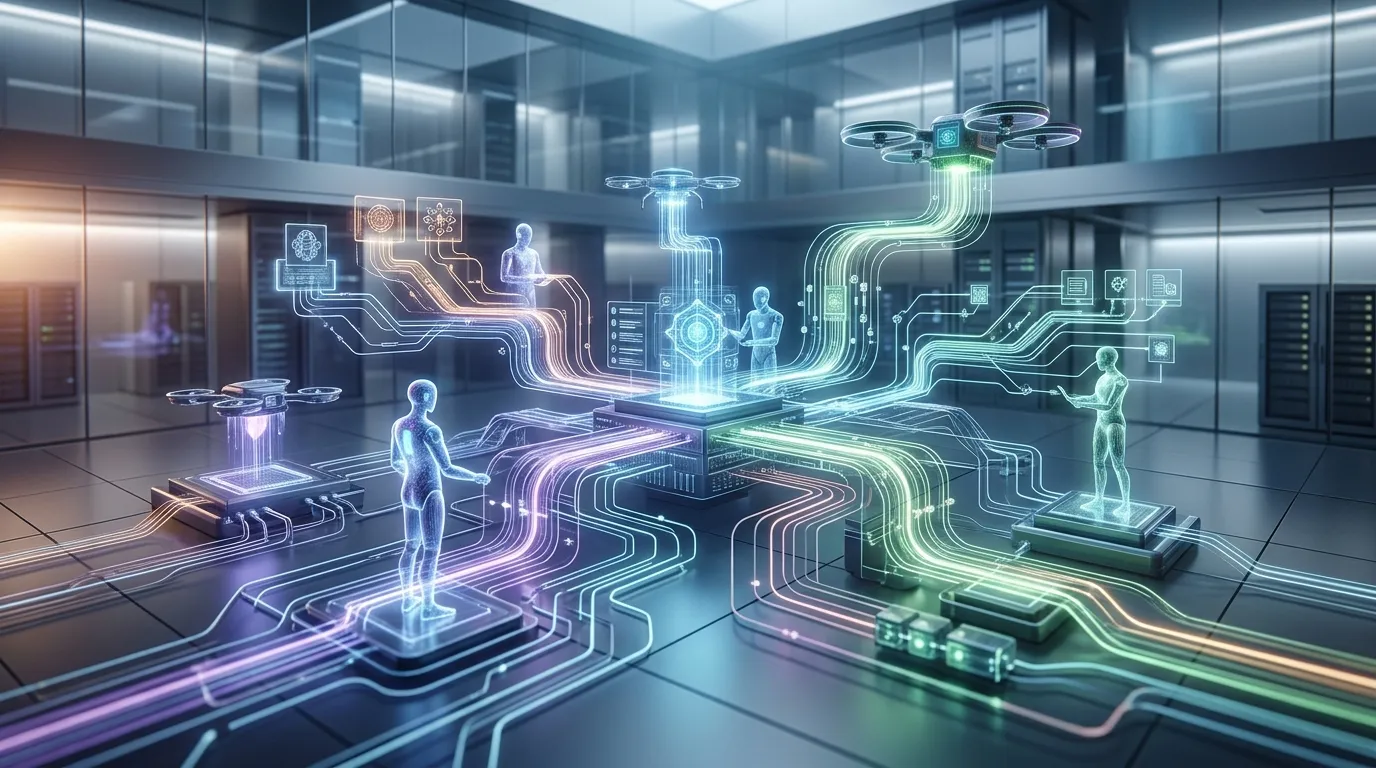

The corporate world is no longer enamored by simple conversational interfaces. In 2026, the novelty of "asking a chatbot" has faded, replaced by a much more powerful reality: agentic workflows. Today, AI for Enterprises means deploying autonomous systems that don’t just talk about work—they do it.
We are currently witnessing a fundamental shift from "Prompt Engineering" to "Agent Orchestration." For CTOs and Technical Architects, the challenge is no longer just about choosing the right Large Language Model (LLM); it is about building the infrastructure that allows these models to act as independent, reliable agents within a complex business ecosystem.
What is Enterprise AI Integration in the age of agents?
Enterprise AI Integration in 2026 refers to the seamless connection of autonomous AI agents with existing legacy systems, cloud infrastructure, and third-party APIs. Unlike traditional automation, which follows rigid "if-this-then-that" logic, agentic workflows use AI to reason, plan, and execute multi-step tasks dynamically.
In this environment, AI Integration Services act as the nervous system. They provide the "glue" that connects a reasoning engine to a company's ERP, CRM, and data lakes. When an agent receives a high-level goal—such as "optimize the supply chain for a 10% reduction in carbon footprint"—it doesn't just provide a list of suggestions. It analyzes real-time shipping data, negotiates with vendor APIs, and updates procurement logs autonomously.
Why are AI-powered workflow automations critical for 2026?
The primary driver for AI-powered workflow automation is the need for operational speed that exceeds human capacity. Market volatility and data density are at all-time highs. Enterprises that rely on manual intervention for every decision point find themselves paralyzed.
- Autonomy over Assistance: While 2024 was the year of the "Co-pilot," 2026 is the year of the "Autopilot." Specialized agents now handle end-to-end processes without constant human hand-holding.
- Reduced Latency: AI-enabled decision automation allows businesses to react to market changes in milliseconds rather than days.
- Scalability: Digital workers (agents) scale horizontally. You can deploy 100 agents to handle a sudden surge in customer service or logistics demands without the overhead of traditional hiring.
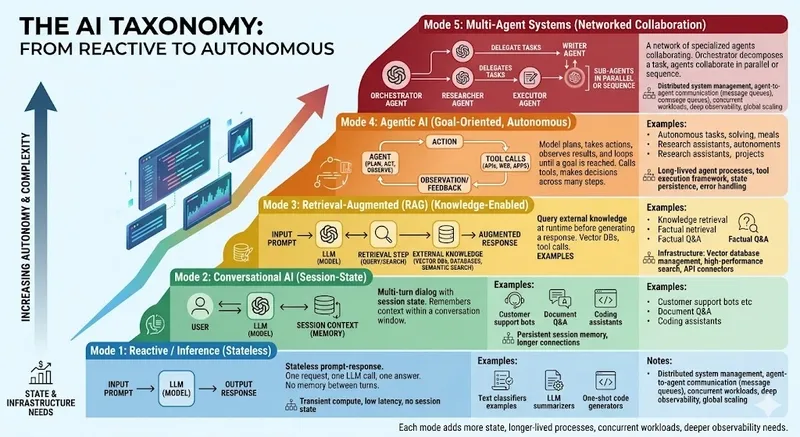
As highlighted in a recent deep-dive on AI integration services for agentic workflows, the shift toward agentic systems requires a move away from monolithic AI deployments toward modular, multi-agent architectures.
How do enterprises implement AI-driven business processes?
Implementing AI-driven business processes is not a "plug-and-play" endeavor. It requires a sophisticated architectural approach that prioritizes three core elements: Planning, Memory, and Tool-Use.
- The Planning Layer: This is the agent’s "brain." It breaks down complex goals into smaller, manageable sub-tasks. Modern integration services utilize advanced "Chain-of-Thought" and "Tree-of-Thoughts" reasoning frameworks to ensure agents don't get stuck in recursive loops.
- The Memory Layer: For an agent to be effective, it needs context. This involves integrating vector databases and RAG (Retrieval-Augmented Generation) so the agent remembers previous interactions, company policies, and historical data patterns.
- The Tool-Use Layer: This is where the actual "integration" happens. AI Integration Services provide agents with the "hands" they need—API connectors, database write permissions, and secure execution environments—to interact with the physical and digital world.
What are the core pillars of effective AI Integration Services?
To succeed in 2026, Enterprise AI Integration must be built on a foundation of trust and technical excellence. Architects focus on these four pillars:
Orchestration and Multi-Agent Systems (MAS)
Single-model solutions are often too brittle for complex tasks. Modern services deploy "swarms" of specialized agents. For instance, one agent handles data extraction, another performs legal compliance checks, and a third manages final output formatting. Efficient orchestration ensures these agents communicate without data loss.
Semantic Data Integration
Agents need to "understand" the data they access. This requires transforming siloed, unstructured data into a semantically indexed format. AI Integration Services now focus heavily on data hygiene and graph-based data structures to provide agents with a 360-degree view of the business.
Robust Observability and Traceability
In an autonomous world, "black box" AI is a liability. Enterprises require full traceability. Every decision an agent makes must be logged, explained, and auditable. This is essential for meeting the strict regulatory requirements of 2026, such as the evolved AI Acts in various global jurisdictions.
Custom AI Solutions and Strategy
No two enterprises are identical. Off-the-shelf agents often fail to capture the nuance of a specific brand’s voice or a niche industry’s regulatory constraints. This is why AI Consulting and Strategy remain the most critical first steps in the integration journey.
How do you solve the challenge of AI governance and security?
The biggest hurdle for IT managers is the "What if it goes wrong?" factor. AI-enabled decision automation carries risks of hallucination or unauthorized actions. To mitigate this, 2026-era integration services implement "Human-in-the-Loop" (HITL) checkpoints for high-stakes decisions.
Furthermore, "Guardrail Agents" are now a standard part of the architecture. These are specialized agents whose sole job is to monitor other agents for compliance, security breaches, and ethical alignment. They act as a real-time firewall between the AI’s reasoning and the company’s core assets.
Transforming Strategy into Reality
The transition to an agentic enterprise is inevitable, but the winners are those who build with intention. AI Integration Services are the bridge between the theoretical potential of LLMs and the practical reality of ROI-driven business operations.
Whether you are an SMB looking to lean out your operations or a global enterprise aiming to revolutionize your customer experience, the roadmap is clear: move from passive models to active agents.
Ready to Orchestrate Your Future?
The era of manual digital processes is ending. At ViitorCloud, we specialize in turning complex business challenges into streamlined, autonomous agentic workflows. Our Custom AI Solutions—from strategic consulting to full-scale Enterprise AI Integration—ensure your business stays ahead of the curve in 2026 and beyond.
Contact ViitorCloud Today to schedule a consultation with our AI architects and start building your autonomous enterprise.























Sign in to leave a comment.