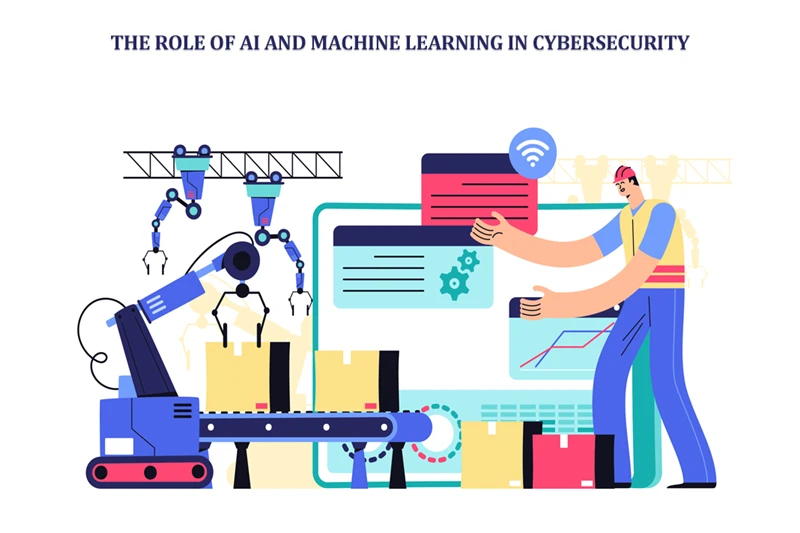

Can AI really guard your data against the next wave of cyberattacks? If that question pops into your mind than you’re not alone. Banks, hospitals, and those tiny online shops you love all live under the same digital sky, and the storms keep getting wilder.
Because hackers keep upgrading their toolkits, defenders must do the same, and that need screams for smarter tech. Enter Artificial Intelligence (AI) and Machine Learning (ML), the brains behind many modern security shields. These programs watch for attacks, teach themselves new tricks, and raise alarms in the blink of an eye, often before a human even hits the coffee button. Not so long ago, a team of experts would be hunched over screens all day.
Now, algorithms do that heavy lifting, sparing humans for the creative fixes that they can’t dream of yet. A bot learns the usual traffic pattern in an e-commerce site and instantly spots when something fishy sneaks in, blocking it before the cashier even knows there was a hiccup.
That same logic powers everything from Fortune 500 data walls to the basic online store with WooCommerce product video plugin selling hand-knit socks. Developers can wire in a quick video scan tool that flags counterfeit goods while the owner enjoys a well-earned lunch.
Stick around as we dig deeper into these digital watchdogs, list the perks they bring, name a few real-world heroes, and peek at where the road is heading next.
What is AI and Machine Learning?
Most folks use the term artificial intelligence, or AI, nowadays. But, its machines doing stuff that we once thought only people could manage. They can recognize a friend face in a photo, transcribe speech on the fly, or even churn out a shopping recommendation you never asked for.
Machine learning, often shortened to ML, is the slice of AI that learns from piles of data instead of obeying step-by-step orders. Take email filters: the program gobbles up thousands of messages, spots patterns, and eventually decides on its own what screams spam. Pretty neat?
Over in cybersecurity land, the story gets even cooler. ML engines comb through streams of network activity, hunting for weird spikes that could signal a hacker at work. Because they train on fresh data every hour, they don’t wait for an intruder to break in before sounding the alarm-it hints at trouble before you even notice there is a problem.
This predictive power marks a giant leap from the old fire-and-forget antivirus boxes that waited till after the damage to spring into action. In short, modern AI watches learns, and warns, giving defenders a fighting chance instead of just counting the scars.
Traditional Cybersecurity vs AI-Based Systems
The old-school approach to cybersecurity leaned on people and a thick rule book. Analysts wrote the rules themselves, and that worked fine for attacks that matched the playbook. But the moment an intruder tweaked a method just as usual to throw off, everything fell apart.
Human teams had to wade through mountains of logs, which ate up time and sometimes let problems slip by.
By today's AI-driven systems never get bored. They zip through terabytes of data in the time it takes you to boil an egg. Machine-learning engines hunt for hidden patterns nobody even thought to label as dangerous.
For example, a random file suddenly tries to poke into every folder on the network. The AI flags it right away, even though that exact file has never been seen before. That sort of flexible response is why companies are betting heavily on smart-tech shields.
Real-Time Threat Detection and Response
One of the coolest things about using AI in cybersecurity is how it catches trouble while the bad guys are still at the keyboard. The software never sleeps; it watches the network 24/7.
Imagine a file suddenly trying to email itself to an address nobody recognizes or traffic spikes that make no sense. The system sees those odd moves, yanks on the brakes, and either blocks the mischief or buzzes a human for backup. That fast cut-off keeps damage from snowballing.
Every alert also feeds a machine-learning engine that sharpens its aim for next time. A hacker who runs the same trick twice will find the door already locked.
Tools as IBM's Watson for Cybersecurity and Google Chronicle crank through millions of log lines in the blink of an eye. Because of that raw speed, safety gaps shrink, panic responses calm down, and companies lose a lot less money to cyber thieves.
AI in Malware and Phishing Detection
Malware and phishing are two of the most common cyber threats. Viruses, worms, and, of course, that headline-stealing ransomware all fall under the malware banner. Phishing, on the other hand, plays a sneakier game.
A scammer lures you into handing over passwords or credit card numbers by posing as someone legit. Artificial intelligence tackles both problems from different angles. The software watches how a file moves around the system and checks which links you actually click.
Email grammar, reply chains, sender tricks-even those tiny details get a second glance. One odd pattern and the engine leaps into action. Take an errant semicolon in a greeting line mixed with a strange attachment; that combo might trigger a warning even if the email address looks right.
Because the model learns from countless past attacks, its threat radar keeps recalibrating all by itself. The results can be stunning. A company flooded with incoming messages every hour sees a measurable dent in phishing loot because the killer emails never even land in the inbox.
Predictive Analysis and Risk Scoring
Nobody wants to hear an alarm after the house has already been that. That’s why smart security systems now try to guess which window a burglar might crawl through next. Predictive analysis digs through old logins, past hacks, and odd traffic spikes so the software can shout a warning before real trouble starts. For example, if a server keeps catching login hits from the same, out-of-the-way suburb, the program flags that spot as sketchy.
Risk scoring works like a credit check, only in a digital playground. Each user or gadget winds up with a number that tells security folks whether to shrug or spring into action. A laptop sneaking onto strange websites at 3 a.m. and yanking down huge files probably ends up with a fat, red warning next to its name. Teams can then bag the biggest threats first, sort of like firefighters choosing the blaziest house on the block.
Predicting trouble this way packs less chaos. Preemptive alerts and neat risk numbers let overworked staff focus their eyes where they count. In big places with thousands of screens blinking at once, that little bit of smarts can keep the lights on.
Challenges of Using AI in Cybersecurity
AI and machine learning sound cool, but rolling them out in security still runs into bumps. Every smart model starts skinny and needs a belly full of clean, fresh data. Feed it junk or stale info, and your system may flag a harmless file as a virus.
Hackers know this and may try to give the model bad samples on purpose; that sneaky trick is called adversarial AI. Even when the math works, the price tag doesn’t. Rented clouds, sharp engineers, and nonstop tuning can eat up a budget faster than planned.
How Small Businesses Use AI in Cybersecurity
Lots of people picture only giant tech firms when they hear about AI. The truth is, mom-and-pop shops are getting in on the action, too. In fact, plenty of budget-friendly security services now bake intelligent software right into their packages.
Take an online boutique running WooCommerce, for example. The owner might install a flashy product video plugin and, almost on autopilot, gain an AI watchdog that scans incoming traffic. If a hacker tries to sneak in bad code or swamp the site with phony requests, that automated guard can slam the door before anyone ever notices.
Small firms rarely employ a crew of full-time IT pros, so the tech steps in like a night watchman who never sleeps. Most platforms keep things straightforward, spitting out color-coded dashboards, instant alerts, and tidy summary reports that even a busy store manager can read.
Some services throw in a friendly chatbot that explains what went wrong and offers step-by-step fixes. Thanks to these helpers, even a lean team can lock the digital doors and sleep a little easier.
Future of Cybersecurity with AI and ML
AI and machine learning look set to steer the next chapter of cybersecurity. Hackers keep tweaking their tricks, and our software is being pushed to outsmart those tricks fast. Picture a program that spots a gap in its armor and slaps a patch on it before anyone can blink. Companies are already testing that self-healing tech behind closed doors.
Cloud environments will lean even heavier on AI, stitching all their parts together for tighter protection. Passwords and PINs may fade as biometrics take over, with cameras and microphones processing data at lightning speed. Smart facial and voice checks can flag fakes before they finish a login form.
Big governments and Silicon Valley juggernauts are throwing dollars into AI labs because cybercriminals do not rest on the weekend. Classes in ethical hacking and data training pop up on university course rosters every semester. Students sit next to industry pros, working on real patches for real networks.
Conclusion
AI and Machine Learning are changing the game in Cybersecurity. They help find, block, and predict threats much faster than old systems. From real-time protection to stopping phishing emails, these tools offer smart solutions. They’re not perfect and need good data and human control, but the benefits are clear. Even small businesses can use AI for better protection—sometimes within tools they already use, like WooCommerce or antivirus software. The digital world keeps growing, and so do the risks. But with the help of smart meters, we’re more prepared than doesn't doesn’t replace human thinking—it works with it, making our defenses faster and stronger. As we move forward, blending technology with human skills will be key to staying safe online. In this fast-changing world, smart pronation isn’t a choice—it’s a must.
























Sign in to leave a comment.