
Introduction
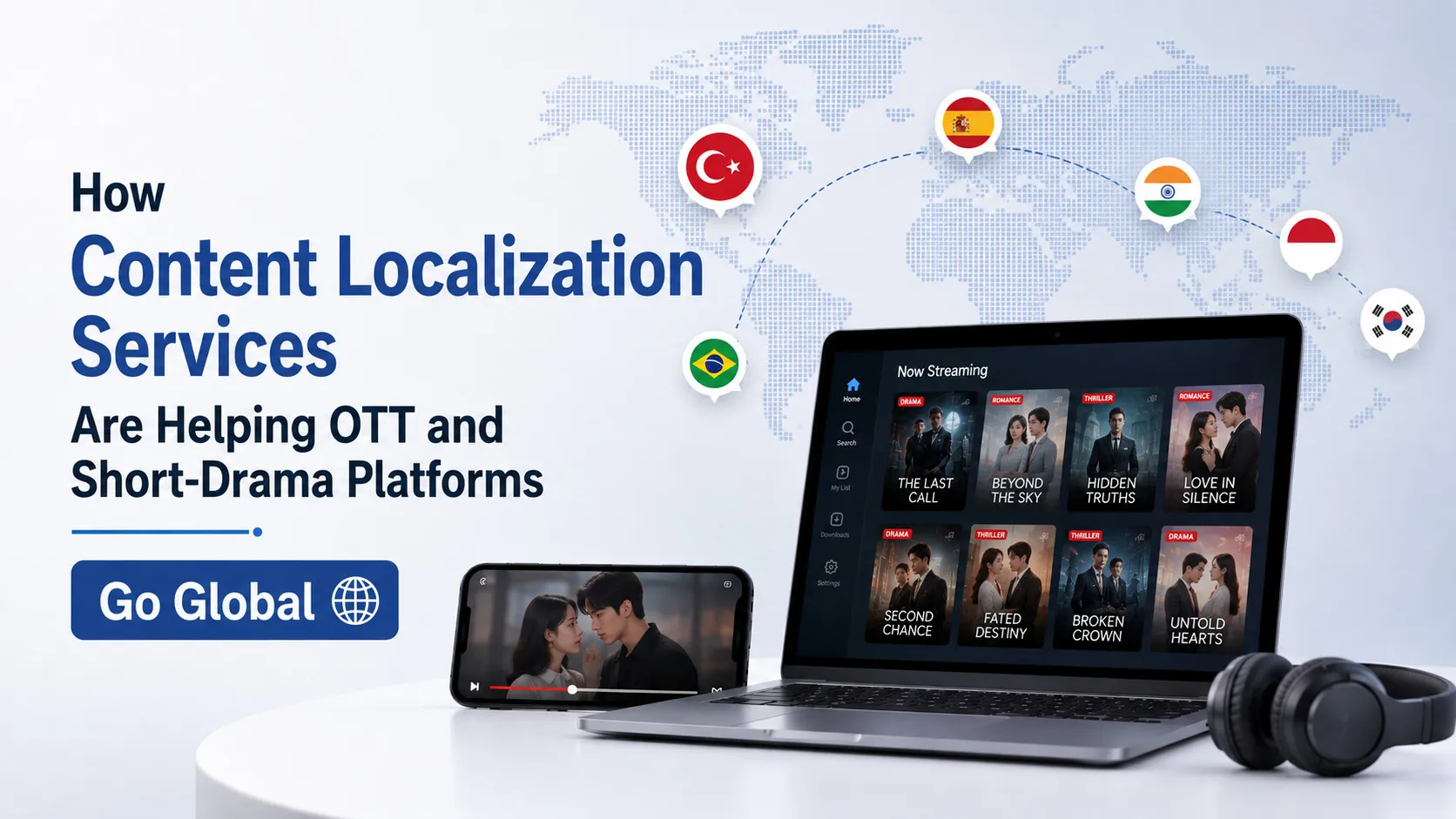
Short dramas are taking over Asia. These bite-sized shows just 3 to 10 minutes per episode are built for mobile screens. Viewers watch them on commutes, lunch breaks, and before bed.
But content only travels when it speaks the viewer’s language. That is where Micro Drama Dubbing comes in. It has become one of the most important services in the OTT industry today.
India alone has over 22 official languages. Audiences in Tamil Nadu, Bengal, Kerala, and Maharashtra each want content in their own tongue. The studios below are making that possible.
Why Micro Drama Dubbing Is Growing
People watch short dramas differently. They watch while commuting. They watch with the sound on, not subtitles.
Subtitles work for films. They don’t work as well for fast-paced, emotion-driven micro drama. Dubbed content feels more natural. It keeps viewers hooked.
OTT platforms have proved this with data. Dubbed content improves completion rates by 30 to 50 percent in regional markets. In Tier 2 and Tier 3 Indian cities, local-language content is not a bonus. It is a necessity.
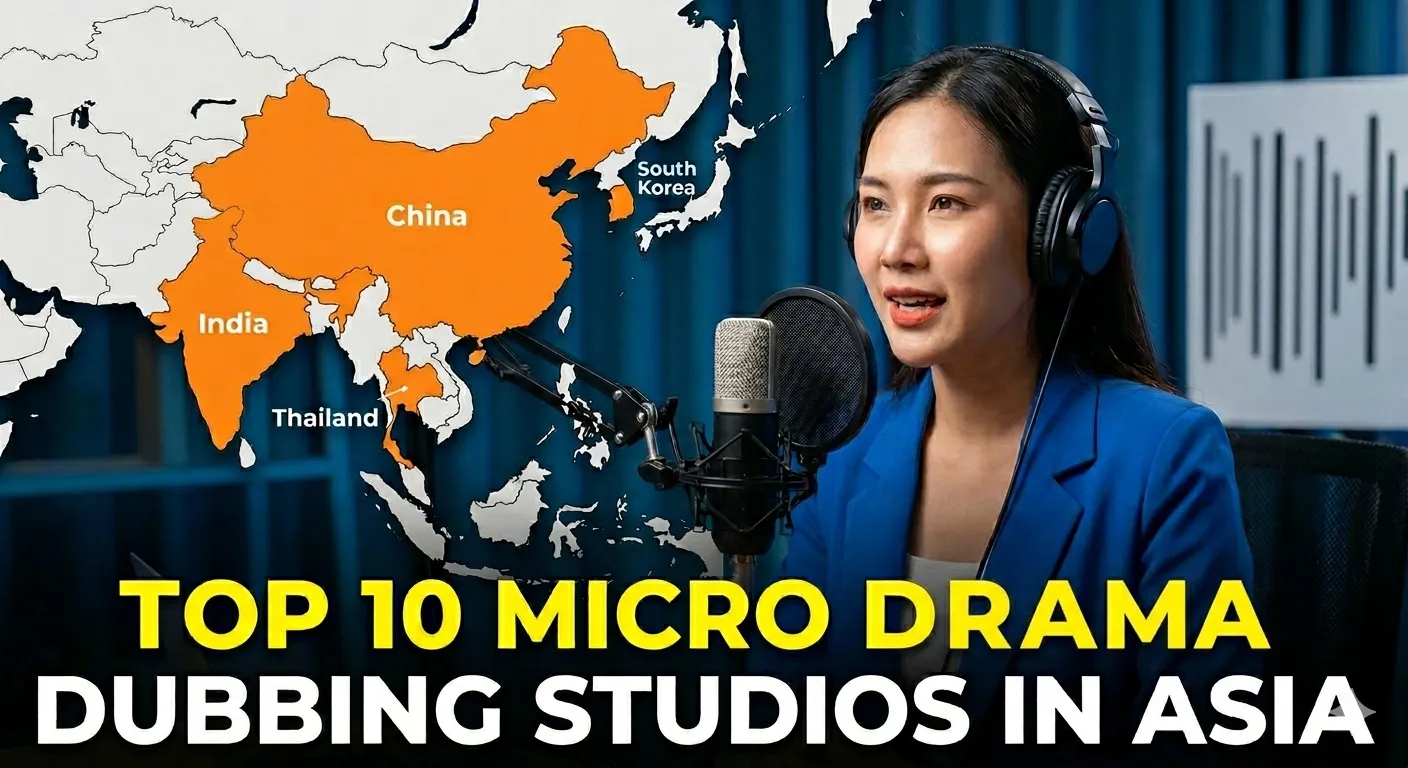
Top 10 Micro Drama Dubbing Studios in Asia
1. SukuDo Studios — India
SukuDo Studios is built specifically for micro drama dubbing. It understands India’s regional-language market deeply. Its voice talent covers Hindi, Tamil, Telugu, Bengali, Marathi, Malayalam, and Kannada. Workflows are designed for high volume and fast turnaround. For OTT platforms targeting South Asian audiences, Sukudo is a top choice.
2. Iyuno — South Korea
Iyuno is one of Asia’s biggest localization companies. It grew alongside the Korean Wave. It uses AI-assisted Micro Drama Dubbing workflows and operates across 35 countries. Platforms distributing Korean content across Asia rely on Iyuno heavily.
3. Pixelogic Media — Asia-Pacific
Pixelogic runs cloud-based production across the Asia-Pacific region. It offers end-to-end media services for OTT clients. Its quality standards match what tier-one streaming platforms demand. It handles large content libraries with ease.
4. Zoo Digital — Asia Division
Zoo Digital uses a cloud-based dubbing platform. It can release content across multiple territories at the same time. This matters for micro dramas with daily episode drops. Its freelance network covers 50-plus languages.
5. Visual Data Media Services
Visual Data is a trusted OTT localization partner. It excels in digital asset management and quality control. It can handle hundreds of episodes across multiple language tracks at once. Ideal for large-scale micro drama projects.
6. BTI Studios
BTI focuses on emotional authenticity in voice casting. It does not just translate words. It captures character. This approach fits micro drama perfectly. BTI serves major streaming platforms across Asia.
7. Voice & Script International
Voice & Script specialises in lip-sync accuracy and linguistic nuance. These matter greatly in short-form content. Tight pacing leaves no room for timing errors. This studio delivers precision on every track.
8. Main Frame Software Communications
Main Frame Software Communications takes a technology-driven approach to localization. It combines software expertise with media production. Its solutions are built to scale for OTT platforms across Asian markets.
9. Ezenhall Media Asia
Ezenhall is a Southeast Asian specialist. It knows Thailand, Vietnam, Indonesia, and the Philippines from the inside. As micro drama platforms grow in the region, that local knowledge becomes invaluable.
10. Bang Zoom! Asia Collaborations
Bang Zoom! built its name on anime dubbing. Its Asia collaboration network extends that expertise to broader content. It is a strong fit for micro dramas with Japanese or Korean stylistic influences.
Key Trends in 2026
AI is speeding up Micro Drama Dubbing. Script translation, lip-sync timing, and quality checks are all faster now.
But human talent still leads on quality. Emotion, cultural nuance, and character voice cannot be automated. The best studios use AI as a tool, not a replacement.
Regional-language demand in India is growing faster than supply. Tamil, Telugu, and Bengali dubbing are now commercially essential. Daily release schedules are pushing studios to run parallel workflows around the clock.
Conclusion
Micro drama dubbing is no longer optional. It is the bridge between content and audience.
The ten studios profiled here are building that bridge across Asia. They combine speed, technology, and cultural understanding to connect stories with viewers in their own language.
The future of multilingual entertainment belongs to studios that do all three well.





















Sign in to leave a comment.