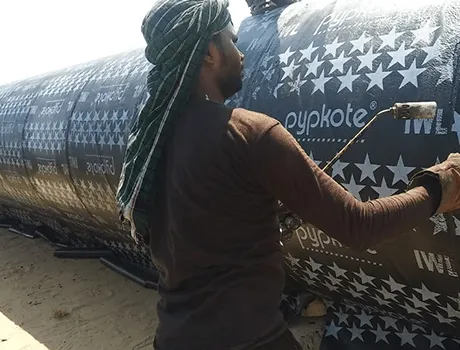

1. Corrosion Protection in Offshore Pipelines
Offshore pipelines are constantly exposed to saltwater, which is highly corrosive. Without proper protection, the integrity of these pipelines can degrade rapidly, leading to leaks and operational failures.
Pipe coatings, such as coal tar epoxy or fusion-bonded epoxy (FBE), form an impermeable barrier, shielding the metal surface from moisture and salt ions. These coatings ensure the longevity of offshore pipelines, even in highly corrosive marine environments.
For premium pipeline protection products, explore the solutions at IWL India.
2. Thermal Insulation for High-Temperature Pipelines
In the oil and gas industry, many pipelines transport fluids at extremely high temperatures. Without adequate protection, these temperatures can damage the pipeline material or reduce its efficiency.
Thermal insulation coatings help maintain the temperature of the transported fluids, reducing energy loss and preventing thermal stress on the pipeline material. Advanced coatings also protect the exterior of pipelines from extreme external temperatures in regions like deserts or arctic environments.
3. Abrasion Resistance in Onshore Pipelines
Onshore pipelines, especially those buried underground, face mechanical stress from soil, rocks, and construction activities. Abrasion-resistant coatings are essential for protecting these pipelines from physical wear and tear.
High-performance coatings like polyethylene or polypropylene-based wraps offer excellent resistance to abrasion while ensuring the pipeline remains structurally sound. For added protection, products like PyPKote Pipe Wrap Tape provide an extra layer of security, extending the pipeline’s service life.
4. Chemical Resistance in Processing Plants
In oil refineries and gas processing plants, pipelines transport highly reactive chemicals. Exposure to these chemicals can lead to material degradation, affecting both safety and efficiency.
Specialized pipe coatings, such as zinc-rich primers and anti-corrosion tapes, provide robust chemical resistance, ensuring that pipelines remain unaffected by aggressive substances. This application is critical for maintaining the safety of workers and preventing costly operational downtime.
5. Leak Prevention in Aging Infrastructure
As pipelines age, they become more susceptible to leaks due to material fatigue or corrosion. Pipe coatings play a vital role in rehabilitating and extending the life of aging infrastructure.
Coatings such as epoxy liners and pipe wrap tapes help seal small cracks and prevent leaks, restoring the pipeline's structural integrity. They also reduce the need for frequent repairs, saving time and costs.
For comprehensive pipeline maintenance solutions, check out IWL India for reliable and innovative products.
The Importance of Choosing the Right Pipe Coating
The effectiveness of a pipe coating depends on selecting the right product for the specific application. Factors such as environmental conditions, operating temperatures, and the type of fluid transported must be considered to ensure optimal protection.
By partnering with trusted manufacturers like IWL India, you can access a range of high-quality pipe coatings and protective materials tailored to meet the demands of the oil and gas industry.
Conclusion
Pipe coatings are indispensable in the oil and gas industry, offering protection against corrosion, abrasion, and chemical damage while improving operational efficiency. From offshore pipelines to aging infrastructure, these coatings ensure the safety, durability, and longevity of critical assets.
For industry-leading solutions like PyPKote Pipe Wrap Tape and other advanced coatings, visit IWL India today. Their expertise and cutting-edge products are designed to meet the challenges of the modern oil and gas industry.























Sign in to leave a comment.