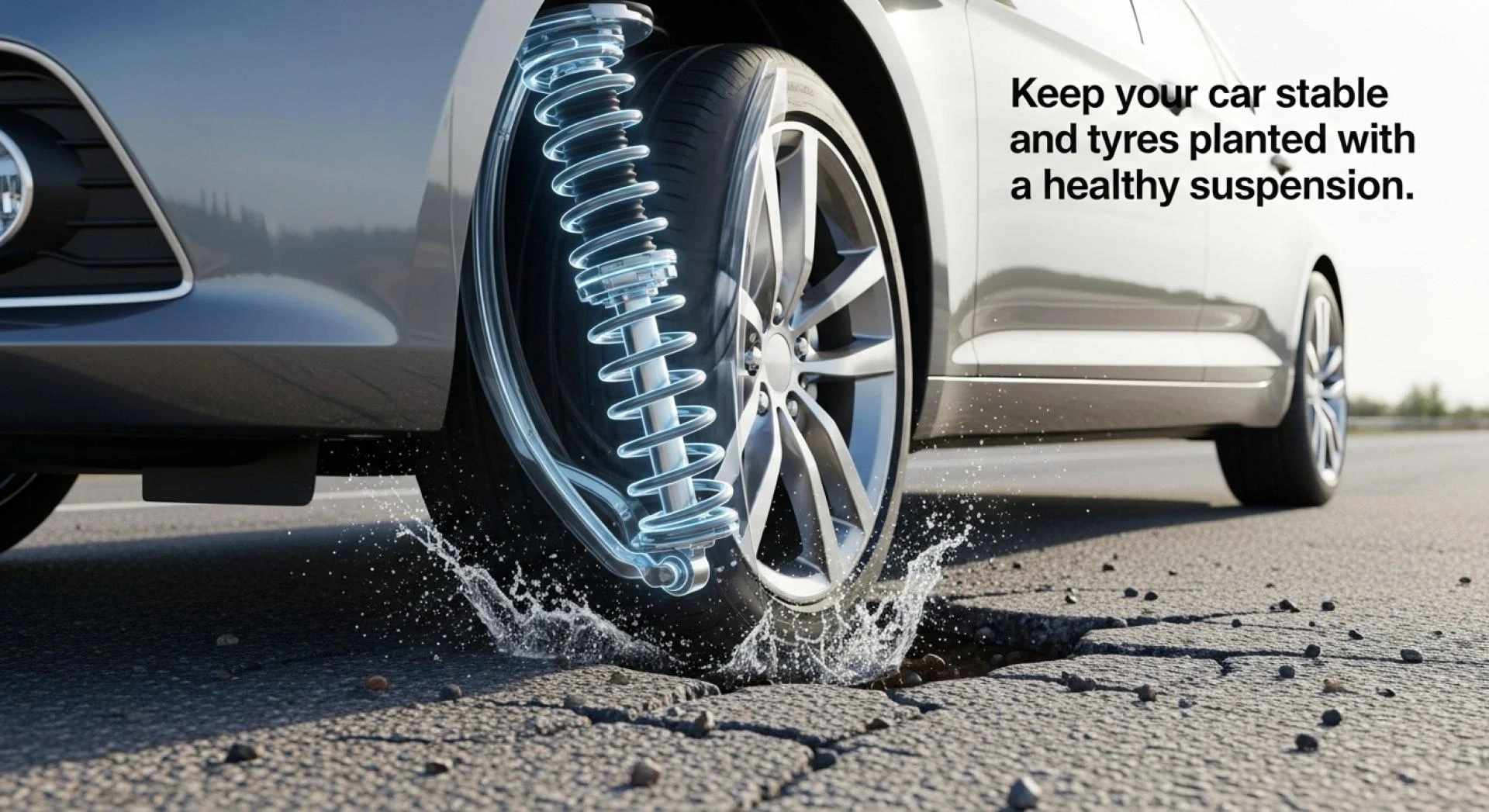
A car’s suspension is your safety system on the road. It keeps your tyres planted, your ride smooth, and steering responsive. Neglect it and even a small pothole on Perth’s roads can send you bouncing, increase stopping distance, or wear out tyres prematurely.
This guide explains the top 7 suspension problems, how to spot them, and how Perth’s expert mechanics fix them. Read on or book a suspension check at Schon Automotive to stay safe and smooth on WA roads.
Top 7 Car Suspension Problems: Signs Your Car Needs Suspension Repairs in Perth
IMAGE
Perth’s rough roads and climate make suspension wear almost inevitable. Watch for these warning signs that tell it’s time for a suspension repair. For each issue, we list common causes and quick fixes recommended by our skilled auto mechanics in Perth.
1. Worn Shock Absorbers & Struts
Worn shock absorbers or struts can’t damp road bumps effectively. You’ll feel nosediving on hard braking, swaying in corners, and an excessively bouncy ride. Steering may feel loose or you may notice uneven tyre wear.
· Causes: Shocks and struts wear out over tens of thousands of km due to heat, fluid loss or damaged seals. Rough roads and high mileage speed up wear.
· Quick Fix: Replace the bad shocks/struts (usually in matched pairs) with quality parts. Perth mechanics will fit the new dampers and perform a wheel alignment. This restores ride stability and tyre contact.
2. Broken, Sagging or Weak Springs
Coil springs support the car’s weight, so broken or sagging springs let one corner of the car sit lower. You may notice uneven ride height; car leans to one side, frequent bottoming out over bumps, or a fluttery ride. The car may lean heavily when turning or feel “soft” in the rear or front.
· Causes: Springs fatigue over years of compression, rust through, or even snap from hitting a large pothole. One side dropping indicates a damaged spring on that side.
· Quick Fix: Replace any cracked or weak springs. Mechanics replace springs in pairs or all four to keep the car level. Upgraded car suspension kits (spring and strut assemblies) can restore proper ride height and performance.
3. Leaking Shocks / Dampers
Oil stains or drips on a shock absorber mean its seals have failed. A leaking shock can’t cushion bumps, causing a bouncy ride, poor handling, and uneven tyre wear. You might hear clunks as the shock hits its stop. Driving on leaking struts is unsafe: braking performance and steering stability suffer.
· Causes: Internal seals degrade with age or get damaged by road debris. Harsh use (overloaded car, potholes) or poor installation can also break seals.
· Quick Fix: Replace the leaking shocks or dampers as they can’t be repaired. Mechanics advise replacing both shocks on the same axle to keep handling even. After installation, they’ll check alignment and ensure no fluid is left dripping.
4. Worn Suspension Bushes (Control-Arm/Sway-Bar Bushes)
Rubber or polyurethane bushings cushion joints (control arms, sway bars, etc.) from metal contact. Worn bushings let parts move loosely, causing clunks or rattles over bumps and loose or vague steering. You may also get uneven wheel alignment as worn bushings let suspension geometry shift.
· Causes: Bushings crack and erode over time from normal flexing, heat, road salt or grime. As they wear out, noise and vibration increase.
· Quick Fix: Replace the worn bushings (or the entire control arm if bushings are integral). Expert mechanics press in new bushings or arms and then realign the wheels. This stops rattles and returns steering precision.
5. Ball Joints, Tie Rods & Steering-Link Wear
These front suspension/steering links wear out and cause clunking noises and steering problems. Worn ball joints produce a faint click in turns and give the steering a sloppy or wandering feel. Bad tie rods make the steering wheel shake or feel loose, especially under acceleration, and cause uneven tire wear. In both cases, you may lose steering control on severe failure.
· Causes: Normal wear from many steering cycles, and knocks from potholes or kerbs. Ball joints typically last 70,000 mi or more, but heavy loads and road splash can cut life short. Tie rod ends wear as the steering is used.
· Quick Fix: The only fix is to replace worn ball joints or tie rod ends. Perth mechanics will change out the bad parts (mostly the whole steering knuckle arm) and then do a precise front-end alignment. This restores tight steering and prevents uneven tyre wear.
6. Wheel Alignment Issues & Tyre Cupping (Uneven Tyre Wear)
Cupping or scalloped wear on tyres (worn patches spaced around the tread) signals suspension issues. It accompanies a vibration or humming noise at speed. Cupping means your tyres are bouncing or slapping on the road, reducing grip. You may also see one-sided wear or the car pulling to one side, indicating misalignment.
· Causes: Worn shocks/struts or other suspension play let the tyre bounce, causing cupping. Misaligned or unbalanced wheels put uneven pressure on tyres, also leading to patchy wear.
· Quick Fix: Have an expert check alignment and balance. Replace any worn dampers, springs or bushings so wheels roll smoothly. Then rotate or replace the cupped tyres. Proper wheel alignment afterwards makes steering straight again and stops the abnormal wear.
7. Sway Bar (Anti-Roll Bar) Issues & Mounts
A broken or disconnected sway (anti-roll) bar causes excessive body roll in corners and clunking noises. You’ll feel your car lean much more than normal when turning. Damaged sway bar end-links or mounts often rattle or bang, especially over bumps. You might also notice uneven tyre wear on outer edges in cornering.
· Causes: Bushings and links wear out or snap under stress. Hitting big potholes or kerbs can bend or break the bar. Constantly overloading the car strains these parts too.
· Quick Fix: Replace the broken sway bar end-links or bushings. If the bar itself is bent, it too should be replaced. Perth mechanics will mount new sway links/bushes and tighten everything. This stops the clunks and restores normal body roll and stability.
Is your car bouncing too much? Hearing clunks or knocks over speed bumps? Noticing uneven tyre wear or scalloped tread?
Reach Out to Schon Automotive – Get Expert Car Suspension Repairs in Perth
Schon Automotive’s Perth suspension specialists will inspect your vehicle, diagnose the issue, and fix worn shocks, springs, bushes or any suspension parts with precision.
We handle all suspension repairs for any make/model. Our friendly mechanics use quality parts so your car drives as it should.
Don’t let a bad suspension make your car unsafe or uncomfortable.
Book Your Suspension Check Now
Get Back to Smooth, Safe Driving – Fast!
FAQs About Car Suspension Problems
Q1: Can you drive a car with a bad suspension?
No – it’s unsafe. Even minor suspension issues, like clunks, thumps or excessive bounce, indicate worn parts. Driving on bad suspension will hurt handling and braking and can damage other components. If you notice any signs, get it checked rather than risk losing control.
Q2: How long do shocks and struts last?
Typically, shocks and struts last about 50,000–100,000 miles (80,000–160,000 km). They wear out gradually, so you’ll start feeling every bump and noticing control issues when they’ve degraded.
Q3: Can I drive with a bad shock absorber?
Driving with a failed shock is dangerous. A bad shock absorber means one wheel can bounce uncontrollably, causing steering instability, longer stopping distance, and loss of tyre contact. It’s best to replace a bad shock immediately for safety.
Q4: How much does suspension repair cost in Perth?
Costs vary widely by vehicle and how many parts. In Perth, a single shock absorber replacement costs around $270–$600 including labour. A full front or full suspension job (struts, springs, arms, etc.) can be $1,000–$5,000+ depending on the car’s make/model and how many components need replacing. Always get a detailed quote.
Q5: What causes tyre cupping and how is it fixed?
Cupping (scalloped tread) is usually caused by worn suspension components or balance/alignment issues. For example, bad shocks let the tyre bounce, creating cupped wear patterns. Fix it by replacing any worn shocks/struts or bushings, then properly aligning and balancing the wheels. New tyres might be needed if the wear is severe.
Q6: How often should I have my front suspension checked?
Have it inspected at least once a year (or about every 12,000 mi / 20,000 km) as part of routine service. Also check after heavy use: if you regularly drive over potholed roads, or notice any steering or ride issues. Early checks by a mechanic can catch problems before they get serious.
Q7: Can I replace just one suspension?
It’s not recommended to replace only one shock or strut. Suspension parts work as pairs on each axle; replacing just one will unbalance the suspension, causing uneven handling. Mechanics advise replacing both or all four shocks/struts at once so both sides of an axle match in performance.
Q8: Do car suspension upgrades affect warranty?
Modifying suspension can affect your warranty on those components. In most cases, if an upgraded or aftermarket part causes a failure, the manufacturer may deny warranty coverage for that repair. Always check your vehicle’s warranty terms and consult the dealer before doing major suspension modifications.
Q9: How long does suspension last on a car?
A well-maintained suspension system lasts 50,000–100,000 miles, but this varies. Springs and bushings may last longer, while shocks need attention closer to 50k miles. Harsh roads, heavy loads and driving style can all shorten suspension life, so monitor it regularly.
Q10: How long do suspension repairs take?
Simple repairs (e.g. replacing one or two shocks) can be done in a few hours. More extensive jobs (replacing multiple parts, or a complete suspension overhaul) may take a full day or more. Your mechanic can give an ETA based on your specific repairs.





















Sign in to leave a comment.