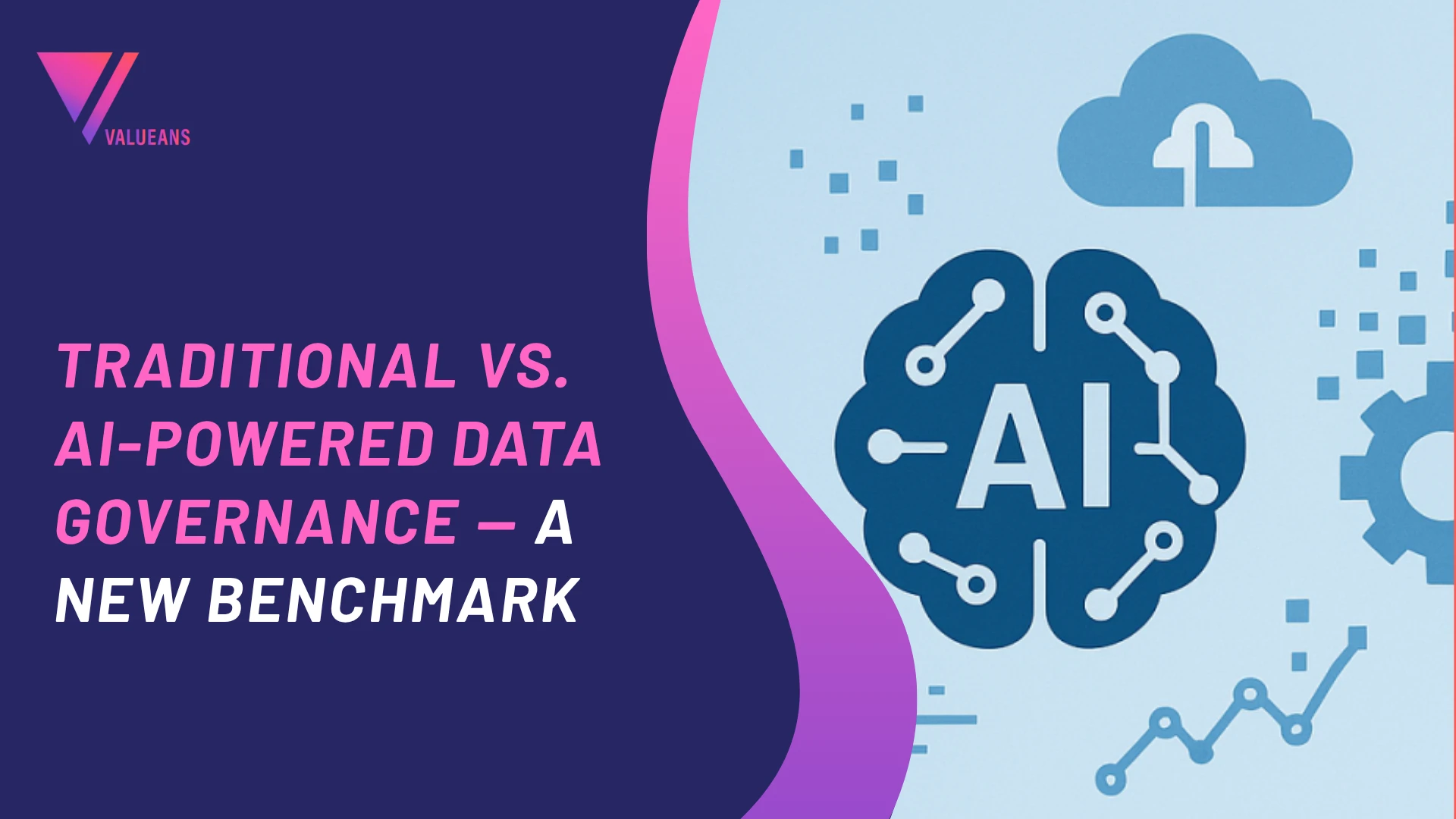

In today’s hyper-connected digital world, data governance has moved from being a back-office compliance task to a boardroom priority. As enterprises generate, store, and process data across hybrid clouds, edge devices, and global infrastructures, traditional governance frameworks can no longer keep up with the velocity, variety, and volume of information.
This is where AI-powered data governance emerges as a game-changer. By combining machine learning services, automation, and predictive intelligence, organizations can transition from static rule-based systems to self-learning, adaptive frameworks that anticipate risks before they materialize.
Companies like Securiti.ai are leading this transformation — redefining how modern enterprises manage privacy, compliance, and trust. Their AI-driven platform represents not just technological advancement but a new benchmark for governance automation and intelligence.
Traditional Data Governance: Reactive and Rule-Based
Traditional data governance frameworks rely heavily on manual oversight, predefined policies, and static rule sets. These systems were effective when data volumes were manageable and compliance regulations less dynamic. However, in the modern landscape — where data flows across global boundaries and regulatory requirements evolve constantly — this approach shows serious limitations.
Key Limitations of Traditional Governance
- Manual Monitoring: Compliance teams must manually track data usage and violations.
- Fragmented Systems: Policies differ across departments, leading to inconsistent governance.
- Limited Scalability: Human-driven oversight struggles with large-scale data ecosystems.
- Delayed Response: Risk detection and compliance verification often occur post-incident.
While this method ensures basic accountability, it’s inherently reactive — responding to problems instead of preventing them.
AI-Powered Data Governance: Intelligent, Predictive, and Autonomous
The new era of governance is powered by artificial intelligence — systems capable of learning, predicting, and adapting continuously. AI-driven data governance uses predictive analytics technologies to provide organizations with visibility and control that traditional methods could never achieve.
By integrating AI-ML solutions and natural language processing (NLP), enterprises can automate compliance, identify risks in real time, and ensure continuous regulatory alignment across hybrid environments.
Core Advantages of AI-Powered Governance
- Automation at Scale: Self-learning algorithms reduce manual dependency.
- Real-Time Monitoring: AI tracks data usage patterns across cloud and on-premises systems.
- Adaptive Compliance: Models automatically update policies based on new regulations.
- Predictive Intelligence: Systems forecast potential risks before breaches occur.
- Enhanced Decision-Making: Governance insights support smarter business strategies.
Through this lens, AI governance isn’t just an upgrade — it’s a complete architectural redefinition of how enterprises secure, manage, and trust their data.
How Securiti.ai Redefines Governance Intelligence
At the heart of this transformation is Securiti.ai, an AI-driven platform designed to unify privacy, security, and compliance under one intelligent system.
The Securiti ai company overview reveals a clear mission — to simplify and automate complex data governance tasks through AI-based privacy and compliance technologies. Its intelligent data fabric empowers enterprises to manage sensitive information confidently, no matter where it resides.
Key Innovations Powering Securiti.ai’s Platform
- Data Intelligence Graphs: Provide contextual visibility across structured and unstructured data.
- AI-Driven Compliance Engine: Ensures automatic adaptation to regulatory changes.
- PrivacyOps Automation: Manages user data requests with zero manual intervention.
- Predictive Risk Insights: Utilizes predictive analytics technologies to forecast emerging threats.
By merging compliance, governance, and data security, Securiti.ai sets a new gold standard for AI-powered enterprise resilience.
The Business Case: Why Enterprises Are Adopting AI Governance
The decision to adopt AI-based data governance isn’t purely technical — it’s a strategic move that delivers measurable business impact. Organizations are under growing pressure to maintain compliance, ensure data integrity, and reduce operational costs.
By integrating AI-driven governance platforms, enterprises can achieve:
- Operational Efficiency: Automation reduces manual workloads and human error.
- Regulatory Agility: Real-time updates align policies with changing global standards.
- Trust and Transparency: Continuous monitoring strengthens customer and stakeholder confidence.
- Cost Reduction: Predictive analytics lowers the cost of compliance management.
These outcomes demonstrate why AI governance isn’t just a compliance tool — it’s a business enabler driving efficiency and long-term sustainability.
Market Impact: A Shift from Compliance to Intelligence
The global shift toward AI-powered governance is part of a broader movement where security, privacy, and intelligence converge. This transformation is exemplified by acquisitions like Veeam acquires Securiti ai, which underline how traditional data management vendors are evolving into intelligence-first security providers.
As AI becomes integral to enterprise ecosystems, the boundaries between data protection, privacy automation, and governance are blurring. This convergence creates unified systems that manage, secure, and analyze data in one seamless framework — enhancing both security posture and business performance.
Integrating AI Governance with Broader Enterprise Systems
Modern data environments are complex — spanning mobile applications, IoT devices, and multi-cloud deployments. This complexity demands integrated ecosystems capable of unifying governance across technologies.
By connecting AI-ML solutions, machine learning services, and IoT deployment technologies, organizations can establish intelligent governance frameworks that extend from backend servers to edge devices.
For enterprises building mobile infrastructure, combining AI governance with mobile app development services ensures that compliance and security are embedded into every digital touchpoint. This holistic integration transforms data governance into a continuous, intelligent lifecycle, not a one-time policy exercise.
Future Outlook: Setting a New Benchmark for Data Governance
The future of governance will be defined by autonomous intelligence — where AI systems continuously monitor, predict, and adapt governance frameworks based on live data interactions.
In the coming years, expect to see greater collaboration between governance technologies and predictive analytics engines that forecast compliance risks and automate mitigations. The integration of NLP solutions will further enhance governance intelligence, enabling contextual understanding of policy documentation, audit trails, and regulatory language.
Ultimately, this shift represents more than innovation — it’s a cultural transformation where data governance evolves from a reactive compliance burden into a strategic intelligence discipline.
Conclusion: Governance Enters the Age of Intelligence
The journey from traditional to AI-powered data governance marks a profound turning point in how enterprises handle data responsibility. What began as manual oversight has now evolved into intelligent automation — capable of predicting, adapting, and governing with precision.
With leaders like Securiti.ai setting industry standards and acquisitions like Veeam’s strategic move reinforcing AI’s importance, the benchmark for governance is being rewritten. The future belongs to organizations that embrace AI-driven intelligence, integrating it with machine learning services, NLP solutions, and IoT deployment technologies to build truly resilient and compliant digital ecosystems.
In this new era, data governance is no longer about control — it’s about confidence.
FAQs
1. What differentiates AI-powered data governance from traditional governance?
AI-driven governance automates policy enforcement, predicts risks, and adapts to regulatory changes in real time — unlike traditional systems that rely on manual oversight.
2. How does Securiti.ai enhance enterprise governance?
Securiti.ai leverages AI-ML solutions to automate compliance, deliver predictive analytics, and unify governance across complex data ecosystems.
3. Why are companies moving toward AI-based governance frameworks?
To manage large-scale, hybrid data systems more efficiently while ensuring continuous compliance and data trust.
4. What technologies support intelligent data governance?
Integration of machine learning services, NLP solutions, and predictive analytics technologies enables adaptive, automated, and proactive data governance.
























Sign in to leave a comment.