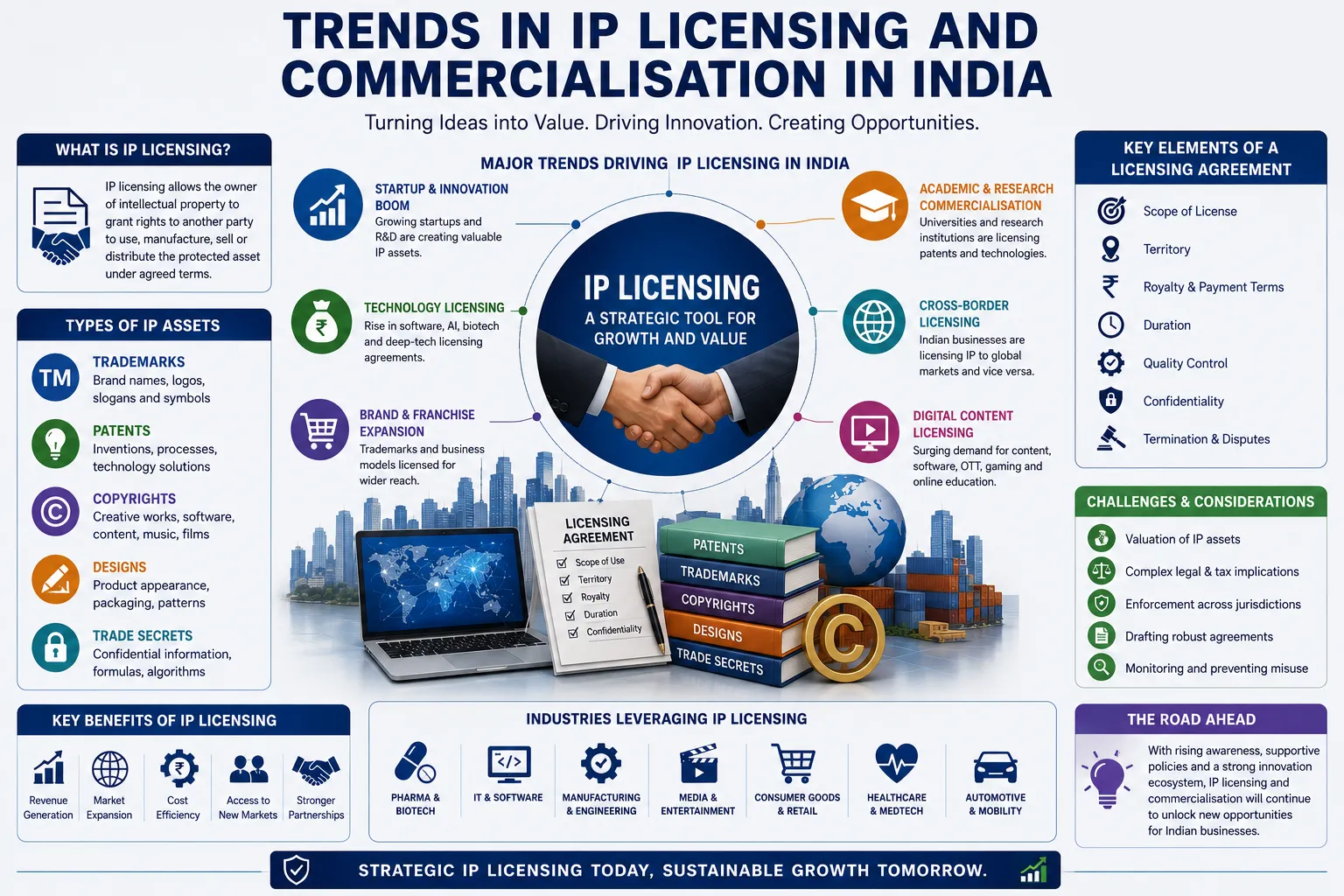

India’s intellectual property landscape has evolved significantly over recent years. Businesses today no longer view intellectual property merely as a legal safeguard. Instead, companies increasingly recognise patents, trademarks, copyrights, designs, and trade secrets as valuable commercial assets capable of generating revenue and driving business growth.
This shift has accelerated the growth of intellectual property licensing and commercialisation across multiple sectors in India. Startups, technology companies, research institutions, media businesses, pharmaceutical enterprises, and manufacturing organisations now actively explore ways to monetise intellectual property through structured commercial arrangements.
As innovation and digital transformation continue shaping India’s economy, intellectual property licensing has become an important strategic tool for businesses seeking competitive advantage and sustainable expansion.
Understanding IP Licensing and Commercialisation
Intellectual property licensing refers to the process where the owner of intellectual property grants permission to another party to use, produce, distribute, or commercialise protected assets under agreed terms.
Commercialisation involves converting intellectual property into commercially valuable products, services, technologies, or revenue streams.
Common intellectual property assets used in licensing arrangements include:
- Trademarks
- Patents
- Copyrights
- Software
- Industrial designs
- Trade secrets
- Digital content
Licensing helps businesses expand market reach while maintaining ownership rights over intellectual property assets.
Growing Importance of IP Commercialisation in India
India’s growing startup ecosystem and technology driven economy have increased awareness regarding intellectual property monetisation. Businesses increasingly realise innovation alone may not generate commercial success unless intellectual property rights are strategically managed and commercialised.
Several factors contribute to this trend:
- Rapid startup growth
- Increased foreign investment
- Technology innovation
- Global business expansion
- Digital economy development
- Stronger intellectual property awareness
Businesses now focus on building intellectual property portfolios capable of creating long term commercial value.
Rise of Technology Licensing
Technology licensing has become one of the most prominent trends in India’s intellectual property ecosystem. Software companies, artificial intelligence developers, healthcare innovators, and research organisations frequently enter licensing arrangements to commercialise technologies across industries.
Technology licensing provides several advantages:
- Faster market access
- Revenue generation
- Reduced operational costs
- Research collaboration opportunities
- Global business expansion
Indian startups increasingly collaborate with larger enterprises through licensing models involving software solutions, automation systems, and digital platforms.
Trademark Licensing and Brand Expansion
Trademark licensing has also expanded significantly across sectors such as fashion, food and beverage, retail, entertainment, and consumer products.
Businesses now use trademark licensing to:
- Expand into new markets
- Build franchise networks
- Increase brand visibility
- Create additional revenue streams
Well recognised brands often generate substantial commercial value through licensing partnerships without directly managing every operational aspect.
As brand protection becomes increasingly important, businesses often consult experienced ip lawyers in india to structure licensing agreements and protect ownership rights effectively
Growth of Franchise Based Models
Franchising continues to play a major role in intellectual property commercialisation across India. Restaurants, educational institutions, fitness brands, retail businesses, and service providers frequently rely on trademark and operational licensing arrangements.
Franchise agreements generally involve:
- Trademark usage rights
- Operational guidelines
- Business model licensing
- Quality control standards
- Revenue sharing structures
The growing popularity of organised retail and service industries has strengthened demand for structured intellectual property licensing frameworks.
Increasing Role of Universities and Research Institutions
Universities, research organisations, and innovation centres now actively commercialise patents and technological inventions developed through academic research.
Technology transfer offices increasingly support:
- Patent filing
- Licensing negotiations
- Industry partnerships
- Startup incubation
- Research commercialisation
India’s focus on innovation and research driven entrepreneurship has encouraged stronger collaboration between academic institutions and private businesses.
Commercialisation of research based intellectual property contributes to technological advancement and economic development.
Digital Economy and Copyright Licensing
The growth of digital platforms has transformed copyright licensing practices across industries such as entertainment, media, gaming, publishing, and online education.
Digital businesses increasingly license:
- Music content
- Software applications
- Educational material
- Films and streaming rights
- Gaming assets
- Digital artwork
Streaming services and online content platforms have created new licensing opportunities for creators and businesses alike.
At the same time, businesses must carefully manage copyright ownership and distribution rights to avoid infringement related disputes.
Cross Border Licensing Arrangements
Globalisation has increased cross border intellectual property licensing involving Indian companies and international businesses. Technology exports, digital services, pharmaceutical partnerships, and manufacturing collaborations frequently involve international licensing agreements.
Cross border licensing creates opportunities for:
- Global market access
- Foreign revenue generation
- International partnerships
- Technology transfer
- Brand expansion
However, international licensing also introduces legal complexities involving jurisdiction specific laws, taxation, enforcement, and compliance standards.
Businesses must therefore adopt carefully structured intellectual property strategies before entering foreign markets.
Importance of Well Drafted Licensing Agreements
Strong licensing agreements remain essential for successful intellectual property commercialisation. Poorly drafted agreements often lead to disputes involving ownership rights, royalties, territorial usage, confidentiality, and termination rights.
Key clauses commonly addressed in licensing agreements include:
- Scope of licence
- Territory restrictions
- Royalty structure
- Duration of usage rights
- Quality control obligations
- Confidentiality provisions
- Dispute resolution mechanisms
Businesses should ensure agreements clearly define rights and obligations of all parties involved.
Emergence of Startup Driven Licensing Models
Indian startups increasingly use intellectual property licensing as part of growth and scaling strategies. Rather than manufacturing products independently, many startups commercialise innovation through licensing partnerships with larger corporations.
This model offers several benefits:
- Lower infrastructure costs
- Faster commercial expansion
- Access to established distribution networks
- Reduced operational risk
Startups developing software, healthcare technologies, and specialised manufacturing solutions often rely heavily on licensing based commercial models.
Artificial Intelligence and Emerging Licensing Challenges
Artificial intelligence and advanced technologies have introduced new intellectual property licensing concerns. Businesses now face questions involving:
- Ownership of AI generated content
- Licensing of training data
- Software usage restrictions
- Algorithm confidentiality
- Cross border technology transfer
As technology evolves rapidly, intellectual property licensing frameworks continue adapting to address emerging commercial and legal challenges.
Businesses operating in technology sectors should remain informed regarding changing regulatory and contractual standards.
Growing Focus on IP Due Diligence
Investors and commercial partners increasingly evaluate intellectual property ownership before entering licensing or investment arrangements.
IP due diligence often involves reviewing:
- Registration status
- Ownership records
- Existing licences
- Pending disputes
- Commercial usage rights
Strong intellectual property documentation improves commercial credibility and reduces transaction related risks.
Businesses seeking long term commercialisation opportunities should maintain clear internal records and registration portfolios.
Enforcement and Licensing Protection
Effective enforcement remains important even after licensing arrangements are established. Businesses must monitor misuse, unauthorised sublicensing, and infringement risks involving licensed intellectual property.
Common enforcement concerns include:
- Counterfeit products
- Unauthorised brand usage
- Copyright infringement
- Territorial violations
- Breach of confidentiality obligations
Companies frequently seek support from experienced best trademark law firms in india to manage trademark licensing protection and enforcement matters.
Strong monitoring mechanisms help preserve commercial value and reduce long term legal exposure.
Government Policies and Innovation Support
Government initiatives supporting startups, research commercialisation, digital business growth, and innovation have contributed positively to India’s intellectual property commercialisation ecosystem.
Improved online filing systems, startup support programmes, and awareness campaigns have encouraged businesses to explore intellectual property monetisation opportunities more actively.
India’s growing focus on innovation driven economic development is expected to further strengthen licensing activity across industries.
Future of IP Licensing in India
India’s intellectual property licensing landscape is likely to continue expanding as businesses increasingly prioritise innovation, technology development, and global commercialisation.
Future trends may include:
- Increased technology transfer partnerships
- Expansion of digital content licensing
- Growth in AI related licensing arrangements
- Stronger startup commercialisation models
- Greater international collaboration
Businesses capable of strategically managing intellectual property rights may gain significant competitive advantages in evolving markets.
Final Thoughts
Intellectual property licensing and commercialisation have become central components of India’s modern business environment. Companies across industries increasingly recognise intellectual property as a valuable commercial asset capable of generating revenue, supporting expansion, and strengthening market position.
As innovation and digital transformation continue driving economic growth, businesses must adopt structured intellectual property strategies focused not only on protection, but also on effective monetisation and commercial use.
In India’s evolving commercial ecosystem, intellectual property licensing will continue playing a critical role in shaping entrepreneurship, technology development, and long term business success.





























Sign in to leave a comment.