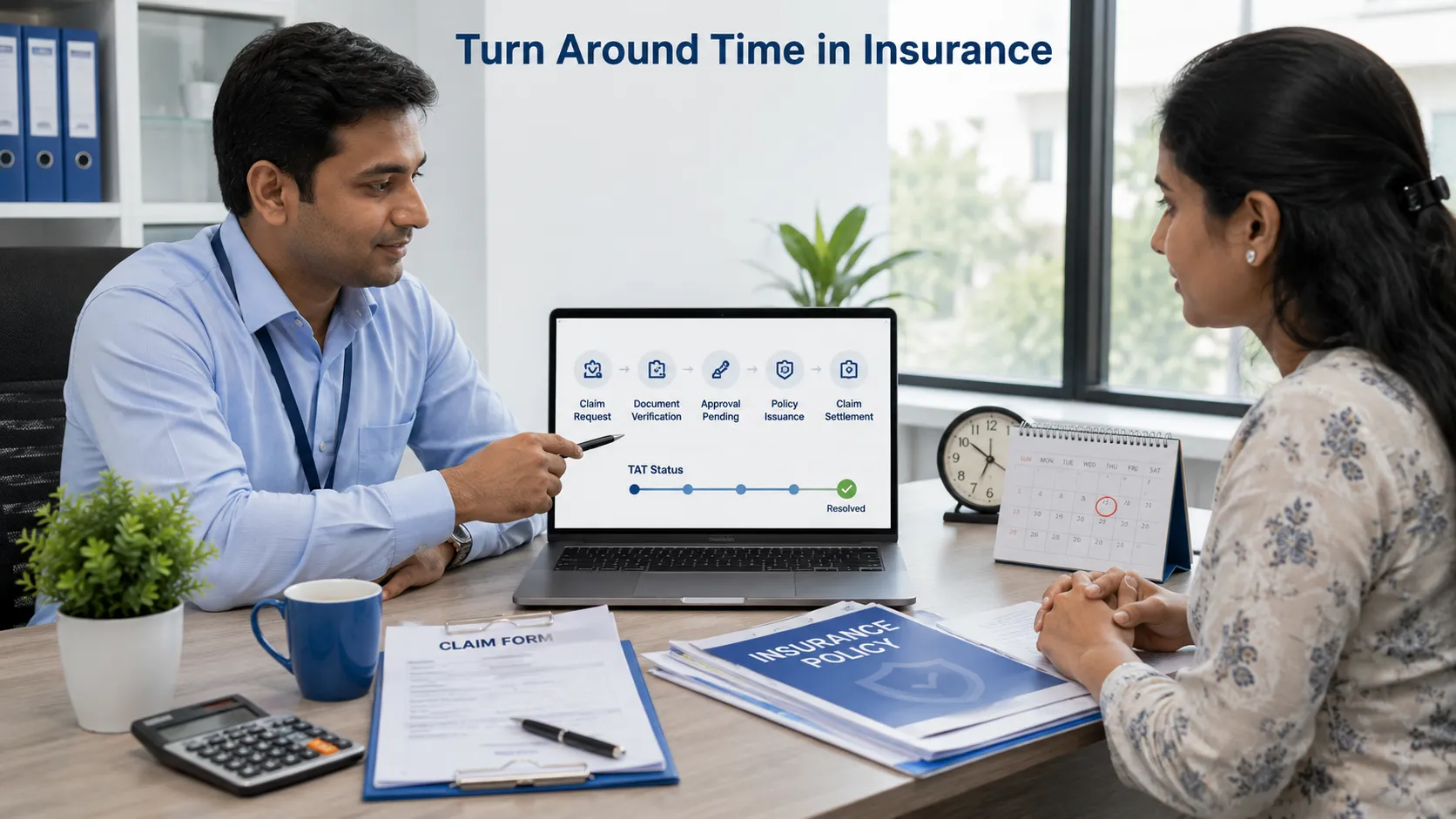

When purchasing an insurance policy or filing a claim, you've probably come across the term Turn Around Time (TAT). Insurance companies frequently use this term to indicate how long they take to complete a specific service or process. Whether you're buying a new policy, renewing an existing one, or waiting for a claim settlement, understanding TAT helps you know what to expect and when.
A faster Turn Around Time not only improves customer satisfaction but also reflects the efficiency and reliability of an insurance provider. For policyholders, knowing the expected TAT can help avoid unnecessary delays, plan finances better, and ensure timely access to insurance benefits.
In this guide, we'll explain what Turn Around Time in insurance means, why it matters, the common processes that have defined TATs, and the factors that can affect service timelines.
What Is Turn Around Time (TAT) in Insurance?
Turn Around Time (TAT) refers to the time an insurance company takes to complete a specific customer request or service, starting from the receipt of all required documents or information until the process is completed.
Depending on the request, TAT may apply to:
- Policy issuance
- Policy renewal
- Claim registration
- Claim settlement
- Endorsements (policy changes)
- Policy cancellation
- Document verification
- Grievance resolution
Insurance companies usually define internal service standards for these activities, and many timelines are also influenced by regulatory requirements and the complexity of the request.
Why Is TAT Important in Insurance?
Turn Around Time plays a significant role in the overall customer experience.
A shorter TAT means policyholders receive faster service, quicker claim decisions, and less uncertainty during important situations such as accidents or medical emergencies.
Key benefits of efficient TAT include:
- Faster claim settlements
- Better customer satisfaction
- Improved trust in the insurer
- Reduced waiting time
- Greater operational efficiency
- Enhanced transparency
For insurers, maintaining efficient TAT helps strengthen customer relationships and improve service quality.
Common Insurance Processes That Have TAT
Almost every insurance-related service has an expected processing time.
1. Policy Issuance
After submitting the proposal form and required documents, the insurer reviews the application and issues the policy.
The TAT depends on factors such as document verification, underwriting requirements, and payment confirmation.
2. Policy Renewal
Renewals are often completed quickly, especially when there are no changes to the policy and the premium is paid before the due date.
Online renewals are generally processed faster than manual requests.
3. Claim Registration
Once a claim is reported, the insurance company acknowledges the request and begins the verification process.
Prompt claim registration helps reduce delays in subsequent stages.
4. Claim Settlement
Claim settlement is one of the most important areas where TAT matters.
The insurer reviews the submitted documents, investigates the claim if necessary, assesses coverage, and makes a settlement decision.
The time required varies depending on the type and complexity of the claim.
5. Policy Endorsements
Changes such as updating the nominee, correcting personal details, changing the insured address, or modifying vehicle information are processed through policy endorsements.
The TAT depends on the nature of the requested change and the supporting documents.
6. Grievance Resolution
Insurance companies also have service timelines for responding to customer complaints and resolving grievances.
Customers should keep their complaint reference number for future follow-up if required.
Factors That Affect Turn Around Time
Several factors can influence how quickly an insurance company processes a request.
Document Completeness
Incomplete or incorrect documentation is one of the most common reasons for delays.
Submitting all required documents accurately helps speed up processing.
Type of Insurance
Different insurance products have different processing requirements.
For example:
- Motor insurance claims
- Health insurance claims
- Life insurance claims
- Travel insurance claims
Each category follows its own assessment procedures.
Complexity of the Claim
Simple claims with complete documentation are generally processed more quickly than claims involving extensive investigations, disputes, or multiple parties.
Verification Requirements
Additional verification, medical examinations, surveys, or inspections may increase the overall processing time.
Regulatory Compliance
Insurance companies must follow regulatory guidelines while processing customer requests, which may affect timelines depending on the nature of the transaction.
How to Reduce Delays
Policyholders can help ensure faster processing by following a few simple practices.
These include:
- Submit complete and accurate documents.
- Report claims promptly.
- Keep policy information updated.
- Respond quickly to insurer queries.
- Maintain copies of all submitted documents.
- Use online claim portals whenever available.
- Track the status of your request regularly.
Being proactive often leads to a smoother and quicker experience.
Why TAT Matters During Insurance Claims
When an accident, illness, or loss occurs, timely claim processing becomes extremely important.
A reasonable Turn Around Time helps policyholders:
- Receive financial assistance sooner.
- Reduce stress during emergencies.
- Plan repairs or medical treatment.
- Minimize disruption caused by unexpected events.
This is one reason why many customers compare insurers based not only on premiums but also on their reputation for efficient claim handling.
TAT vs Claim Settlement Ratio
These two terms are often confused, but they measure different aspects of an insurer's performance.
Turn Around Time (TAT) measures how quickly an insurer completes a process.
Claim Settlement Ratio (CSR) indicates the percentage of claims an insurer settles compared to the total claims received during a particular period.
A company may have a high claim settlement ratio, but if its TAT is lengthy, customers may still experience delays.
Both metrics are important when evaluating an insurance provider.
Tips for Choosing an Insurer with Good TAT
When comparing insurance companies, consider:
- Digital claim support
- Online policy management
- Cashless service network (where applicable)
- Customer support availability
- Transparent claim process
- Strong customer reviews
- Efficient grievance handling
Choosing an insurer known for responsive service can make a significant difference when you need assistance.
Frequently Asked Questions
What does TAT stand for in insurance?
TAT stands for Turn Around Time, which is the time an insurance company takes to complete a specific service or process after receiving all the required information.
Does every insurance company have a TAT?
Yes. Insurance companies generally maintain service timelines for policy issuance, renewals, claims, endorsements, and customer support, although the exact duration may vary.
Can incomplete documents increase TAT?
Yes. Missing or incorrect documents are among the most common reasons for delays in processing insurance requests.
Is a shorter TAT always better?
Generally, yes. Faster processing improves customer experience, provided the insurer also performs the necessary verification to ensure fair and accurate decisions.
Final Thoughts
Turn Around Time (TAT) is one of the most important service quality indicators in the insurance industry. It represents the time an insurer takes to complete processes such as policy issuance, renewals, endorsements, and claim settlements after receiving all the required information.
While faster TAT enhances convenience and customer satisfaction, policyholders also play a crucial role by submitting complete documentation, reporting claims promptly, and responding to insurer requests without delay. When choosing an insurance provider, consider both the quality of coverage and the company's reputation for efficient service, as a responsive insurer can make all the difference when you need support the most.
























Sign in to leave a comment.