

Sutures play a vital role in modern medicine by enabling proper wound closure, promoting healing, and reducing the risk of infection. Understanding the types of suture materials and their clinical applications is essential for medical students, nurses, surgeons, and other healthcare professionals. Each suture type has unique properties that influence wound healing, tissue reaction, and cosmetic outcomes.
In this article, we will explore the different types of suture, their classification, materials, and common medical uses to help you make informed clinical decisions.
What Is a Suture?
A suture is a medical device used to hold body tissues together after injury or surgery. Sutures are designed to support wound healing until tissues regain sufficient strength. The choice of suture depends on factors such as tissue type, wound tension, healing time, and risk of infection.
Classification of Types of Suture
Sutures can be broadly classified based on absorbability, material origin, and filament structure.
Absorbable Sutures
Absorbable sutures are broken down and absorbed by the body over time through enzymatic or hydrolytic processes. They are commonly used for internal tissues and do not require removal.
Natural Absorbable Sutures
- Catgut (Plain and Chromic)
Made from purified collagen derived from animal intestines.- Plain catgut: Absorbed quickly (7–10 days)
- Chromic catgut: Treated with chromium salts to delay absorption
Uses:
- Mucosal closures
- Ligation of small vessels
Synthetic Absorbable Sutures
- Polyglactin 910 (Vicryl)
- Polyglycolic Acid (Dexon)
- Polydioxanone (PDS)
Advantages:
- Predictable absorption
- Minimal tissue reaction
- High tensile strength
Uses:
- Subcutaneous tissue
- Fascia
- General and orthopedic surgeries
Non-Absorbable Sutures
Non-absorbable sutures are not metabolized by the body and usually require removal unless used internally.
Natural Non-Absorbable Sutures
- Silk
Easy to handle but causes moderate tissue reaction.
Uses:
- Vessel ligation
- Gastrointestinal surgeries
Synthetic Non-Absorbable Sutures
- Nylon (Polyamide)
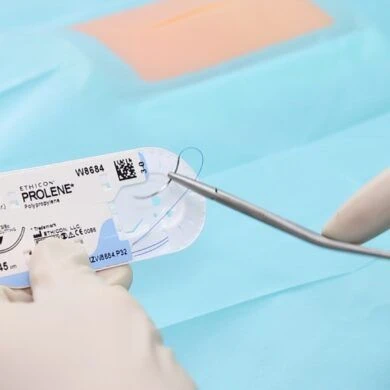
- Polypropylene (Prolene)
- Polyester (Ethibond)
Advantages:
- High tensile strength
- Minimal tissue reactivity
- Long-term wound support
Uses:
- Skin closure
- Cardiovascular surgery
- Plastic and reconstructive procedures
Classification Based on Filament Structure
Another important way to understand the types of suture is by filament structure.
Monofilament Sutures
These sutures consist of a single smooth strand.
Advantages:
- Less tissue drag
- Lower infection risk
Examples:
- Nylon
- Prolene
- PDS
Uses:
- Skin closure
- Contaminated wounds
Multifilament Sutures
These are braided or twisted sutures.
Advantages:
- Better knot security
- Easier handling
Disadvantages:
- Higher risk of bacterial harboring
Examples:
- Silk
- Vicryl
- Polyester
Special Types of Sutures
Antibacterial Sutures
- Coated with agents like triclosan
- Reduce surgical site infections
Barbed Sutures
- Do not require knots
- Provide even tension distribution
Uses:
- Cosmetic surgery
- Laparoscopic procedures
Choosing the Right Type of Suture
Selecting the appropriate suture depends on:
- Tissue type (skin, muscle, fascia)
- Healing time required
- Risk of infection
- Cosmetic considerations
For example, absorbable sutures are ideal for internal tissues, while non-absorbable sutures are preferred for skin closure where long-term strength is required.
Conclusion
Understanding the different types of suture is fundamental to effective wound management and successful surgical outcomes. From absorbable to non-absorbable, monofilament to multifilament, each suture type serves a specific purpose. Proper suture selection minimizes complications, enhances healing, and improves patient satisfaction. Whether you are a medical student or a practicing healthcare professional, mastering suture knowledge is an essential clinical skill.


























Sign in to leave a comment.