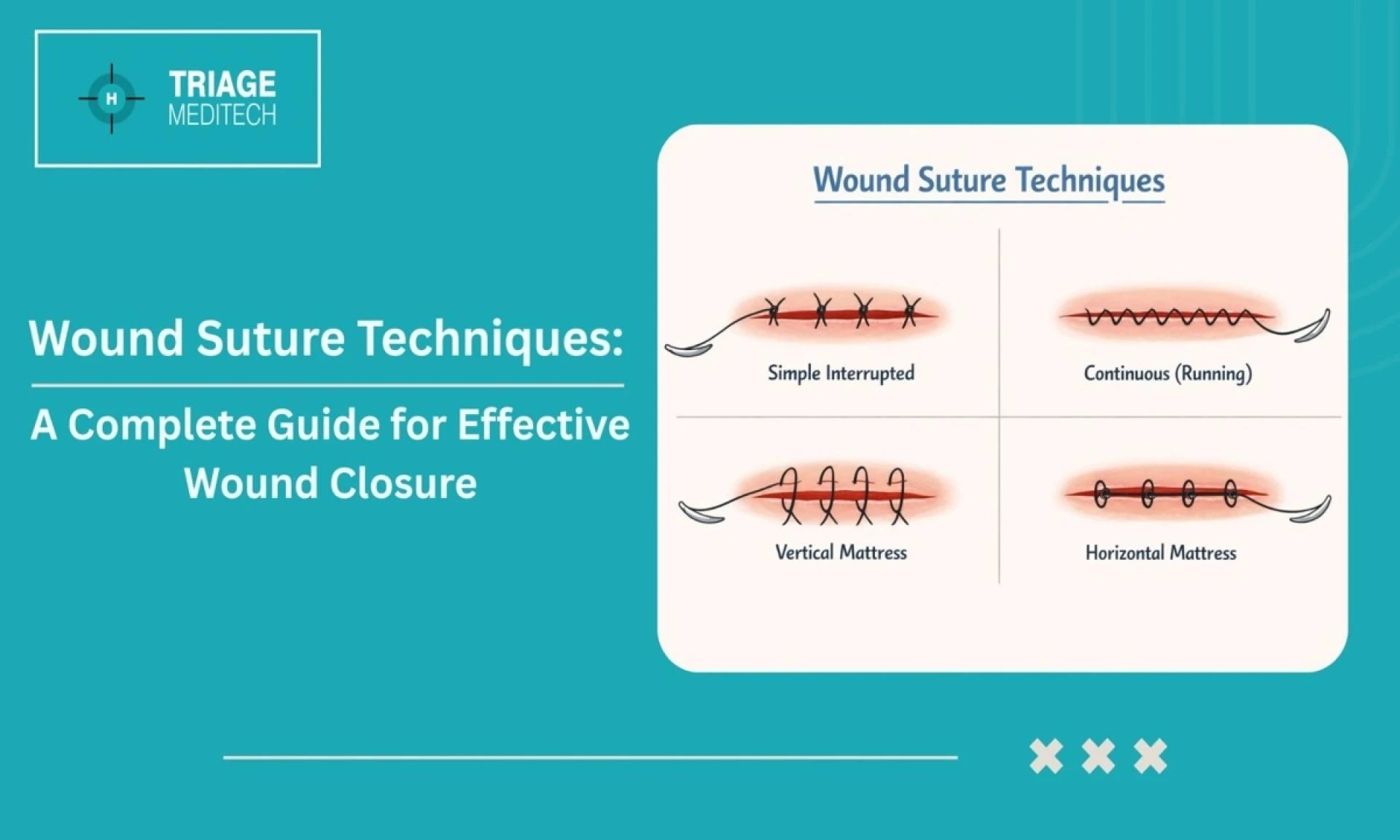

Proper wound management is a critical aspect of medical care, and one of the most important steps in this process is suturing. Wound suture techniques play a vital role in closing injuries, minimizing infection risk, promoting faster healing, and reducing scarring. Whether used in emergency rooms, surgical procedures, or minor clinical settings, mastering the right suturing method ensures optimal patient outcomes.
In this guide, we’ll explore the most commonly used wound suture techniques, their purposes, advantages, and when each method is typically used.
What Are Wound Suture Techniques?
Wound suture techniques refer to the various methods used by healthcare professionals to stitch or close a wound using surgical threads (sutures). These techniques help bring the wound edges together, allowing tissues to heal properly.
The choice of technique depends on several factors, including:
- Type and depth of the wound
- Location on the body
- Level of tension on the skin
- Risk of infection
- Cosmetic considerations
Selecting the correct suturing technique helps prevent complications and supports faster, cleaner healing.
Importance of Proper Suturing
Correct suturing is essential for several reasons:
- Promotes faster healing by keeping wound edges aligned
- Reduces infection risk by sealing the wound
- Minimizes scarring through precise closure
- Provides structural support to healing tissues
Improper suturing can lead to wound reopening, infection, or poor cosmetic outcomes, making proper technique essential in clinical practice.
Common Wound Suture Techniques
Healthcare professionals use different suturing methods depending on the wound type. Below are the most commonly practiced wound suture techniques.
1. Simple Interrupted Sutures
The simple interrupted suture is one of the most widely used techniques.
Features
- Each stitch is tied separately.
- Provides strong wound closure.
- Easy to remove if infection occurs.
Advantages
- Excellent control over wound tension
- If one stitch breaks, the others remain intact
- Suitable for most types of wounds
Common Uses
- General skin lacerations
- Emergency wound closures
- Areas requiring precise tension control
2. Continuous (Running) Sutures
The continuous suture technique involves one uninterrupted thread running along the wound.
Features
- Faster than interrupted sutures
- Uses a single knot at the beginning and end
Advantages
- Saves time during procedures
- Distributes tension evenly along the wound
Limitations
- If the suture breaks, the entire closure may loosen.
Common Uses
- Long surgical incisions
- Low-tension wounds
3. Vertical Mattress Sutures
The vertical mattress suture is designed to provide deeper wound support and improve skin edge eversion.
Features
- Two bites: deep and superficial
- Helps reduce wound tension
Advantages
- Strong closure for high-tension wounds
- Reduces risk of wound edge inversion
Common Uses
- Areas where skin tends to invert
- High-tension wounds such as back or joints
4. Horizontal Mattress Sutures
The horizontal mattress suture is another tension-relieving technique used to close wounds securely.
Features
- Parallel stitches across the wound
- Provides strong tension distribution
Advantages
- Useful for fragile or thin skin
- Helps control bleeding
Common Uses
- Scalp wounds
- Areas with poor skin elasticity
5. Subcuticular (Intradermal) Sutures
The subcuticular suture technique is commonly used when cosmetic outcomes are important.
Features
- Sutures are placed just beneath the skin surface
- Usually absorbable sutures are used
Advantages
- Minimal visible scarring
- No external stitches to remove
Common Uses
- Cosmetic surgeries
- Facial wounds
- Surgical incisions
Choosing the Right Suture Material
Along with technique, the type of suture material also plays a major role in wound healing.
Absorbable Sutures
These dissolve naturally in the body over time.
Commonly used for:
- Internal tissues
- Subcutaneous layers
Non-Absorbable Sutures
These require removal after healing.
Commonly used for:
- Skin closure
- Long-term wound support
Selecting the appropriate material ensures durability and reduces complications.
Best Practices for Effective Wound Suturing
To achieve the best outcomes, healthcare professionals follow several key practices:
- Maintain sterile technique to prevent infection
- Align wound edges carefully for better healing
- Avoid excessive tension that may damage tissue
- Use proper needle angles for smooth penetration
- Monitor wounds regularly after suturing
Proper training and technique greatly improve wound healing results.
Potential Complications of Suturing
While suturing is generally safe, certain complications may occur if not performed correctly.
Possible risks include:
- Infection
- Tissue necrosis
- Wound dehiscence (reopening)
- Excessive scarring
- Suture marks
These risks can be minimized by selecting the appropriate technique and maintaining sterile conditions.
Conclusion
Understanding and applying the right wound suture techniques is essential for effective wound management. From simple interrupted sutures to advanced subcuticular methods, each technique serves a specific purpose depending on the wound type, location, and tension.
Healthcare professionals must evaluate every wound carefully to choose the most suitable suturing approach. With proper technique, sterile practices, and appropriate materials, suturing can significantly improve healing outcomes, reduce complications, and ensure optimal patient care.
Mastering these techniques is a fundamental skill for clinicians, surgeons, and emergency healthcare providers involved in wound management.
























Sign in to leave a comment.