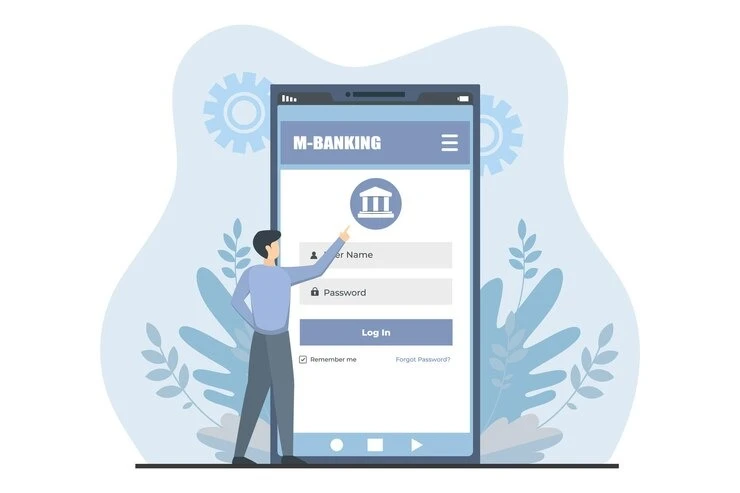

Trust is all there is when money is concerned.
In fintech, your application is not merely a product; it is a bank, an investment consultant, a gateway to payments, and in most scenarios, life insurance. And users will not allow any misunderstanding, hesitation, or time loss.
This is why excellent UI/UX is the backdrop of any successful fintech product. It’s what builds confidence, clarity, and compliance — all without sacrificing performance or design.
In this article, we’ll unpack the essential UI/UX best practices that help fintech apps win trust, simplify complex flows, and scale faster, with insights from top ui ux design agencies shaping the next wave of financial platforms.
Why UX Is a Strategic Priority in Fintech
Financial products deal with:
- Personal and transactional sensitive information
- Consecutive decision making (e.g., lending and investing).
- Great expectations of speed and clarity
As a result, your UI/UX must do more than look good. It must feel secure, behave predictably, and guide users through often complex journeys with zero uncertainty.
That’s why modern fintech teams are partnering with ui ux design companies early, often before a single line of code is written.
1. Prioritise Clarity Over Cleverness
Fintech apps should be predictable, not “creative”. Users want to know exactly what’s happening with their money, every step of the way.
Key design principles:
- Write in plain language (and provide no financial jargon and vague icons)
- Bring processes step by step (e.g., transfers, KYC, credit checks)
- Give feedback in real-time about all interactions
- Surface key numbers up front (balances, limits, interest rates)
Top ui ux design services rely heavily on user testing to make sure every screen passes the “Can I trust this?” test.
2. Reduce Cognitive Load in Complex Tasks
Finance is inherently complex, but the user interface shouldn't be.
To keep the flows digestible:
- Break multi-step actions into short, manageable screens
- Use progressive disclosure to show only relevant options.
- Group-related actions (e.g., “Send” and “Request” under Transfers)
- Auto-fill data where possible (e.g., saved accounts, ID scan)
When you hire mobile UI designers for fintech apps, ensure they understand how to simplify without oversimplifying, especially when dealing with regulatory requirements.
3. Design for Speed and Minimal Friction
Fintech users expect instant feedback, smooth transitions, and zero wait times — especially when moving money.
Optimisation tips:
- Pre-load frequent data (e.g., balance, recent transactions)
- Use skeleton loaders instead of spinners.
- Enable biometric logins and one-tap actions.
- Limit form fields to the absolute minimum
Speed isn’t just a tech issue — it’s a UX differentiator. Users equate performance with security and credibility, especially in financial apps.
4. Build Trust with Visual and Behavioural Cues
Design isn’t just about layout — it communicates emotion and intent.
To reinforce security and professionalism:
- Use consistent colours, fonts, and button styles
- Highlight safe actions in green, caution areas in amber
- Display trust signals: badges, secure lock icons, biometric prompts
- Provide clear confirmation for every major action.
A seasoned ui ux developer will treat every pixel as a confidence builder, especially in areas like onboarding, transactions, and account settings.
5. Make Onboarding Effortless but Thorough
First impressions are critical — but so is compliance. In fintech, onboarding must be smooth and secure.
Best practices:
- Guide users step-by-step through ID verification and KYC
- Use progress indicators and estimated time to complete
- Enable the user to leave and resume onboarding
- Offer contextual help (e.g., tooltips, FAQs)
The best ui ux design firms are so preoccupied with onboarding since they are aware of the highest drop-off at 2-5 minutes.
6. Prioritise Mobile-First, but Think Omnichannel
Most users will experience your fintech product first — and often only — on mobile. But some tasks (like applying for a loan or setting up a business account) still require desktop support.
Design accordingly:
- Use responsive design principles
- Sync states across devices in real time
- Include a QR login within the app to provide a smooth transition
- Take into consideration the need to support all types of displays and devices
When you hire mobile UI designers, ask for their approach to multi-device UX — not just how things look, but how sessions, data, and UI states are maintained.
7. Integrate Microcopy, Not Just Interface
The same can be said with words as it does with images. Microcopy may minimize anxiety on the part of the user, eradicate misinterpretation of intention, and encourage the appropriate behaviour.
Use it to:
- Reassure users after a transaction (“Funds transferred successfully”)
- Guide decisions (“This investment carries moderate risk”)
- Prevent errors (“Please use a valid IBAN number”)
- Humanise error messages and empty states
Leading ui ux design companies often pair writers with designers early to ensure tone, clarity, and compliance align from the first wireframe.
Final Thoughts: Simplicity + Trust = Growth
In fintech, trust is the product, and your UI/UX is how that product is delivered.
From onboarding to investment tracking, great design isn’t just about delight — it’s about removing friction, reducing anxiety, and increasing clarity.
Whether you’re launching a neobank, crypto wallet, budgeting app, or lending platform, now is the time to invest in experience design — either by working with a leading ui ux design company, or choosing to hire mobile UI designers who specialise in financial flows.
Because in a category where trust is hard-earned and easily lost, UI/UX isn’t just a feature — it’s your foundation.




























Sign in to leave a comment.