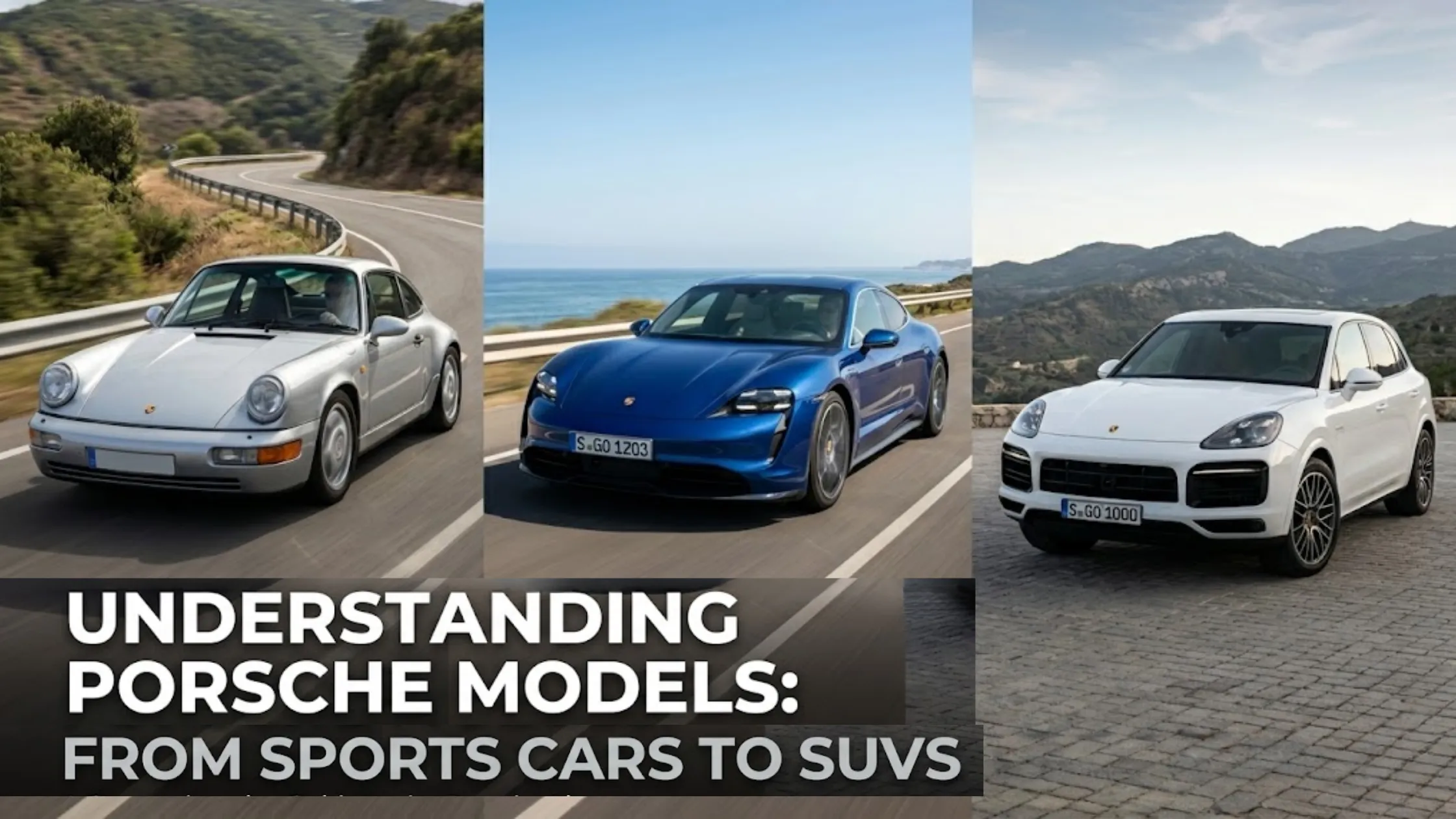

Many people still think of Porsche as a sports car manufacturer. Still, in reality, the German automaker offers a wide range of vehicles and even more options for different performance levels, beyond just sports cars. Starting in the 2000s and continuing today, Porsche has added performance SUVs, performance sedans, and performance electric vehicles to their roster.
Let’s look at the main types of Porsche cars, how each is built for a different driving style, and how it helps owners and enthusiasts understand maintenance, as it varies between models, since engine layouts, drivetrain systems, and electronics are not identical across the lineup.
That becomes especially useful when discussing Porsche repair, since a two-door sports car often needs very different service attention than a larger luxury SUV.
Sports Cars That Built the Brand
The model most closely linked to Porsche’s identity is the Porsche 911. It remains the best-known car in the lineup and has evolved through many generations while keeping its rear-engine layout and distinctive shape.
Within the 911 family, there are several variants designed around different levels of performance:
- Carrera
- Carrera S
- Carrera 4
- Targa
- Turbo
- GT3
Although they share a common platform, each version changes power delivery, suspension tuning, drivetrain setup, and handling behavior.
The Porsche 718 Cayman is another classic sports car that goes hand in hand with the Porsche 718 Boxster. These models have their engines right in the middle of the car, giving them a different feel and balance than the famous 911.
Many drivers prefer the 718 models because they feel lighter and more direct in everyday driving while still offering strong performance.
SUVs That Expanded the Porsche Lineup
Porsche entered a new segment with the introduction of the Porsche Cayenne. This model became important because it combined sports-car-inspired handling with SUV practicality.
Today, the Cayenne remains one of the most versatile models in the Porsche lineup and is available in several forms:
- standard gasoline models
- turbocharged versions
- hybrid versions
- coupe body style
The smaller Porsche Macan offers a similar idea in a more compact package. For many owners, the Macan feels closer to a sporty daily driver, while the Cayenne offers more space and stronger towing ability.
SUV models also tend to have different service patterns because cooling systems, suspension components, and brake wear often behave differently than in lower sports models.
Sedans with Performance Focus
The Porsche Panamera brought Porsche into the four-door luxury segment. It combines long-distance comfort with performance features that still reflect the brand’s sports-car roots.
Panamera versions often include:
- Rear or all-wheel drive
- Turbocharged engines
- Hybrid powertrains
- Extended wheelbase options
Panamera relies more on electronic systems and adaptive suspension controls than smaller sports cars do, which means diagnostics often play a larger role during maintenance.
Electric Porsche Models
One of the newest additions to Porsche's vehicle lineup is the Porsche Taycan. The Taycan is fully electric and represents a major shift in how Porsche approaches performance, one that differs from traditional engine models.
This significantly changes service priorities because electric systems require different monitoring than combustion engines. The Taycan also comes in several versions:
- Rear-wheel drive
- 4S
- Turbo
- Turbo S
- Cross Turismo
Although naming follows familiar Porsche performance language, the mechanical systems are entirely different underneath.
Why Variants Matter Within the Same Model
One reason Porsche models can be confusing is that a single model name often covers several very different mechanical setups. As models, the 911 Carrera or 911 Turbo may look the same from a distance, but they differ internally, such as:
- Engine power
- Turbo levels
- Cooling needs
- Drivetrain setup
- Braking systems
This holds for the Macan and Cayenne lineups as well. All of these vary by trim. This is important because factors like service schedules, brake life, and part strain often depend more on the specific trim you drive than on the model name alone.
Older Porsche Models Still Common on the Road
Older Porsche models remain highly valued because many generations, such as the 911, earlier Boxster models, and first-generation Cayenne models, are still actively driven and regularly appear in specialist workshops.
Even these classic models need regular care for things like:
- Seals and gaskets
- Suspension bushings
- Ignition systems
- Coolant pipes
Most owners love that older Porsche designs can stay on the road for decades as long as you keep up with the maintenance.
Choosing the Right Model for Daily Use
Picking a Porsche is a personal choice, but how you drive and how you use your car matter a lot. For example, the 718 and 911 pure sports models are great for people who love driving. If you have a family, you should go for the SUVs instead.
That is why drivers comparing maintenance costs often ask car repair shops Wilmington, NC, how service differs across Porsche categories.
An SUV used daily in traffic may show brake wear differently than a sports coupe used mainly on weekends.
Why Model Type Affects Long-Term Maintenance
Each Porsche category tends to show wear differently because the systems underneath are not the same.
1. Sports cars usually need you to keep a closer eye on the tires, brakes, and how well the cooling system is running.
2. SUVs usually show wear more quickly in the suspension, brakes, and driveline because they tend to be heavier and have more frequent usage.
3. Problems are usually more easily detected in sedans and electric models because they use software to do system checks and diagnostic scans.
Knowing which category your car falls into helps you plan for maintenance and avoid surprises down the road.
The Right Porsche Supports Long-Term Care
Porsche has expanded far beyond its iconic sports car, now offering several models and driving styles without losing focus on precision engineering.
Knowing these model differences makes ownership easier, especially when service needs begin to vary over time, with long-term wear, and everyday driving expectations. Whether someone owns a classic sports coupe or an electric sedan, maintenance always reflects the design of that specific platform.
Over time, regular attention to fluids, brakes, electronics, and cooling systems makes ownership easier and helps future automotive repair stay predictable rather than reactive.





















Sign in to leave a comment.