

A decade ago, many first-time investors treated renewable energy as a niche theme: admirable, politically charged, and perhaps too dependent on subsidies to stand on its own. That picture has changed dramatically. Utility-scale solar and onshore wind have become cost-competitive in many markets, battery storage is moving from pilot projects into grid planning, and large industrial buyers now sign long-term clean power contracts because the economics can work even before reputational benefits are counted. For a beginner, that matters because the sector is no longer just an environmental bet. It is increasingly an infrastructure, industrial, and technology story.
The opportunity is broad, but so is the confusion. “Renewable energy investment” can mean buying shares in a turbine manufacturer, funding a community solar project, owning a clean-energy exchange-traded fund, backing a battery recycling company, or purchasing green bonds issued to finance transmission and storage. Each route carries different risks, time horizons, liquidity constraints, and return profiles. A newcomer who treats them as interchangeable can make basic but costly mistakes.
What makes 2026 especially important is the widening gap between headline enthusiasm and investment discipline. According to the International Energy Agency in recent market assessments, clean energy spending has continued to outpace fossil-fuel investment growth globally, but that does not mean every clean-energy company is a good buy or every project is financially sound. The smart beginner starts by understanding the structure of the market: where revenue comes from, how policy shapes cash flow, and which parts of the value chain are mature versus speculative.
This guide is built for that investor. It explains what renewable energy investing actually includes, where beginners can start with relatively simple instruments, which red flags deserve attention, and how current developments in 2026 are changing the risk-reward balance across solar, wind, storage, grids, and adjacent sectors such as electric vehicles.
Why renewable energy has become a mainstream investment theme
The strongest case for renewable energy as an investment category is not ideological. It is structural. Electricity demand is rising as transport electrifies, data centers expand, heavy industry seeks lower-carbon power, and governments push energy security after years of geopolitical shocks. Renewable energy sits at the center of that shift because solar, wind, hydro, geothermal, storage, and grid modernization are increasingly tied to national competitiveness.
Recent commentary in The Conversation argued that renewable energy is reshaping the global economy, reflecting a broader consensus that the sector is no longer peripheral. That framing is useful for beginners because it highlights a crucial point: you are not only investing in “green power.” You may be investing in manufacturing capacity, commodity demand for copper and lithium, software for grid balancing, financing structures for infrastructure, and the electrification of transport fleets.
The policy backdrop also remains influential. In the United States, Europe, China, India, Southeast Asia, and parts of the Middle East, public policy continues to steer capital toward domestic energy supply, industrial resilience, and lower-emission systems. Yet policy support is not the same as guaranteed profit. Incentives can accelerate project pipelines, but margins may still be squeezed by supply-chain costs, interest rates, land constraints, permitting delays, or oversupply in equipment markets.
For beginners, the key insight is simple: renewable energy is not one trade. It is a network of industries linked by electricity demand, infrastructure spending, and policy support.
That network effect is why the sector can be attractive even when one segment struggles. Solar module manufacturers, for example, may face pricing pressure while grid equipment providers benefit from transmission bottlenecks. Wind developers may confront permitting delays while battery storage operators gain from volatility in power markets. A beginner who sees only the headline theme misses these internal differences.
If you want a broader primer before choosing a specific route, WriteUpCafe’s Complete Guide to Renewable Energy Investment Opportunities and Unlocking Renewable Energy Investment Opportunities Across Global Markets offer useful context on how the sector spans mature utilities, emerging technologies, and international markets.
What counts as a renewable energy investment for beginners
Beginners often assume the choice is between buying a “green stock” and doing nothing. In reality, the menu is much wider. The right entry point depends on whether you want liquidity, income, growth, diversification, or direct impact. Understanding the main categories helps you avoid buying an asset that does not match your goals.
- Public equities: Shares of utilities, independent power producers, equipment makers, inverter companies, storage firms, EV charging businesses, and grid technology providers.
- Exchange-traded funds: ETFs can spread risk across dozens of renewable or clean-tech names, which is often helpful for beginners who do not yet have strong conviction on individual companies.
- Yield-oriented vehicles: Some listed energy infrastructure companies focus on operating assets with contracted cash flows, offering income rather than pure growth.
- Green bonds: Debt instruments issued by governments, development banks, or corporations to finance projects such as solar farms, transmission upgrades, or clean transport.
- Private market deals: Crowdfunding platforms, private funds, and direct project investments may offer exposure to specific assets but usually involve lower liquidity and higher complexity.
- Adjacent plays: Copper miners, battery recyclers, power semiconductor suppliers, and grid software companies can benefit indirectly from clean-energy buildout.
For most beginners, public markets are the easiest place to start because pricing is transparent, research is more accessible, and liquidity allows you to adjust positions. But ease of access should not be mistaken for ease of analysis. A solar developer with long-term power purchase agreements behaves differently from a manufacturer exposed to module price wars. An electric utility building renewables may look defensive, while a hydrogen startup may be highly speculative.
Another distinction matters: investing in renewable energy companies is not the same as investing in renewable energy projects. Companies can be affected by management quality, debt levels, share dilution, and corporate strategy. Projects, by contrast, depend more directly on construction risk, offtake contracts, resource quality, and financing terms. Beginners usually underestimate this difference.
A practical way to think about the sector is by layers of risk:
- Lowest complexity: diversified ETFs and large regulated utilities with renewable exposure.
- Moderate complexity: established developers, grid firms, and storage companies with visible revenues.
- Higher complexity: equipment manufacturers, commodity-linked suppliers, and emerging technology names.
- Highest complexity: private project deals, early-stage startups, and thinly traded thematic plays.
That ranking is not a promise of performance. It is simply a map of how hard the analysis becomes. A beginner’s first job is to choose the layer they can realistically understand.
How to evaluate a renewable energy opportunity without getting lost
New investors are often pulled toward stories: a startup says it will transform grid storage, a headline celebrates record solar installations, or a country announces a major clean-energy corridor. Stories matter, but returns depend on numbers. The most useful beginner skill is not forecasting the entire energy transition. It is learning to ask boring, revealing questions.
Start with revenue visibility. Does the company sell into long-term contracted markets, or does it depend on volatile spot prices? A solar and wind asset owner with multi-year power purchase agreements may have steadier cash flow than a turbine manufacturer whose order book swings with policy cycles and financing conditions. Next, examine capital intensity. Renewable energy is full of businesses that need large upfront spending before profits appear. High interest rates or refinancing pressure can hurt even firms with attractive long-term assets.
Then look at the balance sheet. Debt is not automatically bad in infrastructure-heavy sectors, but beginners should pay attention to maturity schedules, borrowing costs, and whether expansion depends on repeated equity issuance. A company that constantly raises capital can dilute shareholders even while revenue grows.
Margins are another filter. In several clean-tech segments, especially manufacturing, price competition can be brutal. Falling equipment costs may help project developers and consumers while hurting producers. This is one reason why broad enthusiasm about solar adoption does not always translate into strong returns for every solar stock.
- Ask where cash comes from: contracted power sales, equipment sales, software subscriptions, tax credits, or trading revenues.
- Check policy exposure: Is the business viable without a specific subsidy, or does one rule change threaten the model?
- Measure execution risk: Are projects already operating, under construction, or still awaiting permits?
- Review customer concentration: A few large buyers can be efficient, but they can also create vulnerability.
- Compare valuation to peers: Growth stories can stay expensive for years, but paying too much reduces future upside.
External reporting can sharpen this analysis. Forbes highlighted the scale of the energy opportunity while also underscoring the need for coordination between government and industry. For investors, that translates into a practical lesson: policy ambition alone is not enough. Projects need transmission, permits, workforce capacity, and financing structures that can actually turn announcements into earnings.
A beginner should never confuse sector growth with automatic shareholder gains. Expanding demand can coexist with weak margins, dilution, or poor project execution.
One more point is easy to miss. Renewable energy returns are often shaped by infrastructure bottlenecks outside the project itself. Grid interconnection queues, transformer shortages, and transmission delays can postpone revenue even when demand is strong. That is why some of the most interesting opportunities in 2026 sit not only in generation, but also in the less glamorous parts of the system: cables, substations, grid software, and storage integration.
The main opportunity buckets in 2026
By mid-2026, beginners looking at renewable energy should think in buckets rather than headlines. The market is no longer dominated by a single “best” theme. Instead, several investable areas are moving at different speeds and carrying different risk profiles.
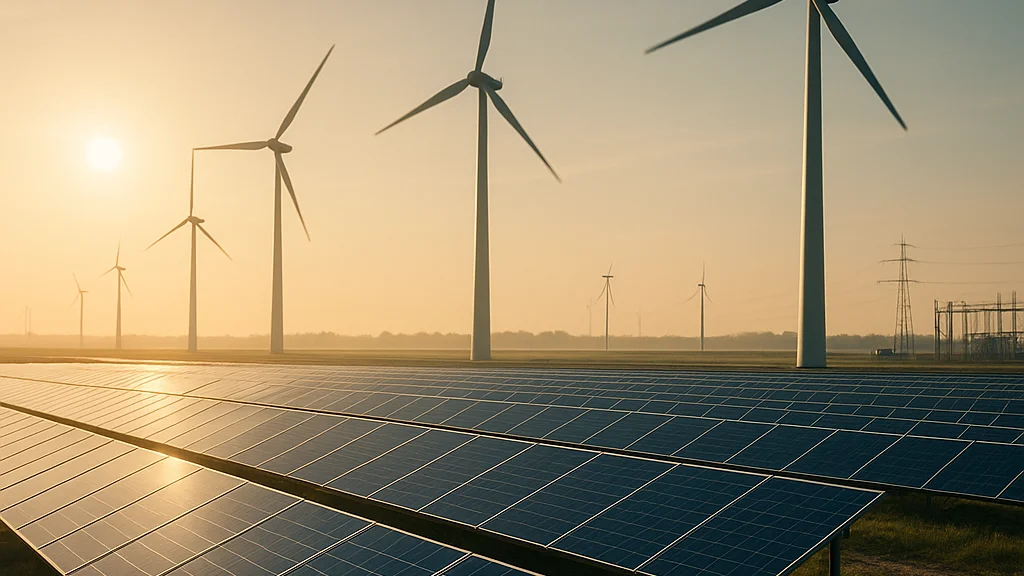
Utility-scale solar remains one of the most accessible entry points conceptually. It benefits from mature engineering, falling long-term costs in many regions, and broad geographic applicability. Yet solar is also exposed to land issues, interconnection delays, trade disputes, and pricing pressure in manufacturing. Investors who want solar exposure may find developers and asset owners easier to analyze than module producers.
Wind power is more mixed. Onshore wind remains important in many markets, but offshore wind has faced well-documented cost inflation, supply-chain issues, and contract repricing in recent years. That does not eliminate opportunity; it changes where it sits. Turbine service businesses, specialized infrastructure providers, and selected developers with disciplined contract structures may offer more resilient exposure than broad enthusiasm for the segment suggests.
Battery storage has become one of the most watched areas because intermittent generation requires flexibility. Storage can earn revenue from energy arbitrage, capacity markets, ancillary services, and grid stabilization. But business models vary widely by market design, which means beginners should be cautious about assuming one region’s economics apply everywhere.
Grid infrastructure may be the most underappreciated category for new investors. Renewable buildout stalls without transmission expansion, digital control systems, and upgraded distribution networks. Grid equipment companies, engineering firms, and utilities with strong regulated investment pipelines can offer steadier exposure than more volatile pure-play clean-tech names.
Electric mobility links matter too. Renewable energy and EVs increasingly reinforce each other. More EV charging raises electricity demand, while cleaner grids improve the emissions case for transport electrification. Investors who follow this connection may also want to read WriteUpCafe’s Renewable Energy Investment Opportunities in 2026: A Comprehensive Analysis and Top 10 Renewable Energy Investment Opportunities in 2026, both of which explore how storage, charging, and generation increasingly overlap.
Finally, there are regional growth stories. According to The Star, Sarawak’s renewable energy push is drawing investment attention in Southeast Asia. Meanwhile, the Los Angeles Times reported that Gulf investors were still expected to support African renewable energy despite regional geopolitical tensions. Those examples show how capital is spreading beyond the traditional North America-Europe focus, creating opportunity but also increasing the importance of political, currency, and regulatory analysis.
Risks beginners usually underestimate
Renewable energy investing has a favorable long-term narrative, but beginners often focus so heavily on demand growth that they miss the sources of downside. The first is valuation risk. A company can operate in an attractive market and still be a poor investment if the stock price already assumes years of flawless execution. The sector has repeatedly shown that high expectations can be punished quickly when margins disappoint or projects slip.
The second is policy concentration. Clean energy still interacts closely with tax credits, auctions, feed-in tariffs, local content rules, and grid access regulations. That does not mean policy support is fragile everywhere. It means investors should identify which policies are essential to a company’s economics and which are merely helpful. Businesses that can survive under multiple regulatory scenarios are usually safer than those built around one narrow incentive.
Third comes supply-chain and commodity exposure. Solar, batteries, and grid equipment depend on minerals, manufacturing capacity, logistics, and trade relationships. A developer may sign a power contract based on one cost assumption and then face different economics when equipment prices, interest rates, or shipping costs shift. Offshore wind has been a particularly visible example of how rising costs can disrupt project viability.
Fourth is technology risk. Some emerging segments, especially hydrogen, long-duration storage, carbon management integrations, and advanced fuels, may become important over time. But for beginners, importance is not the same as investability. Early-stage technologies can burn capital for years before reaching commercial scale.
- Interest-rate risk: higher financing costs can reduce project returns and pressure debt-heavy companies.
- Execution risk: permits, construction, grid interconnection, and contractor performance can all derail timelines.
- Market design risk: storage and merchant power assets may depend on local pricing rules unfamiliar to retail investors.
- Currency risk: international projects can generate solid local returns but weaker returns in an investor’s home currency.
- Concentration risk: putting too much capital into a single theme, such as hydrogen or offshore wind, magnifies avoidable volatility.
There is also a behavioral risk. Many beginners buy renewable energy after a strong news cycle and sell after a pullback, effectively turning a long-duration structural theme into a short-term emotional trade. A better approach is to define your thesis in advance. Are you seeking stable income from operating assets, diversified growth from ETFs, or selective upside from specific technologies? Your answer should determine the instrument you choose.
Good renewable energy investing is often less about finding the most exciting technology and more about matching the right vehicle to your risk tolerance, time horizon, and ability to analyze cash flow.
A practical starter strategy for new investors
Most beginners do not need a heroic strategy. They need a repeatable one. A sensible starting framework begins with diversification, position sizing, and a clear distinction between core holdings and speculative ideas. If renewable energy is new to you, consider building exposure in layers instead of trying to identify the single winning stock.
The core layer could include a diversified clean-energy or infrastructure fund, or a large utility with a credible renewable buildout and regulated earnings base. This gives you exposure to the transition without forcing you to forecast which one company will dominate battery storage, inverters, or offshore wind installation. The second layer might include one or two established companies you understand well, such as a developer with contracted assets or a grid equipment firm benefiting from transmission investment. Only after that should a beginner consider smaller or more speculative positions.
A simple checklist can help:
- Limit any single speculative clean-energy position to a small share of your portfolio.
- Read the latest annual report or investor presentation before buying an individual stock.
- Prefer businesses with understandable revenue drivers over story-first narratives.
- Track debt, cash burn, and dilution as closely as revenue growth.
- Review whether the company depends on a narrow policy window or has broader competitiveness.
Time horizon matters. Renewable energy infrastructure is built over years, not weeks. Share prices may swing sharply around interest-rate moves, election cycles, or quarterly guidance, but the underlying buildout of electrification, grid investment, and low-carbon generation tends to unfold over longer periods. Beginners who cannot tolerate volatility may be better served by diversified funds and income-oriented vehicles than by concentrated thematic bets.
It also helps to separate your motivations. If your primary goal is financial return, evaluate renewable energy the same way you would any sector: cash flow, balance sheet, valuation, and execution. If your goal includes measurable environmental impact, you may also want to examine whether your investment finances new capacity, supports lower-cost capital for projects, or merely changes ownership of already-listed shares. Those are different outcomes.
For a wider strategic view, WriteUpCafe’s 2026 Renewable Energy Investment Opportunities: Trends and Insights provides a useful companion read on how macro trends, technology maturity, and regional policy are shaping the current market.
What to watch next as the sector matures
The next phase of renewable energy investing will likely be defined less by whether clean power grows and more by where value accrues along the system. Generation alone is no longer the entire story. Investors should watch transmission expansion, grid digitization, storage duration, power market reform, industrial electrification, and the interaction between AI-driven data center demand and electricity supply planning.
One critical shift in 2026 is the market’s growing appreciation for enabling infrastructure. If solar and wind are the visible face of the transition, grids and storage are the hidden machinery that determine how much of that generation can actually be monetized. That is why some capital is migrating toward companies involved in transformers, switchgear, transmission services, and power management software. These businesses may lack the branding appeal of pure-play clean-tech names, but they can sit closer to the bottlenecks that utilities and governments are under pressure to solve.
Geography will matter more as well. Southeast Asia, parts of Africa, the Gulf, India, and Latin America are attracting greater attention as demand growth, resource potential, and infrastructure needs align. Yet international opportunities require sharper due diligence on currency, legal frameworks, and project bankability. The broadening of the market is a positive sign, but it raises the premium on selectivity.
For beginners, the most durable takeaway is that renewable energy investing works best when treated as a disciplined allocation, not a slogan. The sector offers exposure to one of the defining industrial shifts of the century, but it rewards investors who can distinguish mature cash-generating assets from speculative narratives, and system bottlenecks from surface-level excitement.
If you are just starting, begin with what you can understand, diversify early, and let evidence outrank enthusiasm. Renewable energy may remain one of the most consequential investment themes of the coming decade. The winners, however, will not be determined by optimism alone. They will be determined by who can convert demand, policy, and infrastructure need into durable cash flow.































Sign in to leave a comment.