

In the digital epoch, where data is the crown jewel of enterprises, storage management has become more than just a housekeeping task—it is an integral part of strategy for businesses looking to foster growth and innovation. Amidst the sea of acronyms and solutions, one term that stands out for its prowess in handling massive data and unyielding performance requirements is Scale-Out Network-Attached Storage, or Scale-Out NAS. This article takes a deep dive into what Scale-Out NAS is, how it revolutionizes data storage and processing, and why it's a critical component of your IT infrastructure today.
The Relevance of Scale-Out NAS in a Data-Driven World
Understanding the dynamics of a Scale-Out NAS system is vital for businesses looking to manage their data effectively. With the incessant growth of data, both in volume and variety, traditional storage solutions are struggling to keep up. Scale-Out NAS, however, offers a robust answer to the scalability, performance, and complexity issues that arise in managing modern data demands.
- Defining Scale-Out NAS
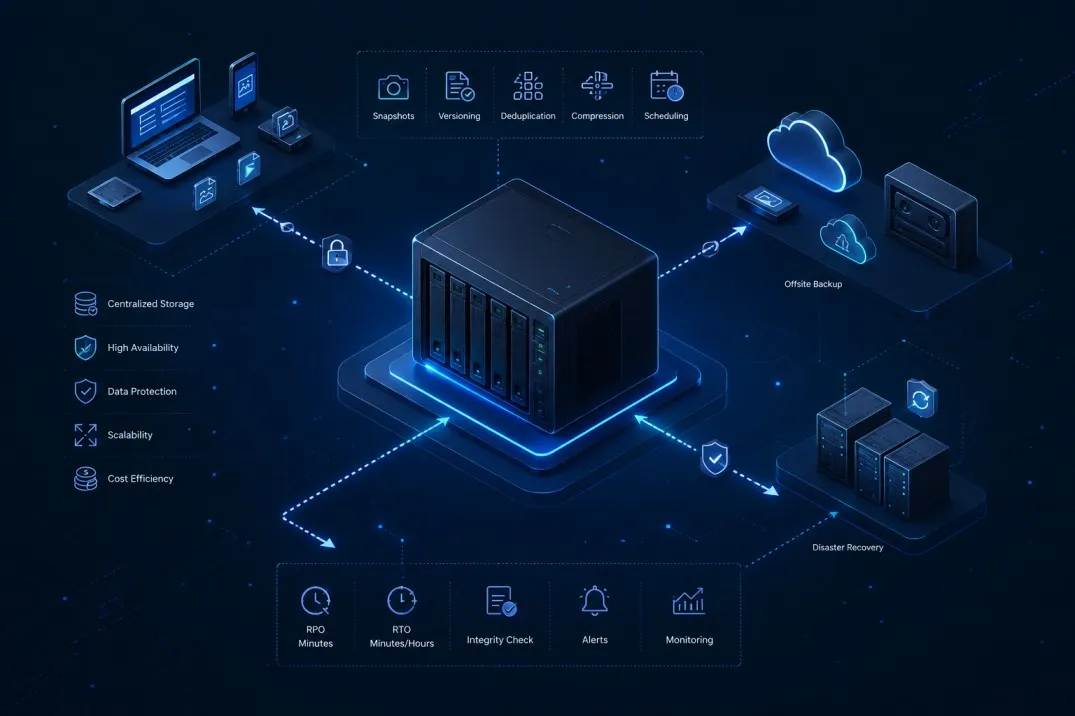
Traditionally, NAS has been a reliable workhorse for file-based storage, providing a centralized repository for data. Scale-Out NAS takes this concept further by allowing the addition of numerous nodes (servers) into a distributed network. This architecture provides not just storage increase, but also boosts performance and fault tolerance.
- Managing Modern Data Demands
Today’s data requirements are unpredictable and multi-faceted. From the unstructured data of social media to structured datasets of transactional systems, the diversity in what data represents and needs to achieve has never been greater. Legacy storage systems, often siloed and rigid, are unable to meet these modern data needs. Scale-Out NAS, with its distributed and flexible nature, stands ready to tackle these new frontiers.
How Scale-Out NAS Works?
Understanding the inner workings of Scale-Out NAS can demystify its capabilities and shed light on its advantages.
- Scalability within a Single Cluster
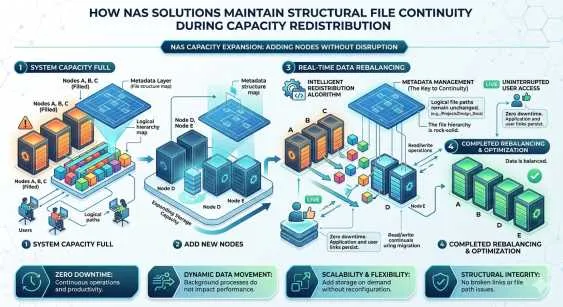
Traditionally, NAS systems were designed to include storage within a single server or appliance, known as Scale-Up. Scale-Out NAS, on the other hand, allows for seamless scalability by simply adding more nodes. This means that as your data grows, you can introduce new servers or storage units to the existing cluster, entirely removing any limits on storage capacity.
- Global Namespace Management
One challenge in storage management has always been maintaining coherence in how data is perceived and accessed by the users. With a global namespace, Scale-Out NAS ensures that data, regardless of where it is physically located in the cluster, is seen and managed as a single entity.
The Benefits of Scale-Out NAS
The significance and benefits of Scale-Out NAS can't be overstated, especially when compared to its traditional counterparts.
- Infinite Capacity without Limitations
One of the standout features of Scale-Out NAS is that it breaks the shackles of storage limitations. By allowing the addition of nodes, you not only increase storage capacity but also upgrade performance in a linear fashion, maintaining an agile and ready-to-scale system as your business grows.
- Meeting Performance Demands
Scalability in network attached storage traditionally referred to the addition of disks in the server. This paradigm, although workable, often resulted in performance bottlenecks. Scale-Out NAS averts this by scaling the number of nodes involved in processing, effectively enhancing system performance.
- Simplified Deployment and Management
Conventional NAS systems, especially when they start nearing their capacities, require careful monitoring and sometimes complex data migrations. Scale-Out NAS, with its horizontal scaling approach, simplifies both deployment and management, providing a ‘set-it-and-forget-it’ level of operation.
- Enhancing User Productivity
Scale-Out NAS, by design, ensures that system downtime is nearly a thing of the past. It includes functionalities to automatically recover from node failures, redistributing the data on the fly to maintain access and operation.
Scale-Out NAS vs. Traditional Scale-Up
A comparison between Scale-Out and Scale-Up architectures can shed light on why many organizations are leaning towards the former.
- Limitations of Traditional Scale-Up Storage
Scale-Up storage, while effective for daily file-sharing routines, can become cumbersome when data volumes grow significantly. There's only so much you can push a single scale out storage unit before reaching a threshold. Scale-Out NAS tackles this problem head-on by its ability to grow horizontally.
- Addressing Scalability, Costs and Complexity
Scale-Out architecture ensures a more cost-effective scalability model as it utilizes commodity servers. It also simplifies complexity by allowing administrators to manage a single system, even when comprised of many nodes. This approach is in stark contrast to the multiple-nodes-versus-multiple-systems paradigm of Scale-Up.
Exploring Scale-Out NAS in Distributed Systems
When we talk about distributed systems and Big Data, Scale-Out NAS is more than just another storage solution – it’s an enabler for connected ecosystems.
- Understanding Scale-Out in Distributed Systems
In distributed systems, scalability and fault tolerance are pivotal. Scale-Out NAS systems are inherently designed to cater to these needs. Each node in the cluster adds not just storage but computing power, thereby providing a scalable solution for both storage and processing requirements.
- Incorporating Scale-Out Principles in Distributed Environments
Whether you're operating in a cloud-based environment or your data center is spread across multiple locations, the principles of Scale-Out NAS are directly transferable, ensuring uniform access and storage policies across all systems.
Addressing Common Queries
Many find it challenging to distinguish between NAS architectures. Here, we tackle some of the common queries.
- What is Scale-Out Storage?
Scale-Out storage is an architecture that allows you to expand the total storage capability of your storage system by adding more nodes, without any decrease in performance.
- Key Differences Between Scale-Out and Scale-Up NAS
The main difference lies in the addition of components to scale. In a Scale-Out environment, you add nodes to scale, while in a Scale-Up NAS, you add storage to the single entity.
- Scaling Out in Hadoop Distributed File System (HDFS)
The Hadoop Distributed File System is a perfect match for Scale-Out NAS, as both are built around the principles of scalability and fault tolerance, providing a robust storage and processing platform for Big Data environments.
Conclusion
The surge of data is not going to abate, it will only intensify. In the face of this data tsunami, traditional storage solutions are akin to rowboats in a hurricane. The robustness and extensibility of Scale-Out NAS provide the necessary life raft for businesses to not only weather the storm of data growth but to surf its waves to new heights. It’s time for enterprises to evaluate their storage strategies and assess the revolutionizing potential of Scale-Out NAS.



























Sign in to leave a comment.