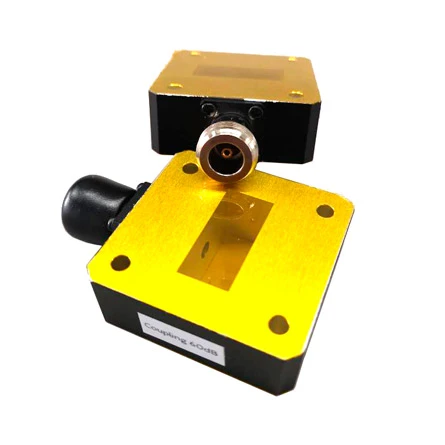

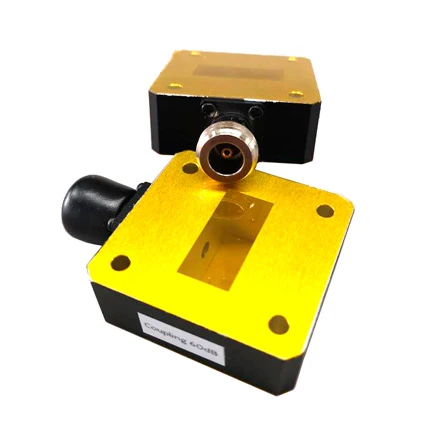
Waveguide Probe Coupler
In waveguide probe coupling, a probe inside a coaxial line is used to distribute energy into a waveguide. As current starts flowing in the probe, an electric field is set up and it gets detached from the probe to the waveguide. The probe (also called a probe antenna) radiates energy equally into the waveguide where it is inserted. Probe antenna insertion is usually made perpendicular to the length of the waveguide, at a distance equal to the quarter wavelength from the shorted end of the waveguide. For more information. feel free to call us and discuss your needs with one of our sales engineers.
Ordering Guide of Waveguide Probe Coupler
Flange type: Multiple types available – see Dolph Microwave Flanges page.
Finish: Corrosion protection plus black/grey top coat.
Datasheet of Waveguide Probe Coupler
FAQs of Waveguide Probe Coupler
Explanation of Waveguide Probe Coupler
In probe coupling, a probe inside a coaxial line is used to distribute energy into a waveguide. As current starts flowing in the probe, an electric field is set up and it gets detached from the probe to the waveguide.
Working Principle of Waveguide Probe Coupler
In coupling probes, the probe within the coaxial line is used to distribute the energy into the waveguide. When current begins to flow in the probe, an electric field is established and separates it from the probe to the microwave waveguide. Probe coupling is intended for coupling to the electric field and is made at the center of the waveguide, as the electric field concentration is at its maximum at this position.
























Sign in to leave a comment.