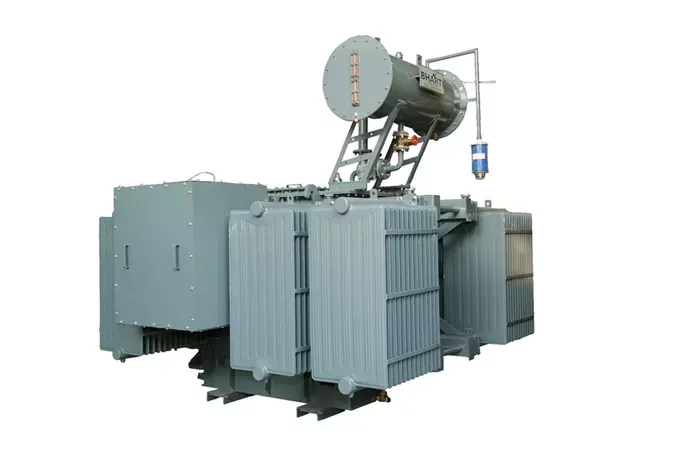

A step-up transformer is a type of electrical transformer designed to increase voltage from a lower level to a higher level while maintaining the same frequency. It is a critical component in modern power systems, enabling efficient long-distance transmission of electrical energy. By increasing voltage, the current decreases proportionally, which helps reduce power losses in transmission lines. This makes step-up transformers essential for improving energy efficiency and system reliability.
What Is a Step-Up Transformer
A step-up transformer is an electrical device that increases voltage from a lower level at the input (primary side) to a higher level at the output (secondary side) while maintaining the same frequency. It operates on the principle of electromagnetic induction, where energy is transferred between two coils through a magnetic field. The defining feature of a step-up transformer is that its secondary winding has more turns than its primary winding, resulting in a higher output voltage.
Step-up transformers are widely used in power transmission systems to improve efficiency by reducing current and minimizing energy losses over long distances. They are also essential in applications such as renewable energy systems, industrial equipment, and high-voltage testing. By enabling safe and efficient voltage conversion, step-up transformers play a critical role in modern electrical infrastructure.
Working Principle of a Step-Up Transformer

The working principle of a step-up transformer relies on Faraday’s Law of electromagnetic induction. When alternating current (AC) flows through the primary winding, it creates a varying magnetic field in the transformer core. This magnetic field then induces a voltage in the secondary winding. The key factor that determines the voltage increase is the ratio of the number of turns in the secondary coil compared to the primary coil.
In a step-up transformer, the secondary winding has more turns than the primary winding. As a result, the output voltage is higher than the input voltage. However, according to the law of energy conservation, the increase in voltage is accompanied by a decrease in current. This balance ensures that the total power remains nearly constant, aside from minor losses.
Transformer Equation
The fundamental relationship governing transformer operation can be expressed as follows:
Vp / Vs = Np / Ns
Where Vp and Vs represent primary and secondary voltages, and Np and Ns represent the number of turns in the primary and secondary coils respectively. For a step-up transformer, Ns is greater than Np, resulting in a higher secondary voltage.
Key Components of a Step-Up Transformer
A step-up transformer consists of several essential components that work together to ensure efficient operation. Each part plays a specific role in voltage transformation and energy transfer. Understanding these components is important for both design and maintenance purposes.
Core
The transformer core is typically made of laminated silicon steel, which provides a low-reluctance path for magnetic flux. Laminations help reduce eddy current losses, improving efficiency. The core ensures that the magnetic field generated in the primary winding effectively links to the secondary winding.
Primary Winding
The primary winding is the coil connected to the input power source. It receives the incoming low-voltage alternating current and generates a magnetic field within the core. The number of turns in this winding is fewer than in the secondary winding in a step-up transformer.
Secondary Winding
The secondary winding is connected to the output circuit and delivers the increased voltage. It has more turns than the primary winding, which is the defining characteristic of a step-up transformer. The higher number of turns enables the voltage to be stepped up effectively.
Insulation
Insulation materials are used to prevent electrical leakage and ensure safe operation. These materials separate the windings and protect against short circuits. Proper insulation is critical for maintaining performance and longevity.
Types of Step-Up Transformers

Step-up transformers are available in different types depending on their design, application, and operating conditions. Each type is optimized for specific environments and requirements.
Power Transformers
Power transformers are used in transmission networks to step up voltage to extremely high levels for long-distance transmission. They are typically found in power generation stations and substations. These transformers operate at high efficiency under full-load conditions.
Distribution Transformers
Distribution transformers are used to step up voltage in localized systems or specific industrial setups. While less common than step-down types, they serve specialized purposes where voltage boosting is required.
Instrument Transformers
Instrument transformers are used in measurement and protection systems. They provide accurate voltage transformation for monitoring equipment and protective relays. These transformers are designed for precision rather than power handling.
Applications of Step-Up Transformers

Step-up transformers are widely used across various industries and applications. Their ability to increase voltage makes them indispensable in power transmission and specialized electrical systems.
Power Transmission
In power plants, step-up transformers increase generated voltage to high levels before transmission. This reduces current and minimizes energy loss over long distances. It is a fundamental part of national and regional power grids.
Renewable Energy Systems
Renewable energy sources such as wind turbines and solar panels often generate electricity at lower voltages. Step-up transformers are used to increase this voltage to match grid requirements. This ensures efficient integration of renewable energy into the power system.
Industrial Applications
Many industrial processes require high voltage for equipment operation. Step-up transformers provide the necessary voltage levels for machinery, heating systems, and specialized equipment. They are essential in manufacturing and heavy industries.
How to Choose the Right Step-Up Transformer
Selecting the appropriate step-up transformer depends on several important factors. These include voltage requirements, load capacity, efficiency, and environmental conditions. Careful evaluation ensures optimal performance and long-term reliability.
Voltage Rating
The voltage rating must match the input and desired output levels. Choosing the correct rating prevents overloading and ensures safe operation. It is one of the most critical selection criteria.
Power Capacity
The transformer must be capable of handling the required load without overheating. Power capacity is typically measured in kilovolt-amperes (kVA). Selecting the right capacity ensures efficient and stable performance.
Cooling Method
Cooling methods such as air cooling or oil cooling are essential for heat dissipation. The choice depends on the application and operating environment. Proper cooling extends the lifespan of the transformer.
Conclusion
A step-up transformer is a vital component in modern electrical systems, enabling efficient voltage increase for power transmission and industrial applications. Its operation is based on electromagnetic induction, with the key principle being the ratio of turns between primary and secondary windings. By increasing voltage and reducing current, it minimizes energy losses and improves system efficiency.
FAQs
1. How Does a Step-Up Transformer Increase Voltage?
A step-up transformer increases voltage by having more turns in the secondary winding than in the primary winding. This difference in turns ratio results in a higher output voltage according to electromagnetic induction principles.
2. Where Are Step-Up Transformers Commonly Used?
They are commonly used in power plants, substations, renewable energy systems, and industrial applications. Their primary role is to prepare electricity for efficient transmission and specialized uses.
3. What Are the Losses in a Step-Up Transformer?
The main losses include core losses (hysteresis and eddy currents) and copper losses (resistance in windings). These losses reduce efficiency but can be minimized with proper design and materials.
4. What Is the Difference Between Step-Up and Step-Down Transformers?
A step-up transformer increases voltage, while a step-down transformer decreases voltage. The difference lies in the turns ratio of the windings, with step-up transformers having more turns in the secondary coil.


























Sign in to leave a comment.