

Living with mature hardwoods is one of the best parts of having a property in New England. However, our unpredictable weather puts immense environmental pressure on these massive trees. Between saturated spring soils and heavy winter ice storms, structural decay can happen surprisingly fast.
When a root system fails or a massive oak starts leaning dangerously over your driveway, action must be taken. That is exactly when scheduling professional tree removal in Connecticut becomes an urgent necessity to protect your home.
For most homeowners, the idea of bringing down an eighty-foot tree in a tight neighborhood is highly stressful. People naturally worry about heavy machinery ruining their lawn or falling branches crushing a fence.
At A1 Tree Service, we believe that understanding the extraction process is the best way to ease those anxieties. A professional tree removal is a tightly engineered logistical operation, not just a crew showing up with chainsaws. Here is a clear look at how a safe, professional extraction unfolds.
The Morning Walkthrough and Hazard Mapping
Long before any cutting begins, the crew foreman conducts a detailed site survey. This step is crucial because a residential yard is full of hidden vulnerabilities that need to be protected.
We actively walk the property to map out specific hazards, including:
- Overhead electrical drops and hidden cable lines.
- Underground septic tanks and drain fields.
- Hidden irrigation sprinkler heads and delicate hardscaping.
Once the hazards are marked, we focus on ground protection. If the soil is soft from recent rains, we never drive multi-ton trucks directly across your grass.
Instead, we lay down high-density composite ground mats to create a temporary roadway. These mats distribute the equipment's weight, allowing us to access the tree without leaving deep, muddy tire ruts in your turf.
Setting Up High-Altitude Rigging
In an open forest, a tree can just be notched at the base and pushed over. In a tight suburban lot, letting heavy wood free-fall is an absolute recipe for disaster. There is rarely enough clearance, and the ground impact alone can crack nearby concrete.
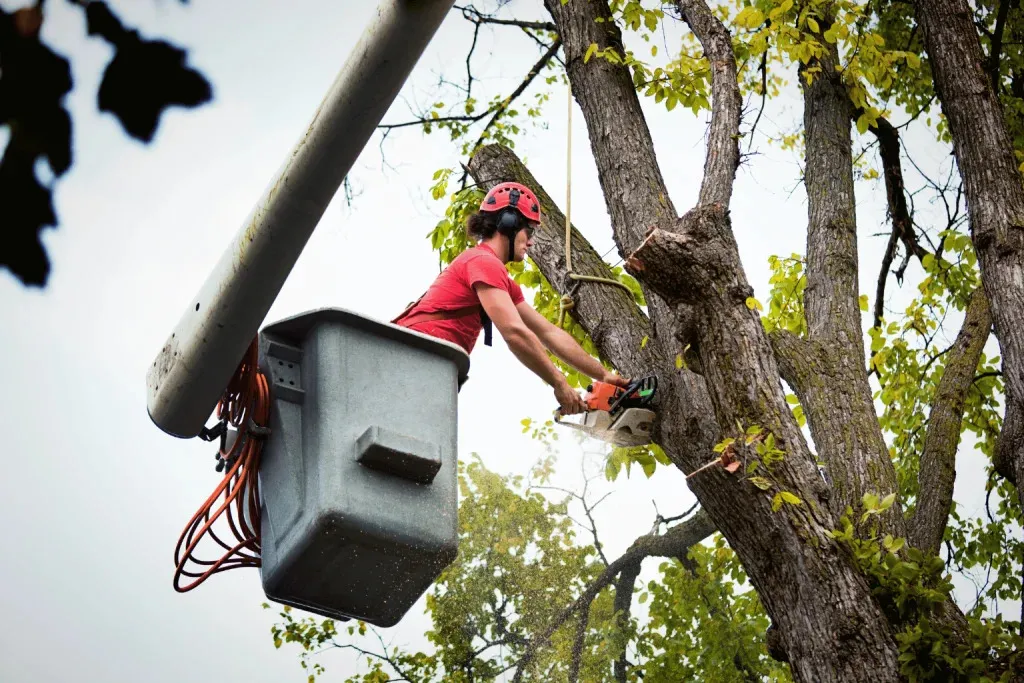
The entire tree must be methodically taken down from the top down. Our technicians access the upper canopy using aerial bucket lifts or advanced rope-climbing gear.
Once secured in the canopy, they do not just hack branches off and let them drop. The crew uses a highly controlled rigging system:
- Arborist friction blocks are secured high in the tree's crown.
- Heavy lateral branches are tied off with high-tensile bull ropes.
- The ground crew uses the friction system to slowly lower the cut timber.
This precise rigging is exactly how we manage complex tree services Bristol projects, where homes are built incredibly close together. It ensures heavy wood never swings into your siding or gutters.

Taking Down the Main Spar
Once the leafy canopy and side branches are safely on the ground, all that remains is the towering central trunk. In the tree industry, this vertical column is known as the spar.
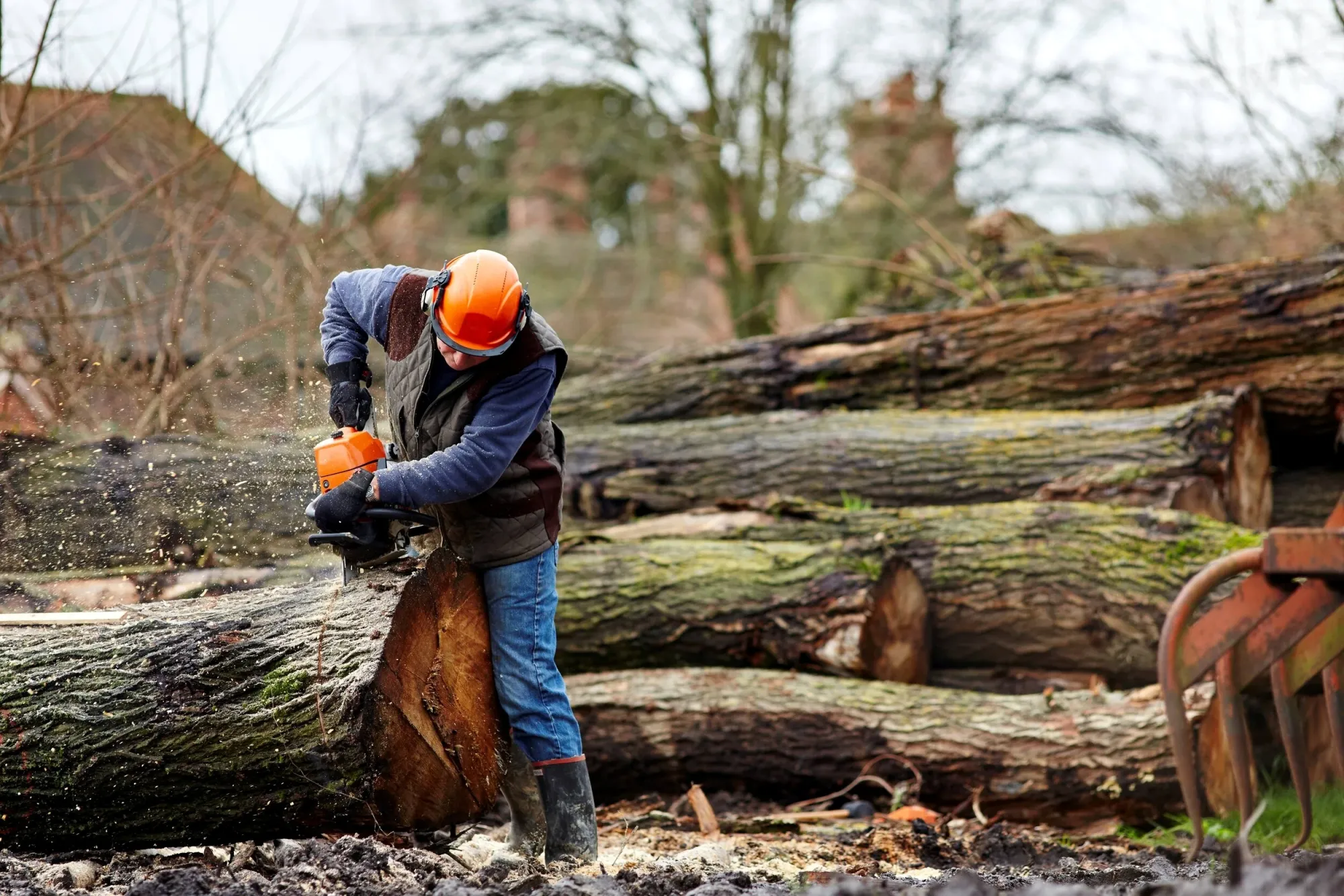
The climber works their way downward, cutting the trunk into manageable, uniform sections. If space is incredibly tight, these heavy trunk blocks are roped down slowly, just like the upper branches.
If there is a clear, safe drop zone directly below, the climber will cut the blocks at specific angles. This makes the heavy wood land perfectly flat on the grass, deadening the impact and preventing deep divots in the soil.
The Cleanup Protocol and Site Restoration
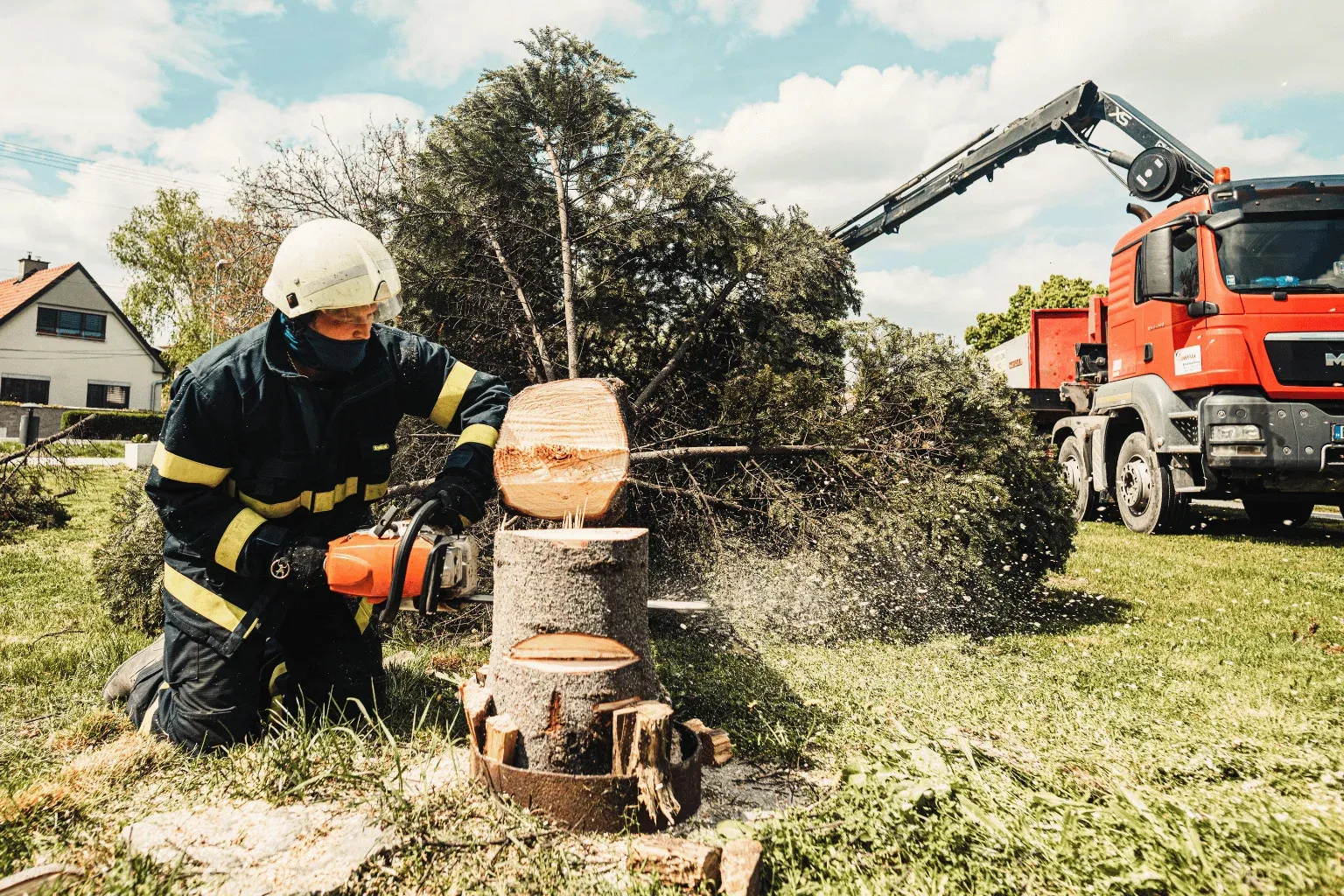
A mature hardwood tree produces an enormous volume of wood waste. Dealing with it efficiently separates true professionals from amateurs.
Our complete cleanup protocol ensures your yard is fully restored:
- Smaller limbs and brush are fed directly into commercial wood chippers.
- Heavy trunk logs are loaded into hauling trucks using turf-friendly loaders.
- Sawdust and twigs are meticulously raked out of your garden beds.
- Driveways and walkways are blown completely clean of debris.
When the trucks finally leave, the hazardous tree is gone, and your property is completely safe, clean, and ready to enjoy.


























Sign in to leave a comment.