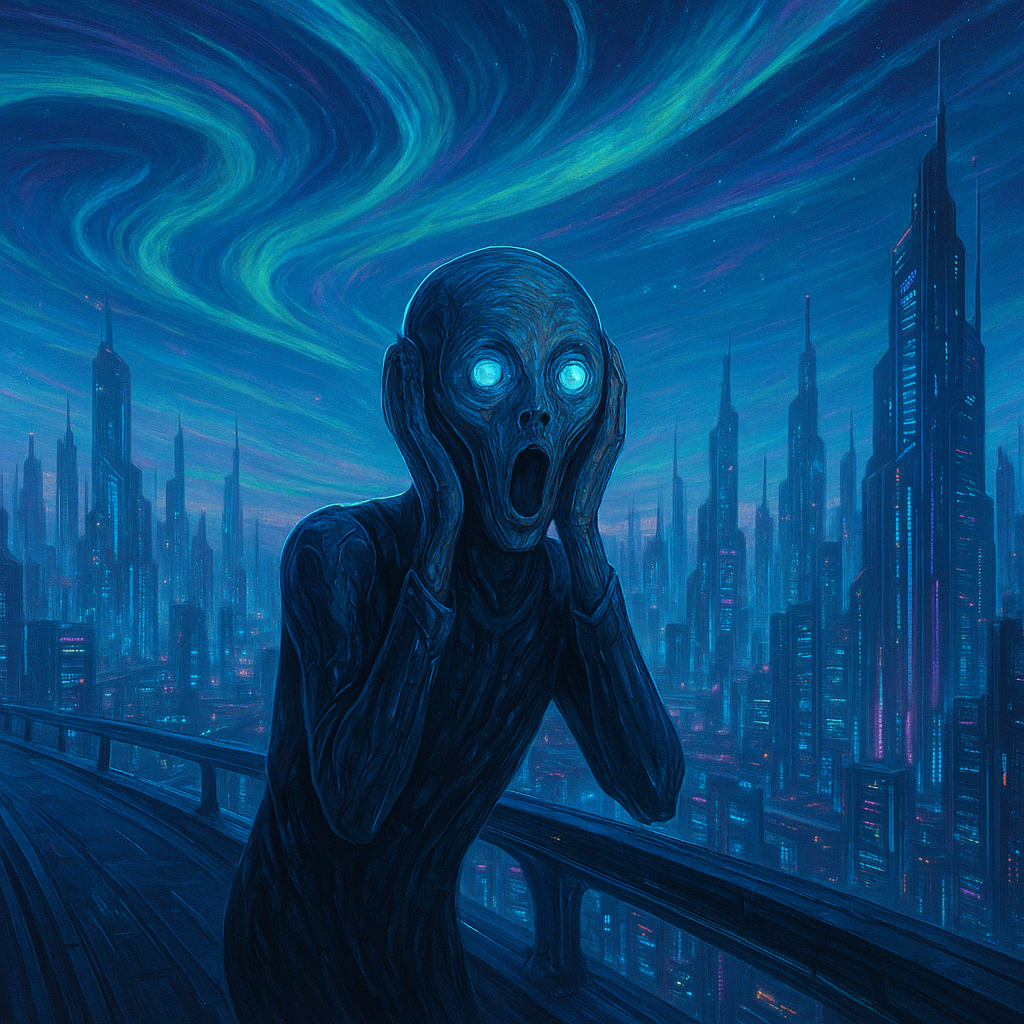

Echoes Through Time: Envisioning The Scream Three Centuries Ahead
Edvard Munch’s The Scream remains one of the most iconic and haunting images in art history, encapsulating existential dread with a visceral intensity that has transcended generations. But what if we could peer beyond the present, beyond even the near future, and imagine how this masterpiece might evolve over the next 300 years? Thanks to cutting-edge artificial intelligence tools developed in 2026, such a speculative vision is now within reach. A new simulation tool uses deep learning and generative adversarial networks (GANs) to project how environmental factors, artistic reinterpretations, and material decay might alter The Scream in three centuries.
The simulation provokes profound questions about art preservation, cultural memory, and the intersection of technology with human creativity. As we stand at the crossroads of digital innovation and artistic heritage, understanding how iconic works might transform illuminates how future societies may engage with the past. This article explores the origins of this AI simulation tool, its methodology, current breakthroughs in 2026, and what these futuristic visions mean for art, culture, and technology.
Tracing the Journey: From Munch’s Tormented Vision to AI Prognostications
Edvard Munch painted the original The Scream in 1893, capturing a moment of profound emotional turbulence rendered through bold colors and swirling forms. Over the ensuing century, the painting became emblematic of modern anxiety and human vulnerability. Yet, beyond its emotional impact, The Scream also presents a fascinating case study in material preservation. The original exists in several versions—paintings, lithographs, and pastels—each subject to different degradation paths due to pigments, canvas, and environmental exposure.
Preservationists have long grappled with mitigating damage from light, humidity, and pollution. However, traditional conservation methods focus on maintaining the artwork’s current state rather than projecting its future transformations. By 2020, preliminary efforts to digitize and model aging effects on art began to emerge, but these were limited in scope.
Enter AI-driven simulations. Leveraging advances in machine learning, image recognition, and material science, researchers sought to create models that could predict not just physical decay but also artistic reinterpretation over time. This approach aligns with broader 21st-century trends where AI assists in forecasting cultural shifts and technological impacts on heritage artifacts.
These developments culminated in 2026 with a collaboration between the Norwegian National Museum, AI specialists at the University of Oslo, and global tech firms specializing in generative AI. Their goal: to simulate The Scream’s appearance in 2326, considering factors from pigment fading to hypothetical reinterpretations influenced by future cultural contexts.
How the Simulation Works: Data, Algorithms, and Artistic Variables
The AI tool underpinning this futuristic simulation combines several advanced technologies. At its core are generative adversarial networks (GANs), which pit two neural networks against each other to create highly realistic image transformations. The system ingests high-resolution scans of each The Scream version, along with detailed chemical analyses of the pigments and materials used.
Key inputs include:
- Material degradation models: Data from conservation science on pigment fading rates, canvas fiber breakdown, and varnish discoloration under various environmental stresses.
- Environmental projections: Climate models predicting humidity, temperature fluctuations, and pollution levels in Oslo’s museum environment over centuries.
- Cultural reinterpretation modules: AI trained on evolving art styles, social moods, and symbolic meanings extracted from historical art trends and speculative future art scenarios.
- Artistic style transfer: Algorithms capable of blending Munch’s original style with predicted future aesthetics, simulating how future artists or restorers might reinterpret the work.
By integrating these elements, the tool generates iterative visual projections of The Scream at increments of 50 years up to 300 years. The process includes uncertainty quantification, expressing confidence intervals for each predicted color shift, texture change, or compositional alteration.
This multifaceted approach distinguishes the simulation from mere aging software. It acknowledges that art is not static but a living cultural artifact subject to reinterpretation and environmental transformation alike.
2026 Breakthroughs: Current Developments Fueling New Frontiers
In early 2026, the unveiling of these simulations made headlines worldwide, prominently featured on platforms like MSN reporting on cultural AI innovations. The Norwegian National Museum’s exhibition includes interactive displays allowing visitors to explore The Scream’s projected states over centuries, augmented by virtual reality experiences.
Technological advances powering these breakthroughs include:
- Enhanced spectral imaging: New scanning methods capture ultra-fine pigment details, enabling more accurate degradation modeling.
- Improved GAN architectures: The latest neural networks reduce artifacts and increase realism in image generation, essential for nuanced art simulations.
- Cross-disciplinary datasets: Integration of climate science, material chemistry, and art history data sets into unified AI training frameworks.
- Public engagement tools: User-friendly interfaces invite art enthusiasts and scholars to submit hypotheses on how future social changes might influence artistic reinterpretations, allowing the AI to incorporate crowd-inputted cultural variables.
These innovations have also sparked academic interest in the ethics of digital art preservation and the role of AI in cultural memory. The collaboration between AI developers and art historians has become a model for interdisciplinary research, demonstrating the potential of technology to deepen our understanding of heritage.
Expert Insights: The Intersection of AI, Art, and Cultural Legacy
Leading voices in both AI and art conservation emphasize the transformative implications of these simulations. Dr. Ingrid Løvenskiold, head of conservation at the Norwegian National Museum, states:
“This tool allows us to move beyond reactive conservation into a proactive dialogue with time. We can now anticipate how The Scream might visually and symbolically evolve, informing preservation strategies and public interpretation.”
Similarly, AI ethicist Professor Daniel Kim from the University of California notes:
“While the simulation offers remarkable insights, it also challenges us to consider the authenticity of digitally projected art. What does it mean to experience a 300-year-old artwork through AI's lens? The boundaries between original and future reinterpretation blur.”
The conversation extends to the art market and cultural institutions. Museums worldwide are exploring similar AI tools to simulate futures of their collections, aiming to balance physical conservation with digital archiving and reinterpretation. The potential applications include educational programs, virtual exhibitions, and even AI-assisted restoration planning.
Industry analysts foresee a convergence where AI becomes integral to cultural heritage management, complementing traditional methods and enriching public engagement. This trend echoes developments in other sectors, such as DeFi structures covered in Blaze Swap: A Thorough Look at Its DeFi Structure, Token System, and Future Prospects, where technology reshapes foundational systems.
What Lies Ahead: Future Outlook and Cultural Implications
The simulation of The Scream in 300 years is more than a technological curiosity; it is a glimpse into how humanity might steward its cultural treasures amid accelerating change. The tool’s predictive capacity invites several takeaways:
- Dynamic preservation: Conservation may evolve from static protection toward adaptive strategies informed by AI forecasts.
- Engagement with impermanence: Accepting that artworks will transform encourages new ways to value art beyond permanence.
- Expanded interpretive frameworks: Simulations can reveal how future societies might reinterpret artistic themes, fostering cross-temporal dialogues.
- Ethical considerations: Determining the authenticity and authority of AI-generated future art versions will require ongoing debate.
Moreover, the tool embodies a broader trend of AI augmenting human creativity and cultural understanding. As explored in Future Trends in Augmented Reality: What to Expect in the Next 5 Years, immersive technologies and AI will increasingly enable us to experience art and history in multidimensional ways.
Ultimately, envisioning The Scream three centuries hence compels us to reflect on how art, memory, and technology intertwine. The simulation does not just reconstruct a visual future; it challenges us to consider our role as custodians of culture, bridging past, present, and future.




























Sign in to leave a comment.