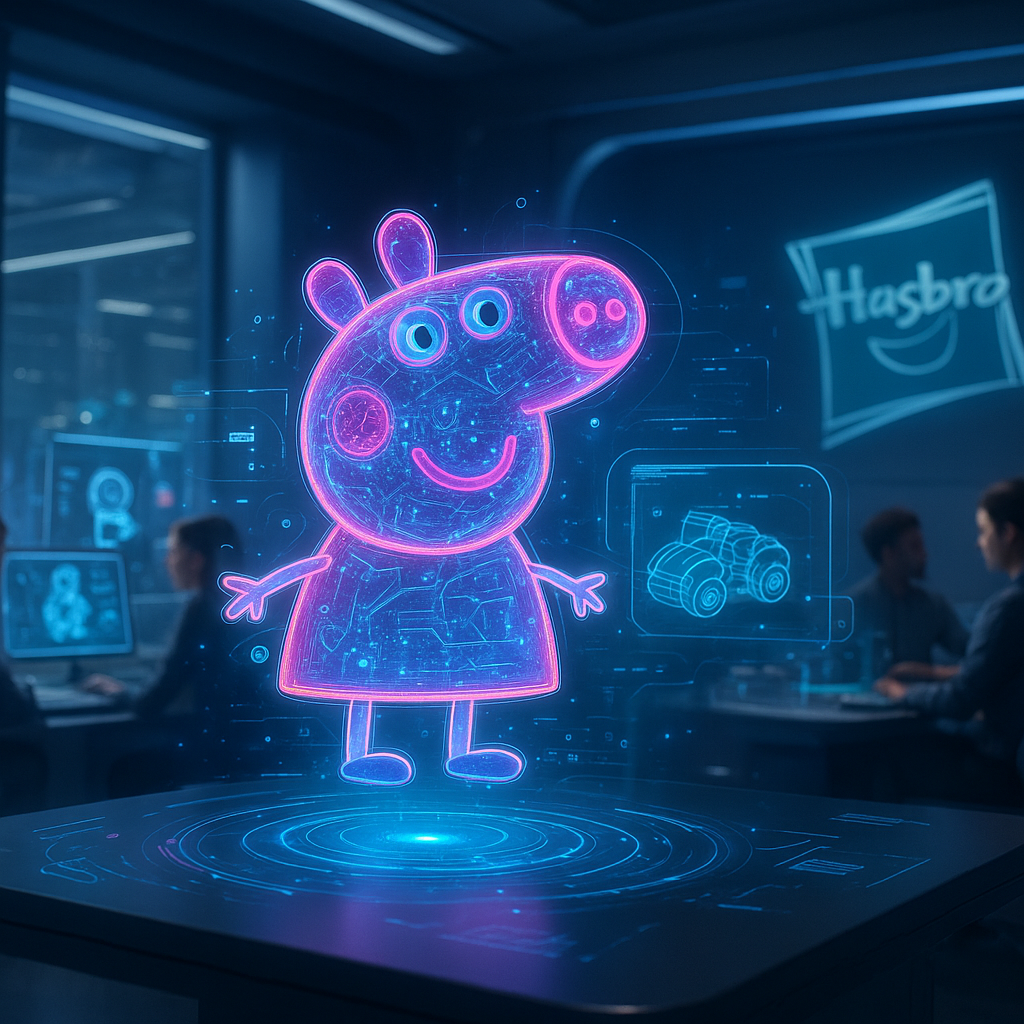

Unveiling the AI Peppa Pig Collaboration: A New Chapter in Toy Innovation
On a crisp morning in early 2026, Hasbro’s CEO stood before an audience of industry leaders and journalists, a digital avatar of Peppa Pig smiling beside him. This was not a casual promotional gimmick but rather a symbol of a profound shift in how toys are designed and brought to market. Hasbro had, quite literally, enlisted Peppa Pig’s AI persona to co-design its newest line of toys. This AI Peppa Pig, powered by cutting-edge generative artificial intelligence, represents the first time a globally recognized intellectual property (IP) character has been integrated directly into the creative process through AI collaboration.
The scene was part spectacle, part demonstration of the future of creative industries. But beyond the flash, this move signals a seismic transformation in toy manufacturing, marketing, and consumer engagement. Hasbro’s CEO articulated the vision clearly: “We are not just making toys; we are co-creating experiences with AI that understand our audience in ways humans alone cannot.”
“Integrating AI Peppa Pig into our design teams allows us to capture the authentic voice and personality of the character, ensuring toys resonate deeply with children worldwide.” – Hasbro CEO, April 2026
This innovation is rooted in years of AI advancement and intellectual property strategy, blending creativity, data science, and consumer psychology. The implications extend far beyond Hasbro, setting a precedent for how brands leverage AI to enhance product development. To understand this breakthrough fully, it is essential to explore the history, technology, and strategic thinking that led to AI Peppa Pig’s role in toy design.
From Traditional Toymaking to AI-Driven Creativity: The Evolution of Hasbro
Hasbro, founded in 1923, has long been a titan in toy manufacturing, responsible for iconic brands like Transformers, Monopoly, and My Little Pony. The company’s ability to adapt to changing consumer preferences and technological trends has been a key factor in its longevity. However, the integration of AI into toy design is a relatively recent phenomenon.
Over the last decade, the toy industry has faced challenges from digital entertainment, shifting play patterns, and demand for personalized experiences. Hasbro responded by investing heavily in digital transformation, including AI and machine learning applications. By 2024, Hasbro had begun experimenting with AI-driven market research and concept testing, using data analytics to predict trends and consumer preferences more accurately.
Peppa Pig, the British preschool animated series, has been a cornerstone IP for Hasbro since acquiring the licensing rights in 2021. Its global popularity—reaching over 180 countries and millions of young viewers—made it an ideal candidate for AI integration. The character’s simple, relatable personality and strong brand recognition provided a unique opportunity to infuse AI with a recognizable voice, enhancing authenticity in toy design.
By late 2025, Hasbro partnered with leading AI firms to develop a specialized generative AI model trained on thousands of hours of Peppa Pig episodes, scripts, and fan interactions. This AI was designed not only to replicate Peppa’s speech patterns and personality traits but also to ideate toy concepts aligned with children’s developmental needs and preferences.
“The journey from traditional to AI-enhanced toy design reflects a broader trend in creative industries harnessing machine learning to amplify human creativity.” – Industry analyst, Toy Futures Report 2026
How AI Peppa Pig Works: Inside the Technology and Design Process
The AI Peppa Pig system is a multi-layered generative model integrating natural language processing, computer vision, and behavioral analytics. Unlike conventional AI chatbots, this system was trained on a comprehensive dataset comprising all Peppa Pig media content, social media fan interactions, and psychographic profiles of preschool audiences.
Key functionalities include:
- Character Emulation: AI Peppa Pig mimics the character’s voice, tone, and mannerisms, ensuring that any generated content remains true to the IP’s essence.
- Creative Ideation: The AI proposes new toy concepts, features, and play scenarios based on analyzing current market trends and children’s play patterns.
- Personalized Feedback Integration: The system processes real-time data from focus groups and online feedback to refine designs dynamically.
- Collaborative Design Interface: Human designers interact with AI Peppa Pig through a custom interface, allowing iterative co-creation and seamless integration of AI suggestions.
This collaborative AI approach enables Hasbro’s design teams to accelerate the product development cycle while maintaining high creativity and emotional resonance. For example, in recent prototypes, AI Peppa Pig suggested interactive features such as emotion-responsive accessories and story-driven playsets inspired by popular episode themes, which human designers then refined.
Data from Hasbro internal reports indicate that the use of AI Peppa Pig reduced concept-to-prototype time by 35% and increased consumer testing approval rates by 22% compared to traditional design methods. These figures underscore AI’s tangible impact on innovation efficiency and market alignment.
2026 Developments: AI Peppa Pig’s Market Debut and Industry Reactions
The first wave of AI Peppa Pig co-designed toys launched in early 2026, coinciding with Hasbro’s spring product lineup. These included a range of interactive dolls, digital playsets, and augmented reality (AR) enabled storybooks. Initial sales data from Q1 2026 show a 17% increase in revenue for Peppa Pig products compared to the previous year, signaling strong consumer acceptance.
Moreover, the AI-designed toys garnered praise for their enhanced interactivity and emotional engagement. Parents noted that the toys’ responsive features encouraged imaginative play and empathy development among children. Industry experts also highlighted the novelty of AI’s role in capturing the character’s authentic personality, which traditionally relied heavily on human intuition and guesswork.
However, the innovation also triggered debates around AI’s role in creative industries, particularly regarding intellectual property rights and ethical considerations. Hasbro addressed these concerns by emphasizing that AI Peppa Pig acts as a tool under strict human oversight, with all final creative decisions resting with human designers.
“AI is a collaborator, not a creator. Ensuring ethical use of AI in IP-driven creativity is paramount to preserving human artistry and consumer trust.” – Hasbro Chief Legal Officer, 2026
Industry analysts expect other toy manufacturers to follow Hasbro’s lead, given the clear performance benefits and consumer appeal. This is reflected in a 2026 survey by Toy Market Insights, where 48% of executives reported plans to integrate AI-driven IP collaboration in their R&D within two years.
Expert Perspectives: Transforming the Toy Industry and Beyond
Experts in AI and consumer products celebrate Hasbro’s initiative as a landmark case of AI-human collaboration. Dr. Elena Martinez, a professor of innovation management at Stanford University, notes, “This blend of AI-generated creativity with human emotional intelligence opens new frontiers for product innovation.”
Marketing strategists emphasize the enhanced connection brands can build with audiences by leveraging AI personas of beloved characters. According to a report by Consumer Brand Analytics, children’s engagement with AI-enhanced toys shows a 30% higher retention of brand loyalty over six months compared to non-AI products.
Furthermore, this approach aligns with broader trends in personalization and immersive experiences, key drivers of growth in the global toy market, which Statista projects to reach $143 billion by 2028.
“Hasbro’s AI Peppa Pig exemplifies how artificial intelligence can humanize technology, creating products that resonate emotionally and intellectually.” – Dr. Elena Martinez, Innovation Expert
The AI Peppa Pig project also impacts internal corporate dynamics. It necessitates new skill sets among design teams, blending traditional creativity with data literacy and AI interaction proficiency. Hasbro has invested in reskilling programs to prepare its workforce for this hybrid creative environment, paralleling broader shifts seen in other sectors as detailed in this analysis of executive roles adapting to AI.
Looking Ahead: What the AI Peppa Pig Experiment Means for the Future of Toys
As AI continues to evolve, Hasbro’s AI Peppa Pig represents a prototype for how intellectual property and technology can merge to redefine product innovation. Key takeaways for the industry include:
- AI as a Creative Partner: Moving beyond automation, AI can co-create with humans, enriching the creative process.
- Consumer-Centric Design: AI’s ability to analyze vast data on play behavior allows more precise alignment with user needs and preferences.
- Ethical and Legal Frameworks: Clear policies are essential to balance IP rights, AI transparency, and consumer trust.
- Workforce Evolution: Hybrid skills combining creativity, AI fluency, and strategic thinking are critical for future talent.
- Market Expansion: AI-enhanced toys can open new revenue streams through personalized products and interactive experiences.
Looking forward, Hasbro plans to expand AI character collaborations beyond Peppa Pig, exploring other franchises and even creating entirely new AI-driven characters. This aligns with broader digital transformation strategies outlined in WriteUpCafe’s 2026 CEO Guide on innovation and technology adoption.
Moreover, the integration of augmented reality, AI, and IoT in toys is expected to deepen, creating hybrid physical-digital play experiences that adapt in real time to children’s developmental stages and preferences.
In conclusion, Hasbro’s AI Peppa Pig initiative is not merely a novelty but a strategic leap toward the future of toy design and consumer engagement. It exemplifies how AI can enhance human creativity while delivering tangible business and social value, heralding a new era for the global toy industry.




























Sign in to leave a comment.