

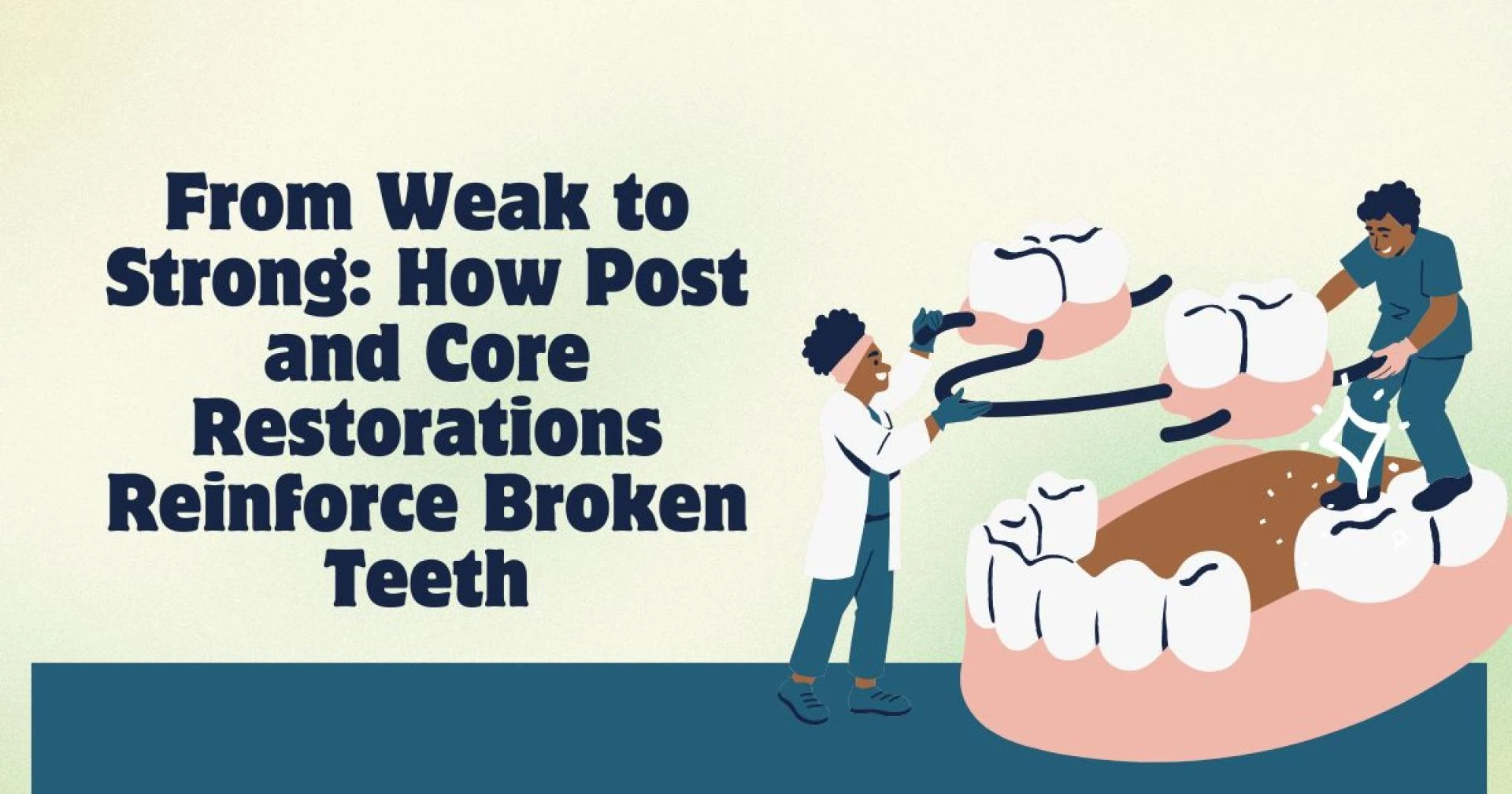
Restoring a severely damaged tooth requires both strength and precision — and that’s where post and core dental procedures come in. This restorative technique plays a crucial role in rebuilding teeth that have lost a significant portion of their structure, often after a root canal treatment. When a tooth becomes too weak to support a dental crown on its own, post and core restoration acts as the foundation, ensuring the crown remains stable and the tooth functions properly. But how do you know when you really need this procedure? Let’s dive deeper into the reasons, process, and benefits behind post and core dental treatment.
Understanding Post and Core Dental Restoration
A post and core is a two-part restorative procedure performed after root canal therapy when a tooth’s internal structure has been compromised.
- The post is a small rod-like structure inserted into the cleaned root canal of the tooth. It helps anchor the restoration securely within the root.
- The core is a build-up material that replaces the lost tooth structure above the gum line, providing a strong base for a dental crown.
Together, the post and core restore the tooth’s strength, allowing it to function like a natural tooth once capped with a crown.
When Is a Post and Core Dental Procedure Needed?
A post and core isn’t required for every tooth that undergoes a root canal. Dentists recommend it only in specific situations, such as:
1. Extensive Tooth Decay
When tooth decay extends deep into the pulp and compromises most of the structure, the remaining tooth may not have enough material left to support a crown. In such cases, a post and core rebuilds the internal foundation before the crown placement.
2. After Root Canal Treatment
Teeth that have undergone root canal therapy often become brittle over time. Without the pulp, they lose moisture and flexibility, making them prone to cracking or fracturing. A post and core provides internal support to reinforce the tooth and prevent further damage.
3. Fractured or Broken Teeth
Accidental trauma or long-term decay can lead to broken teeth. When a large portion of the tooth is missing, it’s impossible to place a crown directly. The post acts as an anchor, while the core rebuilds the missing structure, making it possible to restore the tooth’s function and appearance.
4. Insufficient Retention for a Crown
Sometimes, the tooth’s remaining walls are too thin or short to hold a crown securely. The post and core provide additional retention, ensuring that the crown stays firmly in place.
5. To Enhance Longevity of Crown Restorations
A well-executed post and core procedure not only supports the crown but also extends its lifespan. It ensures even distribution of chewing forces and protects the underlying tooth from fracture or crown dislodgment.
Types of Posts Used in Dental Restorations
There are different materials and methods used for posts, depending on the dentist’s approach and the patient’s needs:
- Metal Posts: Durable and commonly used, but can sometimes cause aesthetic issues in front teeth due to discoloration.
- Fiber Posts: Tooth-colored and aesthetically pleasing, ideal for anterior teeth restorations.
- Prefabricated Posts: Ready-made posts that can be quickly inserted into the root canal.
- Custom Cast Posts: Individually designed for precise fitting in teeth with irregular canal shapes.
Your dentist will choose the appropriate type based on factors like tooth location, amount of remaining structure, and overall oral condition.
The Post and Core Procedure: Step-by-Step Overview
- Assessment and Preparation: The dentist evaluates the tooth after a root canal to determine if a post and core is required.
- Post Placement: A space is created inside the treated root canal, and the post is inserted using dental cement for stability.
- Core Build-Up: Once the post is secured, a special composite or resin material is used to rebuild the tooth’s lost structure above the gum line.
- Crown Placement: After shaping and polishing, a dental crown is placed over the rebuilt core, completing the restoration.
This procedure restores not just the tooth’s function but also its appearance, allowing patients to smile confidently again.
Benefits of a Post and Core Dental Procedure
- Restores structural integrity of severely damaged teeth
- Prevents fracture and tooth loss after root canal treatment
- Provides a strong foundation for crowns
- Enhances the longevity and stability of dental restorations
- Improves both aesthetics and chewing function
When done correctly, post and core restorations can last for many years, offering durability and natural-looking results.
How to Care for a Tooth After Post and Core Treatment
To maintain the health and strength of your restored tooth:
- Maintain proper oral hygiene — brush twice a day and floss gently.
- Visit your dentist for regular checkups and professional cleanings.
- Avoid chewing hard foods or biting on non-food items.
- Use a mouthguard if you grind your teeth at night.
With the right care, your restored tooth can function efficiently for years without complications.
Conclusion
A post and core dental procedure is essential when a tooth has lost too much structure to hold a crown on its own. It plays a vital role in reinforcing weakened teeth, restoring natural function, and preventing further damage after root canal therapy. If you’ve experienced extensive tooth decay or a fracture and are unsure whether you need this treatment, it’s best to consult a dentist close to me who can evaluate your specific case and recommend the right restorative solution for your smile.




























Sign in to leave a comment.